

8 Signs of a Bad Mouse Infestation That Requires Pest Control
Pest infestations are never pleasant, but a mouse invasion can be especially unnerving. These tiny invaders aren’t just hard to eliminate—they bring filth, chaos, and a host of diseases right into your living space.
According to most estimates, mice invade around 21 million homes in the US annually, making them one of the most common pests that NEPA homeowners encounter.
If you suspect that these unwelcome guests have taken up residence in your home, it’s crucial to act fast. Here are eight telltale signs of a mouse problem and when you should reach out to a pest control professional so you can get rid of mice in your home once and for all.
1 . Frequent Sightings of Mice
Mice and rats tend to be social creatures, so spotting one mouse typically indicates that there are more living in your home. While seeing the occasional mouse may not be cause for alarm, if you are spotting multiple mice–especially after using mouse repellents–it could mean that there is a larger problem at hand that requires the help of a professional.
2. Noticeable Droppings and Urine Odor
Seeing rodent droppings around the house is another sign that you may be dealing with a mouse infestation. Mouse droppings are small, dark, and pellet-shaped, typically about the size of a grain of rice (1/8 to 1/4 inch long). They are usually pointed at both ends and have a slightly tapered appearance.
You may also notice a strange, lingering odor, similar to the smell of ammonia, which can be a sign of rodent urine in the home.
3. Gnawed Wires, Furniture, and Other Items
Mice will often gnaw on wires, furniture, and other household items to grind down their teeth. If you notice items in your home that are damaged and have chew marks with no easy explanation, you should have your home inspected for mice.
4. Scratching or Squeaking Noises
Hearing scratching or squeaking noises behind your walls can be another sign of mice hiding in your home. These sounds may be more noticeable at night since mice are nocturnal creatures.
5. Grease Marks and Smudge Trails
Mice will often leave grease marks, also known as sebum, from the dirt in their fur and on their skin. If you notice any strange grease marks or smudge trails on your floors, walls, and surfaces in your home, be on the lookout for mice.
6. Nests Made from Shredded Materials
Mice make their nests with random materials, including insulation, wood chips, paper, and plastic. Look for these in basements, attics, and wall cavities where mice tend to hide.
7. Damaged Food Packaging and Stockpiles
It’s no secret that mice are attracted to food, food waste, and garbage. Mice will often hoard food and other items, so if you notice strange stockpiles around your home, you may want to have an inspection done. This also applies to damaged food packaging, as mice are typically in search of food when they invade a home.
8. Unusual Pet Behavior
Household pets may act strangely when mice are present. If you notice your dog or cat sniffing and scratching at the walls or floors, staring at the walls, and barking, growling, or even crying for seemingly no reason, it can be a sign of a mouse infestation.
When Does a Mouse Infestation Require Pest Control
A mouse infestation often starts subtly—maybe a faint scratching in the walls or a few scattered droppings. But as their population grows, so does the potential for damage and health risks. Mice can chew through electrical wiring, insulation, and even structural components of your home, increasing the chances of fire hazards and costly repairs.
Beyond physical damage, mice carry diseases such as hantavirus and salmonella, which can spread through contaminated surfaces and food. If you notice these signs, it’s a clear indication that professional pest control is necessary.
Don’t wait until a small problem turns into a major disaster. Mice reproduce quickly, and what begins as a minor issue can rapidly escalate into a full-blown infestation. Call a trusted rodent control specialist at the first sign of mice in your home to protect your property and your family’s health. Acting swiftly will ensure that your home remains a safe and comfortable place for you—not for mice.
FAQs
How can you differentiate between a minor and a severe mouse infestation?
While no mouse infestation is good, there are a few differences between a minor infestation and a more severe one. Seeing mice during the day, the strong smell of urine, and fresh droppings indicate a more severe infestation.
What are the health risks associated with a bad mouse infestation?
Having a mouse infestation can be dangerous for a number of health-related reasons, including the diseases mice carry, such as hantavirus and leptospirosis. Mice can also contaminate the food they come into contact with, and they also often carry ticks and fleas on them, posing more health risks to homeowners.
How quickly can a small mouse problem escalate into a large infestation?
A small mouse infestation can quickly become a larger issue due to the rapid speed at which mice reproduce. It can take only a few weeks for a small infestation to become larger, which is why it is imperative that you act fast if you suspect you have mice in your home.


How to Get Rid of Rats Once and for All
As a homeowner, the last thing you want to deal with is an infestation of any kind. A rat infestation can be particularly upsetting, as these pests are dirty, carry disease, and can be difficult to get rid of once they invade your home.
If you are currently dealing with a rat infestation in Northeast Pennsylvania, here is our step-by-step guide to get rid of them once and for all.
1. Identify Signs of a Rat Infestation
First, you need to identify whether or not you are dealing with rats or some other kind of rodent. While rats tend to dwell outdoors, they have been known to make their way inside occasionally.
There are several telltale signs of a rat infestation to keep an eye out for, including:
- Rat droppings in the house
- Finding rat nests
- Gnaw marks on walls and floors
- Strange or foul odors
- Scratching or scurrying noises coming from inside the walls
Of course, these could be signs of a mouse. To tell the difference between a rat and mouse, it’s keen to note that rats are heavier in size and larger in shape, measuring anywhere from 12-18 inches in length.
2. Determine the Type of Rat Problem
If you suspect you are dealing with a rat infestation, the next step is to determine the type of problem and how severe the infestation is. One key way to determine what type of rat you’re dealing with is by looking at the size and location of the rat droppings in your home.
Larger droppings may indicate that a larger rat species, such as the Norway rat, has invaded your home, while smaller droppings may mean you are dealing with roof rats. You will also want to check certain areas of your home for rat nests, such as your attic, basement, kitchen, and wall voids.
At this stage, we typically recommend performing a rodent inspection using a local, trusted professional to determine the size and severity of the infestation.
3. Seal Entry Points
Sealing any possible entry points in your home is crucial to getting rid of rats and preventing more from coming in. To do this, you will want to inspect your home for any cracks and crevices they may use to gain access to your space. You can seal these entry points with caulk, steel wool, or waterproof sealant, and be sure to weatherstrip your doors and windows for an extra layer of protection.
4. Remove Food and Water Sources
Rats are typically searching for food and water when they enter a home, so removing these things can make your home less appealing. Be sure to properly store your food and beverages in sealed containers, and sweep up any crumbs or fallen food after using the kitchen. It is also a good idea to fix any leaking faucets or pipes in your home, as rats will often use these things as water sources.
5. Declutter and Tidy Up
Cleaning and decluttering your home is imperative to getting rid of rats and preventing them from returning. This applies to both the inside and outside of your home, so be sure to maintain the grass and foliage surrounding your home in addition to keeping the inside of your house tidy.
6. Set Traps and Baits
Traps and baits can be effective in killing the rats in your home, but keep in mind that it is important to be extremely cautious when setting them up. Rat poison is very harmful not only to humans but also to pets, so you will want to make sure you’re setting up traps where your children or pets can’t reach them.
7. Consider Natural Deterrents
It is said that rats hate the smell of peppermint, ammonia, eucalyptus, and lavender, among many other scents. These scents can be used in essential oil form as an all-natural way to deter rats from entering your home.
8. Use Rodenticides Carefully
Some homeowners prefer to take matters into their own hands and use powerful rodenticides to get rid of rats. However, it is imperative that you carefully read the instructions for whatever rodenticide you choose to use to ensure you apply it correctly.
9. Employ Professional Pest Control Services
Whenever you are dealing with an infestation of any kind, it is always in your best interest to enlist the help of a pest control professional. Rats can be extremely difficult to get rid of, so you’ll want a professional exterminator’s expertise to ensure the problem is dealt with safely and effectively. The Pest Rangers’ residential pest control programs even feature ongoing maintenance measures designed to prevent rats, mice, and dozens of species of pests from ever making their way into your home.
10. Maintain Preventive Measures
Once the rats in your home have been exterminated, you will want to make sure that they don’t return in the future. To keep rats far away from your home, be sure to properly seal and store all food and beverages, clean your house regularly, and maintain your lawn and any foliage outside of your home.
FAQs
What is the best way to prevent rats from entering a home?
There are several things you can do to prevent a rat infestation, including properly sealing and storing all food and beverages, keeping your home clean and free of clutter, and maintaining the grass and foliage outside of your home.
Are there any natural or humane methods to get rid of rats?
Live rat traps can be used as a more humane way to get rid of the rats in your home. Rats are also said to dislike the scent of certain essential oils, so using these scents in your home to get rid of rats could be worth a try.
How long does it typically take to eliminate a rat infestation?
It will typically take around three weeks for a minor rat infestation to get rid of the rats in your home. However, larger infestations may take several months to resolve.

Your Guide to Common Ants in Pennsylvania
Ants are some of the most common household pests in Pennsylvania, so much so that most homeowners don’t even bat an eye when they see an ant in their home.
While seeing the occasional ant or two around the house is not usually cause for concern, it is important to know how to identify the different types of ants and know when to take action.
How to Identify Different Ant Species
Identifying different ant species in and around your Pennsylvania home can be challenging, especially since many ants may look similar at first glance. However, understanding the subtle differences in size, shape, and color can help you distinguish between the various species.
For instance, while most people are familiar with the common small black ants, other species can range in size from just a few millimeters to nearly half an inch. Additionally, some ants have distinct body shapes, with different proportions between their head, thorax, and abdomen, making them easier to identify when you take a closer look.
Color is another crucial factor in identifying ant species. While many ants are black, you may also encounter ants that are reddish-brown, yellow, or even bi-colored. For example, carpenter ants are larger and often have a combination of black and reddish hues, which sets them apart from the smaller, uniformly black pavement ants.
By paying attention to these characteristics—size, shape, and color—you can more accurately identify the different ant species that may be present in your home and take appropriate measures to manage them.
Common Ants in PA
The following are some of the most common ants in Pennsylvania that you are bound to encounter in your home or at your business.
Odorous Ants
- Identification: Small, dark brown or black ants that release a foul odor when crushed; usually found near moisture sources like leaky pipes, water heaters, or under sinks.
- Danger Level: Low; considered a nuisance due to odor and food contamination.
- Common Locations: Indoors during rainy weather, around areas with high moisture.
- Prevention: Fix leaky pipes, eliminate standing water, and keep surfaces clean to remove potential food sources.
Odorous ants get their name from the unpleasant smell they release when crushed. Odorous ants are small dark brown or black ants that are mostly attracted to moisture, which is why you may notice them hanging out by leaky pipes and water heaters.
Pavement Ants
- Identification: Small ants with reddish-brown or black bodies and visible ridges on the head and thorax; often found in large colonies in pavement cracks and foundations.
- Danger Level: Low; non-aggressive but can be a nuisance in homes.
- Common Locations: Cracks in pavement, sidewalks, driveways, and inside buildings, especially kitchens and bathrooms.
- Prevention: Seal cracks and crevices around foundations, keep food sealed, and clean up spills promptly.
Pavement ants are some of the most common types of ants in Pennsylvania and can be identified by their small size and reddish-brown or black bodies. They get their name from the fact that they are often found in the cracks of pavement and sidewalks.
Pharaoh Ants
- Identification: Very small ants, light yellow to reddish-brown, with two distinct nodes on the waist; often seen near food sources in kitchens or other areas.
- Danger Level: Moderate; can spread diseases and are difficult to eliminate.
- Common Locations: Kitchens, hospitals, apartments, and residential homes, especially near food or drinks.
- Prevention: Store food in sealed containers, clean up crumbs and spills immediately, and use baits or professional pest control if infestations occur.
Pharaoh ants are small and lighter in color than other types of ants, typically a light yellow or reddish-brown shade. Pharaoh ants are most drawn to fatty and sweet foods, which is why you may notice these ants near areas where food or drinks have been left out.
Acrobat Ants
- Identification: Small to medium-sized, shiny ants varying in color from light red to black; known for raising their abdomen when disturbed and often found around plants.
- Danger Level: Low; can bite and cause minor wood damage but are not aggressive.
- Common Locations: Fruit trees, rose bushes, shrubs, and damp or rotting wood.
- Prevention: Trim vegetation away from the home, seal entry points, and remove damp wood or debris from around the house.
Acrobat ants are small to medium in size and have shiny bodies that can be found in a variety of shades, from light red to brown or black. These ants are most attracted to fruit trees, rose bushes, and shrubs, although they are known to make their way inside occasionally.
Carpenter Ants
- Identification: Largest North American ants, shiny black, and up to ½ inch or more; known for excavating wood, causing structural damage.
- Danger Level: High; destructive to wooden structures but do not eat wood.
- Common Locations: Damp, decayed, or damaged wood, such as trees, logs, and parts of buildings like walls and roofs.
- Prevention: Repair leaks and water damage, store firewood away from the house, and seal any cracks or gaps in wooden structures.
Carpenter ants are the largest ants in North America and can be identified by their shiny black bodies and large size compared to other types of ants. These ants like to excavate wood, making them some of the most destructive ants you may see in Pennsylvania. .
Are Ants Harmful to Humans or Property?
While ants are not typically harmful to humans, their bites can cause allergic reactions in some people. Certain types of ants can also cause significant damage to property, particularly carpenter ants. Because of this, you will want to make sure you take care of an ant infestation as soon as possible to protect your home and your loved ones.
Ant Prevention Tips
While ants can be incredibly annoying to deal with, there are several ways you can prevent them from invading your home, including:
- Sealing cracks and crevices in your home
- Keeping your kitchen clean
- Properly sealing and storing food
- Removing standing water from your property
- Fixing leaky pipes and faucets
- Removing clutter and debris from your home and yard
You can also take certain steps to get rid of ants in your yard so that you prevent them from nesting in your home.
When to Call an Exterminator for Ants
Like with any pest, it is always advisable that you contact an ant exterminator at the first sign of an infestation. While seeing one or two ants here and there is not necessarily cause for concern, you will want to act fast if you notice several ants in your home at one time.
A trusted exterminator will be able to perform an inspection of your home to determine the severity of the infestation and recommend a treatment plan to get rid of these pests.
FAQs
What are the signs of an ant infestation in a home?
There are several signs of an ant infestation to look out for, including seeing live ants in your home, finding discarded insect wings, discovering ant trails, and hearing strange sounds coming from inside your walls.
How do ants enter homes and buildings?
Ants are incredibly skilled at making their way into homes and buildings, especially because of their small size. Ants can gain access to homes and buildings through cracks and crevices in the wall, open windows, and by crawling on tree limbs that may be touching the exterior of the home or building.
What attracts ants to homes in Pennsylvania?
The biggest reason ants may be drawn to your Pennsylvania home is that you are leaving out food and water for them to enjoy. Without even realizing it, you may be leaving food crumbs and excess water for these pests to access, which is why it is imperative to properly store your food, avoid leaving dirty dishes sitting in the sink, and remove any standing water from your property.

11 Common Nocturnal Bugs Found in Pennsylvania
Sometimes, the creepiest crawlies come out at night. While it’s easy to spot critters like wasps and butterflies during the day, plenty of nocturnal creatures only come out after dark.
Most of these bugs, like any other insect, are harmless. However, they are still not welcome inside your home. The last thing you want to worry about at night before you hit your bed is that some tiny creature is paying an unexpected visit.
Fortunately, our home protection plans are designed to thwart over a dozen common daytime and nighttime bugs.
To help you keep an eye out so you don’t have to keep one eye open, here are the top 11 nocturnal bugs in Northeast Pennsylvania and tips to prevent them from coming inside.

1. Moths
Most moths are nocturnal and are attracted to artificial light. These flying insects can range in size from very small to large, like the Sphinx Moth. Some of the bigger species can have intricate designs on their wings, much like butterflies.
They must keep moving to stay active and alive as their muscle movement regulates their body heat. A moth’s primary goal is to reach adulthood and mate before they die.
While the moths found in NEPA are generally harmless, they are attracted to bright lights and can be bothersome. However, they are responsible for a good amount of pollination, which makes them very important to the ecosystem.
The best way to keep these creatures out of your house is by doing routine pest maintenance on your screen doors and windows and sealing up any potential entryways. Turn off outdoor light fixtures and be careful when opening and closing doors at night.
2. Fireflies
These tiny, flying beetles are a summertime joy. The light show they provide results from a chemical reaction that makes them bioluminescent. While the males do the flying, the females lay low and emit their flashes so they can find a mate.
These little creatures, known as lightning bugs, feed and pollinate at night and are entirely nocturnal. They are pretty harmless–just don’t eat them, as they can enter a process called “reflex bleeding,” which can leave a poisonous residue behind.
Much like with moths, these nocturnal insects tend to stay outside. Keep up on your home’s maintenance by sealing any open cracks, broken screens, and other possible openings.
3. Centipedes
These insects can be quite the sight at night as they scurry across your basement or bathroom floor. These dark dwellers have eight pairs of legs and can sting with their front set. They are quick, quiet, and hard to detect. You’ll only notice them when they are hunting for food. They tend to feast on several different pests and hide out in dark, damp areas.
To keep centipedes at bay, watch the moisture level in your home. Get a dehumidifier or another device to control the humidity and moisture in your home.
4. Mosquitoes
Small, annoying, and potentially deadly, Mosquitoes live for the night. While they enjoy warm weather, they tend to come out in swarms when it’s cooler. These little bloodsuckers make nests in standing water anywhere they can find it. Plus, the closer they are to hosts, the longer they will stay.
The best way to combat mosquitoes is by using a repellent with DEET. For guaranteed protection, we offer mosquito yard sprays that prevent mosquitoes from coming into your property and also repel ticks.
5. Bed Bugs
Bed bugs are nocturnal insects that eat in the dark of night and don’t stray far from their host. Bed bugs can burrow into bed stands, mattresses, floorboards, and walls. While they do not transmit diseases, you can get a secondary infection from their bites.
Unlike the other entries on this list, bed bugs can be more difficult to eliminate. Remember to inspect any items or clothes you bring into your home. If you spot a bed bug, run your bedding and clothes through the dryer on high heat. Consider contacting a pest control expert to assess the infestation.
6. Crickets
Crickets during the summer can be a wonderful sound if it’s outside. While crickets may not be harmful, they can be annoying. They are noisy and tend to feed on fabric, so your closet can take a heavy hit. Crickets are attracted to light and warm, moist environments. They will cluster in any damp area, such as a basement with a leaking pipe.
The best way to combat this pest is simply by keeping those moist areas dry. Patch any leaks and seal any possible entryways to avoid an unwanted symphony.
7. Cockroaches
These six-legged roaches prefer to come out at night. They are quick, quiet, and usually come in great numbers. Not only are they hard to get rid of, but they can also carry several diseases that can be very dangerous to you and your family.
They prefer to come out during times of little or no activity, and unfortunately, you may need the aid of a pest control specialist to get rid of them for good.
8. Black Widows
One of the most venomous spiders, the black widow, has a venom 15 times stronger than a rattlesnake’s. Though they only attack when provoked, they do tend to do their feeding at night. Their prey consists of flies, mosquitoes, grasshoppers, beetles, and more, so they are pest control experts.
The key to avoiding these deadly nocturnal insects is to be careful outdoors. They live in dry, dark areas, like garages, basements, or in brush or vegetation. Check any shoes you may leave outdoors, and be mindful of any spiders you may see in your home.
9. Wolf Spider
This night hunter is much more aggressive yet far less deadly than the Black Widow. The Wolf Spider has been known to attack humans, as they would any other prey. They are normally found in dark places, like a garage, basement, or under a woodpile.
Much like the Black Widow, the best way to avoid the Wolf Spider is to perform regular maintenance and plug up any possible entryways. Be cautious when using items left outside or when entering dark areas. A little caution can help you avoid a nasty bite.
10. Dobsonfly or Hellgrammites
The dobsonfly is commonly found near sources of water. Though poor swimmers, these creatures tend to hide under leaves and strike at their prey. While these creatures are not easy on the eyes, you should keep both on them. The females can leave a nasty bite. Dobson flies have a short lifespan and are often used as fishing bait.
If you want to keep these creatures as far away as possible, avoid any type of water. These insects are drawn to moist areas, so try to keep the area dry. They are also drawn to light sources, so remember to turn off those outdoor lights.
11. Kissing Bug or Triatomine Bug
Recently, an invasive species known as the “Kissing Bug” has reached Pennsylvania. These nocturnal insects feed off the blood of animals: mammals, birds, and reptiles. While we’re no stranger to blood-sucking creatures, this insect carries a potentially fatal parasite.
This parasite transferred through their feces, can transmit Chagas disease, which can be fatal if left untreated. Often, they will not stray far from the blood host. They can be spotted near a pet resting area, in bedrooms, mattresses, or nightstands. They can also be found near rodent infestations.
If you happen to find one, do not squash or squish this insect. Place the kissing bug in a glass container and fill it with rubbing alcohol. If none is available, you can freeze it. Take the insect to the CDC for testing.

How to Protect Against Nocturnal Insects
There is no need to fear the creatures that emerge at night. With the right precautions, you can enjoy a peaceful, insect-free environment. The key to preventing issues with nocturnal insects is to be proactive and diligent in your efforts to keep them out.
1. Routine Home Maintenance
Regularly inspect your home for potential entry points that insects might use to get inside. This includes sealing cracks and gaps in walls, around windows and doors, and in the foundation. Pay special attention to areas where utility lines and pipes enter the home, as these are common access points for insects. Installing weather stripping and door sweeps can also help create a barrier that nocturnal insects cannot easily breach.
2. Outdoor Lighting
Nocturnal insects are often attracted to light, so consider using yellow or amber-colored bulbs in outdoor lighting fixtures. These lights are less attractive to insects compared to traditional white or blue-toned bulbs. Additionally, minimizing the use of outdoor lights when not necessary can reduce the number of insects drawn to your home.
3. Screen Protection
Ensure that all windows and doors are equipped with screens that are in good condition. Repair or replace any screens with holes or tears, as even the smallest opening can allow insects to enter. For added protection, consider installing fine mesh screens that can keep out smaller insects like mosquitoes and gnats.
4. Indoor Precautions
Keep food and trash inside your home in airtight containers to avoid attracting insects. Clean up crumbs and spills promptly, and avoid leaving pet food out overnight. Regularly vacuum and dust to remove potential hiding spots for insects. Using natural deterrents like essential oils (such as citronella, peppermint, or eucalyptus) can also help keep insects at bay.
5. Yard and Garden Maintenance
Nocturnal insects often breed and thrive in overgrown vegetation, standing water, and cluttered areas. Keep your yard well-maintained by trimming shrubs, regularly mowing the lawn, and eliminating stagnant water sources. Use insect-repellent plants like lavender, marigolds, or lemongrass around your home’s perimeter to naturally deter pests.
6. Pest Control Services
If you suspect a problem with nocturnal insects or notice an increase in their presence despite your efforts, it’s wise to contact a pest control expert. Professionals can assess the situation, identify the type of insects you’re dealing with, and implement targeted treatments to eliminate the issue. By addressing the problem early, you can prevent a small nuisance from turning into a major infestation.
7. Stay Informed
Understanding the habits and behaviors of nocturnal insects can help you take more effective measures against them. Learn about the types of insects common in your area, their preferred habitats, and the seasons when they are most active. This knowledge will empower you to make informed decisions about how to protect your home.
FAQs
Why are nocturnal insects attracted to my home?
Nocturnal insects are often drawn to light sources, warmth, and food. Bright outdoor lights, open windows, and uncovered food or trash can attract these insects to your home.
How can I prevent nocturnal insects from entering my home?
Perform routine home maintenance, such as sealing cracks and gaps in walls, doors, and windows. Installing screens on windows and using door sweeps can also help keep insects out.
Are certain types of outdoor lighting better for deterring nocturnal insects?
Yes, using yellow or amber-colored light bulbs outdoors can reduce the attraction of insects. These bulbs are less likely to attract nocturnal insects than white or blue-toned lights.
Understanding Common Snakes in Pennsylvania: Which are Poisonous?
Ophidiophobia, or the fear of snakes, is one of the most common phobias in the world, and for good reason. Most shriek at the first sign of a snake in their yard, though most snake species in the US tend to be entirely harmless.
While Pennsylvania is home to over 22 species of snake, it’s important to note that most of these species tend to avoid encounters with humans. Actual encounters, especially with venomous snakes, are rare.
Of the 22 snake varieties, only three are venomous, and the rest are mostly harmless. Still, harmless doesn’t mean they won’t cause trouble, and a snake bite can start, with or without venom.
While our home protection plans are designed to protect against over a dozen common species of pests, including snakes, you’ll never know when you’ll encounter a snake in the woods or outside your property.
Understanding which snakes in Pennsylvania are poisonous and how to handle an encounter will keep you and your loved ones safe.

Poisonous Snakes in Pennsylvania
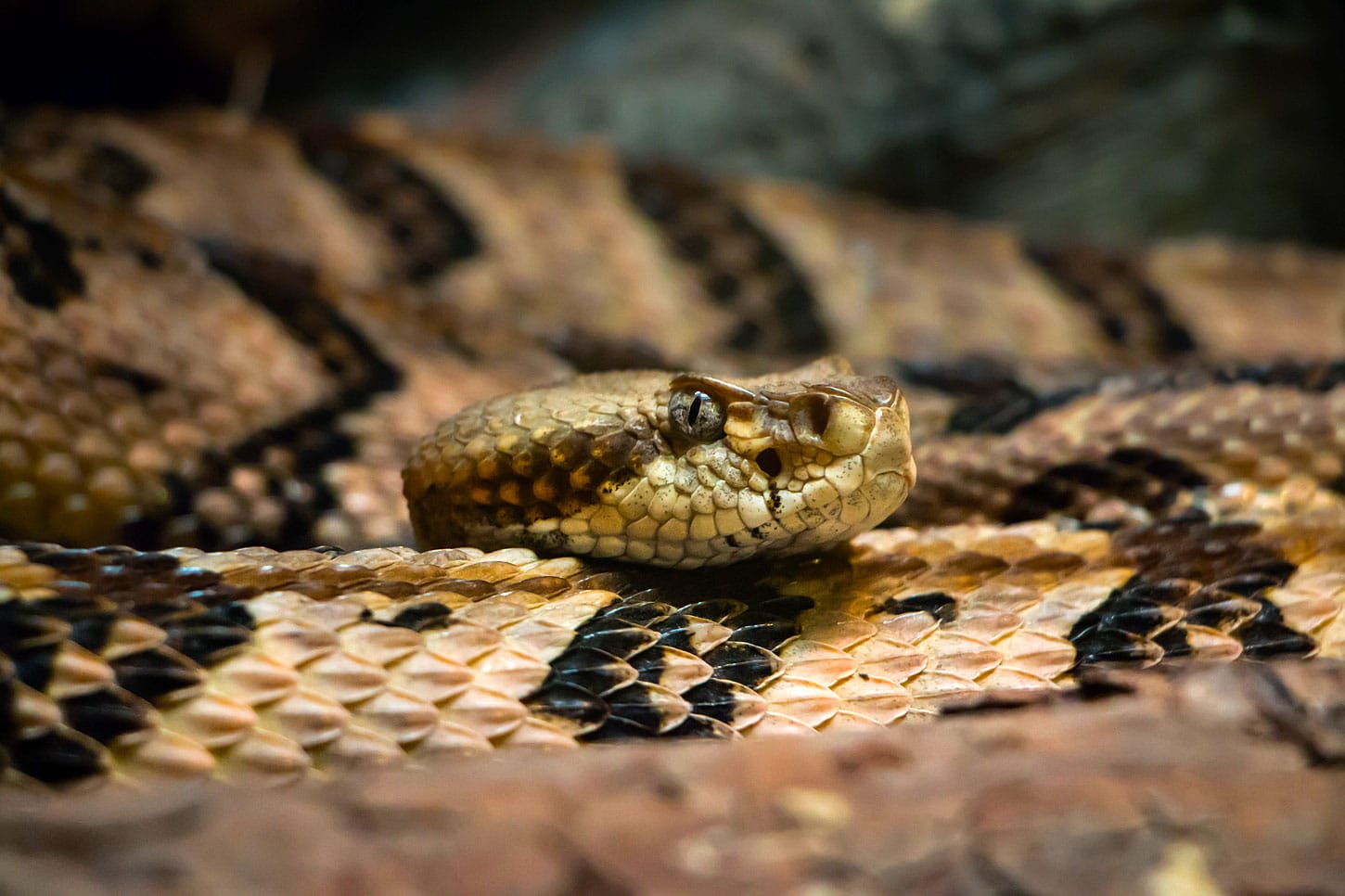
The three most venomous snakes in Pennsylvania are the Eastern Copperhead, Timber Rattlesnake, and the Eastern Massasauga.
These snakes are considered venomous, not poisonous, because when they bite, they inject venom that is intended to immobilize or kill their prey or to defend against predators.
- Eastern Copperhead: The Eastern Copperhead is perhaps the most common venomous snake in the state. It is identifiable by its copper-colored head and hourglass-shaped bands along its body. While its venom is relatively mild compared to other species, a bite can still cause significant pain, swelling, and tissue damage. Copperheads prefer habitats like rocky areas, forests, and near water sources.
- Timber Rattlesnake: Timber Rattlesnakes are large, heavy-bodied snakes known for their distinctive rattling sound, which they use as a warning to potential threats. Their venom is potent and can be dangerous if not treated promptly. These snakes are usually found in rugged terrains like forests and mountainous regions, often basking on rocks or ledges.
- Eastern Massasauga: The Eastern Massasauga is a smaller, more elusive species, often found in wetlands and grassy areas. This snake is listed as a threatened species in Pennsylvania due to habitat loss. Despite its smaller size, the Massasauga’s venom is quite toxic, making it one of the more dangerous snakes in the region.
While encounters with these snakes can be alarming, they generally avoid humans and only bite when provoked or threatened. Knowing how to identify these snakes and understanding their behavior can help reduce the risk of a dangerous encounter.
Non-venomous Snakes in Pennsylvania
Non-venomous snakes are more common in Pennsylvania and include the following:
- Rat Snakes
- Garter Snakes
- Water Snakes
- Eastern Hognose
- Ringneck Snakes
Not only are these snakes harmless, but they may also help keep problematic pests at bay, such as rodents.
Of course, if you encounter a snake in your basement, garage, or out on a hike, you may not know precisely what you are looking at.
How to Distinguish Between Venomous and Non-venomous Snakes
Clearly, the biggest difference between the venomous snake and the non-venomous snake is the fact that one can kill you with a bite and the other cannot. Pennsylvania venomous snakes have distinct characteristics that can make identifying them easier.
They have an indentation or pit on each side of their head, between the eye and nostril. Their eye pupil looks very much like a cat’s eye, with a vertical slit. They also have a single row of scales on the underside of their tail.
Keep in mind that if you can see any of these details, you may be way too close. The best course of action should you find a snake unexpectedly is to keep your distance.
Are Snakes Dangerous?
Snakes are often perceived as dangerous creatures, but the truth is that they are generally more afraid of humans than we are of them.
Aside from getting stuck in places where they don’t belong, such as in homes or gardens, people often consider snakes a nuisance primarily because of a deep-seated fear of them. This fear is largely based on misconceptions and a lack of understanding about these reptiles.
For many, even finding a shed snakeskin can cause panic, triggering an immediate sense of alarm. However, a snakeskin is just a sign that a snake has passed through the area and is not a direct threat.
It’s important to remember that most snakes you may encounter are non-venomous and pose no real danger to humans. Even the venomous species tend to avoid human contact whenever possible.
If you do encounter a snake, it’s crucial to keep in mind that it most likely wants to be left alone. Snakes are not aggressive by nature and will usually only bite if they feel threatened or cornered. By giving the snake space and not attempting to handle or provoke it, you can avoid any potential conflict.
Where Are Snakes Commonly Found
Snakes prefer areas that are dark, quiet, and have a food source close by. You can often find them in garages, rock walls, barns, woodpiles, and basements.
Snakes sometimes find their way inside through a crack and become trapped. Often, if you do find a snake somewhere in your home, chances are, they don’t want to be there either!
What Should You Do If You Encounter a Snake?
The first precaution you should take is always being aware of your surroundings. Snakes can often go unnoticed, which is part of the issue. You may not know you are near one until it’s too late. This can be especially dangerous if you run into a venomous snake.
If you encounter a snake, you should keep in mind that all snakes are protected species. They eat rats, mice, insects, and other pests and are considered crucial to the ecosystem. Plus, a few species are endangered and should be treated with extra care.
If you’ve found a snake on your property or have evidence of a snake, take steps to make your yard less habitable for them. Ensure they don’t have a steady food source or a comfortable hiding place.
If you do come across a snake, it’s best to call and have it removed from your property. Exclusion is best; snakes can be relocated somewhere safe, and your home or yard will be snake-free. Read more about how to get rid of snakes safely and ethically.
FAQs
How can I identify venomous snakes in Pennsylvania?
- Eastern Copperhead: Copper-colored head, hourglass-shaped bands on the body.
- Timber Rattlesnake: Large, with a distinctive rattling sound, usually with dark chevron-shaped bands on a lighter background.
- Eastern Massasauga: Smaller in size, with dark brown or black blotches on a gray or light brown background.
Are venomous snakes in Pennsylvania aggressive?
No, venomous snakes in Pennsylvania are not typically aggressive. They generally avoid human contact and will only bite if they feel threatened or provoked.
What should I do if I encounter a venomous snake?
The best course of action is to give the snake space and avoid any sudden movements. Do not attempt to handle or provoke the snake. Allow it to move away on its own, and if it’s in a dangerous location, consider contacting a professional wildlife service.

Get Rid of Carpenter Bees: 5 Safe and Sustainable Ways
The presence of carpenter bees is inevitable during the summer months, and most of us forget they are even there when spending time outdoors. These bees are large and chubby-looking and are not known to be particularly aggressive to humans unless they feel threatened. However, carpenter bees can cause a lot of damage to wooden structures, which can be bad news for homeowners.
If you find yourself dealing with a carpenter bee infestation this summer, here are some safe and sustainable ways to get rid of them.
Why Are Carpenter Bees a Problem
Carpenter bees can become serious nuisances to your property, as these pests like to excavate through wood to lay their eggs. Carpenter bees prefer raw and untreated wood, and over time, their tunnels can cause the wood on your property to become weak and even affect the structural integrity of your home, deck, and garden beds. Carpenter bees may also sting if they feel threatened, leading to pain and even an allergic reaction if you are stung.
Why You Shouldn’t Use Synthetic Pesticides
Synthetic pesticides are not typically recommended when it comes to treating a carpenter bee infestation. This is because carpenter bees, like all bees, are pollinators, and killing them with synthetic pesticides can do more harm than good.
When it comes to keeping these pests away, there are other safer options to explore that won’t adversely impact pollinator populations.
Understanding Carpenter Bee Behavior
While carpenter bees may look large and menacing, these bees are typically not aggressive by nature and only sting when they feel threatened. They are known for their nesting behavior, which they achieve by excavating wood and laying their eggs in the tunnels they create. Male carpenter bees choose locations where they are most likely to access female bees to mate.
Carpenter bees are some of our most beneficial pollinators and are exceptionally good at pollinating eggplants, tomatoes, and other vegetables and flowers. For this reason, it’s important to protect all bees, but that doesn’t mean our properties need to suffer.
5 Ways to Sustainably Get Rid of Carpenter Bees
When it comes to getting rid of carpenter bees, there are several ways to do so sustainably without using synthetic pesticides that harm bee populations:
1. Preventative Measures
There are many ways to prevent carpenter bees, including the use of natural deterrents, insecticide dust, and bee traps. These preventative measures are usually on the more affordable side and many can be made at home using a DIY approach, making them good options for homeowners on a budget.
2. Physical Barriers
Physical barriers, such as mesh screens, caulk, and wooden plugs, can also help keep carpenter bees from destroying your home’s wood. Even just treating wood with a varnish or coat will help deter bees from your property.
3. Organic Pesticides
Organic pesticides are another great solution for getting rid of the carpenter bees on your property. At The Pest Rangers, we use safe but powerful insecticides that help deter bees and other stinging insects.
The use of certain essential oils may also be effective in deterring these pests, as carpenter bees are known to dislike the scent of almond and citrus oils.
4. Providing Alternative Nesting Sites
Providing alternative nesting sites may be worth a try to get rid of carpenter bees. You can do this by drilling some holes into a block of wood and placing it near your home to encourage carpenter bees to use that wood for a bee hive rather than the wood on your home or deck.
5. Natural Predators
Birds are natural predators of carpenter bees, so inviting more birds to your property may effectively keep the bees at bay. You can do this by hanging up bird feeders on your property to make your home more appealing to birds.
When to Call an Exterminator
It is always a good idea to contact an exterminator at the very first sign of a pest infestation. While seeing the occasional carpenter bee is not typically cause for concern, a larger presence of bees may indicate that you need to schedule a visit from a pest control professional.
Don’t wait until the problem gets out of hand and your home has already been damaged; contact a trusted pest control expert as soon as you suspect an infestation.
FAQs
How can you differentiate carpenter bees from bumblebees?
Carpenter bees are often confused with bumblebees, but the two have a few key differences. Bumblebees have yellow markings on their abdomens, while carpenter bees do not. Carpenter bees also have smooth and shiny abdomens and measure at about ¾-1 inch in length.
Where do carpenter bees typically nest?
Carpenter bees prefer to build their nests in raw, untreated wood. They love softer woods, such as redwood, cedar, and pine.
Are carpenter bees harmful to humans?
Carpenter bees are not typically aggressive bees and will not sting unless provoked or threatened. However, their stings may cause an allergic reaction in some people, which could potentially be dangerous.

How to Identify and Eliminate Carpenter Ants
During the summer months, you may notice more ants than usual, both inside and outside of your home. While seeing the occasional one or two ants is usually not a cause for concern, it becomes a problem if you notice a large number of ants in your home that reappear after you’ve already killed them.
Furthermore, if you spot what appears to be wood shavings or holes near wooden furniture outside, you may be dealing with a special breed of ants known as carpenter ants.
While carpenter ants can be scary, they can be easy to deal with if you take the right steps. Check out our helpful guide for accurately identifying and eliminating carpenter ants once and for all.
How to Identify Carpenter Ants
Carpenter ants are large ants that can vary in color but are typically dark brown or black. They have oval-shaped, segmented bodies, six legs, and elbowed antennae, which means that their antennae are bent. Male carpenter ants have wings, and their back wings are shorter than their front wings. Queen carpenter ants are usually the largest in the colony but can vary in size from ¼ to 3/4 of an inch in length.
Carpenter ants are best known as structural species of ants that bore holes through wood to make nests.
Signs of Carpenter Ants
There are several signs of a carpenter ant infestation to be aware of, including:
- Hearing a rustling sound inside your walls
- Seeing piles of wood shavings and sawdust around the house
- Finding discarded insect wings
- Seeing ant droppings around the house
- Spotting live ants in or around your home
In many cases, these signs can be confused with termites. However, it’s important to distinguish that carpenter ant frass tends to be finer, like wood shavings, and termite droppings tend to resemble pellets.
Tips to Get Rid of Carpenter Ants
While dealing with a carpenter ant infestation can be distressing, getting rid of them is possible. Here are some of our best tips for getting rid of carpenter ants:
1. Perform an Inspection
Performing regular inspections of your home can help you catch a carpenter ant infestation before it gets out of control. To check for carpenter ants, be sure to keep an eye out for signs of damaged wood in and around your home. You may also notice things like discarded insect wings, piles of wood shavings, and hearing a rustling sound coming from inside your walls.
2. Remove Nests
Carpenter ants will often build their nests near tree stumps and woodpiles, so check these areas if you suspect you may be dealing with an infestation. If you discover a nest, you can use an insecticide or a more natural solution like diatomaceous earth to quickly destroy the nest.
3. Use Traps and Baits
Carpenter ant baits can be highly effective in getting rid of these pests. When an ant ingests the bait, they will go back to their colony and unknowingly spread the toxic substances to the rest of the ants, killing them.
4. Eliminate Standing Water
Standing water is known to attract a variety of different pests, including carpenter ants. To prevent these pests from taking over your home, get rid of any standing water, including old bird baths, overwatered plants, and even leaky pipes.
5. Seal Food
Carpenter ants are drawn to food that has not been properly sealed, so be sure to carefully seal and store all food and drinks to prevent these pests from invading your home.
6. Seal Untreated Wood
Carpenter ants prefer untreated, raw wood, so you may unknowingly invite these pests into your home if you have a lot of unsealed wood. By sealing the untreated wood in your home, carpenter ants are less likely to want to chew through it.
7. Use Diatomaceous Earth
Diatomaceous earth is a natural, powder-like substance that can be used to kill carpenter ants. When the ants come into contact with the powder, it will stick to their exoskeletons and dry them out, effectively killing them.
When to Call a Professional
Whenever you find yourself dealing with an infestation of any kind, it is important to take it seriously and reach out to a pest control professional right away. While an ant infestation may not seem as serious as other types of pest infestations, carpenter ants can be incredibly destructive to your home if you don’t take care of the infestation immediately.
A trusted pest control professional will be able to inspect your home to determine the severity of the infestation and recommend a unique plan of action to get rid of these pests while keeping you and your loved ones safe.
FAQs
How big do carpenter ants get?
Carpenter ants are the largest ants in North America and are typically five times the size of an average pavement ant or garden ant. Carpenter ants measure ¼ to ¾ inch in length depending on their role in the colony, with the queens being the biggest.
What colors are carpenter ants typically?
Carpenter ants can present in a variety of colors, including black, red, brown, and tan. However, black is the most common color for these ants.
How can you distinguish carpenter ants from other ants?
Carpenter ants can be distinguished from other types of ants mainly due to their large size. Carpenter ants also have heart-shaped heads, which sets them apart from other types of ants you may encounter.

Top 9 Ways to Keep Stink Bugs Away in Northeast PA
When the weather grows cold here in Northeastern Pennsylvania, it is time to seek refuge indoors. While dropping temperatures may mean pumpkin pie, Christmas trees, and holiday fun, it could also be a time for a nasty pest infestation.
We’re not the only creatures that seek refuge from the frigid weather; stink bugs are also desperate to find a warm place to spend the winter months. Unfortunately, that could mean your home if you aren’t prepared.
Whether you’re in the Poconos, Scranton, Hazelton, or Wilkes-Barre areas, if you want to keep your home stink bug-free for the winter, here are nine ways to stop these pests from making an appearance this year.
What Are Stink Bugs?
The brown marmorated stink bug is a small insect typically found in gardens, fields, or around homes. An invasive species native to Asia, it was mistakenly brought here in the mid-1990s.
The defining feature of these insects is the scent they release when deterring predators. While they may seem non-threatening, they can cause some pretty big problems for such little bugs.
How to Identify Stink Bugs
Stink bugs are known for their distinct appearance, most notably their shield-shaped torsos and speckled brown coloring. Stink bugs also have smooth, rounded shoulders and alternating dark and light bands on their abdomen and antennae.
On average, stink bugs are about 12-14mm long and known to be pretty good flyers. While the sound of them buzzing around your head may be worrisome, they will not sting you.
Before they hit maturity, their earlier form is known as a nymph. Unlike the brown color of the adult, the immature nymphs are yellow and red with red eyes. As they mature, the yellow tapers off to white.

How do stink bugs get into my home?
Like most insects, stink bugs enter a home through the smallest of openings—ripped or torn window screens, gaps in a window or door frame, or cracks in a wall.
Once inside, stink bugs are skilled at hiding and prefer low-traffic areas of a house. Look for them in folds of curtains or draperies, attics or crawl spaces, or basements.
The most effective way to protect your home against stink bugs is to secure any openings. Walk around your home’s exterior and inspect it closely. Seal any cracks or crevices, close all windows and doors tightly, and fix any gaps in windows or door frames.
What Attracts Stink Bugs to Your House?
There are a few main reasons stink bugs enter residential homes, with the biggest being warmth, food, and light. Stink bugs cannot survive the harsh temperatures during the winter months, making them more likely to seek the warmth of your home this time of year.
Stink bugs are also in search of food, particularly fruits and vegetables. Keeping your kitchen clean and properly disposing of garbage can deter these pests from entering your home in search of food. Lastly, stink bugs are drawn to light sources, which is why you may notice these pests swarming around lamps and outdoor lighting.
9 Ways to Get Rid of Stink Bugs
1. Essential Oils
An easy and natural way to repel stink bugs and other winter pests is by using essential oils like mint. Mint is a pleasant herb that emits an aroma that stink bugs can’t stand. It acts as a repellent, not a killer.
Lemongrass oil is another essential oil you can use to deter stink bugs from your home. These are safe and non-poisonous deterrents that can leave your home smelling fresh as well. You can spray a mixture around window frames, doors, or any possible entry points.
2. Diatomaceous Earth
Diatomaceous earth is a natural sedimentary rock that will keep stink bugs away. This compound contains silica, alumina, and iron oxide. This rock breaks down the protective waxy layer on the exoskeleton and dehydrates it, making diatomaceous earth effective in getting rid of stink bugs.
If you choose to use this method, be sure it isn’t heat-treated. You can spread this around any point of entry, and it will kill off invaders.
3. Garlic Spray
Another potent but non-deadly repellent is garlic. While humans may love this delightful and flavorful bulb, stink bugs are less enthusiastic about it. This natural method keeps stink bugs away with an odor they can’t stand. Spread garlic cloves on window panes or create a spray to deter any would-be pests from entering or staying in your home.
4. Block All Entryways
The best way to keep stink bugs away is to stop them from entering in the first place. Preventing stink bugs requires a thorough inspection of your property, so be sure to check your windows and doors for any cracks or open spaces.
Additionally, make sure all screens are patched or replaced. Cover vents and any other openings with a screen as well. Another step you can take to be sure these pests stay away is putting up repellent. You can use dryer sheets on screens, spray garlic or mint, or spread the diatomaceous earth. Build up a barrier to keep stink bugs out!
5. Vacuum Them Up
If stink bugs manage to sneak their way inside, an easy way to take care of them is by vacuuming them up. You don’t want to squish them; otherwise, you will get to experience why stink bugs are called stink bugs.
You can trap these invaders in a sealed bag or container by scooping them up in a vacuum. After vacuuming, empty them into a trash bag and seal it tightly. From there, you can discard the bag outside or put the bugs in soapy water, ultimately killing them.
6. Keep it Dry
Stink bugs are attracted to warm places with high moisture. When they are looking for a place to hide out for the winter, they look for three main essentials: warmth, food, and water.
Dripping pipes, wet towels, and clogged drains are irresistible draws for these pesky bugs and other pests. If these areas are left unchecked, you may end up with more than stink bugs in your home. Be sure to fix any leaky plumbing and get rid of excess moisture to prevent stink bugs from making themselves at home in your home.
7. Turn Off the Light
Like many insects, stink bugs are attracted to light sources. Whether it’s a porch light, a living room lamp, or the bulb in your garage, bugs are drawn to the glow. If you keep lights on in the evening, inside or out, you may be giving them a beacon.
Additionally, stink bugs may become trapped inside these light fixtures, and their dead bodies can attract other pests. To avoid this issue, keep lights off or purchase motion-activated ones.
8. Cut Off Food Access
During the winter, stink bugs are looking for a warm, wet place to wait out the cold weather. If they find a plentiful pantry, they may never leave. Keep food sources to a minimum by sealing trash up tight. Also, regularly clean all counters and floors, and be sure to eliminate any food spills or crumbs. Without a food source, stink bugs may look elsewhere.
9. Clean Up Outside
Inside isn’t the only place to look to fortify against bugs. Sometimes, these pests are drawn to your home because of your yard. Stink bugs and other pests are drawn to overgrown areas.
To avoid any infestations, keep your yard trimmed and clear. Store firewood away from the home and off the ground. All bushes and trees should be paired down. Additionally, clear out overgrowth, leaves, and other trimmings.
If the pests aren’t drawn close, they will not find their way inside your home.
Should I Squish A Stink Bug?
Squishing them is arguably the worst way to handle a stink bug. Whether threatened or not, stepping on or swatting a stink bug is likely to release their stinky spray, resulting in a pungent odor that’ll fill the area where they were killed.
For this reason, it’s always best to use less aggressive tactics when eliminating stink bugs.
What Happens if a Stink Bug Releases Its Scent?
While seemingly innocuous, killing a stink bug can have lingering effects. Not only does the chemical produced by stink bugs smell, but it also releases pheromones that attract other stink bugs. With numerous stink bugs roaming through your home, it’s only a matter of time until you’re stuck with a smelly infestation!
What Season are Stink Bugs Most Active?
Stink bugs are most active between the months of March and September, but this can vary depending on how warm or cold the winter months are during a particular year. For example, stink bugs may continue to be active during a warm winter instead of going into diapause, the period of life when they do not feed and are inactive.
When to Call a Professional
While seeing the odd stink bug in your house may not seem like a big deal, it is always wise to contact a pest control professional to assess any possible infestations. If your bug problem is too big to handle, don’t hesitate to contact our pest control experts. With a few simple steps, you can prevent stink bugs from entering your home. Make the preparations and keep your home bug-free!
FAQs
Can stink bugs harm humans or pets?
Stink bugs are not harmful to humans or pets, as their mouths do not allow stink bugs to bite or pierce through the skin. The foul odor they produce when squished may cause mild irritation for people who are sensitive to strong smells, but this odor is typically harmless.
What are the health risks of stink bug infestations?
There are no significant health risks of stink bug infestations, as these pests do not bite and do not carry diseases. As mentioned earlier, the odor produced by these insects may be difficult to tolerate for people who are particularly sensitive to smells. Still, other than that, there are no known health risks of having stink bugs in your home.
How can I get rid of stink bugs in my garden?
Stink bugs can become a nuisance to gardeners, as these pests are known to enjoy feasting on the stems and leaves of plants. To get rid of stink bugs in the garden, a simple combination of hot water, dish soap, and white vinegar sprayed onto your plants can effectively stop stink bugs from invading your outdoor space.
How did stink bugs get their name?
“Stink bug” is not the most flattering identifier, but it’s certainly appropriate. These insects have glands in their abdomens that produce a chemical with an offensive smell.
What gives stink bugs their smell?
The chemical produced in their glands when these insects feel threatened is what gives stink bugs their smell. Resist the urge to step on or crush a stink bug, as the odor will linger on your shoes or whatever you use to get rid of them.
When a stink bug finds a winter home, they give off a different scent that is undetectable to humans. This scent is intended to entice fellow stink bugs to come and join them in their warm, cozy new habitat.
Why can only some people smell stink bugs?
Despite a stink bug’s offensive smell, not everyone notices it. Just like humans’ pheromones or natural scents, the chemicals that make up the stink bug’s odor can vary from one insect to another. Likewise, the intensity of the smell will vary from one person’s nose to another.
What purpose does a stink bug serve?
Less-than-complimentary nickname aside, some stink bug species are helpful.
After feeding, the brown marmorated stink bug releases carbohydrates that are beneficial to plant pollination and natural pest control.
Some stink bug species are carnivorous and will eat insects like beetles, caterpillars, or aphids—pests that typically feed on plants. The insect-hungry stink bugs help keep the pest population down and growers’ crops prosperous.
Some stink bug varieties are believed to have medicinal properties.
An old wives’ tale says having a stink bug in your house is good luck. If you are superstitious, think twice about getting rid of any you find in your home!

What Are Those Ants With Wings? What You Should Know
During the summer months, you may notice more ants than usual, both inside and outside of your home. While there are many different types of ants, flying ants are some of the most commonly seen in Northeastern Pennsylvania this time of year.
Flying ants are commonly mistaken for termites, but there are several traits that can help you distinguish between the two. Here is everything you need to know about flying ants and how you can keep them away from your home this summer.
What Are Flying Ants?
Flying ants are sexually mature ants with wings, commonly called alates, swarmers, or reproductives. Flying ants are spawned by queen ants and worker ants feed them. When the colony grows larger and is ready to expand, the flying ants leave it to establish their own colonies.
Distinguishing Between Flying Ants and Termites
When it comes to telling the difference between flying ants and termites, it can be difficult to distinguish between the two, as they share many similarities. While both flying ants and termites have wings, a termite’s wings are equal in length and a flying ant’s wings are larger in the front and smaller in the back. Flying ants also have more narrow waists, while termites have more broad waists. As for their antennae, flying ants have bent antennae, while termites have straight antennae.
Finally, most flying ants will not damage your home via your wooden furniture or framing members. For this reason, it’s important to understand the signs of a termite infestation so that you can act promptly.
Do Carpenter Ants Fly?
Yes, some carpenter ants can fly. These winged ants, known as swarmers, possess wings that allow them to travel in order to find a mate. Once the male swarmers fertilize the female swarmers, the males will die and the females will shed their wings to land and form new colonies. For this reason, you should act quickly if you spot a flying carpenter ant near your home.
How to Prevent Flying Ants from Invading Your Yard
Like with any household pest, there are several ways to prevent flying ants from invading your yard and home. Some of the measures you should take include:
- Regularly cut your grass and trim hedges and foliage
- Remove dead tree branches and fallen leaves from your yard
- Keep firewood a safe distance from your home
- Keep food properly stored in sealed containers
- Remove trash from your home regularly
- Seal cracks and crevices in your home using a caulk or sealant
- Create a DIY ant deterrent using peppermint essential oil
When to Call an Exterminator About Flying Ants
While many homeowners will disregard flying ants as nothing more than a minor nuisance, contacting a pest control professional is still a good idea if you spot these ants around your home.
An ant infestation can quickly become out of control, and a larger infestation can even result in damage to your home if the ants begin to burrow into your wood. A trusted exterminator will be able to come out and inspect your home for signs of a flying ant infestation and come up with a plan of action to get rid of these pests.
If you suspect you may be dealing with a flying ant infestation in Southern or Northeast Pennsylvania, contact The Pest Rangers immediately to eliminate the problem.
FAQs
What time of year are flying ants most common?
Flying ants are most commonly seen during warm summer, particularly in July and August. However, these ants can also appear during spring and fall, depending on where you live.
Do flying ants pose any health risks?
While nobody wants to see flying ants in their home or crawling on their arms and legs, these pests are typically harmless to humans and are not known to pose any health risks. Some flying ants may bite or sting if they feel threatened, but these bites are typically not very painful. Still, you must take the necessary measures to keep these ants away from your food and out of your home.
Termite Pest Control | Top 15 Things You Should Know
Pests can be very troublesome when they invade your home, but none is more destructive than the termite.
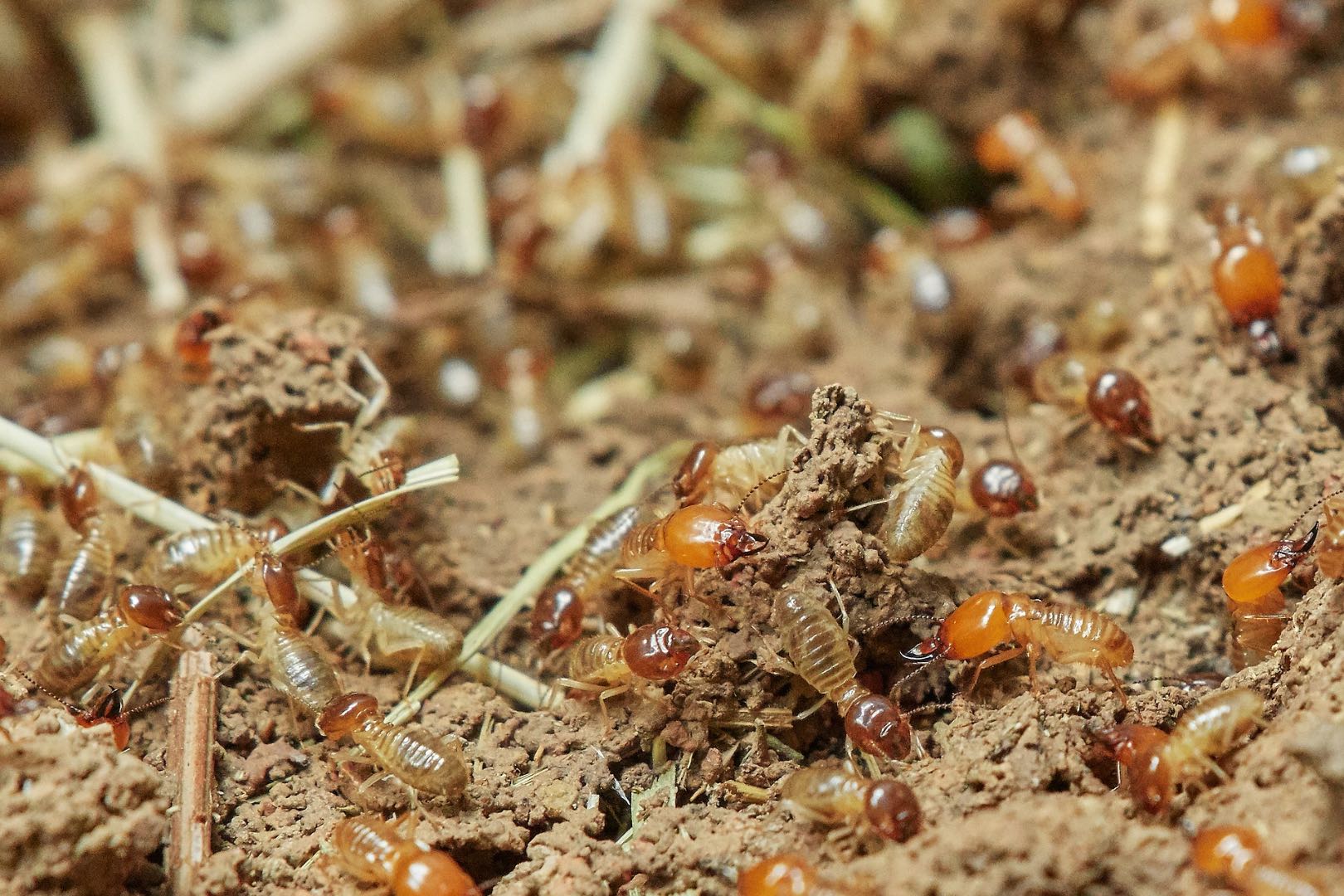
Termites come in many types and are known to cause crippling amounts of damage as they literally eat you out of your Northeastern or Southeastern PW house.
While these invaders can cause catastrophic amounts of damage, they can be surprisingly difficult to spot. Therefore, understanding the signs of a termite infestation and their behavior will help you avoid a destructive termite infestation and save you money.
To learn more about termites, here are fifteen important facts about termites in Northeast PA and the US.
15 Important Facts About Termites
1. There are three main types of termites living in the United States.
The US is populated by three main termite types: Subterranean, drywood, and dampwood termites. The most common termites in Northeast PA and the most destructive are the subterranean termites. These termites tend to dwell beneath the soil of your home and then make their way up when the right conditions are present (i.e., there is wet softwood available).
Drywood termites are less common in the area and tend to come from above in wooden structures. Dampwood termites are even less common and only tend to feed on wet or decaying wood that has already lost much of its integrity.
2. Blistering or hollow wood are two main signs of termite infestation.
Termite damage can either be visible or audible. Termites can cause wood surfaces to blister, or they can leave wood hollow. The physical damage can be very apparent and may look very similar to water damage.
Additionally, termite-infested wood will have a hollow sound. Termites can damage any wooden surface in your home from cabinets and furniture to ceilings and floors. Also, pay attention to your outer structures like window panes, siding, and porches.
3. Evidence of swarms can indicate a termite problem.
A clear indicator of a termite problem is evidence of swarms. If you discover piles of discarded wings, it’s possible you may have an issue. Additional evidence includes finding black or brown dead termites. These swarms usually occur after rain or when the weather is cloudy.
4. Mud Tubes can indicate the presence of Termites.
Termites need to maintain moisture when they venture out to feed. They often create mud tubes on outer or inner walls and they are about the width of a drinking straw. If you spot these muddy structures, follow them; they connect termites to their food source.
5. Drywood termites leave droppings.
Drywood termites normally nest in hard, dry wood. When they consume wood, they leave droppings behind in mounds. These fecal pellets often resemble sawdust or coffee grounds. Additionally, termite-infested areas tend to have a mildew or mold scent.
6. Termites are present in all states except Alaska.
Termites are mostly hot-weather pests that cannot stand cold temperatures. However, this doesn’t mean that your home is safe during the winter, as these pests venture indoors during the winter months.
7. Termites constantly feed.
Termites must constantly feed to keep their colony prospering. They eat 24/7, often resulting in billions of dollars of damage every year. It’s imperative to catch a termite problem immediately to avoid costly repairs.
8. Termites are social insects.
Termites live in well-organized colonies with a queen, workers, and warriors. These pests can consume more than 100 lbs of wood in one year. Therefore, if you spot one of these insects, odds are there are many more you haven’t seen.
9. Termites can fit in cracks as thin as 1/32 of an inch.
Termites do not need much space to slip into your home. They can fit through slits no thicker than a piece of paper. If you do not take care of your foundation or home’s exterior, termites can sneak in very easily.
10. Subterranean Termites are the most common in the US.
Subterranean termites are known to cause the most damage of all the termite species. They nest in the soil below homes and travel up. They can often find their way in through cracks, vents, and other open areas.
11. Formosan Termites are coastal termites.
Another type of subterranean termite, these creatures come up through the ground and can cause more damage. They are known for traveling through mud tubes and are attracted to places with high moisture.

12. Drywood termites do not nest in soil.
These pests nest in hard, clean wood. Any type of dry lumber they have access to makes a good home. They can infest any wooden structure inside or outside of your house.
13. Termites will keep coming back if you do not protect against them.
Treatment alone will not keep termites away permanently. While treatments could be effective for a short time, the only sure way to keep these bugs out is by properly fortifying your home. Block all entry points, inspect your house regularly, and you will avoid any future infestations. Additionally, we offer Sentricon termite systems designed to thwart any termites that do make their way onto your property.
14. Termites cause up to $5 billion in damage each year.
These very small, hard-to-spot pests can have a severe effect on your home. Since it’s difficult to detect a termite problem, they can end up causing much more damage. Each year, termites can cause up to $5 billion in damage; often, insurance won’t foot the bill.
15. Sometimes, The Only Way To Find A Termite Problem Is By Scheduling An Inspection.
While swarms, hollow wood, and mud tubes are good indicators of an infestation, termites tend to remain hidden until the problem gets out of hand. Professional pest control specialists are knowledgeable about termite habits, living spaces, life cycles, and building methods. If you suspect you may have termites, the best way to be sure is to schedule an appointment.
While you should definitely keep an eye out for any signs of termite damage in and around your home, a formal inspection by a pest control professional is always best. An experienced pest control expert will have the tools and knowledge to be able to properly identify the severity of an infestation, as well as come up with a unique plan of action to get rid of the termites for good.
In turn, regular termite inspections can:
- Save you money.
- Keep your home safe.
- Keep your wooden furniture safe.
Signs of Termite Damage
There are several undeniable signs of termite damage, but they can be easily overlooked if you don’t know what to look for. While we’ve discussed some already, some telltale signs of a termite infestation in the home include:
- Hollow-sounding wood when tapped
- Buckling or sagging floors
- Mud tubes or tunnels on walls or foundation
- Discarded wings near windows or light sources
- Small holes in wood surfaces
- Cracked or bubbling paint on wood surfaces
- Pin-sized holes in drywall
- Accumulation of sawdust-like frass
- Uneven or bubbling paint on walls
- Difficult to open or close windows or doors
- Termite droppings (small pellets)
- Sagging or weakened wooden structures
- Blistered or distorted areas on wooden surfaces
- Hollowed-out wooden beams or furniture
In each termite colony, insects known as “swarmers” leave the colony to mate and produce their own colonies. These swarmers can be identified by their six legs and straight antennae, as well as their wings. Swarmers often appear in various colors, ranging from black and dark brown to beige or tan and even red.
Identifying swarmers early is key in stopping termite colonies, as termites outside your house can spread colonies across your property.
However, these signs may not be as obvious as you think and can often be attributed to water damage, foundation damage, or other natural events. So, when it comes time to inspect for termites, you need to have the right tools and knowledge at your disposal to pinpoint the source of an infestation.
DIY Termite Prevention Tips
There is no greater form of prevention than inspection, but there are several DIY approaches you can take to prevent termites, including:
- Install termite barriers
- Prevent wood from contacting soil
- Seal cracks
- Keep homes and yards clean
- Fix leaks
With that said, don’t wait until it’s too late. Now that you know the signs of behavior of termites, you can act quickly. Contact The Pest Rangers for an inspection to take control of your termite problem.
FAQs
Why are termites a problem?
Termites can cause extensive damage to homes and buildings by feeding on wooden structures, leading to costly repairs and structural issues if left untreated.
How long do termites live?
The lifespan of a termite depends on its role within the colony. Worker termites live approximately 1 to 2 years, while queens can live for decades under optimal conditions.
Can termites be controlled naturally?
Some natural methods to control termites include using nematodes (parasitic worms that feed on termites), applying orange oil, or using boric acid. However, effectiveness can vary, and professional treatment is often recommended for severe infestations.

What Are Clover Mites? Are They Harmful?
When it comes to household pests, clover mites are not usually the first to come to mind. Many people consider other types of pests like termites, rodents, and cockroaches to be more destructive and difficult to get rid of, which is true, but clover mites can also become a headache for many homeowners if there is a significant presence in or around your home.
One of the biggest issues with clover mites is that these pests are so small that they can easily go undetected until you start to notice damage to your plants and foliage outside of your home. If you suspect you may have clover mites on your property, here is everything you need to know about these tiny pests.
What Are Clover Mites?
Clover mites are a small species of mite that are part of the arachnid family. Clover mites do not feed on blood, but rather plants, which is where they get their main nutrients from. Clover mites get their name from the way they suck plant juices from clover, grass, and other plants frequently seen on lawns.
How to Identify Clover Mites?
Clover mites are very small, typically between 0.03 and 0.033 inches in length, making them difficult to see unless you’re looking for them. They are oval-shaped with eight legs and are typically reddish brown or dark green/brown in color. Clover mites have scales on their abdomens and a distinct dark spot on their backs that leaves a red stain when crushed.
Where Are Clover Mites Commonly Found?
Clover mites are typically found outside of homes with lawns, as they feed on grass, clover, and other plants grown on lawns. When it comes time to molt and lay eggs, clover mites prefer to hide in various cracks and crevices, commonly underneath the loose bark on trees, under the siding of homes, and around window frames. While clover mites are usually found outdoors, they may make their way into your home if the weather outside becomes too hot or too cold, and will enter through any cracks or crevices in your walls or floors.
Are Clover Mites Harmful?
While clover mites are not harmful or dangerous to humans or pets, they can cause a lot of damage to your lawn and garden. Because they like to eat grass, clover, and other plants, these mites can eat away at your lawn and foliage if not treated promptly. The more clover mites that are present in your yard, the more significant the damage will be. These pests can also leave behind red stains when crushed, which can look unsightly on your home, shed, or garden beds.
How to Get Rid of Clover Mites
While dealing with clover mites can be difficult, there are several things you can do to get rid of them:
- Vacuum them up (if you find them inside your home)
- Create a barrier around your home using diatomaceous earth or baking soda
- Use pesticides to target and kill clover mites
- Create your own DIY clover mite traps and deterrents
How to Prevent Clover Mites
Preventing clover mites isn’t as difficult as it may seem and it’s often the best solution for long-term relief. Here are a few things you can do to protect your home and garden from these pests:
- Regularly trim tree branches and shrubs to keep them away from your home
- Keep plants at a distance of at least three feet from your home
- Remove fallen leaves from your yard
- Invest in ongoing pest control from a trusted exterminator
While clover mites are not as destructive as other household pests, such as cockroaches or rodents, they can still become a nuisance if left untreated. If you suspect you are dealing with a clover mite infestation in your home or on your lawn, contact us today to talk about your pest control options!
FAQs
Can I use pesticides to eliminate clover mites?
Pesticides are generally not recommended for controlling clover mites indoors because they are ineffective and can pose health risks. Instead, focus on preventive measures and physical removal.
Do clover mites damage plants?
Clover mites can feed on plant sap, but they rarely cause significant damage to plants unless present in very large numbers. They are more of a concern for aesthetic reasons than for plant health.
When are clover mites most active?
Clover mites are most active in the spring and fall when temperatures are mild. They tend to become more noticeable when they migrate indoors seeking shelter from extreme heat or cold.

What Wood-Eating Insect Am I Dealing With?
When it comes to household pests, wood-eating insects are some of the most dreadful. Not only is dealing with any kind of pest an unpleasant experience, but wood-eating pests, in particular, are notorious for being destructive and can cost homeowners a ton of money in repairs and extermination fees.
However, before you rush to grab the termite spray, you must first identify what type of pest you are dealing with. With over four types of common wood-destroying insects in Pennsylvania, understanding what you’re up against will help you get rid of them faster.
If you suspect you’re dealing with a wood-eating insect infestation in your home but aren’t quite sure which specific insect it is, here is a helpful guide!
The Danger of Wood-Eating Insects
Wood-eating insects are so dangerous due to their damage to homes and wood. Each year, these insects cause billions of dollars in damage to homes and buildings across the United States. Not only are these repairs costly and dangerous, but homeowners must also invest in pest control and maintenance to ensure these pests don’t return.
In extreme cases, a termite infestation or other wood-destroying insect invasion could render your home unsafe to dwell in.
Previous wood insect damage could also impact your resale value and increase insurance rates.
For the sake of your home and your wallet, it’s important to eliminate wood-destroying insects as soon as you spot them.
4 Common Wood-Eating Insects in Pennsylvania
Before you can eliminate wood-destroying insects from your home, you need to know which ones you are up against. Here are four common wood-destroying insects in Pennsylvania.
1. Termites
When it comes to wood-eating insects, the first ones that come to mind for many homeowners are termites. There are two main types of termites in NEPA: subterranean and drywood. Subterranean termites are more common in the Northeast and live primarily underground. Drywood termites are less common and live above ground. However, both types of termites are incredibly destructive and can cause a huge headache for homeowners who run into them.
In particular, subterranean termites are known to damage wood inside homes and are considered more destructive. You must act quickly if you spot the early signs of a subterranean termite infestation.
Signs You Have Termites
There are several signs to look out for when trying to determine if you are dealing with a termite infestation. These include:
- Mud tubes
- Discarded insect wings
- Frass
- Termite swarmers
- Wood damage
- Cracked or bubbling paint
Our home protection plans feature Sentricon systems to prevent and eliminate any termites that venture onto your property.
2. Carpenter Ants
While ants are not typically the first insect that comes to mind when you think about household pests, carpenter ants are among some of the most destructive. Carpenter ants are large black ants that excavate wood to create tunnels and create their nests inside. If unchecked, they can be nearly as destructive to your home as termites.
Signs You Have Carpenter Ants
The signs of a carpenter ant infestation include:
- Seeing live ants
- Sawdust piles
- Frass
- Hollow-sounding wood
- Rustling noises
- Discarded insect wings
You can get rid of carpenter ants using special ant baits and traps or by sprinkling diatomaceous earth on places where they dwell.
3. Wood-Boring Beetles
Wood-boring beetles are another type of wood-eating insect that can cause a lot of structural damage to a home. There are many different types of wood-boring beetles, including deathwatch beetles, powderpost beetles, and ambrosia beetles.
Signs You Have Wood-Boring Beetles
When it comes to determining if you have wood-boring beetles on your property, some signs to look for include:
- Holes and tunnels in wood
- Frass
- Seeing live beetles
- Unexplained stains on wood
- Clicking sounds
Special borate-based insecticides may need to be applied to eliminate these pests.
4. Carpenter Bees
While carpenter bees are not known to be particularly aggressive, they can cause a lot of structural damage to a home if not treated promptly. Carpenter bees can be identified by their large, black bodies and shiny appearance.
Signs You Have Carpenter Bees
Some telltale signs of a carpenter bee infestation include:
- Holes and tunnels in wood
- Buzzing sounds from within walls
- Stains on wood
- Seeing live carpenter bees
Many organic sprays may be effective against carpenter bees. If you are worried about harming other insects, then talk to a pest control specialist.
Tips to Eliminate Wood-Destroying Insects
Getting rid of wood-destroying insects can be challenging, but it is not impossible with the help of an experienced pest control specialist. If you suspect you may be dealing with a wood-eating insect infestation, it is imperative that you contact an exterminator immediately.
In addition to seeking professional help, there are a few things you can do to prevent these insects from returning to your home:
- Seal any cracks or crevices in your home
- Use treated wood when adding onto your home
- Reduce excess moisture
- Perform regular inspections and know the signs to look for
When to Call an Exterminator
You should always call an exterminator at the first sign of a pest infestation of any kind. Even if you suspect you may be dealing with some kind of infestation, it is better to be safe than sorry. Contacting a pest control professional immediately will ensure that the problem is dealt with promptly so you can return to enjoying your peace of mind in your own home.
FAQs
How do wood-eating insects damage structures over time?
Many ways wood-eating insects can damage your home over time, with the most common being eating through the wood in your home. These insects can slowly eat away things like decks, porches, and other structures, and you may not even notice the damage that has been done until it’s too late.
Are there specific regions or climates where wood-eating insects are more prevalent?
While it is possible to deal with wood-eating insects in most parts of the country, there are certain regions and climates where specific insects tend to be more active. For example, termites tend to prefer warmer clients, whereas wood-boring beetles usually prefer to stick to damp or coastal areas.