

Best Lawn Care Maintenance to Keep Pests Away
Nice weather is here, and it’s time to start caring for your lawn again. Whether you’re a fan of backyard barbeques or just have a green thumb, lawn care is crucial if you want to enjoy some time outdoors.
However, that’s not the only reason to stay on your lawn care game. Believe it or not, lawn care maintenance is important for keeping pests off your property and out of your home.
In Northeast Pennsylvania, there are quite a few unwanted creatures that love a nice overgrown lawn. If your goal is to keep your yard tidy and stop any unwanted infestations, here are seven lawn care maintenance tips to keep pests away.

1. Check Out Your Lawn
Before you give your lawn the proper TLC it deserves, you have to know what type of ground is surrounding your home. Get to know the soil type, the grass and growth, and all the areas that may need attention.
Are there sections with a lot of overgrowths? Overgrown vegetation and grass a huge draw for insects like ticks and gnats. Moss is another growth to keep an eye on; it’s a sign of moisture, which could mean still water and a breeding ground for mosquitoes.
Do you store wood on your property? Wood is a wonderful hiding place for snakes, rodents, and spiders, among other pests. Finally, gardens, though beautiful, can have quite a few insects that you may not want in your home. Make note of all these areas, and you can work your way through each spot as needed.
2. Keep Your Grass Cut
Ah yes; the weekly to bi-weekly task of cutting grass can be a hassle but keeping up with the habit can prove more beneficial than you think. Overgrowing grass can attract plenty of insects, some more dangerous than others. Ticks, for instance, love to use the tall grass as a boost to find hosts. These parasites don’t fly or jump, so they must rely on other methods to find a blood meal.
Additionally, the more you allow your grass to grow, the harder it can get to cut. The more unwieldy it gets, the weaker and less healthy the grass becomes. This makes it a hotbed for pests. So, it’s recommended to keep your yard trimmed, cutting down the verge requires sharp mower blades. Also, be sure to remove any refuse left behind.
3. Mind the Weeds.
Much like grass overgrowth, weeds can become troublesome if left to grow unchecked. High brush and grass are a draw for all manner of pests from mice to spider mites.
They can also suck up any nutrients meant for other plants in your garden. Also, they can do a number on your allergies. If you want to avoid any pest entanglements, take care of any weeks that may be infesting your lawn, growing in the cracks in the pavement, or sprouting upright by your house.
4. Don’t Overwater.
Moisture brings all the bugs to the yard, especially ones you want to keep out. Areas with high moisture serve as a breeding ground for annoying insects like black gnats and mosquitoes. Unfortunately, these insects can do more than just buzz around your ears, as mosquitoes carry nasty diseases like West Nile Virus and Zika Virus.
To keep the moisture low, make sure you don’t overwater your lawn or garden. Make sure your sprinklers don’t go off too often and be mindful of rain.
5. Trimming the Verge.
Like weeds and grass, you want to be careful of your garden and any overgrowth. When bushes become too unwieldy, or vines start to take over, they often become hiding places for all manner of pests. Be sure to keep plants contained, trimmed, and away from your home. If you have bushes and trees, be mindful of their growth.
Vines are particularly dangerous, especially if they are growing on the side of your home. Vines can get into cracks, stick to stone, and overwhelm siding. Considering that most pests only need a crack to slip into your home, this can create unseen openings all over. Plus, overgrown is always a draw for insects.
Still, if done properly, vines can add a certain aesthetic to your home; but you must be willing to care for them, and make sure you live in a dry environment. If you don’t, the vines can easily take over not only the side of your house but the lawn and garden as well.
6. Keep Things Clear
If there is one thing that can help keep pests away, it’s taking away any possible hiding spots. Unfortunately, nature is constantly changing leaving our yards filled with overgrowth, leaves, yard trimmings, and moss. If you want to keep pests out of your yard, make sure you keep things clear.
Rake up any fallen leaves, remove excess yard clippings, and discourage any animals or insects from moving in.

7. Rinse and Repeat
Taking care of your lawn is not a one-and-done thing. Grass, flowers, bushes, and plants are all in a state of constant growth. That means you have to stay on top of it. To keep your yard in tip-top shape and pest-free, you have to put in the maintenance. The cleaner your yarder, the better chance you have.
Concluding Thoughts
Unfortunately, keeping a clean lawn doesn’t always mean it will be pest-free; however, making sure that your lawn is cared for is a good start. Putting in the work can help discourage pests from making a home out of your backyard. Still, if you should experience a pest issue, you can always reach out to a pest control expert to help. Warm weather is here; why not enjoy it with a nice clean, pest-free lawn?


Did You Ever Wonder Why We Need Bugs?
They’re tiny, creepy, and crawly — oh yes, and they are everywhere here in Northeastern Pennsylvania. Wherever you are, go, or plan on going, you can bet there’ll be some kind of bug close by. Spiders, mosquitoes, beetles, and more make up this diverse, if sometimes creepy, world of bugs.
However, have you ever wondered exactly why we need bugs? Whether they are so tiny you can barely see them or the size of your hand, they come in so many shapes and sizes.
And believe it or not, bugs play a pretty big role in our ecosystem. Without them, the world would certainly be a different place. Here are five reasons why we need bugs for our way of life.

1. Circle of Life
Our world is dependent on the life cycle; things are born, they live, and they die. Imagine, however, if nothing broke down after passing away. Bugs are an important part of the circle of life mainly because they break things down. Insects are responsible for recycling plant material, as well as taking care of dead plants, animals, and other organic materials.
Quite simply, things need to be broken down; otherwise, we’d be surrounded by piles of dead matter. While we don’t give this process a second thought, it is a very necessary process. Thankfully, we have insects around to take care of it.
Additionally, while we may want to keep insects out of our gardens and away from our crops, without them, we’d be overrun by plant growth. Bugs take care of plants other than our price petunias and apple trees. They eat seeds in meadows and feast on weeds.
2. Pest Control
While you might need to refer to a pest control expert to take care of any problems within your home or on your property, bugs can do a fairly good job themselves. Not only do insects handle dead matter, but they can take care of living pests too. Predator bugs can help protect plants and animals from other annoying insects.
Spiders are some of the most efficient killers, and often take care of dangerous pests like mosquitoes, flies, and cockroaches. Ladybugs are especially good for gardens, as they snack on the aphids that tend to kill plants. Many of these predator bugs eat some of the worst offenders, like ticks, gnats, and fleas. If you are looking for pest control experts that won’t cost a dime, look no further than other insects.
3. Pollinating, pollinating, pollinating!
Do you like fruit, nuts, coffee, chocolate, and all that great stuff? Thank a bug that likes to pollinate. Without pollinator bugs, we would be in a heap of trouble. Not only do insects help spread the joy of delightful plants and flowers, but they are responsible for the growth of many of our crops year to year.
Honeybees are especially important for pollinating, accounting for about 80 percent of all the pollination in the United States alone. Of course, honeybees also provide us with wax and honey that we use just about every day in cooking or cosmetics. In fact, bees and butterflies make up most pollinating insects, though other insects can do the job as well.
4. Good Eatin’ for Some
The circle of life is a crazy loop, and just as insects help by breaking down dead matter, they also serve another purpose in the ecosystem: food. Insects are among one of the largest food providers for plenty of animals. Bugs are abundant, and they provide a good source of protein that keeps other animals alive.
Birds, mammals, lizards, and even humans can ingest these little creatures, though most species must be aware of which insects are edible or not. Opossum, frogs, bats, and even other insects depend on insects for most of their intake. Without bugs, many species would be forced to go without and eventually die off.
Insects aren’t just a good snack for animals; some, like locusts, have been a staple in human diets in several parts of the world. These bugs, including termites, caterpillars, and larvae, are high in protein and fat. Of course, with any food, they have to be prepared properly.
5. Medicinally Beneficial Bugs
Bugs fulfill plenty of roles in the ecosystem, but one crucial area that continues to grow is the medical field. While it may be unpleasant to talk about, infections can be a big issue and proper cleaning can be the difference between life and death. In the past, maggots have been used to treat wounds and stop the spread of gangrene.
In fact, they can clean the wound and prevent further infection. While not common practice today, maggots are still observed for their healing benefits.
In addition to destroying dead tissue, some insects, like bees, have powerful venom secretions that can be used in medicines and, of course, anti-venoms. Also, honey has been used as a natural cure for colds, colds, and other issues. This is just the surface of what insects may be able to do for us medically.
Concluding Thoughts
Whether they are pollinating some crucial crops or breaking down dead matter, bugs are an important part of our lives. No matter how big or small, each insect has a purpose. While it may be easy to forget what roles these tiny creatures fulfill, the world is a much better place with them around.

2021 - The Return of the 17 Year Cicada in Pennsylvania
Tradition is a very big part of the culture in Northeastern Pennsylvania. We have yearly festivals, our celebratory parades, and as the weather warms up, the residents hit the streets for bizarres and block parties galore.
However, rather than a yearly occurrence, there’s a phenomenon that occurs once every 17-years and it can be just as outrageous. Yes, 2021 marks the return of the cicadas. The East Coast is about to get a lot louder as these insects emerge and make their long-awaited debut. But what are these creatures, and when exactly will they appear?
 A 17-Year-Old Tradition: The Year of the Cicada
The Brood X cicada last appeared back in 2004, and after 17 long years, they are ready to make a return. These cicadas crawl up, en mass, from beneath the soil, shed their final skin, and become adults. From that point, their goal is to fly, mate, and ultimately die. And they are loud about it during their remaining two to four weeks of life.
The Brood X cicadas are found across the Northeast in Indiana, Pennsylvania, Maryland, New Jersey, Delaware, and several other states. In total, this phenomenon has taken place in 15 different states. These “17-year locusts” aren’t just one type of cicada. The Brood contains several different species, each with its own song, and the male sings its heart out in an attempt to attract a female.
What are Brood X Cicadas?
There are a few details that set Brood X cicadas apart from others of their species. The most obvious is the fact that they emerge from the underground after 17 years to mate and die. Unlike annual cicadas, which are green, these insects have a very distinct look. Brood X cicadas are black with bold red eyes.
Dubbed “Brood 10,” they are the largest of the 15 different cicada broods that appear. There are three species that make an appearance every 13 years, while 12 wait for 17 years before they emerge to mate. These cicadas surface as nymphs, and after they mate, their children fall to the ground to burrow once again. The nymphs live off plant roots, continuing to mold until they reach the surface.
Once the Brood X cicadas find their way back and emerge, they shed their skin one last time to obtain their last form. These insects can be over an inch long, with a wing space of about 3 inches. From there, the cycle begins anew, and the next batch of nymphs will return to the ground for another 17 long years.
Are Cicadas Dangerous?
Cicadas are big and loud, but no; they are not dangerous. Though their red eyes may seem intimidating, these loud and unique creatures are more lovers than fighters. Plus, those eyes aren’t fooling anyone. In fact, there are plenty of predators that like making a meal of these cicadas.
Brood X cicadas are pretty much edible to most creatures, including humans, which can make living a difficult task for these “tasty” snacks. These cicadas depend on their sheer numbers to survives, and yes - there is power in numbers. The Brood X cicadas emerge by millions, and each female will deposit 400-600 eggs. It would be near impossible for predators, no matter how delicious they believe these cicadas are, to eat the number produced after that long 17-year period.
So, while these cicadas may not be the most threatening, they can overwhelm their predators by reproducing around 1.5 million cicadas per acre.
 When will these Cicadas emerge?
2021 marks the 17-year finish line, as the last Brood X emersion occurred back in 2004. While annual cicadas typically pop up in late June and August, the 17-year cicadas will start to surface in May and continue through early June.
These cicadas will emerge slowly at first, but they will let everyone know they are here. They will be producing their loud mating calls for at least two to four weeks. To keep up with their survival techniques, the cicadas need to mate and lay their eggs before they are eaten, or die.
It’s true; after their grand reentrance, the Brood X cicadas simply take to the skies, mate, and then die. It’s an event 17 years in the making, and they restart the process once again with their offspring. It’s an amazing phenomenon, though it can get quite noisy for that stretch between May to early June.
Concluding Thoughts
As of May 2021 approaches, keep your eyes (and ears) open; you’ll have to wait another 17 years to witness this event again. Unless you’re locked away, it should be pretty hard to miss. Over 1.5 million cicadas are set to burst from the soil and take to the sky. If you don’t see it, you most certainly will hear it.

What Do Pests and Martha Stewart Have in Common? TPR
What does the queen of homemaking have in common with getting rid of creepy crawlies that have snuck inside your house? The Pest Rangers! Keeping a good home doesn’t just mean making some wonderful meals or having the right decor. It also includes making sure your home is fortified against unwanted pests and that means taking some extra care to keep them out.
The wrong creatures can not only ruin the way your home looks, but they can also cause a lot of damage. Whether it’s cave crickets or Asian lady beetles, you must do what it takes to protect your home. So, what can you do to ensure your home stays in tip-top shape? Thanks to ContentMender’s traditional PR outreach efforts, you get the combo of great housekeeping and pest protection to keep your home in top shape. This is exactly what you should be on the lookout for this spring,
Overwintering Pest Problem
As warm weather approaches, the bugs start to come out. While most of these critters emerge outside, if some managed to weasel their way into your home, the shift in temperature can cause them to stir. There are quite a few overwintering pests that can cause a problem, but there are two that are quite a nuisance: ladybugs and cave crickets. As seen on Martha Stewart’s website, these creatures can tarnish a home if left unchecked. It’s time to search both high and low, and we’ll help you spot these unwanted house guests.
The Call of the Cave Cricket
An unsightly pest, cave crickets can often be mistaken for spiders. Also known as camel crickets, spider crickets, or sprickets, unlike other cricket species, they don’t actually make sounds. These insects are drawn to dampness, and you can often find them where moisture gathers. Typically, cave crickets can be found in basements and crawlspaces, but they can’t also be found in closets, utility rooms, and garages.
Cave crickets get inside your home through cracks and open areas. They actively seek out high moisture areas. While they don’t carry diseases or bite, they are a nuisance pest. Once in your home, they can cause damage to clothes, fabric, furniture, or carpeting. If you don’t want to deal with holes in your curtains or rugs, you may want to deal with the problem fast.
Drying up Cricket Problems
An easy way to deter cave crickets from your home is by eliminating excess moisture. Make sure all your pipes are sealed and are in working order. Also, it’s a good idea to invest in a dehumidifier to pull the moisture out of trouble spots in your house. To keep crickets from getting inside, fortify your home by closing any cracks or openings. Outside your home, make sure to keep a tidy lawn by cutting the grass often, tending your garden to avoid overgrowth, and keeping woodpiles at least 20 feet away from your house. These tips should keep your home cricket free!
Not your Everyday Lady...bug
If you’re looking for a little luck, you may want to look somewhere other than ladybugs. These little beetles are great for a garden and make amazing little pest control experts themselves. However, if they find their way inside your home during the winter, they can be a problem. While ladybugs tend to stay outside, Asian lady beetles can be a nuisance.
These little insects sneak inside through cracks and crevices actively looking for a warm place to hide out for the winter. As spring rolls around, the resulting swarm can be overwhelming. While a few ladybugs may seem harmless, they can stain interior and exterior paints a brown-yellow color. Once inside ladybugs tend to look for heat and moisture, and you can often find them in areas that are bright and warm.
While ladybugs are pretty harmless, Asian lady beetles can bite. They also leave a yellow stain when crushed. It can be hard to tell the difference, but you can spot an Asian lady beetle by its brown-yellow color and the distinct white mark on its forehead.

How to Stop the Swarm
The best way to get rid of a swarm of ladybugs is to stop them from getting inside. Perform exterior maintenance on your home, particularly on loose and damaged siding. Repair any screens that may have snags or tears and seal any cracks or holes that may lead inside. If you do spot them inside, it may be too late. If you have a few, you can easily brush them into a box with small holes and relocate them outside. If you have Asian lady beetles, however, you might have quite the swarm on your hands. If you have an overwhelming amount, it may be time to seek out professional help.
Concluding Thoughts
Keeping a good house means keeping it safe from invaders, and the Pest Ranger is here to help. With these helpful tips and a little prevention, your home can be pristine and pest-free. Plus, a little extra home maintenance can keep your property looking great. Home care and pest control are a well-met match; if you suspect you may have a pest problem, seek a pest control expert to help.
New Year, New Bugs: What to Look Out for in 2021
New year, new you is the saying! A lot awaits us as soon as the clock strikes midnight, but that doesn’t mean everything from the previous year goes away. While we say good-bye to 2020, there’s no time like the present to gear up against the nasty pests waiting to emerge as the weather gets warm.
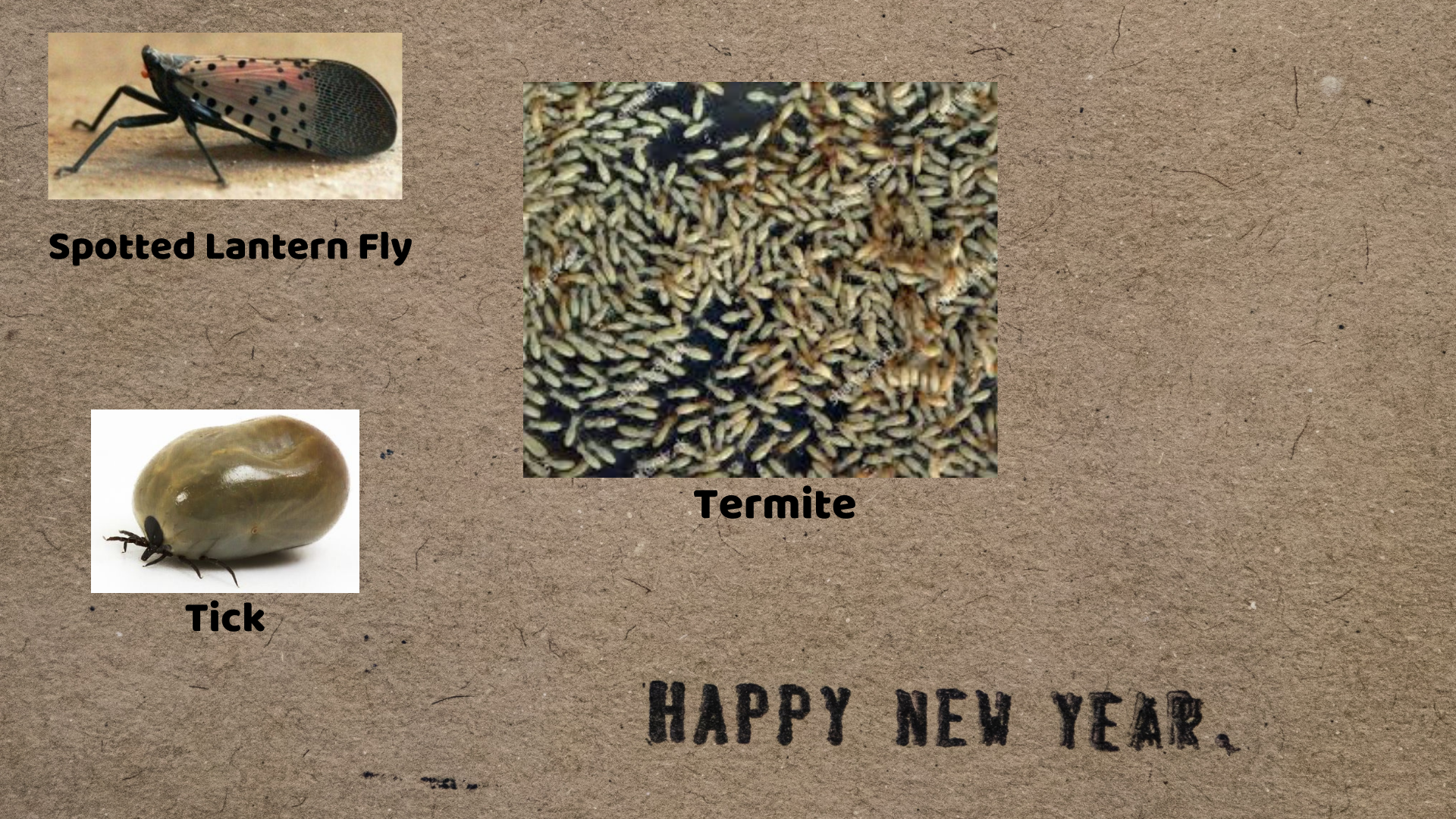
While we have a few of the usual suspects, we have some new insects to worry about in 2021, especially in the Wilkes-Barre/Scranton and Hazelton areas. Really, no time is safe from an unwanted pest invasion; whether it’s winter, spring, summer, or fall, here are the top seven pests to look out for in 2021.
1. Overwintering Pests
The first pest on the list might be the first to emerge as temperatures begin to rise. Overwintering pests overstay their winter welcome by hiding away in homes and garages, waiting for spring. While they don’t necessarily do heavy damage to your home, they can be annoying and cause a bit of trouble once the hatch begins.
Asian lady beetles are one of these unwanted houseguests. They will typically hatch in large numbers, gather near warm areas, like a sunbathed window, and they tend to leave nasty yellow streaks wherever they go. Plus, they give off a foul odor if you accidentally squish them. These aren’t the only pests that manage to sneak inside before winter. Other overwintering pests include stink bugs, box elders, and crickets. Again, while they may not cause huge problems, you probably don’t want them in your home.
2. Ticks
Believe it or not, ticks are an all-year problem. These tiny little bloodsuckers can hide away in piles of leaves, wood, or even under the snow. Ticks burrow and these piles can provide plenty of insulation. Additionally, they have evolved a trait that acts like anti-freeze, protecting them from the cold. That doesn’t mean they won’t die if temps drop. However, they can survive the winter - especially a mild one. This year hasn’t been exactly shivering in below zero temperatures, so ticks may be out in higher numbers come spring.
Ticks will become more plentiful as the weather warms, and though they are little, they carry some huge problems. These little pests carry numerous life-threatening diseases, such as Lyme and Rocky Mountain Fever. Though they do not fly, they can drop down or grab on to any host that passes by.
3. Spotted Lanternfly
The last few years have brought Pennsylvania a unique, new invasive pest in the spotted lanternfly. Unusually colored, these insects are terrorizing local trees and crops. While they may not be dangerous to humans, in particular, they can prove devastating to the economy and ecosystem. Spotted lanternflies feed on local vegetation such as asps, oaks, and other trees. They also attack apple trees, grapevines, and other crucial crops.
While there is an effort to contain this invasive species, it has found its way around Pennsylvania. They can be transferred by vehicles, lawn furniture, Christmas trees, and more. The goal is to stop the spread and limit their access to new areas before they cause more damage.
4. Mosquitoes
These nasty biting insects are always a problem when seasons change. As snow thaws and stagnant water forms in buckets, gutters, or even puddles, it’s prime time for mosquitoes to breed. All they need to lay eggs are blood and a little still water. Mosquitoes aren’t just annoying little fling pests; they are one of the deadliest creatures alive.
Mosquitoes are known for spreading illnesses like West Nile virus, Malaria, and yellow fever, to name a few. While winter may give us a slight reprieve, the change in weather signals their return and they can make going outside a nightmare.
5. Black Gnats
Like mosquitoes, black gnats are plentiful as spring rolls around. In fact, their numbers seem to get worse and worse every year. They usually breed in areas high and moisture, and they are especially attracted to faces. These little beasts can make going outside unbearable, as they aim for areas with high moisture, like your eyes, nose, and mouth.
These pests are not just annoying; if a swarm is big enough, it can kill small animals. Plus, they have a nasty bite.
6. Termites
No matter the time of year, termites are always a danger. While they may not pose a threat to humans directly, they cause millions in structural damage every year. As it gets closer to spring, the swarming season draws nearer, and colonies can grow. What may be a small problem now can grow larger, and unfortunately, a termite infestation can be hard to spot until it’s too late. One of the best times to catch them is during a swarm since they leave behind shedded wings as evidence.
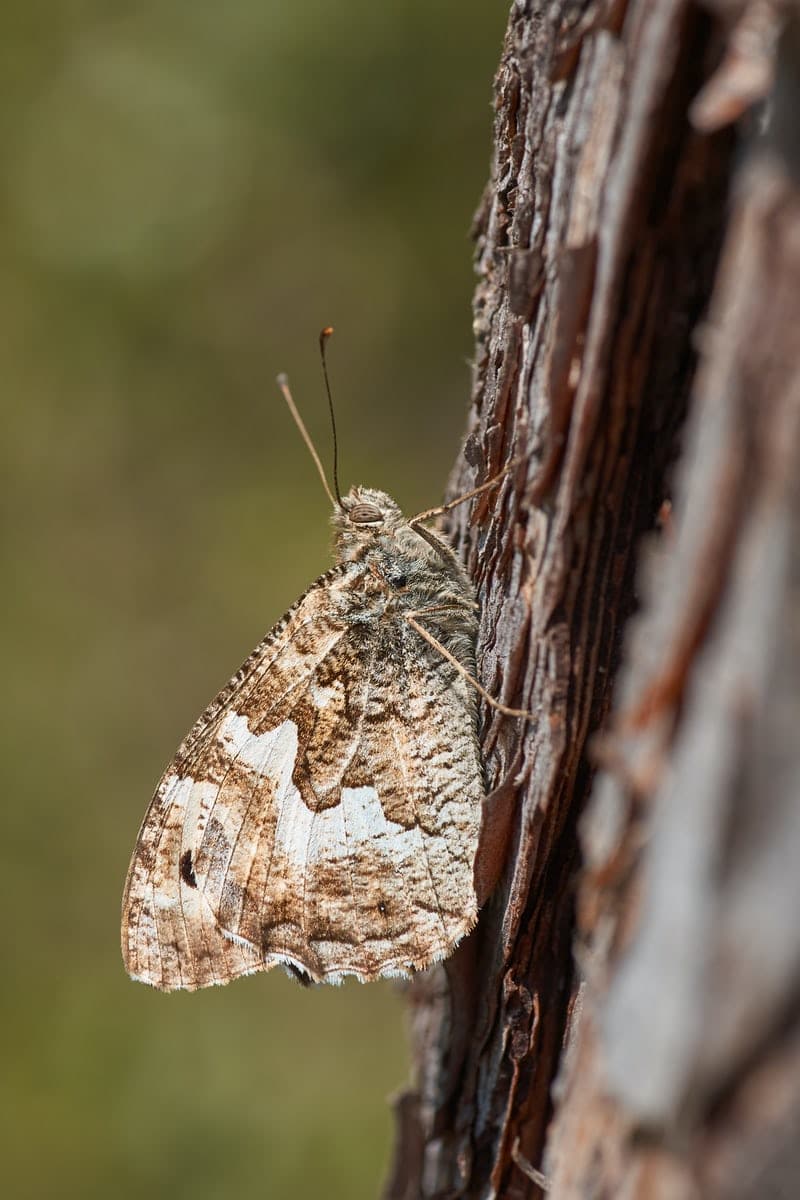
7. Gypsy Moths
The final pest to look out for in the new year is an invasive species that seems to come and go. Gypsy moths, like spotted lanternflies, target local greenery. They tend to lay large egg masses on apple, alder, aspens, pines, spruces, and more. While an infestation isn’t a death sentence the first time, if it is not taken care of, gypsy moths can cause a lot of damage.
Eggs hatch from mid-April to early May. Egg masses should be removed from trees and disposed of properly to stop the spread.
How Can We Prepare This Year?
As spring approaches, you don’t have to worry about doing battle with pests if you take a few precautions. Perform regular maintenance on your home by sealing up cracks, holes, and damage that may let pests sneak inside. Keep gutters clear of growth, leaves, and other blockages to keep water flowing. Keep a clean home to spot any signs of termites and to discourage insects from gathering.
Perform regular maintenance on your lawn and keep overgrowth to a minimum to discourage ticks. Also, you can keep an eye out for any egg masses from either of the invasive species. Finally, you can get regular home inspections to safeguard against possible invaders. Stay on top this new year by keeping bugs and pests out.
Is There a Difference between DYI Pest Control and Pest Professionals?
Finding an infestation in your home can be a nerve-wracking experience. The presence of these unwanted house guests may not just leave your skin crawling, but some creatures can wreak havoc on your property.
Some pests can even be downright dangerous. Then again, there are instances where a pest control problem isn’t the end of the world and can be a simple do-it-yourself fix.
The best approach is to get an idea of the issue at hand and decide if it’s better to handle it alone or seek professional help. Of course, that’s easier said than done. Here are seven points to consider before deciding to try DYI pest control or hire a pest control expert.
1. The Size of the Problem
The first step you should take when evaluating a pest control problem is to see what you’re up against. If you have a few fruit flies drifting around your kitchen, calling in a swat team of exterminators may not be worth it. If you have an entire fleet swarming the drains, your food, and your family, that’s another story.
Whether the problem is inside your home or outside the backyard, try to gauge the size of your infestation. If you’re dealing with a few ant hills or overwintering pests, there are plenty of home remedies and tricks you can try to get rid of them.
When the numbers are overwhelming, and you can’t even enjoy sitting on your patio for fear of a mosquito or wasp attack, it may be time to have an expert take care of the job. When you’re sizing up your intruders, though, you may want to keep in mind what type of pest you have on your hands before you decide to handle it yourself.
2. The Actual Pests
Some pests are harmless and easy to take care of when they end up in your home. However, there are plenty of pests that you may be better off leaving to the professions. Termites and bed bugs are two different insects that can be very hard to trace and even harder to eliminate. Termites cost millions in property damage every year; they can construct huge colonies, and unfortunately, right under your nose.
Likewise, bed bugs can be elusive little devils, burrowing into your furniture, bedding, and walls, and only coming out in the night for a blood-feeding. You may not even notice until you find mysterious welts on your skin the next day.
In addition to hard-to-find pests, some creatures can be downright dangerous. Cockroaches, mosquitoes, and rodents all carry life-threatening diseases. They can also be challenging to get rid of on your own. Before you approach a pest issue alone, keep in mind what you might be up against.
3. How Complicated the Process
Taking care of a pest problem is more than just buying a bug spray and zapping the bugs away. All pests are different and require different strategies to get rid of them. Some pests can’t stand the scent of certain plants like citronella, while diatomaceous earth could be the perfect solution for others.
Additionally, when trying to get rid of your pest problem, you have to take the time to find out where they are hiding, how they are getting in, and what you need to adjust in your home. Simple preventative tactics could put an end to your infestation, especially for seasonal pests. The trick is doing the research and figuring out how to handle your unique situation. If you aren’t ready to do a deep dive, you may want to hand the issue off to professionals.
4. How Much Time Do You Have?
Depending on the size and type of pest problem you have, it could take some time to get rid of your unwanted house guest. There’s plenty that must be done before you formulate a strategy: identify the problem and its size, find out where they are coming from and where they are hiding in your home or yard, discover what you need to get rid of them.
Of course, you may have to try a process of elimination, and sometimes you may have to try a few different times. For example, ants can be quite resilient. You may have to set a few traps before the colony is gone for good, or you might have to try a few different baits to find one that works. The worst part is, even after all that work, pests can make a return if you don’t keep up with yearly maintenance or re-apply sprays.
If you don’t want to spend the time doing all the prep work and constant maintenance, you can always refer to a pest control expert, especially if your infestation is stubborn and keeps coming back. A few quick visits, and easy diagnosis, and a few treatments later, can have your home and yard back in no-time. Plus, most pest control companies offer a guarantee if you have return visitors. Again, this all depends on what type of infestation you have and how prepared you are to handle it.
5. Have you Tried This Before?
Before diving into your pest control problem yourself, you should probably do a little research. Many of the points on this list address a decent amount of research before diving head-first into DIY pest control. There’s no one size fits all approach, and if you haven’t tackled a pest problem before, it can be a little intimidating.
This process can be very tricky and when it comes to handling certain repellents and herbicides. Before you take any chances, you really want to be sure you are using the proper materials and amounts to address your problem. You may not have to use any chemicals at all!
In addition to not being familiar with identification, methods, or what actions are needed, you may find that the pest you need to remove may be protected. Bats, for instance, are protected by law, while other insects, like the Spotted Lantern Fly, are invasive species that are being monitored. Of course, there are plenty of pests you can take care of on your own; however, you must be willing to put in the work to learn about your case first. Otherwise, it may be easier to hire a professional.
6. It Can Be Risky
Pest control is no joke, and if you are new to the whole DIY, it can be dangerous. Sprayers, foggers, and just your regular household traps all carry a bit of risk when you put them out, especially for pets and small children. If you don’t follow the precautions or the steps correctly, you can end up doing way more harm to yourself and your property.
Aside from the deadly side-effects, certain sprays may take out bugs and plants you may want to keep around. Before jumping right into herbicides, do your homework and see which treatments would work best for your situation. In some cases, the insecticides may not be effective against your pest problem at all. Also, when it comes to bigger problems, like termites and bed bugs, pest removal may require more extreme measurements better left to professionals.
 7. The Cost
The final issue to consider when tackling a pest problem is the cost. While a pest control expert is a more efficient and safer way to handle a pest problem, it can get costly. DIY treatments and at-home kits are going to be way more cost-effective.
Of course, that depends on your infestation. If you are unable to get rid of your pest problem, you may be shelling out more money in the long run for the same problem. Also, in the case of difficult cases, the cost may be worth getting rid of the rodents or termites infesting your home. What it all comes down to is what you have and whether you can take care of the issue quickly.
Concluding Thoughts
When it comes downs to taking care of a pest problem yourself or handing it off to professionals, it boils down to your unique situation. Whether you have a few invading ants or an entire colony, there are numerous ways to tackle your problem. There are plenty of situations where you can handle a pest problem on your own, provided you do the proper research beforehand.
Still, there are a few larger-than-life problems that are better left to the professionals. Take precautions when it comes to pest control, and don’t hesitate to reach out to the experts.

Just Because it is Not Top News the Spotted Lanternfly is in PA
It’s been a crazy year so far, and there are plenty of different subjects flooding the news. With all the high-profile, pressing stories, it can be easy for other subjects to be lost in the shuffle, and that can lead to some devastating effects.
While worrying about an invasive pest species may not be at the front of your newsfeed, the spotted lanternfly should still be the main concern, especially for those residing in Pennsylvania. These planthopper insects may not seem like much of a threat on the outside, but these destructive insects could cost the state over $324 million dollars and over 2,800 jobs. Here’s why you should be keeping your eye out for the spotted lanternfly.
The Threat of The Spotted Lanternfly
The spotted lanternfly was discovered in Berks Country, Pennsylvania in 2014 and has since spread across the state. These spotted insects may not seem like much of a threat at first. They are not dangerous to humans or animals, but they do some damage to plants and other fauna that are vital to our way of life.
From destroying fruit trees to completely wiping out plan nurseries, these seemingly inconspicuous flying insects are costing the state millions while additionally putting a dent in the agricultural economy. If they can spread further, the damage they cause can have devastating long-term effects on our way of life.
What is the Spotted Lanternfly?
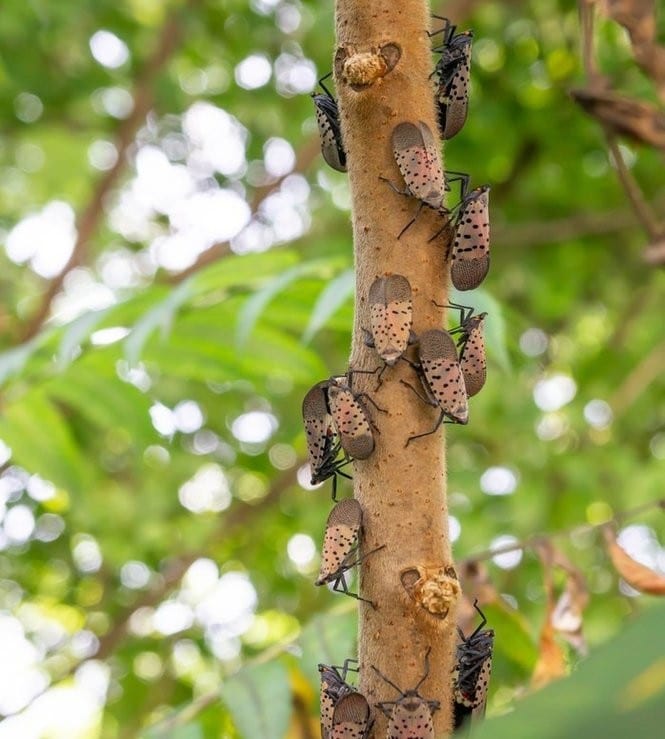
The spotted lanternfly is a winged insect native to Asia. Appearing in Pennsylvania around 2014, the adult insect is about one inch long and a half-inch wide. They are easily identified by their vibrantly colored wings. The spotted lanternfly has a grey forewing with black spots and hides wings with contrasting red and black patches with a white band. Finally, their abdomens are yellow with black bands. Immature spotted lanternflies are black with white spots and they develop red patches as they grow.
These invasive insects feed on many different fruits, plants, and trees. When they have infested a tree, they form large egg masses. Unfortunately, these pests are hitchhikers. They can easily move throughout the Commonwealth on vehicles, clothes, or other surfaces. Spotted lanternflies can be spread far and wide, and that’s how they can become a massive problem.
Why are Spotted Lanternflies a Problem?
While these colorful insects may not seem like much of a threat, they can cause a lot of damage. They may not be harmful to humans and animals, but they can be deadly for fruit trees, ornamental plants, and so much more. Spotted lanternflies will infest trees, their favorite being the tree-of-heaven.
The infestation will cause the host trees to ooze sap; the leaves will curl, the tree will wilt, and eventually die. As the insects feed on the tree, they secrete a sugary substance that encourages black, sooty mold. While not harmful to us, it will kill plants. And these insects don’t just seek out trees to host them.
The spotted lanternfly will roost anywhere it can find food, which has taken a toll on vineyards, orchards, and other industries. Hops and hardwood, along with fruit trees like apples and cherries, have taken severe hits. This invasive species feeds on over 70 different types of plant species. Their presence can not only cause economic crises and shortages, but they can possibly wipe out theses plant species completely.
What Can You do to Stop the Spread of Spotted Lanternflies?
Fortunately, there are several things you can do to stop the spread of spotted lanternflies. First, it’s important to keep an eye out for the signs and symptoms to spot any infected trees or plants in your area. Infected plant life will ooze or weep and will have a fermented odor. You can often spot sticky fluid, called ‘honeydew,’ on plants or on the ground beneath infested fauna. Additionally, infested plants will have sooty mold; if you spy any of these symptoms, you must alert pest control experts immediately.
In some cases, finding evidence of spotted lanternflies may take a little more effort on your part. Remember, these are hitchhiking insects, so you may very well be carrying them without even knowing it.
As you prepare for seasonal changes, check your outdoor equipment and decorations for spotted lanternfly egg masses. You should check everything, even items you bring indoors.
Should you spot any egg masses, scrape them off, place them into plastic zipper bags filled with hand sanitizer, and close it before disposing of the bag. Check your clothing when traveling and if you park near a tree line, be aware of your surroundings. Spotted lanternflies can easily hitch a ride on your car or your shirt if you get close enough.
When inspecting trees and plants, try to do so at dusk and night when the invasive pests gather in large groups. You can spot them on tree trunks or on plant stems. Finally, always keep a look-out for large egg masses on any surfaces. Brick, stone, trees, or even metal can be a viable surface for these creatures. If you do spot any signs of a spotted lanternfly invasion, be sure to report it to the proper authorities.
 Concluding Thoughts
Though it may not be the top story in the news, the spotted lanternfly crisis is still very crucial to Pennsylvania agriculture and the economy. If this invasive species is allowed to spread, unchecked, it could result in over $324 million dollars in damages yearly.
Do your part in stopping the spread and stay alert. If you discover a spotted lanternfly infestation, contact a pest control expert today.

Top 7 Ways to Repel Gnats: Take Back Your Yard
As the warm weather returns each year in the Lehigh Valley, Northeastern Pennsylvania, and Southeastern Pennsylvania, the last thing any homeowner wants to deal with is those small flying bugs in the house.
Gnats are one of the most ubiquitous and annoying bugs that come around each summer and it can feel like you are powerless to stop them.
However, we’ve provided seven tips to get rid of gnats outside and inside your house so you can take back your yard and enjoy the warm weather once again.
Why Are Gnats Swarming My Yard
Gnat swarms are an important part of the gnat reproductive process, allowing gnats to mate and produce offspring.
However, gnats may be attracted to your home in particular for one of the following reasons:
- There is fungal growth in your garden due to overwatering
- Fruit and vegetables are overgrown and even rotting
- There is food spillage and garbage that is not properly sealed
Gnats are also attracted to body heat and water, making your sweat the ultimate resource for gnats to feast and dwell. This is why gnats swarm people, especially around tall and exposed areas, such as their faces and heads.
How to Identify Different Gnat Species
While most gnats are annoying regardless of their species, identifying what attracts certain gnats can help you identify the source of the attractant.
- Fungus Gnats (Sciaridae): Fungus gnats are commonly found in environments with high moisture levels, particularly around decaying organic matter. Their larvae feed on fungi and organic material in soil, making them a frequent indoor pest, especially in overwatered houseplants.
- Fruit Flies (Drosophilidae): Fruit flies are small insects often seen in kitchens and around garbage bins. They are attracted to ripe or fermenting fruits and vegetables. Despite their diminutive size, fruit flies can be a nuisance, especially in settings where food is stored.
- Eye Gnats (Chloropidae): Eye gnats thrive in areas with decaying plant material and manure. These tiny insects are attracted to moisture and can be particularly bothersome around the eyes. Their presence is common in outdoor spaces where organic matter is decomposing.
- Biting Midges (Ceratopogonidae): Biting midges, also known as “no-see-ums” or “punkies,” are small flies that can bite humans and animals, causing irritation. They are often found in various environments and can be particularly bothersome in outdoor settings, especially during certain seasons.
Be sure to spot the difference between gnats and mosquitoes, as mosquitoes can be harbingers of disease and illness.
Are Gnats Dangerous?
While most gnats are more annoying than dangerous, they can cause itchy bites that become swollen or painful. In particular, black flies, buffalo gnats, and sand gnats pack the meanest bite, though these are typically found in more exotic environments, such as near riverbanks or sandy regions.
For the most part, gnats are an unwelcome disturbance that can be dealt with easily by following a few prevention and treatment tips outlined below.
7 Ways to Get Rid of Gnats Outside
1. Follow the fungus.
Since gnats are so small and love to swarm around your head, it can be difficult to pinpoint their origin. The most common backyard gnats are fungus gnats.
These pesky invaders are found in areas of high humidity or moisture and can be found anywhere with a lot of water. This includes areas like creeks, rivers, ponds, and other spots close to water. Of course, their favorite place isn’t limited to bodies of water. They like to swarm near birdbaths, leaking pipes, puddles, and overwatered plants as well.
Once they find a place they like, they’ll lay their eggs in soul or dead matter, and they usually take about three days to hatch. With the right conditions, you may have a little gnat farm in your backyard.
Of course, there are other varieties of gnats, including the eye gnat, the buffalo gnat, and the sand gnat. The best way to tackle your situation is to find out what you have first, starting with following the fungus. Eliminate any areas with excessive moisture, and you’ll be one step closer to a gnat-free yard.
2. Draw them with Vinegar.
An easy way to draw gnats is by using a little vinegar and dish soap mixture. Gnats are drawn to the sweet scent, but the dish soap will keep them from escaping once they land. This is a great way to eliminate a gnat problem, especially if they find their way into your home or swarm around your deck. Just change out the bowls regularly.
3. Repel them with Scent.
Gnats are naturally drawn to fruity scents; in fact, your shampoo, body wash, or perfume may be what makes you a desirable target for these pesky flying pests.
An easy way to combat this is using unscented soaps or avoiding that spritz of cologne during the summer. Or, you can switch up your favorite scent with something they don’t like. Try Lighting citronella candles using lemon or vanilla sprays. While gnats are a fan of sweet-smelling fruit, they can’t seem to stand vanilla, lemon, or even lavender. A little spritz can at least keep them at bay.
4. Try Gnat Traps.
Simple and easy disposable fly traps are a good way to keep gnats away from your patio. There are a few different options, usually small and large. If you have a smaller problem, the discreet smaller traps can easily trap gnats in a funnel.
The larger traps can hang from a beam or branch and often attract other unwanted flying insects. These traps have a strong odor, so keep that in mind when you decide where you want to place them. The best part? You can toss the trap once it’s full.
5. Tiki Torches and Candles.
Much like spraying yourself with particular scents, burning candles or tiki torches can help keep gnats away, so long as you use the right smells. Citronella is a natural bug repellent that will help ward off more than just gnats.
If you don’t have one, try using lavender or lemon-scented candles. It could be just enough to keep gnats from interrupting your outdoor gathering.
6. Plants that Repel Gnats.
While we’re on scents, you can play the long game and plant flowers that gnats can’t stand. There is a handful that can keep gnats at bay, including geraniums, lemon thyme, lavender, and Mexican marigold. The wonderful thing about using plants is that they look nice in your garden and will also help keep more than just gnats away.
Just look into what each plant requires and arrange them strategically around your outdoor space.
7. Bug Zapper.
Sometimes, the best way to combat these little pests is with a good ol’ bug zapper. Gnats are drawn to light, so if you are experiencing a rather big gnat problem, a zapper can be just what you need. Just know that this usually works better with larger insects, but it will be effective in getting rid of plenty of gnats, too.
Is It Time to Call an Exterminator?
You don’t have to live in fear of your outdoor space. Take back your lawn using these simple tips. However, not all gnat problems can be solved with a quick fix. If you are experiencing an overwhelming infestation, don’t hesitate to contact a pest control expert. Take action and start enjoying the warm weather today.
FAQs: How to Get Rid of Gnats Outside
Can Gnats Transmit Diseases?
Gnats are generally not known for transmitting diseases to humans. While they can be a nuisance, they are not significant vectors for disease transmission.
How Long Do Gnat Infestations Last?
The duration of gnat infestations can vary based on factors such as environmental conditions, food sources, and breeding sites. Typically, with proper control measures, infestations can be resolved in a matter of weeks.
Are DIY Gnat Traps Effective?
DIY gnat traps can be effective in reducing gnat populations. Typical traps include vinegar traps, fruit traps, and sticky traps. However, the effectiveness may vary, and it’s essential to address the root cause of the infestation as well.
Do Gnats Bite Humans?
While some species of gnats may bite humans, not all do. Those that do bite are usually seeking blood as a nutrient source for egg development. Bites are generally irritating but are not known to transmit diseases.
Can Gnat Infestations Cause Plant Damage?
Yes, gnat infestations can cause damage to plants. Gnats may feed on plant roots and lay eggs in the soil, leading to root damage. Additionally, their larvae can affect the health of plants by consuming root hairs.

9 Steps to Take to Have a Pest-Free House in Spring
Spring is finally here, and after a long, grueling winter, it’s time to get out and enjoy the nice weather.
Unfortunately, we’re not the only ones emerging after frigid temperatures thaw. It’s primetime for insects and pests as they get ready for the returning greenery.
What’s worse is the harsh toll winter can take on your home and yard. Have no fear! There are some simple steps you can take to have a pest-free house this spring. With a little maintenance and time well-spend, you can fortify your home for the year with these nine easy tips.
1. Perform Seasonal Maintenance
The first place to start after a long cold season is seasonal maintenance. Winter can be harsh on your home from the snow and thaw to the winds and ice. The extreme weather and temperatures can cause cracks and breaks. Time itself also lends some damage with regular wear and tear. All of this makes it easy for pests to get inside your home. As the weather warms up, look at your home’s exterior and see which areas need some TLC.
2. Clear out Seasonal Debris
Fall and winter can leave behind a big mess. Between snow run-off and piles of leaves, your yard may be quite a mess by the time spring rolls around. Pests love piles of debris, and as the world begins to thaw, you may end up with additional moisture in your yard.
Aside from leftover leaves and dead wood, you may have thick areas of overgrowth starting to form. Don’t let it. Take care of these messes before the pests return. Discourage them from even thinking about coming to your home.
3. Regularly Cut Grass and Clear Weeds
It may seem like too early to start cutting your grass, but trust us, it’s not. It’s better to cut your grass early before it becomes overgrown. Don’t give it that chance; pests especially enjoy overgrown and parasites like ticks use tall grass to reach their hosts. Jumping on your lawn and yard care early is a great way to keep on top of the growth in your yard.
The same can be said for weeds. As the weather warms, weeds will begin sprouting just about anywhere, but if you nip the problem in the bud, you won’t have to wrestle with tall growth of any sort, which will encourage pests to look elsewhere.

4. Check out Your Trees
Checking out the trees in your yard may be one of the last things on your mind as winter fades, but you should remember to look. Trees take a lot of damage in the winter; some may have leaning branches, dead limbs, or they might be the perfect way for wildlife to get to the roof of your house.
Additionally, if you have a dead or dying tree, that can also be a draw for dangerous insects, like termites. Make it a point to check the trees in your yard to avoid potential issues in the future.
5. Seal up cracks in Doors, Windows, and Other Openings
As the weather warms up, it’s the perfect time to seal any potential openings or tears that occur during the fall and winter. Cracks in foundation or underneath doors are perfect opportunities for pests to sneak inside. Also, keep an eye on your windows. Torn screens or damaged screens are easy ways to let in flies, wasps, and other flying insects.
During your repairs, keep in mind, some areas that need covering don’t have to be “damage repair.” Vents and pipes are also ways for pests to access your home. Take the time to cover any holes with caulking, mesh, or other methods to keep pests out.
6. Watch out for Stagnant Water
Whether it’s in a birdbath, a stuffed gutter, or a thawing puddle in your backyard, stagnant water is a prime spot for mosquitoes. Mosquitoes only need a little still water to lay their eggs, and you may end up with a whole mess in your yard and home. Pools of water can also be a draw to other pests.
When looking for a home, pests are searching for two key essentials: food and water. During your regular maintenance, it’s a good idea to mark any areas where water pools or open rushing water.
7. Care for Outdoor Storage
It’s time to dust off your gardening tools and clean out your garages. To keep your home and yard pest-free, you have to get rid of any potential living areas. Garages, tool sheds, or any outdoor storage units are perfect places for pests to hide during and after winter. All types of creatures like to take shelter in cluttered, seemingly untouched areas, like snakes, spiders, and other various wildlife. Don’t give them a cozy place to stay.
Additionally, if you have woodpiles or logs, it’s best to move or store them away from the house. Having them too close could attract termites and other pests to the more ideal living space of your home.
8. Cut off the Food Sources
An easy way to ensure pests aren’t drawn to your house this spring is by cutting off their food source. Any garbage or recycling bins should be covered when left outside. Be mindful of garbage pick-up days or how close you are to the dumpsters. The smell of food can not only draw insects and rodents but some larger wildlife as well. Be sure to keep things covered and sealed tightly to discourage any unwanted visitors.
 9. Get Regular Inspections
Whether your pest-free or you have an infestation, scheduling a regular inspection is a good idea. A professional pest control expert will not only help you take care of any problems, but they may be able to spot a potential issue before it happens. Regular maintenance is an excellent way to stay ahead of the curve, but routine inspections can fortify your property, especially against what you don’t always see.
Concluding Thoughts
A little extra time at the start of Spring can save you from unwanted pest headaches in the future. Regular maintenance, routine inspections, and a little preventative care are the best ingredients for a pest-free spring season. If you are experiencing a pest problem or want to protect your home, reach out to a pest control expert today.

7 Tips for Managing Pesky Bugs In Spring
The warm weather is finally here. Spring is upon us, and it’s also prime time for those pesky bugs to start stirring. As the winter chill starts to leave us, there’s no time like the present than to start your spring cleaning.
Of course, that means fortifying your home against any overwinter pests or rising insects looking for a new home. As we head into prime bug season, here are seven tips for managing pesky bugs in the spring.
1. Seal Up All Entryways.
The winter months can be hard on your home. As the world starts to thaw, you can really start to see the damage cold weather has on your home. Of course, any holes or cracks are prime spots for insects to sneak in.
Check around the exterior of your home, especially around doorways, foundation, and windows. Make necessary repairs to screens, openings, and leaking pipes.
In addition to the typical entryways, check any spots that may be open like vents or chimneys. Seal them up properly with screens and seal any cracks with caulking. The best way to keep bugs out is to stop them from getting inside to start.
2. Clean Up Inside.
Let’s face it; your house has probably been sitting stagnant since the fall. Over the winter, we tend to do less outside and inside since days are shorter and much colder. As the warm weather returns, it’s a good time to clean up any clutter, especially since that’s where pests look to nest.
Boxes, piles of paper, or any unwanted junk piling up are perfect places for all manner of pests, from insects to rodents, to hide. It’s a good idea to clean out any extra clutter.
Additionally, as winter leaves us, we may start to see issues in the home as well as out. Check your basements and attics. Look for leaking pipes, damp areas, or leaks in the ceiling. Some insects are drawn to damp, cool areas. Be mindful of any areas they might gather and give them a good cleaning.
3. Tidy Up The Lawn.
Now that you’re done with the house, it’s time to take the task outside. An overgrown lawn or garden is prime ground for many pests. While there may not be much growth over the cold season, there can be build up including leaves, branches, and stagnant water. This could lead to plenty of issues, such as mosquitos, ants, and ticks.
Since growth over the winter is minimal, this is the perfect time to tidy up. Clear out dead brush, get rid of any unwanted plants or bushes, and make sure you have less work to do as your plants grow in the Spring.
4. Tidy Up Gutters.
Fall and winter are not typically kind to gutters. They tend to get mucked up with leaves, moss, and branches. If you aren’t careful, they can get clogged which can cause numerous problems, like stagnant water.
Still water is the perfect spot for mosquitos to lay their eggs. Since they are one of the deadliest insects, you definitely don’t want them anywhere near your home. As spring comes around, be sure to clear out your gutters and put an end to any mosquito breeding grounds.

5. Clean Up Stagnant Water.
On the same note, if there are any areas in your yard that may hold stagnant water, it should be cleared away. Check lawn equipment, birdbaths and feeders, outdoor toys, and any other areas that tend to gather water. Don’t forget, mosquitos don’t need more than a small puddle to lay their eggs. To avoid any hatchings, clear away as much stagnant water as possible.
6. Clean Sweep Any Possible Food Areas.
Another way to keep bugs away is to get rid of any possible food sources. Any area that you prepare or eat food should be kept tidy. Store food, including pet food, in airtight containers to discourage pests like ants or cockroaches from looking for an easy meal.
Tidy up after making meals and take care to clean hard to reach areas like behind the refrigerator. You never know what may be lurking back there. A thorough cleaning will help keep your home bug free in the future.
7. Check Any Possible Nesting Areas.
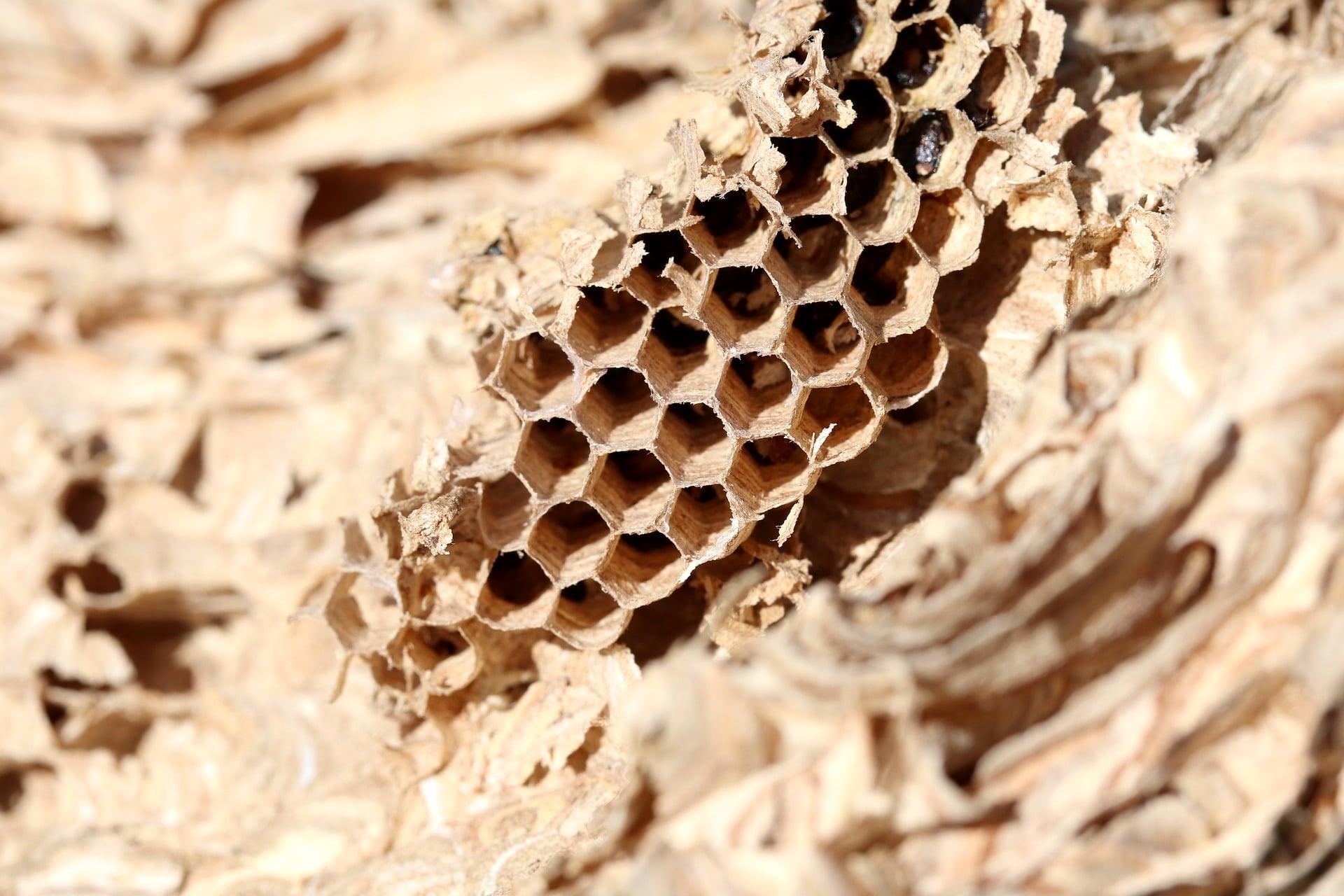
If you are worried about pests taking over your home, do a check and seek out any possible nesting areas. Wasps tend to build their homes in hidden areas like holes in the ground, trees, or even beneath your porch. Ants can make a colony pretty much anywhere they can make a network.
Termites tend to seek out different types of wood, depending on the species. Take a look both inside and outside your home to clear out any possible nesting spots.
Stay Vigilant
Spring is finally on its way, and the best way to prep for any pesky bugs is to be ready for them. Know what to look for, keep things clean, and have the proper baits, traps, and remedies at the ready. You don’t have to let pests become a problem this summer. Stop them before they get in.
As always, if you are having trouble with pests, you can always seek out a pest control expert for advice. However, the best defense is prevention. Take the time and enjoy your spring, pest-free.

New Year, New Focus on Bug Issues: Here's How to Protect Your Home
It’s a brand-new year, and it’s the perfect time to start protecting your home from bugs. As the cold weather slowly starts to warm up, the new year’s focus should be on touching up your home before creatures reemerge and the world springs back to life.
While you may be zoned in on spring cleaning, you might need to think about more than just tidying up your lawn. It doesn’t matter what time of year it is; a pest infestation is always possible.
In any case, it’s better to take preventative action rather than be over-reactive after the fact. As the winter thaw begins and the warm weather returns, here’s how you can protect your home.
The Issues with Infestation
One of the best ways to protect your home in the new year is to know what you may be up against. While there are tons of insects in NEPA, the one that can cause the most damage is the termite.
Termites infest more than 5 million United States homes each year, causing more than $5 billion in home damages—more damage than earthquakes, tornadoes, and fires combined.
Unfortunately, according to the U.S. Department of Forestry, Northeastern Pennsylvania has a serious termite problem. Once these little insects find a place to build their colonies, they will not stop.
They are 24/7 eating machines, and they will chow on any cellulose material, including wood, paper, and drywall. Plus, they like to share their location with other colonies using pheromone communication. Whether you are protecting your home or looking into buying home - you don’t want to take the risk. We provide thorough reporting, and if we do find evidence, our treatment methods for bug issues are child and pet-friendly.
Of course, termites aren’t the only insect issue you may run into. From overwintering pests like Asian Lady Beetles and stinkbugs to seasonal terrors like wasps and crickets, any insect infestation can cause a problem.
Some insects, like cockroaches and mosquitoes, can even carry deadly diseases. You don’t want to deal with the aftermath of an infestation. The best course of action is Proactive Maintenance; stay ahead of a pest problem before it happens.
Bug Issues: Proactive Maintenance
To stay on top of any possible pest problems, the best course of action is preventive measures. The simplest way to do this is by keeping up with your property. Since it is the start of the new year, keep in mind that winter weather can be just as brutal to your home as it is to you. Plus, after both the fall and snowy season, you may have a lot to clean up in your yard.
Survey your yard; check for any possible areas where water can well up and stagnate. This creates a perfect breeding ground for mosquitoes.
Likewise, clean out your gutters, outdoor lawn equipment and furniture, and any other areas that can potentially hold standing water. In addition to your lawn, check your pipes for any leaks.
Look to your home’s foundation and house openings, like doors, windows, and vents. Pests can easily sneak inside through tiny cracks and crevices. Stay ahead of the game by sealing up any potential holes and covering open areas with the proper screens. As you cover all your bases, keep in mind that it’s always a good idea to have an extra set of eyes; especially if it’s a professional.

Month-to-Month Services
Unfortunately, regular maintenance can’t protect against all manner of pests. Also, protection doesn’t have to be a spring and summer rush, and you shouldn’t count fall and winter as safe months. Pests seek shelter in colder months, and often your home could fall victim to overwinter pests.
Whether you have a reoccurring problem like wasps on your roof, or mosquitoes swarming in your backyard, there is a way to protect yourself from insects regularly without feeling the pinch. Hiring a professional pest control expert can not only help you keep insects out, but it can also give you peace of mind.
Our home protection plan guarantees protection against 40 different insects and rodents over a span of four months, so you can rest easy knowing you’re protecting your home.
The cost of the program starts for as little as $35 a month, which is much more affordable than covering the staggering cost of termite damage. Plus, it covers a wide variety of pest protection.
Depending on your needs, we also provide year-round coverage. The tiered Home Protection Plan can give you just the amount of protection you want.
At any time of year, we’ll inspect and treat homes three times a year for any seasonal and reoccurring pests. For preventive measures, we’ll seal all common entry points and guarantee protection against seasonal pests and mice year-round, promptly returning as often as needed.
Bug Issues: Taking the Pressure Off
Protecting your home isn’t a seasonal job, but there is no better time to fortify against infestation like the present. As we head into spring, keep in mind that it’s better to be proactive than reactive when it comes to pest control. Take the steps needed to guard your home against unwanted invaders today.

How To Keep Your PA Christmas Tree Free of Bugs, Spiders, and Rodents: Top 9 Tips
It’s the holiday season! People are full of cheer and on the hunt for the perfect tree to make this season extra special. If you are a fan of the real deal over the artificial kind, a Christmas tree may be the last step to your merrymaking.
However, you may end up playing host to more than just your family and friends if you decide to use a real tree. Christmas trees around Luzerne and Lackawanna counties can be crawling with unexpected bugs, spiders, or other wildlife.
If you are planning on a traditional tree this year, here are the top nine tips to avoid unwelcome house guests.
Unwanted Christmas Guests
The best way to avoid bringing any of these little creatures in your home is to know what to look for on your potential tree. While most of these creatures are harmless, they have no place in your household.
Here a few pests that may invade your perfect tree:
- Spiders and mites: These tiny bugs are found in Douglas-fir, white pine, Fraser fir, Spruce trees. They can hide away on the trunk or branches.
- Aphids: Commonly found on trees and plants, these little black or brown insects are often found on pine, evergreens, balsam fir, spruce, Fraser fir, white fir trees.
- Adelgids: These insects create little white masses as they suck the sap from fir and pine trees.
- Scale insects: Often found on Scotch pine, Norway spruce, or Douglas fir, these tiny insects have red or brown shells and feed of tree sap.
- Bark beetles: As the name suggests, these darkly hued beetles burrow in trunks.
- Praying mantis: These “deadly” insects are more dangerous to each other than they are to us. However, they can leave behind a tan egg mass that can hold up to 400 eggs.
- Sawfly: Any type of fly can be irritating. These black and yellow flies are drawn to spruce and pine trees, two Christmas favorites.
- Spotted lanternfly: These insects are not native to the area and could cause some real damage. Spotted lanternflies can be devastating to agriculture.
- Bird nests: Birds live in trees. Christmas trees are no exception.
- Squirrels and mice: Squirrels and mice often build their homes in trees as well.
These pests are common Christmas tree dwellers, they can be troublesome, especially if they find their way inside. Before you select your tree and set it up in your home, here are nine tips to keep your home pest-free.
1. Know What to Look For
The key to selecting a pest-free tree is knowing what to look for. Check the trunk and the branches for signs. Mantis egg masses are light brown, and Adelgids can leave little white masses on the pine needles. If there is a hole in the trunk, consider leaving that tree behind. You never know what wildlife could be hiding away.
2. Triple Check your Tree
Pests could be hiding out anywhere on your possible Christmas tree. They can also be quite tiny. Examine the underside of the tree, look at it from different angles, and leave no branch unturned. It’s also a good idea to prune the branches to be safe.

3. Shake Your Tree
Before you leave the lot with your tree, it may be a good idea to see if there is a mechanical tree shaker available. This could shake off dead branches, pine needles, and any pests that may be hiding away. If you don’t have access to a mechanical tree shaker, you can also do it manually.
4. Use a White Sheet
Before using a tree, lay down a white sheet beneath your work area. As you shake, you can take note of anything that falls from the tree whether it’s needles or tiny insects.
5. Don’t Bring it in Right Away
As excited as you and your family may be to bring your Christmas tree inside, it’s best to let it rest in the open or in the garage for a few days. If you missed any insects upon your initial inspection, or a stray mouse or bird, they could stay outdoors. This can you escape any unwanted surprises.
6. Try Diatomaceous Earth
While your tree is sitting, try dusting the outside with diatomaceous earth. Any insects present on the tree will be affected and there will be no damage to the actual tree. This way you can get rid of any bugs that may be hiding away while keeping the integrity of your holiday decoration.
7. Don’t use Pesticide Sprays
Though it’s safe to use diatomaceous earth, it’s not a good idea to use any pesticide sprays on your tree. Most pesticides are extremely flammable. While they may do the job, you might end up losing more than you bargained for. Safety is paramount for you and your family. So, stay away from pesticides.
8. Vacuum Them Up!
If some pests somehow managed to hang on to your Christmas tree, have no fear. You can take care of any leftover insects simply by vacuuming them up. Afterward, you can dump them outside and away from your home.
9. Go Artificial
The only true way to avoid any pest infestation is to invest in an artificial tree. While having a real tree in your home could capture the holiday spirit, more than likely, it’ll bring a few unwanted guests with it.
Concluding Thoughts
While most of these pests, aside from the wildlife, don’t pose a real threat, they can put a damper on your Christmas celebration. If you have your heart set on a real tree, take the time to check your tree thoroughly. Follow these steps and enjoy a pest-free holiday.