

What’s the Best Bait for Mouse Traps in PA & NJ
Mice have an incredible sense of smell and are attracted to high-fat, high-protein foods, making them the best choice for mouse trap bait.
In Pennsylvania and New Jersey, mice enter homes and businesses in search of food, warmth, and nesting space, especially during colder months.
Both mice and rats have more olfactory receptors than dogs, allowing them to detect food sources and the urine of predators, which can be used to the homeowner’s advantage to bait and eliminate them.
Beyond selecting the right bait, placing mouse traps in the right locations where mice nest inside your home will increase their effectiveness.
However, mouse traps are not always foolproof, and many homeowners across Pennsylvania and New Jersey require professional pest rodent control services and prevention plans to keep mice at bay.
This guide explains which baits work best, how different traps perform, how to deploy traps safely, and when professional help is necessary.
Common Types of Mouse Traps
Mouse traps work best when the trap type matches the environment, and the bait matches mouse behavior. The most common types of traps include:
- Snap Traps: Snap traps use a spring-loaded bar that snaps shut when a mouse steps on it. These traps can be baited with food such as peanut butter, cheese, or even bacon grease. The advantage of snap traps is that they kill the mouse quickly and humanely, but the disadvantage is that they must be checked regularly for dead mice and reset after each catch.
- Glue Traps: Glue traps use adhesive to capture mice rather than killing them, as snap traps do. The advantage of glue traps is that they can be used multiple times without having to reset them after each catch; however, some people find them inhumane because they leave the captured animal alive until it eventually dies from starvation or dehydration if not removed promptly from the trap.
- Live Trapping: Live trapping involves using bait inside a cage designed specifically for catching animals alive without harming them, so you can release them elsewhere away from your property later, if desired. This type of trap requires no setup since all you have to do is place bait inside and wait for a rodent to enter before the door shuts.
For most residential and commercial properties in PA and NJ, snap traps are the most reliable option when used correctly.
Each trap offers unique benefits depending on individual needs and preferences to ensure that the chosen option best suits the particular situation at hand while still achieving the desired results efficiently every time.
Best Bait for Mouse Traps
Mice are attracted to high-fat, high-protein foods that are difficult to steal without triggering the trap. Smell alone is not enough; the bait must force contact with the trigger for the trap, which is why sticky or greasy substances like peanut butter and bacon grease work best.
Based on field experience, the best baits for mouse traps in the region include:
- Peanut butter: Strong scent, high fat content, and sticky texture require mice to linger on the trigger, making it highly effective.
- Chocolate or chocolate spread: Highly attractive due to sugar and fat content. Works well in colder environments when food is scarce.
- Bacon grease or beef jerky: Strong odor and protein content appeal to mice seeking calorie-dense food. Use sparingly to avoid bait theft.
- Seeds and nuts: Sunflower seeds or mixed nuts mimic natural food sources. Best when secured tightly to the trigger.
- Pet food (dog or cat kibble): Effective in homes with pets where mice are already feeding on it. Use only if mice are accustomed to the food source.
- Nesting materials (cotton, yarn): Useful when food bait is ignored. Mice seeking warmth may trigger traps while collecting nesting material.
Avoid cheese as bait. Cheese dries out quickly and is often removed without triggering the trap.
How to Properly Deploy Mouse Traps
Proper trap placement increases the likelihood of success and also protects pets and children in the house from exposure.
Place traps along walls, behind appliances, inside cabinets, and near known droppings. Mice travel along edges, not open spaces, so position traps perpendicular to walls with the trigger end facing the wall.
Use gloves when handling traps to avoid human scent contamination. Set multiple traps at once to increase capture rates–one or two traps are rarely enough.
Check traps daily and remove caught mice promptly using sealed bags.
Maintaining & Cleaning Mouse Traps
Proper maintenance and cleaning will help ensure the traps work properly and last a long time.
- Inspect Traps Regularly: Check for signs of damage or wear, such as rust or broken parts. If there are any problems, replace the trap immediately.
- Clean Traps After Use: After each use, clean the trap with soap and water or an appropriate cleaner designed specifically for pest control products. This will help remove dirt, debris, and oils from the hands when setting up the trap, as well as any bait residue that may attract pests in future uses of the same trap.
- Store Traps Safely: Store your mouse traps safely out of reach of children and pets so they won’t be disturbed. Avoid moisture sources such as sinks and bathtubs, which can cause rusting over time from prolonged exposure to water droplets or spray splashes on metal surfaces.
- Switch Bait Regularly: Mice can become accustomed to certain types of bait quickly, so switch up what type you are using every once a week (e.g., peanut butter one week, then seeds another). This helps keep mice interested enough that they will take the bait instead of avoiding it altogether and prevents bacterial growth inside the trap.
Regular maintenance and cleaning of your mouse traps will ensure they work as intended and reduce the need for other preventative measures.
How to Dispose of Dead Mice
When disposing of dead mice, use a plastic bag or container that can be sealed tightly to prevent attracting other animals or insects. Make sure you dispose of them in an outdoor trash receptacle far away from your home or business.
Double-bag them for extra protection against germs and bacteria that may come in contact with people or animals if left outdoors.
In addition, keep an eye out for potential health hazards, such as droppings that could indicate a larger infestation inside your walls or attic, requiring immediate professional pest assistance.
Additional Mouse Prevention Tips in PA & NJ
Traps remove active mice, but prevention stops new mice from entering. Without exclusion and sanitation, trapping alone leads to repeat infestations.
The following are tips to prevent mouse infestations:
- Seal exterior entry points: Close gaps around foundations, siding, doors, vents, and utility lines. Mice can squeeze through openings as small as a dime, making even minor cracks a viable entry point.
- Secure all food sources: Store pantry items and pet food in airtight containers. Even small spills or open kibble bowls provide enough food to support continued mouse activity.
- Reduce indoor clutter: Cluttered storage areas give mice shelter and nesting material. Keeping basements, garages, and utility rooms organized limits hiding spaces.
- Eliminate outdoor harborage: Remove leaf piles, wood stacks, tall grass, and debris near the foundation. These areas allow mice to nest close to entry points before moving indoors.
- Maintain doors and thresholds: Replace worn weather stripping and repair door sweeps. Gaps under doors are among the most common mouse entry points.
- Monitor for new activity: After trapping, continue checking for droppings, gnaw marks, or sounds inside walls. Early detection prevents small problems from returning.
Long-term rodent prevention requires reducing access, food, and shelter at the same time.
When to Call Pest Control for a Mouse Infestation
Professional pest control is necessary when trapping does not reduce activity, mice are seen during the day, or signs continue despite multiple properly placed traps. Daytime sightings often indicate overcrowding and an established infestation.
Mice reproduce quickly and build nests inside walls, attics, and crawlspaces where traps cannot reach. In these cases, surface trapping only removes a portion of the population. Pest control professionals perform inspections to locate entry points, nesting zones, and travel paths, then use a combination of targeted trapping, exclusion, and preventative measures to stop the infestation and prevent new mice from entering.
FAQs
What food is most irresistible to mice?
High-fat, high-protein foods like peanut butter, chocolate, bacon grease, and seeds are most effective.
Why do mice steal bait without triggering traps?
Bait is often placed incorrectly or in excess. Mice can remove loose bait without stepping on the trigger.
How many mouse traps should I use?
Use multiple traps at once. The number depends on the size of the home, nesting locations, and scale of infestation. One trap will not control an infestation.
What attracts mice instantly?
Food odors, warmth, shelter, and easy access through small openings.
What is the fastest way to get rid of mice?
A combination of properly baited snap traps, correct placement, and sealing entry points.
Do poisons work better than traps?
Poisons create secondary risks, odor issues, and hidden die-offs. Traps are safer and more controllable.
How long does it take to eliminate mice with traps?
Small infestations may resolve in days. Larger infestations require weeks and exclusion work.
When should I stop trapping?
When no new activity, droppings, or captures occur for at least 7–10 days.


Why Is the Firefly the Pennsylvania State Bug?
The firefly was officially named the Pennsylvania state bug in 1974, thanks to an effort by elementary students in Upper Darby.
While there are thousands of bugs residing in Pennsylvania, the firefly was chosen for its beauty, behavior, and cultural impact. The firefly has become one of the most recognizable symbols of summer in the Keystone State.
On warm evenings, their soft glow drifting across fields, forests, and backyards is instantly familiar. Fireflies play a meaningful role in local ecosystems, and their decline is an early warning sign of broader environmental stress.
Understanding what fireflies are, how they earned their designation, and what threatens their survival helps Pennsylvanians protect a species that’s both scientifically fascinating and deeply tied to local identity.
Why the Firefly Is Pennsylvania’s State Bug
The firefly officially became Pennsylvania’s State Bug in 1974, thanks largely to the determination of elementary school students from Upper Darby. These students organized petitions, engaged legislators, and rallied public support to promote the firefly as a symbol of the state.
Their reasoning was simple and powerful: fireflies are harmless, helpful, widely recognized, and uniquely associated with Pennsylvania summers. Governor Milton J. Shapp signed the designation into law on April 10, 1974, giving the firefly a permanent place in state history.
What Exactly Is a Firefly?
Despite their name, fireflies—also known as lightning bugs—are not flies at all. They are beetles belonging to the family Lampyridae. Most adult fireflies measure under an inch long and are dark-bodied with yellow or orange markings near the head.
What sets them apart is their ability to produce light through a chemical reaction called bioluminescence. This reaction occurs in specialized abdominal organs and produces light with almost no heat loss, making it highly energy-efficient.
Different species use unique flash patterns to communicate, particularly during mating. Some blink in rapid sequences, others glow steadily, and many species can recognize only their own kind by these patterns.
Fireflies: The Surprising Predator
While fireflies are typically thought of as gentle glowing creatures that light up the night sky, their nature is quite different.
They are beetles, after all, and they are classified as predators. While some firefly species do feed on flower nectar, most of them are on the prowl. They make surprisingly good pest control experts themselves.
Firefly larvae feed on other invertebrates, such as snails, slugs, and worms. Having them around can keep your garden pest-free and promote mushroom production.
Between their glow and hungry young, they should be welcome in your garden. The females, however, tend to eat the males; so, courtship can be dangerous.
While they can be harmful to other insects and each other, they aren’t harmful to humans.
Fun Facts about the Firefly
Fireflies, or lightning bugs, are not actually flies, as the name implies. They are actually a part of the beetle family.
These small creatures are about ¾ inch long and mostly black. You can identify these well-known insects by the two red spots on their headcover. Their headcovers and wing covers are both lined in yellow.
They have two antennae, six jointed legs, and, like most insects, a hard exoskeleton. Of course, the most unique aspect of a firefly is its glow.
A firefly’s glow produces light by way of a chemical reaction using special organs. This light emits very little heat to avoid wasting energy. Either sex can use its glow to attract mates, and their flash patterns are particular. In fact, the signals vary from species to species. Some emit a continuous glow while others use “flash-trains” to attract mates.
Mainly a summer insect, there are over 136 different types of fireflies. Their distinctive glow can be white, yellow, orange, green-blue, or red.
Why Are Firefly Populations Declining
Though fireflies have always been a beautiful memory from childhood, the sad fact is that these glowing creatures may be fading into memory. Our state bug is experiencing a steep population decline.
This decline in numbers can be traced to habitat loss and degradation, in addition to light pollution, pesticides, climate change, and over-harvesting.
If we aren’t careful, we could very well lose these useful and beautiful insects. Hope is not lost, however. There are plenty of things you can do to help promote population growth, and you can do it in your own backyard.
How You Can Help Protect Fireflies at Home
To encourage fireflies, the easiest thing you can do is turn off the lights. By turning off your lights at night, both inside and out, you can cut down on light pollution and encourage fireflies to seek shelter in your yard or garden.
Another easy way to promote fireflies is by providing their favorite food–you can do that by maintaining a garden full of flowers and vegetables. Fireflies actually feed on snails, slugs, and earthworms that inhabit garden beds.
To build their population, you can give them a place to shelter while they enjoy a beautiful garden. Just be careful of pesticides.
Additional steps homeowners can take to protect fireflies include:
- Turning off or reducing outdoor lights at night
- Using motion-sensor or warm-spectrum lighting
- Leaving some leaf litter or natural ground cover
These steps create safer conditions for fireflies to feed, breed, and thrive, often without any added cost or effort.
Fireflies on a warm summer night are as strong a memory as street bazaars, ice cream trucks, and county fairs. Unfortunately, without help, our state bug may just become a memory.
Helping these little glowing fellas out is pretty easy; it’s as simple as flicking a light switch.
Take the time this summer to turn off the lights, sit in a quiet place, and watch the fireflies glow. They are the state bug, after all, and they sure know how to put on a show.
FAQs
Why are fireflies Pennsylvania’s state bug?
They were chosen in 1974 due to their harmless nature, cultural significance, and statewide recognition. Their glowing displays are strongly associated with Pennsylvania summers and childhood memories.
Are fireflies actually beetles?
Yes. Fireflies belong to the beetle family Lampyridae, not flies. Their hard wing covers and life cycle are typical of beetles, even though their name suggests otherwise.
Do fireflies help control pests?
Yes. Firefly larvae feed on slugs, snails, and other garden pests. This makes them a natural form of pest control in yards, gardens, and wooded areas.
Can fireflies harm humans or pets?
No. They are harmless to humans, though some animals should not ingest them. Fireflies contain defensive chemicals that can be toxic if eaten by pets like dogs or cats.
Why don’t I see as many fireflies as I used to?
Population declines are linked to habitat loss, light pollution, pesticides, and climate change. These factors disrupt breeding, feeding, and larval development cycles.
What time of year are fireflies most active in Pennsylvania?
Late spring through mid-summer, especially during warm, humid evenings. Activity typically peaks in June and early July.
Does outdoor lighting really affect fireflies?
Yes. Artificial light disrupts mating signals and reduces reproductive success. Even small amounts of excess lighting can significantly impact local populations.
Should fireflies be removed if they’re near my home?
No. Fireflies are beneficial and should be protected, not removed. Creating a firefly-friendly yard helps preserve an essential part of Pennsylvania’s ecosystem.

9 Types of Moths in Pennsylvania and New Jersey
There are over 350 moth species found across Pennsylvania alone, with a few dozen more in New Jersey.
While moths may seem harmless, they pose real threats to trees, gardens, stored food, and even clothing.
Understanding the difference between different types of moths in the region matters, as many can trigger allergy symptoms, harm plants, and even damage property.
Many large moths found in Pennsylvania and New Jersey can be mistaken for other insects and can be scary to encounter in person.
Below, we highlight nine moths commonly encountered in Pennsylvania and New Jersey, followed by practical guidance on moth prevention, attraction triggers, and whether moths are actually dangerous.
1. American Dagger Moth
American Dagger Moths run up to about 2 inches long and can be found anywhere between spring and early autumn.
These moths live in woodland areas and are plain, with dark brown, grey, and white markings. However, their caterpillar form can be pretty intriguing. These insects are brightly colored, usually yellow or green, and have long black bristles.
While you might be tempted to pick up one of these creatures, it’s not the best idea. American Dagger Moth caterpillars are full of toxins that can leave you with a nasty rash. Anyone who picks them up may experience a burning or itching sensation, so it’s best to leave them alone.
2. Ash Sphinx
Though dull in color, the Ash Sphinx is a sight to behold. These large, fuzzy moths look quite grand. They are often grey with a dark streak running down the forewing, and they can grow between 3 ¼ – 4 ½ inches.
Often found in ash trees, these moths have very distinctive pointed wings.
3. Cecropia moth
This colorful moth subverts expectations of the grey and drab with a splash of color.
The Cecropia moth has a wingspan between 5-7 inches, and they can be identified by their reddish bodies and intricate matching bands of red, tan, and white.
Typically found in forests, these moths don’t eat once they hit adulthood and die two weeks after they reach this stage.
4. Gypsy Moth
While not native to the area, gypsy moths are everywhere in Pennsylvania, which can be quite a problem for trees and other greenery.
This invasive species is responsible for killing millions of oak, apple, and birch trees, among others.
The caterpillars feed on trees, and most of the greenery dies as a result. You can often find egg masses on piles of wood, building materials, and refuse piles.
The males are brown, while the females are white with brown markings, and they do not fly. These creatures are more dangerous than caterpillars and require pristine lawn care to prevent them from attacking your property.
An egg mass can contain 600-700 eggs, and the young will feed on tender new leaves.
5. Hummingbird Moth
Take a closer look at the hummingbird hovering close to that bush; it may not be what you think it is.
The hummingbird moth is fast and often found hovering over flowers, grabbing some nectar with their proboscis, or their tongue.
Coming in at 1 ¼ – 2 inches long, these moths have a color and size to match their bird-like counterparts. While most moths are active at night, this species buzzes around during the day and is among the region’s more fascinating insects.
6. Ironweed Clearwing Moth
Speaking of doppelganger insects, you might think this borer moth is a wasp.
Sporting black or brown coloration, they complete the look with yellow bands around the abdomen. The white bands on their antennae set them apart from other borer species, and while it may look like a wasp, it doesn’t sting.
Another day dweller, these moths use their disguise as protection as they dig into and feed on ironweed plants.
7. Codling Moth
Here’s a moth you don’t want near your garden. Codling moths are small, about ½ – ¾ of an inch long. They are pretty plain and can typically blend into their surroundings with their dark brown coloration.
However, their larvae can put the hurt on some vital produce, including apples and pears.
Emerging in early spring, these pests can destroy fruit, nuts, leaves, and spurs, often tunneling into the core.
8. Luna Moth
The Luna moth is unlike any other.
Stretching 3-4 inches, they are quite unique in both shape and color. A misty green and with vast, flowing wings, make these long-tailed creatures a real treat to see.
These moths rely on their coloration for protection, which can be a toxic warning. If attached, they create a clicking noise using their mandibles and can spit nasty fluids at their enemies.
9. Clover Looper Moth
Brown with occasional grey undertones, the clover looper moth feeds on clovers and legumes. Since their food source is plentiful, you can find them regularly in yards, lots, and other areas where weeds grow.
Are Moths dangerous?
While there are plenty of moth species in Pennsylvania, most of them are pretty harmless. In fact, they’re more likely to be a nuisance rather than a threat.
If you have allergies, they may cause some mild discomfort, or if you decide to pick up a dagger moth caterpillar, you may end up with a nasty rash. Of course, they can be poisonous if ingested.
However, moths tend to cause more damage to plants, clothes, and food. If you are experiencing a moth infestation or if you’ve encountered an invasive species like the gypsy moth, it may be best to contact a pest control expert.
What Attracts Moths to Homes in Pennsylvania?
Moths typically enter homes by accident, but infestations occur when indoor conditions support feeding or breeding. Understanding attraction points helps prevent repeat problems.
Moths are commonly drawn to:
- Light sources near doors, windows, and garages
- Stored fabrics, especially wool, silk, and natural fibers
- Pantry goods, including grains, flour, cereal, and pet food
- Vegetation near foundations, which provides shelter and breeding areas
- Humidity and warmth, particularly in basements and closets
Once inside, moths often go unnoticed until larval damage becomes visible. Reducing these attractants dramatically lowers the risk of infestation.
How to Prevent Moth Infestations in Your Home
Prevention focuses on removing food sources, limiting entry points, and disrupting breeding cycles.
Effective moth prevention tactics include:
- Sealing cracks, gaps, and poorly fitted doors or windows
- Storing clothing in airtight containers, especially seasonal items
- Using sealed containers for pantry goods and pet food
- Reducing outdoor lighting near entryways or switching to yellow bulbs
- Keeping closets, pantries, and basements clean and dry
For recurring plant problems or allergy symptoms, be sure to call a professional pest control expert. A local technician can identify hidden breeding areas and apply targeted treatments that stop infestations at the source.
While not dangerous to human life, moths can harm plants and clothing, often requiring professional assistance when they infest your home.
FAQs
Are moths active year-round in Pennsylvania?
Most moths are seasonal, but indoor infestations can persist year-round if food and shelter are available.
Do moths bite or sting?
Adult moths do not bite or sting. Some caterpillars, however, can cause skin irritation if handled.
What’s the difference between clothes moths and pantry moths?
Clothes moths feed on natural fibers, while pantry moths infest dry food products like grains and flour.
Can moths damage furniture or carpets?
Yes. Larvae can damage carpets, rugs, upholstery, and stored fabrics made from natural fibers.
Are mothballs safe to use?
Traditional mothballs contain chemicals that can be harmful if misused. Safer alternatives and professional treatments are often recommended.
Do moths indicate poor cleanliness?
Not necessarily. Even clean homes can experience infestations if entry points or stored items are accessible.
How fast do moth infestations spread?
Moths reproduce quickly. A small, unnoticed infestation can grow significantly within weeks.
Will DIY traps eliminate a moth infestation?
Traps help monitor activity but rarely resolve infestations on their own, especially when larvae are hidden.
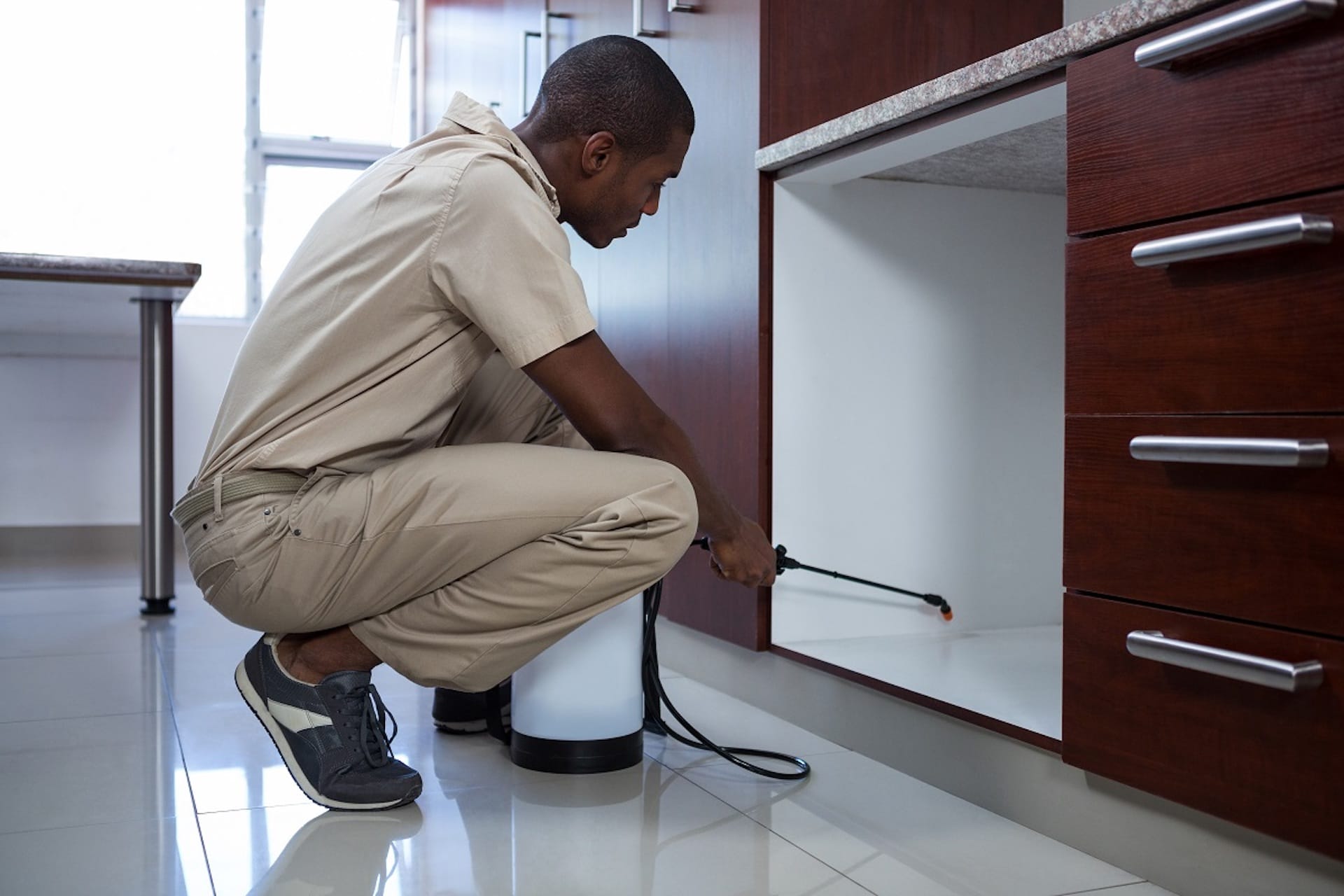
What to Expect From an In-Home Pest Spray (and How to Prepare)
An in-home pest spray is one of the most effective ways to eliminate active infestations and prevent future ones in Pennsylvania and New Jersey. When done professionally, it targets insects at their source, reaches hidden nesting areas, and creates a residual barrier that keeps pests from coming back.
In-home sprays are far more effective than natural repellents and just as safe. Most exterminators use organic sprays specially formulated to eliminate infestations and prevent new ones.
This guide explains what exterminators spray inside, how safe modern treatments are, how to prepare your home, and what to expect after service, so you know exactly how the process works and why it’s effective.
In-Home Pest Sprays: What’s Inside and Are They Safe?
Professional exterminators do not use the same over-the-counter products you find at big-box stores. In-home pest sprays are carefully selected formulations designed to be effective against specific pests while remaining safe for people and pets when applied correctly.
Most professional in-home pest treatments use targeted insecticides that disrupt pest nervous systems or reproduction, combined with residual agents that remain active on the surfaces where pests commonly travel.
These products are formulated to be low-odor or non-odorous for indoor use. Licensed pest control technicians apply them with precision, focusing on cracks, baseboards, entry points, and nesting areas rather than open living spaces.
When applied correctly, modern pest sprays are safe, controlled, and highly effective.
The Benefits of Exterminator Pest Sprays
A properly executed in-home spray delivers layered protection that repels existing pests and new ones from returning.
Key benefits of in-home pest sprays include:
- Eliminating active pests and hidden colonies
- Targeting insects at entry points and nesting areas
- Preventing reinfestation through residual protection
- Reducing reliance on repeated DIY treatments
- Creating a healthier, more sanitary living environment
Professional sprays are designed to solve the root cause of infestations to provide long-lasting and instant results.
What Pests Do Exterminator Pest Sprays Prevent
In-home pest sprays are effective against a wide range of common household pests in Pennsylvania and New Jersey, including:
- Ants (odorous house ants, carpenter ants)
- Spiders (including wolf spiders and house spiders)
- Cockroaches
- Silverfish
- Centipedes and millipedes
- Fleas and ticks (when part of a broader treatment plan)
The specific products and application methods used depend on the pest species, severity of infestation, and layout of your home.
How Do I Prepare For Your Scheduled Pest Control Visit?
While you don’t have to ensure that your home is spotless, there are a few important steps you can take to prepare for an in-home pest control visit.
Seal Away Food in Airtight Containers
Make sure that any unpackaged food items are sealed in airtight containers or bags.
If you have any fresh fruit on your kitchen counters, make sure to seal it up before your pest control visit.
Do a final walkthrough and make sure that you don’t have any hard candy, exposed nuts, or snacks in bowls anywhere throughout your home.
Lastly, make sure to check the kids’ rooms and seal away exposed pet food. Empty your pet’s water bowls.
Do Some Pest Control-Specific Cleaning
While you don’t need to make the home spotless, try to take the following steps before your pest control specialist arrives:
- Vacuum all carpet and hard floor surfaces
- Mop relevant hard surfaces
- Clean furniture and vacuum under couch and chair cushions
- For termites, move furniture at least 3 feet from interior walls
- For bed bugs, remove all bed sheets and linens
- Make sure there are no clothes on the floor
- Don’t leave any sticky spills behind
Completing these steps before your scheduled visits helps ensure that all pests are efficiently eliminated and that future infestations are prevented.
Have A Place for Pets to Go
While The Pest Rangers use non-toxic, pet-friendly in-home pest sprays, it’s best to remove your pet or pets from the treatment area until your pest control specialist is finished.
Make arrangements to ensure that your pet or pets are at daycare, staying with a friend, or visiting you at work on your scheduled pest control date.
What Can I Expect to See After A Pest Control Visit?
Once the spray has been applied, you can expect to see dead bugs as soon as your pest control specialist leaves and for several days post-treatment. Keep in mind that some pests may react differently to bug sprays. This does not mean that the treatment isn’t working.
Bed Bugs Undergo a Longer Elimination Process
If you’re still seeing bed bugs after your first or even second treatment, don’t be surprised. Bed bugs are difficult to treat because they can hide in areas that are hard to access.
While you may only find a few bed bugs before treatment, there are likely many more hiding in cracks and crevices throughout your home.
How Long Do Exterminator Pest Sprays Last?
Most professional in-home pest sprays provide residual protection for roughly 30 to 90 days, depending on the type of pest being treated, household activity, cleaning routines, and environmental conditions.
High-traffic areas, frequent cleaning, and moisture can break down treatments faster, which is why routine reapplication every quarter is often necessary.
Ongoing maintenance services help reinforce protection, address newly emerging pests, and prevent small issues from turning into full infestations.
Is an Influx of Pest Activity Normal After Spraying?
Don’t panic if you see a line of ants crawling up your wall or a cockroach running across your floor after an in-home pest spray treatment. These are simply unwanted critters that have been hiding in cracks and crevices and within your walls the entire time.
Our treatment is flushing them out, and as it does, it’s slowly but surely exterminating these pests in the process.
Don’t wait until it’s too late. It’s much more beneficial to regularly treat your home or business for pests rather than wait until the damage is extensive. Contact a pest control expert like The Pest Rangers to better ensure your home’s safety and longevity.
FAQs
What do exterminators spray inside homes?
Professional exterminators use EPA-approved insecticides formulated specifically for indoor use. Depending on the pest, this may include pyrethroids or pyrethrins for general insects, neonicotinoids or insect growth regulators (IGRs) to disrupt reproduction, and targeted baits or dusts for pests like ants, roaches, or rodents.
These products are applied in precise areas such as cracks, baseboards, and entry points—not across living surfaces—and are safe when used according to label and professional guidelines.
Is in-home pest spray safe for families?
Yes. When applied by licensed technicians and allowed to dry, modern pest sprays are safe for adults, children, and pets.
How long should I stay out of my home after spraying?
Most treatments allow reentry once surfaces are dry, typically within 1–2 hours.
Will one treatment eliminate all pests?
Some infestations resolve quickly, while others, like roaches or bed bugs, require follow-up treatments.
Can I clean after pest control?
Avoid deep cleaning treated areas for at least 24 hours to allow residual protection to work.
Does pest spray prevent future infestations?
Yes. Residual products create barriers that stop pests before they reenter.
Why do I see more bugs after treatment?
Pests are flushed from hiding spots and exposed to the treatment—this is normal and temporary.
How often should homes be treated for pests?
Quarterly treatments are common for prevention, though frequency depends on risk and pest pressure.

The Pest Rangers Referral Program: Earn a $50 VISA Gift Card
Finding a pest control company in Pennsylvania and New Jersey that you can confidently recommend isn’t always easy. That’s why The Pest Rangers created a referral program that rewards you for connecting others with proven, professional pest control, while helping your friends, family, or contacts solve real pest problems.
If you have used our 5-star services in the past and know someone looking for emergency or ongoing pest control, refer them to us, and be sure to have them mention your name
This guide explains how the referral program works, why it benefits everyone involved, and how to get started.
What Is The Pest Rangers Referral Program?
The Pest Rangers Referral Program rewards individuals who refer new customers with a $50 VISA® Gift Card for every successful referral. There is no limit to how many people you can refer or how many rewards you can earn.
Once your referral becomes a customer, your reward is issued.
Why Referral Programs Matter in Pest Control
Pest control is a trust-based service, and, unfortunately, many pest control companies provide poor work that can lead to repeat pest infestations.
Choosing the right pest control provider can be difficult amidst the myriad of local and national options.
People want recommendations from someone with firsthand experience of a company’s reliability, professionalism, and results.
Referral programs benefit customers because they:
- Help customers find reputable pest control faster
- Reduce the risk of choosing a bad provider
- Reward loyal customers for their confidence and advocacy
For local service businesses like pest control, referrals consistently lead to higher satisfaction and longer-term customer relationships.
How The Pest Rangers Referral Process Works
The entire program is built around speed, transparency, and follow-through.
- You submit your contact information and the person you’re referring
- The Pest Rangers team reaches out directly to schedule service
- When your referral becomes a customer, you receive a $50 VISA® Gift Card
Referrals are logged manually by our team, not lost in an automated system, which ensures your credit is properly recorded.
You’re never responsible for selling, reminding, or following up—we take care of the entire customer experience from first contact to completed service.
Once your referral becomes a customer, your reward is issued promptly. It’s a hands-off way to help friends, family, or neighbors find reliable pest control while being rewarded for the connection.
Who Should You Refer?
The referral program applies to both residential and commercial pest control needs. Ideal referrals include:
- Homeowners dealing with rodents, insects, or wildlife
- Landlords and property managers
- Business owners needing ongoing pest prevention
- Realtors or contractors working with clients who need inspections
Anyone who requires pest control services qualifies as a referral.
Why People Trust The Pest Rangers
Customers choose The Pest Rangers over other regional pest control providers because our technicians focus on long-term results, not temporary treatments. Customers choose us for:
- Licensed, experienced technicians
- Clear inspections and honest recommendations
- Preventive pest control plans
- 5-star rated service
How to Get Started
Submitting a referral takes less than a minute. Click the link below to fill out the referral form, provide the contact details, and let us handle the rest.
If you know someone who needs pest control, refer them today—and earn $50 while helping them protect their home or business.
FAQs
How do I know if my referral qualifies for the $50 gift card?
Your referral qualifies once they become a paying customer of The Pest Rangers and complete their first service.
Is there a limit to how many people I can refer?
No. You can refer as many people as you’d like and earn a $50 VISA® Gift Card for every successful referral.
When will I receive my $50 VISA® Gift Card?
Gift cards are issued after the referred customer’s service is completed and payment is confirmed.
Do I need to be a current customer to make a referral?
No. Anyone can participate in The Pest Rangers Referral Program. You do not need to be an active customer.
Can I refer a business or commercial property?
Yes. Residential and commercial referrals both qualify as long as the referral becomes a customer.

What Do Mice Eat? What Food Attracts Mice to Your PA and NJ Kitchens
Discovering mouse droppings, gnaw marks, or shredded packaging is a clear sign that food sources are being compromised.
You may not think that the odd mouse or two inside your home isn’t a big deal, but they can be more dangerous than you suspect. According to a previous report from the Pest Control Industry (PCI), rodents are responsible for up to $19 billion in structural damage each year.
One inside, mice can chew through insulation and wiring–not to mention contaminating food sources and spreading diseases.
In Pennsylvania and New Jersey homes, especially during colder months, kitchens are one of the most common entry points and feeding grounds for mice.
Understanding what attracts mice to your kitchen is the first step in stopping an infestation before it grows.
This guide breaks down what mice eat, which foods put your kitchen most at risk, and how to reduce the conditions that keep them coming back.
Foods That Attract Mice Indoors
Mice are attracted to foods that are high in fats, sugars, and carbohydrates, because these provide quick, dense energy.
In a kitchen environment, even tiny amounts of food, such as crumbs, are enough to keep them coming back night after night.
While mice will eat almost anything if they’re hungry, certain foods are far more enticing and commonly targeted inside homes, including:
- Bread, cereal, and pasta
- Crackers, cookies, and sweets
- Fresh produce and loose crumbs
- Cooking oils and grease residues
- Peanut butter, spreads, and sauces
- Pet food left in bowls or unsealed bags
It’s important to note that mice only eat tiny amounts at a time. They will visit the food sources frequently, though. Mice may return to feed 15-20 times a night, meaning you may hear or see them in action.
The Dangers of Mice Inside Pennsylvania Homes
Mice may seem harmless, and you might not think much of seeing them in your home. Unfortunately, they are a very real threat to safety and health. The risks of having mice in your home include:
- Contaminated food with saliva, urine, and droppings
- Spreading disease through surfaces and stored food
- Damaged insulation and contaminated nesting materials
- Chewing holes through cabinets and drywall
- Gnawing through electrical wiring, increasing fire risk
It’s imperative to remove and eliminate mice as soon as possible, whether through store-bought traps, natural repellents, or a pest control professional.
How Mice Enter Homes?
An important step in preventing mice is physically sealing common entry points.
Mice want into your home because it offers shelter, warmth, and, most importantly, a reliable food source. Mice only need an opening the size of a dime and can find openings around:
- Gaps around doors and garage seals
- Cracks in the foundation
- Utility line openings
- Torn window screens
- Gaps around attic or crawl space vents
If you’re trying to keep mice out, you’ll need to check around these areas to ensure there are no cracks, gaps, or openings that allow mice to enter. If there are, you must seal them properly.
A pest control specialist can help with this if you’re not comfortable doing it yourself.
Do Pet Food and Bird Seed Attract Mice?
Pet food and bird seed are among the strongest attractants for house mice.
Kibble, regardless of flavor, contains many of the grains mice naturally eat in the wild.
Bird seed contains seeds and nuts that make it a buffet for mice. Either left out overnight or stored improperly will be a primary target for rodents.
To avoid issues with mice eating pet food and bird seed, consider the following tips:
- Store pet food in metal or thick airtight containers
- Clean spilled kibble around bowls
- Avoid leaving food out overnight
- Keep bird seed stored in sealed bins away from entry points
Signs Mice Are Feeding in Your Home
As elusive as mice are, they will leave plenty of signs behind to announce their presence.
Some telltale signs of mice feeding include:
- Gnawed pantry items or damaged packaging
- Scattered crumbs or food trails
- Grease marks along walls
- Small chew holes near food storage areas
- Torn food wrappers behind appliances
- Nesting materials made from shredded packaging
- Dry food stashes in hard-to-reach areas
If you spot any of these signs, it’s time to take action. Homeowners can try to eliminate a mouse problem on their own, but it’s always wise to consult with a pest control specialist for help.
Tips to Reduce Food Sources and Prevent Infestations
There are several reasons for mice to target your home. Access to an easy, reliable food source is among them. When trying to stop or prevent infestations, consider these steps:
- Cleaning countertops and floors regularly
- Storing grains, snacks, and baking ingredients in airtight containers
- Sweeping crumbs and wiping spills immediately
- Keeping garbage sealed and take it out frequently
- Avoiding leaving dishes in the sink overnight
- Storing produce in sealed bins—not on open counters
- Feeding pets only at scheduled times rather than free-feeding
The goal is to eliminate food sources for mice. Doing so not only starves them but also drives them away. Coupling these tips with other pest control techniques will help quickly get a mouse problem under control.
When to Call a Pest Control Professional
Pennsylvania and New Jersey homeowners are encouraged to call in a pest control specialist any time they’re concerned about mice. A specialist can help identify an active infestation, deal with it, and even prevent future infestations.
Homeowners can deal with small infestations themselves. However, a professional is recommended for more difficult situations.
Mice multiply quickly and can be a serious threat to your home. A specialist can remove them much more quickly than DIY steps can, making their help the safest route.
FAQs
Do mice prefer crumbs or packaged food?
Mice prefer crumbs because they’re easier to get to. However, they will chew a package open if they smell food inside.
Can mice chew through plastic or cardboard packaging?
Yes. Mice can chew through thin plastic, paper, cardboard, and even soft aluminum foil.
Do mice eat fruits or vegetables?
Yes. Mice eat fruits and vegetables. Apples, potatoes, berries, and bananas are all attractive to them.
How far will mice travel for food?
Most mice will travel 10-30 feet from their nest for food, but scarcity will drive them to go further.
Do mice store food inside walls?
Yes. Mice will often store food behind walls and in other hidden areas near their nests.
What kitchen smells attract mice?
Strong scents like those produced by fats and oils, peanut butter, grains, and sweets will draw mice in.

How Did Stink Bugs Get Their Name? Why Do They Smell?
The stink bug gets its name from the unpleasant-smelling aldehydes it releases when threatened or crushed by humans.
With their distinctive shield shape and mottled appearance, the brown marmorated stink bug (“Halyomorpha halys”) is a frequent guest in homes and gardens across Pennsylvania and southern New Jersey.
Pennsylvania is their home, as the stink bug was first discovered in Allentown, Pennsylvania, in the mid-90s.
There are over 5,000 stink bug species, or Hemiptera Pentatomidae, in the United States. The brown marmorated stink bug is the species commonly found in Eastern Pennsylvania.
It is an invasive species and will move indoors during the fall to find overwintering sites. Stink bugs do not pose any health risks to people, although some are allergic to the chemicals they release.
Luckily, stink bugs do not breed inside your home’s walls, but they tend to hibernate during the winter inside warm basements.
Learn more about stink bugs, where they get their name, and how to safely get rid of stink bugs without triggering their odor.
How Did Stink Bugs Get Their Name?
Stink bugs release a foul-smelling chemical when they feel threatened or crushed—hence the name “stink bug.”
This odor comes from specialized glands in their abdomen and acts as a natural defense mechanism, much like how a skunk uses scent to deter predators.
Once released, the smell can cling to fabrics, shoes, vacuum filters, and other surfaces, making it difficult to remove if the insect is stepped on or smeared. The intensity of the odor can also vary from one stink bug to another, which is why some smell far stronger than others.
What Gives Stink Bugs Their Smell?
Stink bugs release an odor composed of aldehydes and organic compounds. These chemicals serve two key purposes:
- Defense: When handled, trapped, or crushed, stink bugs emit a strong odor to warn predators.
- Communication: When stink bugs find suitable overwintering sites—like your attic—they release a different scent that humans can’t detect. This pheromone signals other stink bugs to join them.
This is why homeowners often find dozens of stink bugs gathering in the same area, including attics, basements, and the side of your home that faces the sun at night.
Why Can Only Some People Smell Stink Bugs?
Not everyone detects a stink bug’s odor the same way, and this comes down to differences between both the insects and the people encountering them.
Individual stink bugs produce slightly different chemical compounds, so some naturally give off a stronger or sharper smell. At the same time, human sensitivity to the aldehydes in stink bug odor varies widely—some people pick up the scent immediately, while others barely notice it at all.
It’s similar to perfume: a fragrance that seems faint to one person can feel overpowering to someone else.
Key Facts About Stink Bugs in Pennsylvania
The brown marmorated stink bug (Halyomorpha halys) is an invasive species from Asia that thrives in temperate regions like Eastern PA. Today, it’s the most common stink bug found in the Northeast.
Key facts about PA’s stink bug population include:
- First U.S. discovery occurred in Allentown, PA (1996)
- Over 5,000 species of stink bugs exist in the U.S., but the brown marmorated species dominates in PA
- They do not breed indoors—they overwinter in homes and emerge in spring
- They cause significant agricultural damage, especially to apples, peaches, tomatoes, and corn
Because homes provide warmth and shelter during cold months, stink bugs gather in wall voids, attics, and basements from September through March.
What Purpose Does a Stink Bug Serve?
Less-than-complimentary nickname aside, some stink bug species are helpful.
The brown marmorated stink bug releases carbohydrates after feeding that are beneficial to the pollination of plants and the natural control of pests.
Some stink bug species are carnivorous and will eat insects like beetles, caterpillars, or aphids, pests that typically feed on plants. The insect-hungry stink bugs help keep the pest population down and growers’ crops prosperous.
Some stink bug varieties are believed to have medicinal properties.
An old wives’ tale says having a stink bug in your house is good luck. If you are superstitious, think twice about getting rid of any you find in your home!
How Do Stink Bugs Get Into My Home?
Like most insects, stink bugs enter a home through the smallest of openings—ripped or torn window screens, gaps in a window or door frame, or cracks in a wall.
Once inside, stink bugs are skilled at hiding and prefer low-traffic areas of a house. Look for them in folds of curtains or draperies, attics or crawl spaces, or basements.
The most effective way to protect your home against stink bugs is to secure any openings. Walk around your home’s exterior and inspect it closely. Seal any cracks or crevices, close all windows and doors tightly, and fix any gaps in window or door frames.
How to Get Rid of Stink Bugs
The best way to remove a stink bug is to gently capture it in a paper towel or paper napkin and release it from an open window.
The brown marmorated stink bug has very few, if any, natural predators, so Mother Nature is not much help when it comes to exterminating these pests.
One easy way to deter stink bugs from entering your home is to keep your landscaping in check. If any trees or shrubs touch your house’s exterior, that gives stink bugs easier access to doors, windows, cracks, and crevices.
Some people will try to remove stink bugs with a vacuum cleaner. While it is effective, just keep in mind that their odor lingers, so it is best to use a hand-held vacuum solely for this purpose.
If your home is overrun with stink bugs in large numbers, it’s best to call in a pest management expert.
DIY remedies produce mixed results due to the species’ robust nature. An experienced pest management technician can offer the best solution for ending your stink bug problems for good.
FAQs
Do stink bugs cause damage inside the home?
No. Stink bugs don’t chew wood, destroy wiring, or reproduce indoors during winter. Most of their damage occurs outdoors on fruits, vegetables, and ornamental plants.
Why do stink bugs suddenly appear in large numbers?
When temperatures drop, stink bugs seek warm overwintering sites. Once one enters, it releases a scent undetectable to humans that signals others to follow, leading to sudden cluster sightings.
Are stink bugs dangerous or poisonous?
Stink bugs aren’t harmful to humans or pets. They don’t bite, but their odor can trigger mild allergic reactions in sensitive individuals.
What’s the best way to get rid of a stink bug without the smell?
Gently capture it with a cup or paper towel and release it outdoors. Avoid crushing or vacuuming them with your household vacuum, as the smell can linger.
Can pest control permanently stop stink bugs?
Because stink bugs enter from outside in large numbers each fall, no method offers a 100% permanent fix. However, professional exclusion services and seasonal treatments greatly reduce infestations.
Why do stink bugs return every year?
Stink bugs are seasonal overwintering pests. They re-emerge and search for warm structures each fall, often returning to the same homes unless entry points are sealed.
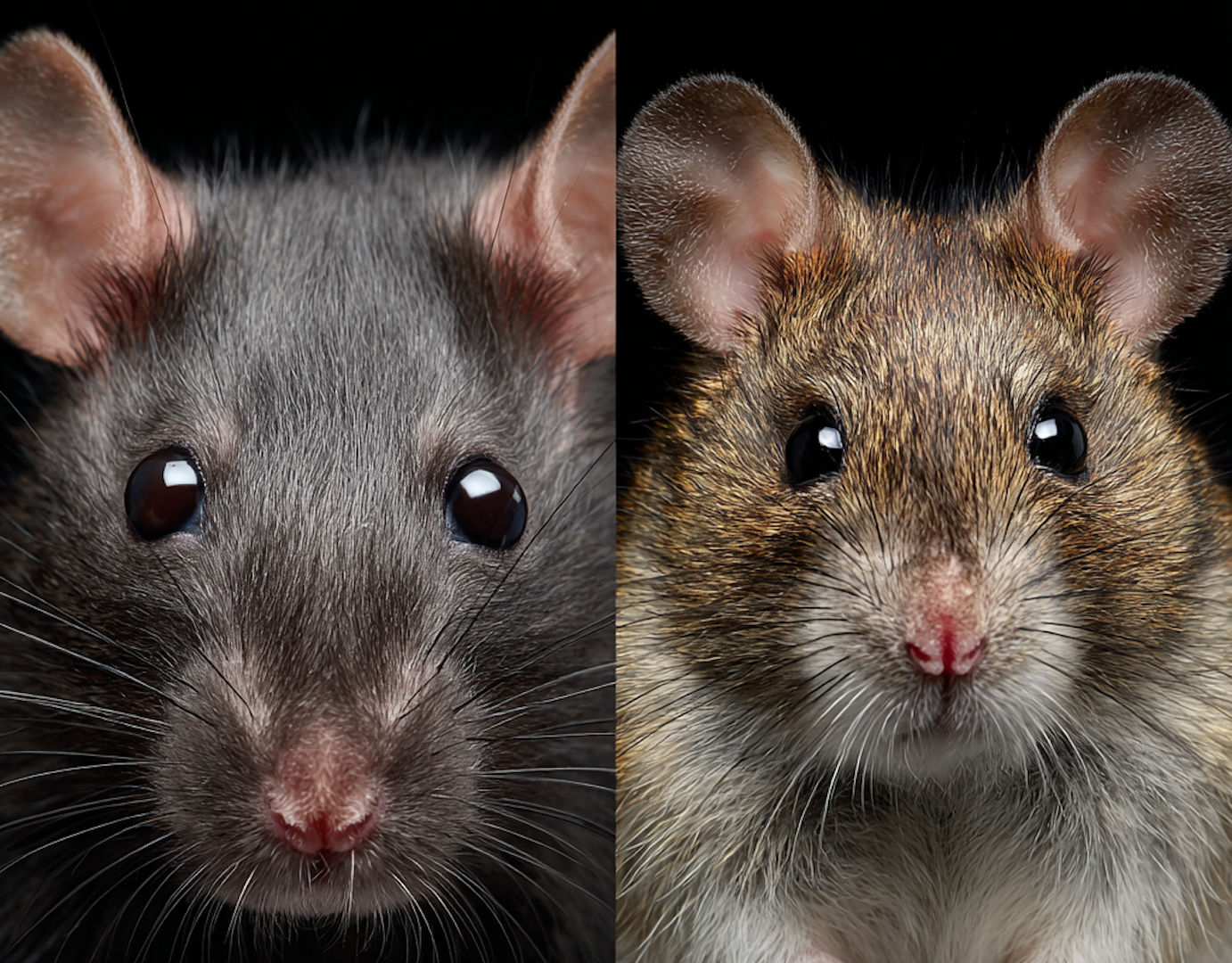
Rat or Mouse? How to Tell the Difference in Your PA or NJ Home
Finding gnaw marks, droppings, chewed food, and other signs of rodents in your Pennsylvania or New Jersey home is a normal occurrence, but it is a sign to take immediate action.
Rodents like mice, rats, and voles are incredibly common around the commonwealth. While mice are more common in rural and suburban homes, rats infest dense urban areas, such as Allentown, Scranton, and Hazleton.
The problem many Pennsylvania homeowners encounter is not knowing which type of rodent is causing them problems.
Treating your home for rats versus mice requires different preventative measures and traps, and getting them mixed up could make it more challenging to eliminate these pests.
This guide will help you identify whether you’re dealing with a mouse or a rat problem. We’ll talk through some telltale signs to help you identify one from the other so you can come up with the right pest control plan.
Common Mice and Rats in Pennsylvania
Rats and mice are most active in winter and typically enter homes through gaps in basements or attics. Knowing what they are is your first step in determining which one you’re dealing with.
- House Mouse: The small, agile house mouse is the most common indoor rodent found in Pennsylvania homes. Their small size is key to your treatment plan, and you can easily distinguish them from rats because of it. They have gray fur, large ears, and long tails that are equal to their body length. Because they’re so small, they can easily squeeze through tiny openings and cracks, often nesting in walls near food sources.
- Norway Rat: Norway rats, also known as brown or sewer rats, are another very common pest in Pennsylvania. They’re much larger than mice, with a blunt nose, large ears, and a short tail. These cautious rats typically hide in basements and crawl spaces, making them harder to spot than mice despite their larger size.
- Roof Rat: As the name would suggest, roof rats tend to dwell in higher spaces. These excellent climbers typically enter homes through attics, trees, and vents, often nesting in higher-up areas. They have a sleek appearance, with pointed noses, large ears, and very long tails.
Key Differences Between Rats and Mice
Rats and mice are often mixed up with one another, but they can easily be distinguished by understanding more about their appearance and behaviour.
Physical Differences
The easiest way to tell the difference between rats and mice is by their size. Mice are much smaller, with a body length typically around two to four inches. Rats are typically double their size, if not bigger, with body lengths of around seven to ten inches.
Size plays a direct role in how either rodent enters your home. Mice can squeeze through openings the size of a dime, while rats need an opening the size of a quarter.
Size and Shape of Droppings
Mice and rats are elusive rodents that can be hard to spot. The mess they leave behind can tell you a lot about who you’re dealing with, though. Droppings specifically are the next easiest way to determine which rodent is in your home.
- Mouse droppings: Small (⅛–¼”), pointed ends, pebble-like, often found in clusters.
- Rat droppings: Larger (½–¾”), blunt ends, sausage-shaped, often left individually.
Gnaw Marks and Damage Patterns
All three rodent species also need to chew constantly. The damage they leave behind can be used to identify them.
- Mouse gnaw marks are small and fine.
- Rat gnaw marks are larger, deep, and often more destructive.
Keep in mind that mice generally only chew on wire insulation and wood, while rats will chew through tougher materials, including drywall and metal.
Nesting Materials and Locations
Mice prefer soft materials like paper, insulation, string, and fabric to build their nests. They typically nest in kitchen walls and storage boxes, where they have immediate access to food.
Norway rats prefer burrows outdoors, crawlspaces, foundations, and basements, while roof rats prefer high nesting areas: attics, rafters, and roofs.
Noises and Activity Levels
Mice and rats are nocturnal rodents that have similar habits, and you can expect to hear them rustling, scratching, and gnawing occasionally at night. Mice are more commonly heard in walls, producing light scratching sounds, especially at night.
Rats produce heavier thumping or slow gnawing sounds near nesting locations
Common Entry Points for Each Rodent
There are plenty of access points that allow rats and mice to get into your home. While mice require smaller openings, you can’t rule out rats exploiting cracks and small holes. Their tougher teeth allow them to chew open access points they might not otherwise fit through.
Rodents typically enter through the following areas:
- Gaps under doors (mice and norway rats)
- Foundation cracks (mice and norway rats)
- Attic vents (roof rats)
- Roof openings (roof rats)
- Utility pipe gaps (all three)
- Damaged siding or soffits (all three)
How to Safely Remove Mice and Rats
Dealing with rodents is something many homeowners opt to take on. In cases where just a single rat or mouse is present, this is totally feasible.
To remove rats or mice from your home, take the following steps:
- Seal entry points, such as gaps and cracks in your siding, foundation, and roof
- Store food in airtight containers
- Eliminate water sources by fixing leaks and sealing cracks
- Clean nesting areas and droppings carefully (wear gloves and a mask)
- Use appropriate traps: Small traps for mice, large traps for rats
- Place traps near walls, behind appliances, and near known travel paths.
Remember never to handle droppings or rodents without gloves and respiratory protection, as they can carry disease and spread illnesses.
Do You Need Professional Pest Control for Mice and Rats in PA?
While you don’t always need to call in a professional pest control specialist, there are plenty of situations where you’re better off doing so. Homeowners can safely take care of a small rodent problem themselves. However, when more than one mouse or rat is found, it’s time to consider getting help.
Rats and mice can cause serious damage to homes, and they multiply quickly. Just a pair of mice or rats can turn into dozens within months. Professionals have experience and resources that make it possible to eliminate infestations and stop rodents in their tracks with ease.
FAQs
How can I quickly tell if I have a rat or a mouse?
The difference in size tells you everything. Mice are smaller, faster, quieter, and leave smaller droppings. Rats are larger, louder, and leave larger droppings.
Are rat droppings different from mouse droppings?
Yes. Mice droppings are small and pebble-like, whereas rats’ droppings are larger and more cylindrical.
Do rats cause more damage than mice?
Yes. Rats are larger and can chew through tougher materials, including metal. With time, they can cause structural damage to your home.
Are rats more dangerous to my health than mice?
Yes. Rats are larger, have stronger jaws, and will chew through structural materials. While both carry disease, rats often travel through sewers and other contaminated areas, making them riskier to be around.
Can I use the same traps for rats and mice?
No. Rats are much larger than mice. Traps used for rats must be larger and stronger.
Why are rats harder to catch than mice?
Rats are more cautious than mice. While mice are more curious and will approach traps immediately, rats wait until they’re familiar with them.

Do You Need Pest Control in Winter? 7 Reasons It’s Necessary
As soon as frost hits in Eastern Pennsylvania, cold weather can lead to unexpected pest problems. While most pests tend to die out in the winter, a few will seek out warm, comfortable places to wait it out. In fact, you’re more likely to experience indoor pest problems during the winter, even if you keep a clean or tidy home.
The most common winter pests in Pennsylvania include cockroaches, rodents, spiders, and bed bugs. Other insects, like ants and termites, can also keep active colonies going inside your home during the snowy season and resume activity once the weather warms in spring.
Winter pest control can be trickier than other times of the year because it relies a lot on exclusion methods and removing active pests when they’re already inside your home.
From as far south as Phoenixville to the Poconos, any place can be a haven for overwintering pests. Here are seven reasons why you need to invest in winter pest control if you live in Pennsylvania.
7 Reasons You Need Pest Control in the Winter in Pennsylvania
1. Rodents Are Looking for Warm Shelter
Rodents can get into your home through cracks as small as half an inch in diameter.
Mice and rats are highly motivated to escape the cold, and your home provides all of the perfect ingredients for a winter shelter: food, warmth, and water.
Once inside, rodents can cause lots of damage including:
- Chewed electrical wiring, creating a fire hazard
- Damaged insulation, raising your heating bills
- Contaminated food sources
- Spreading diseases like salmonella and leptospirosis
Rats and mice are social creatures; if you see one, there might be plenty more. According to one source, two rats can reproduce up to 15,000 offspring within a year under ideal conditions.
2. Cockroaches Are At Their Most Active
As soon as outdoor conditions become too cold or food sources run scarce, cockroaches migrate indoors and settle into kitchens, bathrooms, basements, and utility rooms where heat and moisture are plentiful.
German cockroaches—the most common indoor species in Northeast Pennsylvania—cannot survive freezing temperatures outdoors, which means winter forces them to stay active inside homes.
Once indoors, they hide deep inside wall voids, behind appliances, inside cabinet hinges, and around plumbing lines where warmth and humidity help them thrive year-round.
Winter also increases cockroach activity because:
- Heat from appliances (like refrigerators, dishwashers, and water heaters) creates ideal nesting pockets.
- Indoor moisture, especially from winter condensation, leaking pipes, and humid basements, supports rapid breeding.
- Holiday gatherings and increased cooking leave behind crumbs and grease that roaches detect quickly.
- Boxes of holiday décor brought up from storage often contain roaches that have been hiding unnoticed for months.
Once roaches establish themselves in a warm indoor environment, they reproduce rapidly—even faster than in spring or summer. A single female German cockroach can produce hundreds of offspring in just a few months, turning a minor issue into a full-scale infestation by February.
3. Spiders are a Problem All Year Round
As the temperatures drop, spiders will seek out warmer areas, which can lead to big problems if they happen to lay eggs.
Spiders tend to dwell in basements, crawl spaces, and attics, but you can find them in all corners of the house. While they try to stay hidden, they may just jump up when you grab your holiday decorations. All it takes is a little crack or opening and spiders can find a way inside. While many spiders are harmless, you may come across a few that could be poisonous.
4. Overwintering Pests Can Sneak Their Way Indoors
NEPA homeowners regularly deal with overwintering insects that sneak indoors during fall and stay dormant until temperatures rise.
Common overwintering pests in the region include:
- Stink bugs
- Boxelder bugs
- Cluster flies
- Asian lady beetles
These pests flatten their bodies to slip under siding, squeeze through attic vents, and hide behind insulation. You may not see them until dozens appear all at once.
Overwintering pests rarely cause structural damage, but they stain surfaces and emit foul odors when crushed, making winter prevention essential.
5. Winter Weather Can Open Up Gaps in Your Exterior
While pests may be searching for a place to stay, your home may be an area that requires attention. Weather can really weaken your home; wind, moisture, and temperature can affect the foundation, roof, and siding. When the defenses are down, all manner of pests can come right in.
The space doesn’t have to be too large. Rodents and insects can get through small openings under doors, in the foundation, or even through tears in window screens. Vents and chimneys are easy entry points as well.
Before winter hits, it’s a good idea to inspect your house for visible gaps in the exterior, including your foundation, window screens, chimney, and roof.
6. Firewood and Fireplaces Can Attract Wood-Destroying Insects
Crackling fireplaces and woodpiles are an ideal spot for insects and rodents to hide. Wood piles can provide the proper insulation and warmth for termites and wood-destroying insects that can lead to substantial property damage.
While termites and carpenter ants are not as active in the winter, leftover wood can help spring an infestation of swarmers in the spring.
7. Snow, Moisture, and Leaf Piles Can Be a Recipe for Pests
With cold temperatures comes some awful winter weather. Snow and sleet can easily add extra moisture to your home, and if you have some fall leaf leftovers in your gutter, you may have a stagnant water problem on your hands.
Leftover fall leaf piles are potential homes to pests, including cockroaches, ticks, and ants.
Watch out for leaking pipes, overflowing gutters, and clogged drains, which are all perfect breeding grounds for rodents and insects. If left unfixed, these areas can also attract ants and mosquitoes when the weather warms.
Winter Pest Control Tips to Prevent Pests from Coming Indoors
Preventing winter pests in Pennsylvania begins with making your home less inviting before temperatures drop.
Most cold-season intruders, including spiders, mice, stink bugs, cluster flies, and cockroaches, use tiny gaps and structural openings to slip inside once frost arrives. A quick exterior inspection and a few simple indoor habits can dramatically reduce your risk.
Key winter pest prevention steps include:
- Seal entry points: Check foundation cracks, loose weatherstripping, torn screens, gaps around pipes, vents, and utility lines. Even a pencil-sized opening is enough for rodents.
- Improve sanitation: Store food in airtight containers, clean spills quickly, fix leaks, keep basements dry, and remove clutter that creates hiding spots.
- Reduce moisture: Address leaking pipes, condensation, and humidity, especially in basements where many winter pests settle.
- Inspect items before bringing them inside: Firewood, holiday decorations, and storage bins can harbor overwintering insects.
- Store firewood properly: Keep it at least 20–30 feet away from the home to avoid transporting pests directly indoors.
These small preventative steps help stop winter pests before they ever become a problem, keeping your home protected through the cold season.
The Importance of Winter Pest Inspections and Seasonal Plans
Winter is one of the most strategic times to schedule a pest inspection in Pennsylvania. As temperatures drop, pests gather in predictable areas—basements, attics, utility rooms, wall voids, and crawl spaces—making it easier for professionals to identify early activity before it spreads.
A trained specialist can spot subtle signs most homeowners overlook, such as rodent grease marks, hidden droppings, insect entry points, moisture pockets, or early nesting behavior.
Seasonal pest control plans are also especially valuable during winter.
While many pests are active year-round, winter inspections allow exterminators to strengthen exterior defenses, apply preventative treatments, and interrupt breeding cycles before populations surge in spring.
A winter service visit often includes sealing entry points, adjusting exterior bait stations, removing inactive nests, inspecting attics for rodent trails, checking insulation for pest damage, and ensuring moisture areas are properly addressed.
For NEPA homeowners, seasonal plans provide peace of mind during the region’s long, cold winters. Routine monitoring helps catch issues when they’re small, prevents costly structural damage, and prepares the home for spring when pest activity spikes again.
FAQs
Are winter pest infestations really more common in Pennsylvania?
Yes, many pests move indoors to escape freezing temperatures, making winter one of the most active seasons for indoor infestations. Homes provide warmth, moisture, and hiding spots that pests can’t find outdoors.
Do cockroaches die off in winter?
Outdoor roaches struggle in freezing temperatures, but indoor infestations often worsen in winter because heat and humidity help them breed year-round. German cockroaches, in particular, can explode in population once they settle inside a warm home.
Can spiders survive Pennsylvania winters?
Most spiders survive winter by hiding in undisturbed areas like basements, attics, and crawl spaces. These sheltered environments allow them to lay eggs and remain active until spring.
Why do rodents become such a problem during cold weather?
Rodents seek warmth, food, and shelter once temperatures drop, and even a tiny gap or crack gives them access indoors. Once inside, they can gnaw wiring, contaminate food, and reproduce quickly.
What are the first signs of a winter pest problem?
Common signs include droppings, scratching sounds, grease marks, nesting materials, damaged food packaging, and insect sightings around heat or moisture sources. If you notice these early indicators, an inspection is recommended before the problem spreads.
Can pests come in through holiday decorations or firewood?
Yes, stored décor and firewood piles are common hiding places for spiders, beetles, stink bugs, and rodents. Bringing these items indoors without checking them first can introduce pests directly into your home.
Does snow and ice affect pest activity?
Cold weather pushes pests toward warmth, moisture, and shelter, dramatically increasing indoor activity. Snow and ice can also drive rodents and insects into weakened entry points around your home.

Found Bugs on Your Christmas Tree? Here’s What to Do
A real Christmas tree can make the holiday season feel more magical, but they also risk attracting bugs inside your home.
While many trees are treated with chemical pesticides and fertilizers that keep pests away, they can still serve as a home for some pests that can be inadvertently transferred inside your home.
Organic trees not treated with chemicals often contain sap and pine needles that can attract pests indoors, where they can mistake the warmth for spring and begin hatching.
The most popular Christmas tree in Pennsylvania and New Jersey is the evergreen conifer, which can harbor up to 25,000 insects across its branches, trunk, and needles.
While most of these pests are harmless, the last thing you want to wake up to on Christmas morning is a dozen bugs and spiders roaming around your home.
If you choose a real tree, be aware of the various kinds of bugs that may be hiding in its branches, and how to get rid of them.
Common Bugs Found in Real Christmas Trees
Real trees can host a surprising variety of insects. Most are harmless to humans, but they become a nuisance once they emerge indoors. Below are the pests most often found in PA and NJ-grown trees.
Aphids
Found on lower branches, aphids can be green, brown, black, or even red. While they don’t bite or damage homes, they can crawl onto ornaments, furniture, and walls once warmed up indoors.
Spiders & Mites
Tiny brown or red dots on the branches often indicate spider or mite activity. These pests hide deeply in dense needles and may emerge after the tree warms. They do not survive long indoors, but can be unpleasant to find.
Adelgids (“Fake Snow”)
Adelgids leave behind a waxy white coating that looks like flocking or artificial snow. These insects are extremely common on fir and spruce trees and often go unnoticed until they move indoors.
Pine Needle Scale
White specks on the needles may actually be protective shells containing tiny red insects. Over time, they can hatch and spread through the tree.
Sawflies
Sawfly cocoons are found on spruce and pine trees and hatch into small black-and-yellow flies—often mistaken for wasps.
Praying Mantis Egg Sacs
Walnut-sized brown egg masses can hold 100–400 young mantises that will hatch quickly once brought inside.
Bark Beetles
These beetles leave small round exit holes and sawdust shavings on the trunk. While they don’t damage indoor furniture, they can be alarming when they appear in large numbers.
Why Christmas Trees Attract So Many Insects
PA’s evergreen species, particularly Fraser fir, Douglas fir, white pine, and Norway spruce, provide ideal winter shelter for many insects. The dense foliage offers protection from snow and predators.
When chopped and transported, these insects remain dormant. But once you bring the tree into a heated home:
- The temperature shift speeds up insect metabolism
- Eggs begin to hatch
- Dormant adults wake and crawl toward light sources
- Tree vibrations from decorating force pests out of hiding
This sudden “spring effect” is the main reason bugs emerge days after the tree is set up.
Are Christmas Tree Bugs Dangerous?
Most bugs found in real trees are not harmful to people, pets, or your home. They do not bite, do not infest homes long-term, and cannot survive in dry indoor environments.
Nevertheless, these tree bugs can still cause several problems, including:
- Aphids that stain surfaces with their fluids
- Mites that trigger allergies in sensitive individuals
- Praying mantis hatchlings that spread throughout the home if left undetected
- Bark beetles that leave a mess of sawdust around the tree skirt
The main drawback is the inconvenience of cleanup and attempting to remove these pests, which can be difficult once inside.
Common Mistakes that Attract Bugs to Your Christmas Tree
The most common mistake people make when purchasing trees is not carefully checking the tree before bringing it into their home.
In addition, the National Fire Protection Association (NFPA) outlines a couple of other Christmas tree mistakes that commonly lead to bugs and hazards within the home.
- Not watering the tree often enough (dry tree + Christmas lights = fire hazard)
- Using a tree stand that does not fit the tree trunk. If the stand is too small, the tree won’t get enough water and will dehydrate quickly.
- Over- or under-estimating the size of the space versus the size of the tree. Always measure the space before you cut down and bring in the tree!
- Placing the tree near a heat source (i.e., fireplace, radiator, space heater). No, no, no! The tree will dry out quickly, and obviously being close to a flame or open heat source is a tremendous fire hazard.
How to Remove Bugs Before Bringing the Tree Indoors
Before your tree comes inside, you can dramatically reduce (or eliminate) bugs by taking a few quick preventative steps. These simple precautions keep unwanted insects outdoors where they belong.
- Inspect the tree thoroughly: Look closely at branches, needles, and the trunk for egg sacs, webbing, white “snowy” residue, visible insects, bark dust, or small holes. Trim off any branches with obvious pest activity.
- Shake aggressively outdoors: Even if a tree farm shook it for you, shake it again at home. Place it over a white sheet and shake firmly to dislodge hidden insects and egg masses.
- Store in a cold garage or shed for 48–72 hours: Keeping the tree in a cold environment delays insect emergence and reduces overall survival once the tree is brought inside.
- Dust the tree with Diatomaceous Earth (DE): Lightly apply DE to the branches while the tree is still outside. Let it sit for 24 hours, then shake the tree again to remove dead insects and excess powder.
- Avoid using aerosol insecticides: Never spray chemical bug killers on your Christmas tree. These products are flammable around lights and can harm the tree’s needles.
How to Prevent Christmas Tree Pests From Spreading Indoors
Once your tree is inside, a few simple habits can stop any remaining insects from spreading. Start by vacuuming fallen needles, bark dust, or stray insects every day—this removes hiding spots and keeps dormant pests from settling elsewhere.
Keep the tree well-watered to reduce needle drop, and maintain low indoor humidity, since dry air encourages needles to fall and creates debris that insects like to hide in. If you have pets, keep them away from the tree skirt, where insects may emerge or collect.
During the first week, check the tree daily for signs of renewed activity or unexpected movement.
If you start noticing persistent or widespread insect activity, contact a pest control professional. They can treat the surrounding area safely, without damaging your tree, your home, or your holiday decorations.
FAQs
Are Christmas tree bugs harmful to my family or pets?
No. Most are nuisance pests that cannot survive long indoors and do not bite, sting, or spread disease.
Should I spray my Christmas tree with bug spray?
Avoid chemical sprays. Many are flammable and unsafe for indoor use. Stick to shaking, storing in cold areas, and using Diatomaceous Earth outdoors.
How do I know if my tree has bugs?
Look for egg sacs, tiny red or brown dots, “fake snow” white wax, holes in the bark, or sawdust. A close inspection at the farm is the best prevention.
Can Christmas tree pests infest my home long-term?
Almost never. These insects need moisture and outdoor conditions to survive and will die off indoors within days or weeks.
What should I do if praying mantis eggs hatch in my home?
Carefully remove the egg case if intact, or vacuum up hatchlings and immediately dispose of the vacuum bag outdoors.
Is it safer to buy a pre-cut tree or cut your own?
Both can carry insects. The key is a thorough inspection and proper preparation—not the method of purchase.

The Pest Rangers Acquires O.C.E. Pest & Termite Control
The Pest Rangers Expands Into New Jersey With Acquisition of O.C.E. Pest & Termite Control
The Pest Rangers, one of Pennsylvania’s fastest-growing pest control providers, has officially expanded its regional footprint with the acquisition of O.C.E. Pest & Termite Control, a long-established, family-owned pest control company serving New Jersey and Pennsylvania since 1976.
The transaction was completed on November 26, 2025, with advisory support provided by Cetane Associates, a leading M&A firm serving home-service industries nationwide.
This acquisition strengthens The Pest Rangers’ growing service network across the Mid-Atlantic, giving customers in both states expanded access to professional termite, rodent, and general pest solutions.
A Trusted New Jersey Company Joins a Growing Pennsylvania Leader
O.C.E. Pest & Termite Control, originally known as Oxford Circle Pest, has been a staple in Edgewater Park, NJ, for nearly 50 years. The company built its reputation on dependable pest and termite management delivered with a personal, neighbor-focused approach.
Owner Dave Kirn shared his excitement about the transition:
“We’re really pleased with the outcome of the sale and know the company will be in good hands with The Pest Rangers. A big thank-you to Bob and the Cetane team for making the sale run smoothly.”
The acquisition allows O.C.E. customers to continue receiving high-quality pest control while gaining access to the expanded resources, technologies, and service capabilities of The Pest Rangers.
The Pest Rangers Continues to Expand and Reach New Customers
The Pest Rangers has grown significantly across Pennsylvania in recent years, building a reputation for expert pest management rooted in professionalism, reliable solutions, and customer-first service.
The Pest Rangers currently operates in seven service areas across Eastern Pennsylvania, most recently opening up a branch in Allentown and the Lehigh Valley.
By acquiring O.C.E., the company strengthens its presence across eastern Pennsylvania and formally expands into New Jersey communities that align with its growth strategy.
The Pest Ranger’s Operations Manager, Timothy Drewes, had this to say about O.C.E.’s reputation and what it means for The Pest Rangers to fill that need:
“O.C.E. has earned trust in this community for decades, and our focus is to honor that legacy by keeping the service personal, responsive, and consistent—while bringing additional resources that help us deliver even more value to customers across the region.”
What This Acquisition Means for O.C.E. Customers
For customers in New Jersey, the transition is designed to be seamless. Homeowners and businesses can expect:
- Continuity of service from technicians familiar with local pest issues
- Expanded pest solutions backed by The Pest Rangers’ advanced tools and treatment methods
- Faster response times due to a broader service network
- Enhanced customer support with more robust scheduling, digital communication, and follow-up systems
The Pest Rangers will continue to honor O.C.E.’s commitment to personal service while delivering 5-star rated services that have allowed it to grow and thrive in Eastern Pennsylvania. “We’re thrilled to be taking on O.C.E. It’s a well-respected business with a strong reputation, and we’re committed to maintaining the same reliable, high-quality service that their customers have come to expect,” stated Jeff King, President of The Pest Rangers.
The Pest Rangers specializes in termite treatments, rodent control, bed bug eradication, seasonal pest plans, and residential and commercial pest management—services that remain in high demand across both states due to dense housing, aging infrastructure, and shifting seasonal pest pressures.
To learn more about the transition and what it means to The Pest Rangers and its customers, read the press release.
FAQs
Will O.C.E. customers still work with the same technicians?
No. The owner retired and trusts The Pest Rangers technicians to continue providing the same level of support, ensuring a smooth, familiar service experience.
Will pricing or service plans change?
Most existing plans will remain in place. Customers may gain access to new service options, enhanced seasonal plans, and upgraded scheduling tools offered by The Pest Rangers.
Does this acquisition mean faster service?
Yes. With more staff, equipment, and a larger operational footprint, customers in New Jersey and Pennsylvania can expect improved response times year-round.
Will O.C.E.’s customer guarantees still be honored?
Absolutely. The Pest Rangers is honoring existing commitments while also offering its own 5-star rated service guarantees for added peace of mind.
Which services will now be available to O.C.E. customers?
Customers will have expanded access to termite control, rodent removal, bed bug treatment, mosquito and tick services, seasonal pest plans, and commercial pest management.
7 Proven Tips to Get Rid of Cockroaches in PA and NJ
Getting rid of cockroaches involves multiple steps, from baiting to exclusionary measures.
Calling a professional pest control expert is recommended at the first sign of a cockroach, as they are social creatures that can produce 200 to 500 eggs in their lifetime.
Cockroaches are very common across eastern Pennsylvania and western New Jersey, with the German cockroach being the most common species found in homes and businesses.
If left unchecked, cockroaches can spread disease, trigger allergy symptoms, and reproduce quickly inside wall voids and appliances.
This guide breaks down what attracts cockroaches to NEPA homes, the steps to remove them safely, and why professional cockroach control is often necessary for long-lasting relief.
What Attracts Cockroaches to Your Home
The three main ingredients of a cockroach infestation include food, water, and shelter.
For cockroaches, especially, keeping a dirty or unkempt home could be a significant attractant–not to mention for other pests as well.
To help prevent and control cockroaches, controlling these three attractants is important.
- Food: Cockroaches are attracted to a variety of food sources, including sugars, starches, meats, cheeses, and grease. Therefore, any left-out food scraps or unsealed garbage cans will be a major draw for hungry cockroaches nearby.
- Water: Like most household insects, standing water from dripping pipes will be a major attractant for cockroaches, in addition to mosquitoes, ants, and termites.
- Shelter: Clutter in the form of loose trash, cardboard boxes, and even clothes and knick-knacks all serve as the perfect hiding places for cockroaches. Since most cockroaches tend to dwell in basements, perform a little spring clean every now and then to eliminate clutter.
Cockroaches tend to dwell in your yard before entering your home. You’ll need to eliminate water from clogged gutters and bird baths to prevent cockroaches. Likewise, leaf piles and outdoor clutter can also serve as the perfect shelter for cockroaches.
Where Cockroaches Tend to Hide in Eastern PA and Western NJ Homes
Cockroaches stay hidden by settling into warm, dark, and humid areas, many of which are common in homes throughout Eastern Pennsylvania and Western New Jersey. Older rowhomes, moisture-prone basements, and dense neighborhoods give roaches plenty of places to nest without being seen.
The most common hiding spots include:
- Kitchens: Behind refrigerators, under dishwashers, inside cabinet hinges, beneath sinks, and around stoves where grease collects.
- Bathrooms: Behind toilets, inside vanity cabinets, around pipes, and near shower drains in homes with older plumbing.
- Basements: Floor drains, sump pump pits, utility rooms, wall voids, and cluttered storage areas—especially in damp basements common across PA and NJ.
- Shared Walls & Multi-Family Housing: Roaches travel through electrical lines, pipe chases, and wall voids in duplexes, townhomes, and apartment buildings.
- General Hiding Areas: Cardboard boxes, behind baseboards, under flooring edges, inside wall cracks, and behind appliances or laundry machines.
Because cockroaches flatten their bodies to fit into extremely small gaps, they often go unnoticed until populations grow. Inspecting these hotspots early is a key step in preventing a severe infestation.
7 Steps to Get Rid of Cockroaches
If you find cockroaches dwelling in your Eastern, PA, or Western, NJ home, take these seven steps to get rid of them.
Step 1. Identify Your Cockroach Species
While there are over 4,000 different species of cockroaches, three of the most common cockroaches in Pennsylvania and New Jersey are the German, Oriental, and American Cockroaches.
German Cockroaches
These are the notorious kitchen dwellers who provide a nice jumpscare when you’re reaching for a late-night snack. German cockroaches can easily be identified by their light brown bodies, which contain two parallel dark stripes down the side.
While only half an inch long, these cockroaches can lay 40 eggs at a time and carry disease on the surface of their hands and feet, making them the worst cockroach of the bunch. Due to their ability to hide and multiply so quickly, these cockroaches always require professional assistance and immediate help.
American Cockroaches
About half an inch longer than German cockroaches, American cockroaches are more commonly found in basements, laundry rooms, and anywhere where water persists.
These cockroaches have reddish-brown bodies and tend to dwell outside, munching on mulch and garbage. Simple prevention tips, such as sealing your exterior, will help prevent these critters from making their way inside your house.
Oriental Cockroaches
Also known as water bugs, these black-bodied cockroaches thrive in water and typically don’t enter homes except through pipes. While more common in urban areas, Oriental cockroaches have been known to make their way into homes across NEPA and the Poconos from time to time.
Generally, all species leave similar signs of an infestation, including smear marks and foul odors. But once you understand what type of cockroach you are dealing with, you can make a plan to get rid of them as soon as possible.
2. Seal All Entry Points
Use a landscaper’s caulk to seal up openings and cracks along your siding, especially where it meets the ground. For larger openings, use an expandable spray foam. Simple weatherstripping will work for most windows and doors.
Be sure to inspect your foundation, chimney, and vents for any openings, and fill them with appropriate materials.
3. Inspect Hiding Places
Cockroaches don’t like to come out in the open very often. Instead, they prefer dark, quiet places, especially behind clutter.
One way to inspect these roaches is to shake up and look behind any furniture at night to see if you spot any movement. Look for areas you wouldn’t normally inspect, either, such as behind refrigerators and appliances.
Remember, keeping a clean home is an essential step to keeping cockroaches away.
4. Eliminate Trash and Food Sources
Be mindful of where you store your food, including pet food, and how you store it. Any room where food is stored, prepped, or enjoyed should be cleaned thoroughly–almost daily–and all food properly sealed.
When eating, it’s best to keep it to one central area. Likewise, whenever you prep or cook a meal, clean your dishes, wipe up afterward, and empty your garbage regularly. If the cockroaches don’t have a food source, they will move on to a place that does.
5. Eliminate Standing Water
Keep an eye out for leaking pipes, damp basements, or even your pet’s water bowl. Anywhere there is water, cockroaches will swarm.
Be wary of any area in your home that may have any water source, including humidifiers, sinks, refrigerators, and bathtubs as well.
6. Try Store-Bought Baits
If you have cleaned up, plugged up, and gotten rid of any potential food source, cockroaches can still hang around. Go in for the kill using either a store-bought bait, spray, or trap.
Baits and traps work by transferring a harmful chemical that disrupts a cockroach’s nervous system. Through mutual contact, the chemical will spread to the rest of the colony, providing relief for any infestation.
7. Contact an Exterminator
Most store-bought products fail to provide an effective long-term solution against cockroach infestations. At the first sign of a cockroach, we recommend contacting a professional immediately, especially considering the health risks that any contact with cockroaches can present to you and your family.
Estimating how big your infestation is can also be difficult since roaches can be very difficult to see. It’s also common for cockroaches to resurface, even after you’ve thought you eliminated them entirely. To truly get rid of cockroaches, the best call will be to find a pest control expert to help with your infestation.
Is DIY Cockroach Removal Safe?
While many homeowners may be tempted to reach for DIY solutions, such as neem oil, diatomaceous earth, and essential oils, the sad truth is that many home remedies for cockroaches don’t work as cure-alls.
Take diatomaceous earth. While this powder does attack roaches, the amount you would need to take out a full infestation would be more expensive than hiring an exterminator.
When treating roaches with store-bought products, it’s also important to consider your safety. For one, personal protective equipment (PPE) should always be used when applying insecticides and dealing with roaches. Secondly, you want to avoid any and all contact with roaches to prevent any risk of disease transmission.
Ultimately, you need to evaluate the consequences of failing to get rid of roaches versus the financial benefits of DIY-ing it, which simply are not worth it.
How Professional Cockroach Treatments Work
Professional cockroach control goes far beyond spraying visible insects. Professional exterminators focus on eliminating the full colony, including hidden nests in wall voids, ceilings, cabinets, and appliances that DIY products rarely reach.
A typical treatment plan includes a combination of:
- Insect Growth Regulators (IGRs) that disrupt cockroach reproduction so the population collapses.
- Targeted bait placements inside cracks, hinges, wall voids, and warm harborages (like behind dishwashers and refrigerators).
- Crack-and-crevice applications that reach deep hiding areas homeowners never see.
- Exclusion repairs, such as sealing gaps or installing door sweeps to prevent reinfestation.
- Follow-up inspections to verify egg case elimination, confirm no returning activity, and adjust bait placements.
Professional treatments are far more precise and strategic than store-bought sprays—and they avoid repelling cockroaches deeper into the home, which is a common DIY mistake. In severe cases, it may take multiple visits, but professional programs break the reproductive cycle completely, ensuring long-term relief.
FAQs
How do cockroaches enter homes?
Cockroaches can enter homes through various entry points, such as cracks in walls, gaps around doors and windows, utility pipes, vents, and even through belongings brought into the home. They are opportunistic and can squeeze through incredibly small openings.
How long does it take to get rid of cockroaches?
The time it takes to eliminate a cockroach infestation can vary depending on factors such as the severity of the infestation, the methods used for control, and the effectiveness of those methods. In some cases, it may take several weeks to completely eradicate cockroaches from a property using DIY methods.
Can cockroaches survive without food?
Yes, cockroaches can survive for extended periods without food, sometimes up to a month or longer, depending on environmental conditions. However, they require water more frequently and cannot survive as long without it.
Are cockroaches more active in certain seasons?
Cockroaches can be active year-round but may be more noticeable indoors during warmer months when they seek shelter from the heat. However, some species may also become more active indoors during colder months in search of warmth.
How long does it take to eliminate an infestation?
Light infestations may take 1–3 weeks, while severe ones—especially German cockroaches—may take several months with consistent treatment and follow-up visits.
Are cockroaches dangerous?
Yes. Roaches spread bacteria like Salmonella, contaminate food surfaces, and trigger allergies and asthma—especially in children.