
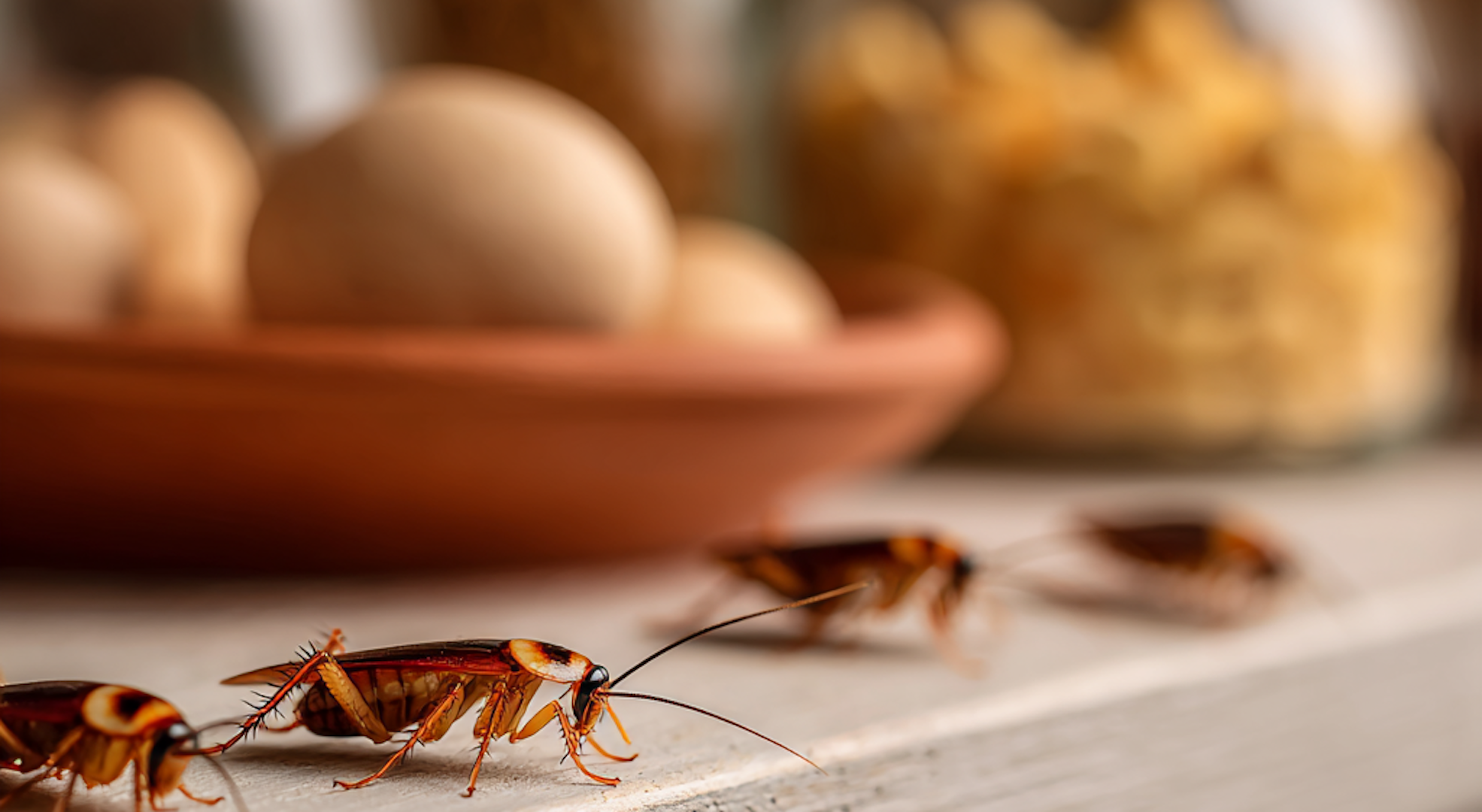
9 Methods to Keep Roaches Away in PA and NJ
To keep cockroaches away in Pennsylvania and New Jersey, homeowners need to focus on a combination of rigorous sanitation, moisture control, and professional exclusion techniques tailored to the region’s humid climate and urban infrastructure.
Cockroach infestations are a chronic issue for homeowners in New Jersey and Pennsylvania, where humid summers and aging infrastructure provide the perfect environment for pests to thrive.
If you’ve spotted a roach in your kitchen or bathroom, immediate action is required to prevent a full-scale infestation.
According to the University of California IPM, a single female German cockroach–the most common in the Mid-Atlantic–can produce up to 30,000 offspring in just one year. In urban areas like Allentown, Trenton, and Scranton, cockroaches can spread rapidly between shared buildings where aging foundations provide easy access, poor sanitation, and abundant food sources.
This guide outlines nine proven methods to keep roaches away, ranging from simple sanitation habits to professional exclusion techniques. Whether you are dealing with German cockroaches in New Jersey or American roaches in Pennsylvania, these strategies will help you clear your home and keep it pest-free year-round.
What Attracts Roaches to Your Home?
Cockroaches are opportunistic survivors that enter your home in search of three specific things. In our region, where seasonal changes and high humidity are common, these pests constantly seek stable environments to nest and breed.
- Consistent Moisture: Moisture is often the strongest draw for a roach. Leaky pipes under the kitchen sink, condensation on basement walls, and even damp bath mats provide the hydration they need to survive.
- Accessible Food Sources: Roaches are attracted to more than just fresh food. While they prefer grease and sugar, they also eat starch-based items like cardboard, wallpaper paste, and book bindings. Open trash cans and pet food bowls left out overnight are primary targets.
- Dark Shelter and Clutter: These pests prefer tight spaces where they feel pressure on both sides of their bodies. Stacks of paper bags, corrugated cardboard boxes, and gaps behind appliances offer the perfect “harborage” points. According to the UC IPM Program, roaches spend most of their time hiding in dark crevices to avoid detection.
How Do Roaches Enter Your Property?
The most common way cockroaches enter a property is through cracks and crevices in walls, windows, and doors. These pests also hitchhike into homes via cardboard boxes, grocery bags, second-hand furniture, and delivery packages. Once inside, they move between rooms and neighboring units through shared utility pipes, wall voids, and floor drains.
Infestations are difficult to eliminate because cockroaches are prolific breeders. Just a single female German cockroach and her offspring can produce over 30,000 individuals in one year. This rapid growth, combined with their ability to hide in microscopic gaps, makes early detection and professional exclusion the most effective means of protecting your property in our region.
Common Cockroach Species in NJ and PA
Identifying the specific type of cockroach in your home is critical because treatment strategies vary by species. In the New Jersey and Pennsylvania region, four types are most likely to invade residential and commercial properties.
- German Cockroach: This is the most common indoor species in our area. They are small, light brown, and identified by two dark parallel stripes behind their heads. These pests breed rapidly and prefer warm, humid areas like kitchens and bathrooms.
- American Cockroach: Often called “water bugs,” these are the largest house-infesting roaches in the Mid-Atlantic. They are reddish-brown with a yellowish figure-eight pattern on the back of their heads. They typically enter through basements, drains, or sewers.
- Oriental Cockroach: These roaches are dark, shiny black, and move more slowly than other species. They thrive in cool, damp locations such as crawl spaces, floor drains, and damp basements common in older homes.
- Brown-Banded Cockroach: Unlike other species, these roaches do not require high humidity and are often found in dry areas, such as bedrooms or behind electronic appliances. They are small and feature two light-colored bands across their wings and abdomen.
In our field experience, the majority of indoor infestations involve the German cockroach, which is considered the most persistent and difficult species to eliminate.
Common Signs of Cockroaches in NJ and PA
Early detection is difficult because cockroaches are nocturnal and experts at hiding. However, most roaches leave behind specific physical evidence. If you notice any of the following signs of a cockroach infestation in your New Jersey or Pennsylvania home, seek professional assistance immediately:
- Cockroach Droppings: Small roaches leave behind remains that look like black pepper or coffee grounds. Larger species produce cylindrical droppings with blunt ends and ridges.
- Foul, Musty Odors: An established colony produces a persistent, oily, or “musty” smell. This pheromone-heavy odor lingers in the air and intensifies as the population grows.
- Shed Skins: As nymphs grow, they molt their heavy outer shells. Finding these translucent, cockroach-shaped “cast skins” near baseboards or under sinks is a definitive sign of a breeding colony.
- Smear Marks: In high-moisture areas like kitchens or laundry rooms, roaches leave dark, irregular streaks as they crawl along walls and floor junctions.
- Egg Capsules (Oothecae): Roaches do not lay individual eggs; they produce brownish, pill-shaped capsules. You may find these glued to protected surfaces or tucked behind appliances.
- Live Sightings: Seeing a cockroach during the day is a major red flag. Because they prefer the dark, a daytime sighting usually means their hiding spots are overcrowded and the infestation is severe.
9 Ways to Keep Roaches Away in NJ and PA
To keep your home pest-free, you must address the specific environmental factors that allow cockroaches to thrive in the Mid-Atlantic climate. Implementing these nine proven methods will help you eliminate current activity and prevent future infestations in NJ and PA.
1. Keep Food Centralized
Roaches are scavengers that can survive on microscopic crumbs. To limit their food supply, consume all meals in a single area, such as the kitchen or dining room. This practice makes it easier to identify and clean up spills that would otherwise go unnoticed in carpeted bedrooms or living areas.
2. Declutter Your Home
Keeping your home free of unnecessary clutter can help prevent cockroaches from lingering, as you will give them fewer places to hide. It is also a good idea to carefully inspect any cardboard boxes, packages, or used furniture and goods before bringing them inside, as these pests have been known to cling to these items and spread once they enter.
3. Get Rid of Standing Water
Leaky faucets and dripping pipes are major attractants for cockroaches. The best way to keep pests away is by making sure everything is clean and dry. Check all bathtubs, sinks, and washing areas; ensure they aren’t leaking. Additionally, keep pet water dishes empty overnight and dry your toothbrushes. For added measure, keep these items sealed and dry.
4. Seal Up Entry Points and Hiding Spots
Prevent additional cockroaches from entering by sealing off any entrance points. Cracks, holes, and crevices are perfect hiding spots for roaches, so be sure to carefully inspect your home for any cracks in walls or windows where these pests could enter. If you do discover any cracks or crevices, seal them up using a caulking gun.
Keeping your yard clean and free of clutter and debris is also a good idea–the fewer hiding places you give roaches, the better.
5. Use an Insecticide
When used correctly, insecticides can provide a necessary knockdown of the population. Focus on “crack and crevice” applications in areas where you have seen activity, such as behind appliances or under cabinets.
However, it is important to note that these chemicals may not be as effective as what an exterminator would use. Be prepared to contact a professional if the roaches in your home don’t react to your insecticides.
6. Use Baits and Traps
Baits are highly effective because roaches carry the slow-acting poison back to their nesting sites. This method targets the colony at its source rather than just the individual roaches you see.
7. Homemade Remedies
There are several DIY solutions you can try to kill cockroaches in your home, with diatomaceous earth among the most popular. Diatomaceous earth is non-toxic to humans but kills roaches upon contact by clinging to their exoskeletons and dehydrating them.
This substance is best applied to entry points, such as windowsills, where cockroaches typically interact.
Keep in mind that these are repellents and should never be used as a substitute for professional-grade treatment.
8. Use Natural Roach Repellents
Natural remedies like peppermint, cedarwood, and cypress essential oils can temporarily deter cockroaches by offending their sense of smell. Similarly, crushed bay leaves and coffee grounds are often used to steer pests away from specific areas. For a DIY bait, some homeowners combine powdered sugar with boric acid to lure and kill individual insects.
However, it is important to understand that natural solutions are not an effective method for eliminating an infestation. These remedies only act as minor deterrents and do not address the root of the problem. Because cockroaches breed so rapidly, relying on home remedies often allows a small population to grow into a massive, unmanageable crisis.
9. Seek out Expert Help
You should contact a professional exterminator at the first sign of a cockroach, even if you only see one. Cockroaches are experts at hiding in dark, inaccessible voids; a single sighting almost always indicates a much larger, hidden infestation nearby.
Professional pest control specialists in NJ and PA use advanced exclusion methods and specialized treatments that go beyond the reach of over-the-counter products. Many modern treatments utilize eco-friendly, targeted chemicals that are highly effective against cockroaches while remaining safe for your family and pets.
FAQs: How to Keep Cockroaches Away
How fast do roaches reproduce?
Cockroaches are known to reproduce incredibly fast, as it only takes one female and one male roach for an infestation to begin. Approximately one week after mating, female roaches lay eggs in a hard case called an ootheca. There are typically about 16 roach eggs per ootheca case, and they take about 28 days to hatch, making cockroaches some of the fastest-spreading household pests.
What is the lifespan of a roach?
Cockroaches typically live anywhere from 100 days to two years, but some can survive much longer than that. It is believed that cockroaches can survive for a month without food but only one week without water.
What are the risks of DIY roach control?
The biggest risk associated with DIY roach control is that it may not work, leaving you with just as many roaches as before. To achieve the best chances of getting rid of cockroaches for good, it is always advisable to seek the help of a pest control professional immediately upon discovering an infestation of any size.
Why are roaches so common in New Jersey and Pennsylvania?
Our region’s combination of high summer humidity and aging urban infrastructure in cities like Allentown, Trenton, and Scranton provides a perfect breeding ground. Older homes often have the foundational cracks, damp basements, and shared utility pipes that cockroaches use to move between properties and stay hydrated year-round.
Can cockroaches survive the winter in the Northeast?
Yes. While they prefer warm environments, roaches are opportunistic survivors that move indoors as temperatures drop. They seek out stable, heated environments such as crawl spaces, wall voids, and areas behind electronic appliances (common for Brown-Banded cockroaches) to nest and breed during the colder months.
Does seeing one cockroach during the day mean I have an infestation?
Typically, yes. Because cockroaches are nocturnal and prefer dark, tight spaces, a daytime sighting is a major “red flag”. It often indicates that their existing hiding spots are overcrowded due to a severe, large-scale infestation, forcing individual roaches into the light to find space or food.
How do I tell the difference between a “Water Bug” and a Cockroach?
In the Mid-Atlantic, the term “water bug” is often a nickname for the American Cockroach. These are the largest species in our area, reddish-brown in color, and usually enter through drains, sewers, or damp basements. Unlike true aquatic insects, these are structural pests that require professional exclusion to remove.
Are natural repellents like peppermint oil effective for large infestations?
Natural repellents like peppermint, cedarwood, and cypress oils can offend a cockroach’s sense of smell and may deter them from specific areas. However, these are strictly repellents and not substitutes for professional-grade treatments; they will not eliminate a breeding colony once it has established itself inside your walls.

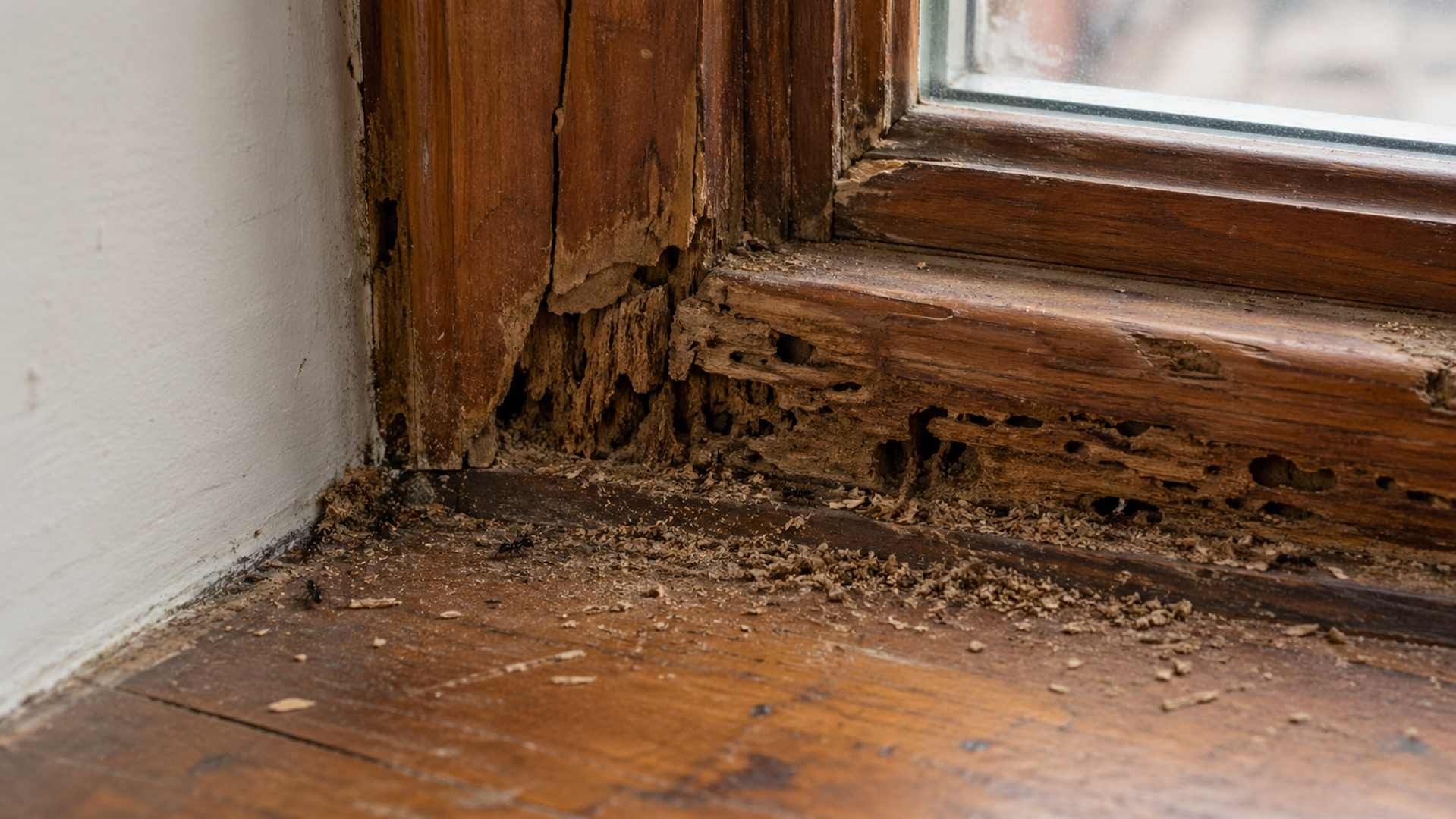
How Much Is Carpenter Ant Treatment in the Poconos?
Carpenter ant extermination in the Poconos typically costs between $250 and $500 for a one-time treatment in 2026, or $40 to $70 per month on an ongoing protection plan.
The final price depends on home size, infestation severity, and whether you choose a single visit or year-round coverage.
What moves the price up: larger homes, multiple nest locations, signs of structural damage, and hard-to-reach exterior colonies on wooded lots.
What moves it down: early detection, smaller homes, and bundling carpenter ant service into a Home Protection Plan that spreads the cost across the year.
Your pest control in the Poconos team handles carpenter ant calls in Mount Pocono, Stroudsburg, East Stroudsburg, Tannersville, Tobyhanna, and Lake Harmony, and all quotes start with a free inspection.
What Does Carpenter Ant Extermination Cost in the Poconos?
Here is the pricing at a glance. These ranges reflect typical 2026 costs for professional treatment in Northeast Pennsylvania, based on industry data for carpenter ant service.
| Service Type | Average Cost | What’s Included | Warranty / Follow-Up |
|---|---|---|---|
| Free inspection | $0 | Full exterior and interior walk-through, nest identification, written quote | No treatment obligation |
| One-time carpenter ant treatment | $250 to $500 | Interior and exterior treatment, non-repellent perimeter application, nest spot treatment | 30 to 90 day retreatment window typical |
| Severe or multi-colony treatment | $500 to $900+ | Multiple application points, interior wall void treatment, follow-up visits | Retreatment included until resolved |
| Home Protection Plan (recurring) | $40 to $70 per month | Service every 4 months covering 40 common pests, including carpenter ants | Free return visits any time between services |
| Repair costs if untreated | $200 to $2,000+ | Carpentry, trim, or structural wood replacement | Not typically covered by homeowners insurance |
The gap between the cheapest and most expensive options matters. Catching carpenter ants early and treating once is the least expensive path. Waiting until damage shows up is almost always the most expensive path.
What’s Included in a Carpenter Ant Treatment?
A full carpenter ant treatment is more than one spray. It is a coordinated process built around locating the colony and applying the right product in the right place.
Inspection: a licensed technician checks the exterior (stumps, trees, firewood, and outbuildings within 100 feet), the interior (window frames, attics, basements, and crawl spaces), and traces foraging trails.
Nest identification: the technician locates the parent colony and any satellite nests in the structure. This is the step that DIY cannot replicate.
Targeted application: non-repellent insecticides applied to the exterior perimeter, along foraging trails, and directly into wall voids when satellite nests are found. Carpenter ants carry the product back to the colony, which eliminates the queen and workers over several weeks.
Moisture and entry point review: the technician flags the conditions that attracted the ants (roof leaks, gutter issues, firewood against the foundation) so you can address them before a new colony moves in.
Documentation: a written service report showing what was applied, where, and what you should monitor afterward.
This sequence follows integrated pest management principles, which emphasize inspection and targeted application over routine blanket spraying. For background, see EPA guidance on integrated pest management.
How Is Carpenter Ant Treatment Priced?
Pricing is not random. Three factors drive most of the difference between a $250 job and a $900 job.
Home Size and Layout
Larger homes take longer to inspect and treat. A 1,500 square foot ranch in Stroudsburg will price at the low end of the range. A 4,000 square foot home in Lake Harmony with a finished basement, attic living space, and multiple outbuildings will price higher because the technician covers more ground and uses more product.
Homes with complex exteriors (multiple wings, attached decks, detached garages) also add time. Wooded lots add inspection time because the parent colony could be in any nearby stump or log.
Severity of Infestation
The more active the colony, the more work the treatment takes.
- Light activity: a few workers in one area, no frass, no structural signs. A standard perimeter treatment usually handles it.
- Moderate activity: frass in one spot, ants in multiple rooms, or a known satellite nest. Adds time for interior applications.
- Heavy activity: multiple frass piles, swarmers indoors, or visible damage. Adds multiple service visits and wall void treatments.
One-Time Treatment vs Ongoing Plan
A one-time treatment handles the current colony. It does not prevent a new colony from moving in from the surrounding woods next year.
One-time treatment: $250 to $500 for typical carpenter ant jobs. Best for isolated problems where the root cause (a single moisture issue, a specific entry point) has been fixed.
Ongoing protection: $40 to $70 per month on a plan. Best for wooded properties in Tobyhanna, Lake Harmony, and Mount Pocono where new colonies can establish quickly. Our Home Protection Plan covers 40 common pests with service every four months, plus free return visits whenever an issue comes up between services.
For seasonal or vacation homes in the Poconos, ongoing plans are often the better value. A small problem found during a quarterly service is far cheaper to treat than a mature colony discovered after the home has been empty for months.
What Does a Carpenter Ant Inspection Cost?
At The Pest Rangers, the initial carpenter ant inspection is free. You get a full exterior and interior walkthrough, species identification, and a written quote without any obligation to schedule treatment.
Industry-wide, standalone inspection fees range from $75 to $200, mostly for wood-destroying insect (WDI) reports required in real estate transactions. If you need an NPMA-33 form for a home sale, ask about that specifically, because it is a separate deliverable with its own documentation.
What the free inspection covers:
- Species confirmation (carpenter ants vs pavement ants vs termites)
- Exterior walk to locate possible parent colonies
- Interior review of likely nesting spots and moisture issues
- Written quote with cost ranges for one-time and ongoing options
- Next-step recommendations even if you do not hire us
Do You Need Follow-Up Treatments for Carpenter Ants?
Sometimes yes, sometimes no. It depends on what the inspection found and how the first treatment worked.
When one treatment is enough: a single non-repellent perimeter treatment applied during the active foraging season (late spring through early fall) often controls the colony in the structure. Activity drops within days, and the ants carry the product back through the colony over a few weeks.
When a follow-up is needed: if activity continues past four weeks, if multiple satellite nests were found, or if the treatment was applied in late fall with winter coming. Retreatment is typically included within a defined warranty window on a one-time service, and is always included on a recurring plan.
When ongoing service makes more sense than repeat one-time visits: if your home sits on a wooded lot with firewood storage, mature trees close to the siding, or a history of past ant activity. Paying $50 per month on a plan is almost always cheaper than paying $300 to $500 twice a year for one-time callbacks.
Is Professional Carpenter Ant Treatment Worth the Cost?
Yes, when the numbers are compared honestly.
The cost of treatment: $250 to $500 once, or roughly $500 to $840 per year on a recurring plan that also covers spiders, mice, stink bugs, and other common pests.
The cost of waiting: structural repair runs $200 to $2,000 or more, depending on how long the colony was active. Most homeowners insurance policies do not cover pest damage.
The cost of failed DIY: $30 to $100 in products, plus the time and worry of watching the activity continue. Repellent sprays can cause colonies to split into multiple smaller nests, which makes the eventual professional treatment more complex and expensive.
According to industry data on wood-destroying insect damage from the National Pest Management Association, wood-destroying insects (including carpenter ants and termites) cause billions of dollars in property damage each year nationwide.
Carpenter ants damage wood more slowly than termites, but the damage still adds up. Poconos homes are at elevated risk because of heavy tree cover and moisture cycles, which Penn State Extension on carpenter ants in PA identifies as primary drivers of carpenter ant activity in Pennsylvania.
The math usually favors early treatment. Spending a few hundred dollars now almost always beats spending thousands on repairs later.
Financing and Payment Options for Poconos Homeowners
Carpenter ant treatment is a real expense. We make it easier to fit into a household budget.
- Monthly payments on a plan: Home Protection Plan coverage is billed across the year rather than as one large upfront charge.
- Credit card and online payment: all major cards and an online payment portal.
- Financing for larger jobs: for severe infestations or bundled services (carpenter ants plus termite protection, for example), we offer financing through a third-party provider.
See current pest control financing options on our financing page. Prequalification does not affect your credit score, and terms are clearly laid out before you agree to anything.
How to Get an Accurate Carpenter Ant Quote in Mount Pocono, Stroudsburg, and Tannersville
Over-the-phone ballpark numbers are useful for budgeting, but an accurate quote always requires an inspection. Here is how to make sure the quote you get is real.
- Schedule a free inspection first. A technician needs to see the property to identify the species, find the nests, and measure the exterior. Phone estimates based on home size alone often miss the nest entirely.
- Share what you have already seen. Photos of ants, frass piles, and affected areas help the technician plan the inspection. Note where and when you saw activity.
- Ask for pricing on both options. A one-time treatment quote and a recurring plan quote give you a real choice. Compare the one-time cost against 12 months of plan coverage to see which fits your budget and your property.
- Check the warranty. Ask how long the retreatment window runs and what it covers. Our Home Protection Plan covers free return visits any time an issue develops between scheduled services.
- Confirm licensing. Every pest control technician in Pennsylvania should hold a PA Department of Agriculture pesticide applicator license. Our pest control in the Poconos team is Quality Pro certified and fully licensed across Monroe, Luzerne, and surrounding counties.
Carpenter Ant Treatment Cost FAQs
Is there a warranty on carpenter ant treatment?
Yes. One-time treatments typically carry a 30 to 90 day retreatment window. If activity returns during that window, we come back and treat again at no extra charge. On our Home Protection Plan, free return visits are available any time between scheduled services, not just during a warranty window.
How long does carpenter ant treatment take to work?
Foraging activity usually drops within a few days of treatment. Complete colony elimination takes a few weeks because the non-repellent product has to spread through the colony to reach the queen. This is expected and not a sign that the treatment failed.
When is the best time of year to schedule treatment in the Poconos?
Late spring through early fall is the ideal window because foraging activity peaks in warm weather. Treatments applied during this period transfer to the colony faster. If you spot activity in winter, do not wait until spring. Winter sightings usually mean a nest is inside the heated part of the home, and prompt treatment is still the right call.
Is professional carpenter ant treatment safe for pets and kids?
Yes, when applied by a licensed technician. Modern non-repellent products are EPA-registered and designed for use in and around occupied homes. Typical reentry times are a few hours after application. If anyone in the home has specific sensitivities, share that with the technician before the service so they can adjust the application accordingly.
Do I need to leave the house during treatment?
For a standard exterior perimeter treatment, no. For interior wall void applications, the technician will tell you which rooms to stay out of and for how long. Most Pocono homeowners continue with their day as normal while the exterior work happens.
Can I finance a larger carpenter ant job?
Yes. Financing is available for larger or bundled services. Prequalification does not affect your credit score, and monthly payments are typically lower than paying out of pocket for the full job. Ask your technician about options during the free inspection.
Ready to Schedule a Free Inspection?
If you have seen carpenter ants, found frass, or are planning ahead for a wooded Poconos property, we can help. A free inspection gives you a written quote with real numbers, no pressure, and no obligation. Call The Pest Rangers or book online to have a licensed technician visit your home in Mount Pocono, Stroudsburg, East Stroudsburg, Tannersville, Tobyhanna, or Lake Harmony.
Request your free inspection through our pest control in the Poconos page, or call directly to schedule a visit that fits your week.
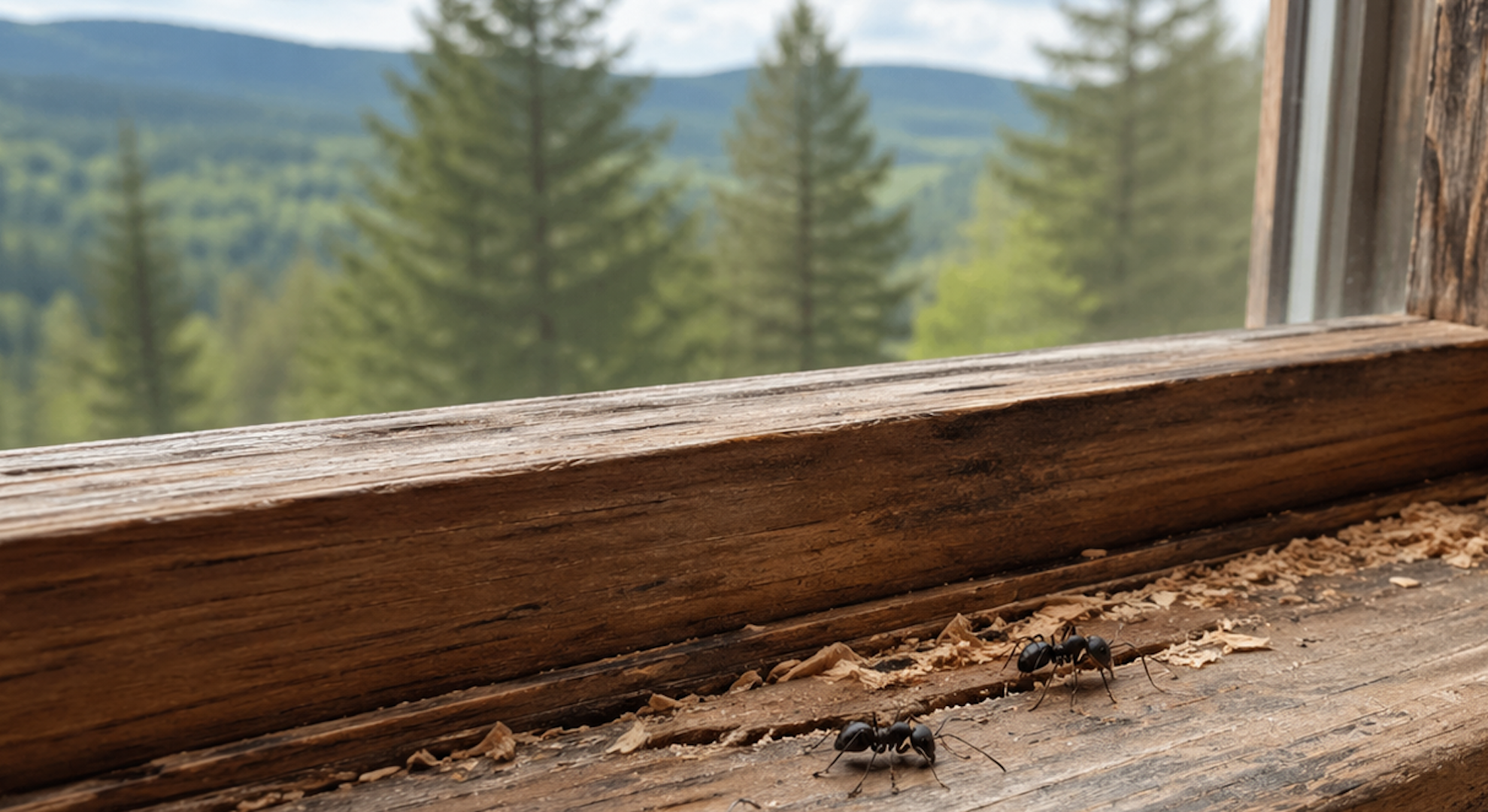
DIY vs Pro Carpenter Ant Treatment in the Poconos
Professional treatment has a significantly higher success rate with carpenter ants because the parent colony is often outside the home and hard to locate.
DIY can work for very isolated, early-stage activity with a single visible trail, but it usually fails when satellite nests are already established inside walls.
For most Poconos homeowners, the honest answer is a mix: try DIY if the problem is small and caught early, and call a professional when you see frass, swarmers, or activity in more than one room.
This guide gives you the trade-offs on cost, timeline, and success rate so you can make the call for your home.
If you are not sure which pest you are dealing with first, the pest identification library can help you confirm the species, and pest control in the Poconos is available in Stroudsburg, Mount Pocono, East Stroudsburg, Tobyhanna, and Lake Harmony, to name a few, if you decide to skip the DIY route.
Which Is Better for Carpenter Ants: DIY or a Professional?
The short version: DIY handles surface-level ant activity. Professional treatment handles the colony. Those are two different problems, and carpenter ants create the second one more often than the first.
DIY works best when: you catch a small trail early, the activity is limited to one room, and there is no frass or signs of nesting inside the structure.
Professional treatment is the better choice when: you see winged swarmers indoors, find sawdust-like frass, hear rustling in walls, or see ants in multiple parts of the home. These signs mean a satellite nest is already inside the structure, and the parent colony is probably somewhere in the surrounding woods.
Carpenter ant colonies often take three to six years to mature, so by the time you see a lot of foragers, the problem has been developing for a while. That history is what makes DIY inconsistent and professional treatment more reliable.
What Does DIY Carpenter Ant Treatment Involve?
DIY carpenter ant treatment usually means buying bait stations, sprays, or dusts at a hardware store and applying them yourself. The approach can work on small, isolated problems, but it requires patience and careful product selection.
Common DIY Methods and Products
- Ant baits: Granular or gel baits containing active ingredients like abamectin, fipronil, or boric acid. Foraging ants carry the bait back to the colony, where it kills the queen and workers over several weeks.
- Contact sprays: Aerosol or liquid sprays containing pyrethroids like cyfluthrin, deltamethrin, or permethrin. These kill ants on contact but rarely reach the nest.
- Dusts: Insecticide powders applied into wall voids or cracks where ants are active. Effective only if you can get the dust close to the nest.
- Natural options: Diatomaceous earth, borax sugar baits, or essential oil sprays. These work in limited cases and usually only against foragers, not the colony.
Before you apply any product, read the label carefully. Using a pesticide in a way that does not match the label is a violation of federal law. The EPA guidance on carpenter ant control spells out the legal use patterns for home pesticide products.
Typical DIY Cost
DIY carpenter ant supplies usually cost $30 to $100 for a full round of treatment.
- Bait stations or gel: $10 to $40
- Contact spray: $10 to $30
- Insecticide dust: $15 to $30
- Duster or applicator tool: $10 to $20
- Protective gloves and eye protection: $10 to $20
The up-front cost is low. The hidden cost shows up later if the treatment fails and the colony keeps expanding, because structural repairs start at a few hundred dollars and can run into the thousands.
Where DIY Usually Fails
DIY fails for predictable reasons. Understanding them helps you judge whether your situation is likely to respond to a store-bought product or not.
- The parent nest is usually outdoors. Most Poconos carpenter ant colonies have a parent nest in a stump, tree, or log within 100 yards of the home. Spraying baseboards does not reach it.
- Satellite nests are hidden. Ants build satellite nests in wall voids, insulation, and roof decking. You cannot bait or spray what you cannot find.
- Contact sprays can make things worse. Repellent sprays can cause a colony to split (a process called budding), creating multiple smaller nests from one original problem. This is a well-documented risk in extension literature on wood-destroying insect control.
- Carpenter ants are picky eaters. Baits only work if the ants accept them. Penn State Extension notes that carpenter ants often ignore baits entirely, which ends the treatment before it starts.
- The strongest products require a license. Non-repellent insecticides that carpenter ants cannot detect (and therefore carry back to the nest) are typically restricted-use products. For more context on colony behavior and why surface sprays often fail, see research on wood-destroying insect control from Rutgers Cooperative Extension.
What Does Professional Carpenter Ant Removal Involve?
Professional carpenter ant removal is a multi-step process built around finding and eliminating the entire colony, not just the ants you see. The goal is colony elimination, not spot treatment.
Inspection and Colony Location
A technician starts with a full inspection of the home and surrounding property. That typically includes:
- Walking the exterior to find stumps, logs, and dead tree limbs that may hold the parent colony
- Checking window frames, door frames, and sill plates for frass
- Inspecting attics, basements, and crawl spaces for satellite activity
- Tracing foraging trails back toward nest sites, usually at dusk or night when carpenter ants are most active
- Identifying moisture problems that support nesting
The inspection often takes longer than the treatment. It is also the step DIY cannot replicate, because finding the parent nest is the hardest and most important part of the job.
Non-Repellent Treatment Methods
Licensed technicians use non-repellent insecticides that carpenter ants cannot detect. Because the ants do not avoid the treated zone, they walk through it, carry the product back to the colony, and transfer it to the queen and the rest of the workers.
Common active ingredients: fipronil, imidacloprid, and similar transferable products used in exterior perimeter treatments. These are the same classes of products state cooperative extension programs identify as most effective for colony elimination.
Application methods: exterior perimeter sprays around the foundation, targeted dust injections into wall voids, and bait placements along foraging trails where appropriate.
Applied during the high foraging season, a single non-repellent perimeter treatment will often control the colony in the structure. For ongoing coverage, many Pocono homeowners choose our Home Protection Plan, which includes carpenter ant coverage along with other common pests.
Moisture and Entry Point Correction
Eliminating the current colony is only half the job. If the conditions that attracted the ants remain, another colony will move in within a year or two. That is why professional treatment almost always includes recommendations for:
- Clearing gutters and directing downspouts away from the foundation
- Repairing leaking pipes, roofs, and flashing
- Removing stumps and firewood from within 100 feet of the home
- Trimming tree branches and shrubs away from siding and rooflines
- Sealing cracks around utility penetrations, windows, and doors
A technician will point out the specific moisture and entry issues on your property. Fixing these is typically on the homeowner, but the guidance saves time and money over multiple service calls.
How Much Does Carpenter Ant Treatment Cost in the Poconos?
Cost varies with home size, infestation severity, and whether the job is one-time or part of ongoing coverage. Published industry data gives reliable ranges for comparison.
DIY treatment: $30 to $100 in products for a single round, sometimes more if multiple products or reapplications are needed.
Professional one-time treatment: typically $150 to $500 nationally, with carpenter ant jobs often landing at $250 to $500 because of the inspection work and targeted products required.
Ongoing protection plans: $40 to $70 per month for quarterly or recurring service that covers carpenter ants along with other common pests.
Structural repair if left untreated: $200 to $2,000 or more, depending on how long the colony was active and which structural elements were affected.
The math usually favors early professional treatment. Spending $250 to $500 once is almost always cheaper than spending that same amount on failed DIY attempts, then paying for professional service, then paying for repairs.
Which Option Has a Higher Success Rate?
Professional treatment has a higher success rate for carpenter ants than DIY. The gap comes down to access to products, access to the nest, and experience identifying satellite colonies.
Side-by-side comparison:
| Factor | DIY Treatment | Professional Treatment |
|---|---|---|
| Average cost | $30 to $100 in products | $250 to $500 per visit, or $40 to $70 per month on a plan |
| Time to resolve | Several weeks if baits work; often never if nest is not located | Noticeable reduction within days; full colony elimination in a few weeks |
| Success rate | Inconsistent; works best only for isolated, early-stage activity | High, especially with a non-repellent perimeter treatment applied during foraging season |
| Colony elimination | Unlikely unless the nest is found and treated directly | Standard goal; most treatments target both parent and satellite nests |
| Products available | Over-the-counter baits, sprays, and dusts | Professional-grade non-repellent insecticides (licensed use only) |
| Warranty | None | Retreatment guarantees common with service plans |
For the official control guidance behind these methods, see Penn State Extension on carpenter ant management. The same guidance informs how licensed technicians approach treatment in Pennsylvania.
When DIY Makes Sense and When It Doesn’t
An honest answer: DIY is not useless. It is just limited. Here is how to decide.
DIY is reasonable when:
- You see fewer than 10 ants over several days, all in one area
- There is no frass, no swarmers, and no rustling in walls
- The trail clearly comes from outside (a cracked door sweep, a window screen)
- You can fix the likely entry point within a few days
- You are willing to monitor for two to three weeks and escalate if activity returns
Call a professional when:
- You find frass piles anywhere in the home
- Winged swarmers appear indoors, especially in spring
- You see ants in multiple rooms or on multiple floors
- Activity continues or worsens after two weeks of DIY treatment
- The home has known moisture damage (old leaks, ice dams, soft window frames)
- You are preparing to sell the home or list it for rental
If you are in the second group, DIY is usually a delay rather than a solution, and the delay lets the colony grow.
What to Ask a Carpenter Ant Exterminator in Stroudsburg or Mount Pocono
Not all pest control companies handle carpenter ants the same way. Ask these questions before signing a contract.
- Are you licensed in Pennsylvania? All technicians should carry a PA Department of Agriculture pesticide applicator license.
- Will you inspect the exterior for parent colonies? A credible answer covers stumps, trees, firewood, and outbuildings within 100 feet of the home.
- What products will you use, and are they non-repellent? Non-repellent products are the industry standard for carpenter ant colony elimination.
- Do you offer a retreatment guarantee? Reputable companies back their work with free retreatment if activity returns within a defined window.
- Will you identify moisture and entry-point issues? Good technicians flag the conditions that attracted the ants in the first place.
- How do you handle seasonal or vacation homes? Lake Harmony, Tobyhanna, and Mount Pocono have a lot of second homes, so a provider who schedules around owner visits is a practical fit.
Carpenter Ant Treatment FAQs
Does carpenter ant spray actually work?
Contact sprays kill the ants they hit, but rarely reach the nest. Repellent sprays can make the problem worse by causing the colony to split into new satellite nests. Non-repellent products are far more effective, and most of the strongest options require a licensed applicator.
When is the best time to treat carpenter ants in the Poconos?
Late spring through early fall is the ideal window because foraging activity peaks in warm weather. Treatments applied during this period get carried back to the colony faster. Winter sightings usually mean a nest is already inside the heated part of the home, and treatment should still happen promptly.
Are professional carpenter ant treatments safe for pets and kids?
Modern products, applied by a licensed technician, are designed for use in and around homes with families and pets. Follow the reentry time on the product label (usually a few hours after application) and store any leftover product out of reach. Always share concerns about specific products with your technician before treatment.
How soon do I need to retreat after professional treatment?
For a one-time non-repellent perimeter treatment, retreatment is often not needed for the season if the job was successful. For properties with heavy wooded surroundings (common in Tobyhanna and Lake Harmony), quarterly service is usually the better long-term approach because new colonies can move in from neighboring woods.
Will one treatment kill the whole colony?
Often, yes, if a non-repellent perimeter treatment is applied during the foraging season and the parent colony is within treatment range. Complete elimination takes several weeks because the product has to spread through the colony before reaching the queen. If activity continues after four weeks, the nest location may need to be reassessed.
Can I combine DIY and professional treatment?
You can, but let the professional know what you have already applied. Prior use of repellent sprays can push ants away from a non-repellent bait, which delays results. Sharing your DIY history makes the professional plan more effective.
For more answers, visit our carpenter ant FAQ.
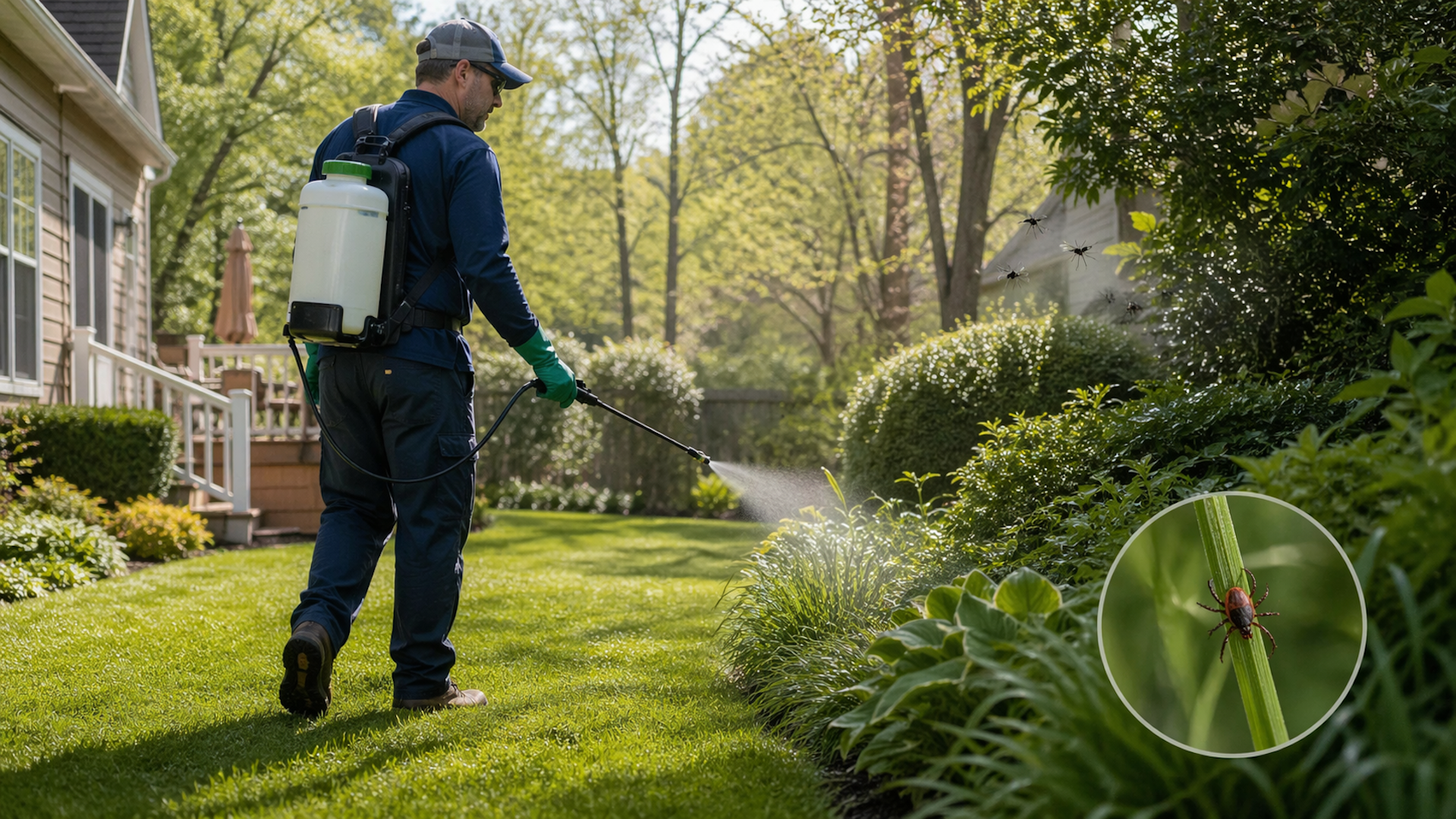
Spring Tick & Mosquito Control: NJ & PA Guide
Spring is the most important time to start mosquito and tick control in New Jersey and Pennsylvania, because early-season treatment directly impacts how severe infestations become later in the summer.
Ticks become active when temperatures reach approximately 45°F, which often occurs in early spring across the Mid-Atlantic. At the same time, mosquitoes begin breeding in standing water created by seasonal rainfall, allowing populations to establish quickly if left untreated.
Delaying treatment allows both pests to reproduce and spread, increasing the risk of bites and exposure to diseases such as Lyme disease and West Nile virus. Early intervention targets these pests at the start of their lifecycle, making control efforts significantly more effective.
This guide explains when mosquito and tick season begins, how professional treatments work, and what’s safe for families and pets, so you can take action before infestations become difficult to control.
When Are Mosquitoes and Ticks Most Active in New Jersey and Pennsylvania?
Ticks and mosquitoes begin breeding and migrating in early spring across New Jersey and Pennsylvania, with populations peaking in mid-summer and remaining through early fall.
Tick activity typically begins in March, as temperatures rise above freezing to that important 45°F threshold.
Mosquitoes follow shortly after standing water forms from spring rainfall, creating ideal breeding conditions for females to lay eggs and for larvae to develop.
Taking action at the start of spring is the best way to limit population growth and health risks.
All of our Home Protection Plans feature barrier sprays that deter mosquitoes and ticks from breeding or migrating onto your property, providing protection for the entire warm season.
What Are Mosquito Barrier Sprays Made Of and How Do They Work?
Mosquito and tick yard sprays use active ingredients called pyrethrins and pyrethroids that kill ticks and mosquitoes on contact.
Pyrethrins are natural treatments that are derived from chrysanthemum flowers, while pyrethroids are synthetic alternatives that are designed to last longer outdoors.
Both products work through contact and residual action, killing mosquitoes that land on any surfaces that have been treated. Experts apply treatments to shaded foliage, under decks, fence lines, and other areas where mosquitoes typically hide during the day.
Are Mosquito and Tick Sprays Safe for Kids, Pets, and Pollinators?
Our technicians use EPA-registered mosquito and tick treatments that are considered safe for residential use. Most treatments are labeled “safe when dry,” which means you do need to avoid contact when the product is wet, but people and pets can return to treated areas once it has dried.
Expert mosquito and tick control service providers also use targeted application zones and buffer areas to make sure gardens and water features are safe. The standards for these chemicals are set by the United States Environmental Protection Agency, which ensures that mosquito control products are safe for residents and have minimal impact on the environment.
How Does Tick Control Work and Why Is It Different from Mosquito Treatment?
Ticks live in different environments than mosquitoes and have different biology, so treatments must also differ. Tick control services in the mid-Atlantic focus on ground-level areas, such as leaf litter, tall grass, wooded edges, and shaded landscaping beds, where these insects typically hide.
Experts typically combine granular treatments and targeted sprays to eliminate ticks. Aggressive tactics like this are especially important in Pennsylvania, where Lyme disease risk is among the highest in the country, according to the Pennsylvania Department of Health.
Ways to Prevent Mosquitoes and Ticks Naturally
Professional pest control services are guaranteed to keep ticks and mosquitoes at bay, but property owners can also take additional steps to reduce their exposure.
- Remove standing water from buckets, planters, and gutters
- Mow lawns regularly and trim overgrown vegetation
- Clear leaf litter and brush piles near yard edges
- Refresh birdbath water every few days
- Keep play areas and patios away from dense vegetation
- Use personal repellents like DEET or picaridin when outdoors
- Maintain clean drainage around landscaping
These tips reduce breeding grounds for mosquitoes and ticks and help naturally repel these parasites from biting you personally, even if they are in your yard.
Nevertheless, hiring a qualified pest control specialist is the only way to guarantee relief from tick and mosquito exposure and protect your loved ones from potential disease transmission.
FAQs
When should I schedule mosquito and tick treatment in New Jersey or Pennsylvania?
Early spring, typically March through April, is the best time to begin mosquito and tick control programs. Starting before populations peak helps dramatically reduce problems throughout the year.
How long does a mosquito yard treatment last?
Treatments typically last three to four weeks, depending on rainfall and vegetation density. That’s why many homeowners schedule recurring mosquito treatments for yards in the northeast during the warm seasons.
Are mosquito and tick sprays safe for kids and pets?
Yes. Experts use EPA-registered products and carefully apply them according to strict guidelines. Once the treatment dries, the area is often safe for normal yard activity.
What’s the difference between mosquito control and tick control?
Mosquito treatments target resting areas on shaded surfaces and foliage, as well as standing water, while tick treatments focus on ground-level habitats. Many programs combine both treatments for areas where these pests are prevalent.
How much does mosquito treatment for a yard cost in New Jersey?
Prices vary by property size and the specifics of the service plan provided, but $75-$150 per visit is typical. However, shopping for quotes locally is the only way to get an accurate price for your situation.
Do I need tick control if I live near woods in PA?
Yes. Forested lots, deer traffic, and leaf litter create ideal living conditions for ticks. Homeowners in rural or even suburban areas of Pennsylvania are also highly vulnerable to ticks.
What makes a good mosquito and tick control company?
Look for transparent product information, an integrated pest management approach, and state licensing. These qualities will help you find the best local expert to treat your yard.
What kills mosquitoes in a yard in spring?
Barrier sprays and larvicides that target breeding sites, paired with the removal of standing water, all play a role in the process. Together, they reduce existing mosquito populations and prevent new ones from forming.
CTA: Schedule a Mosquito and Tick Yard Spray Now
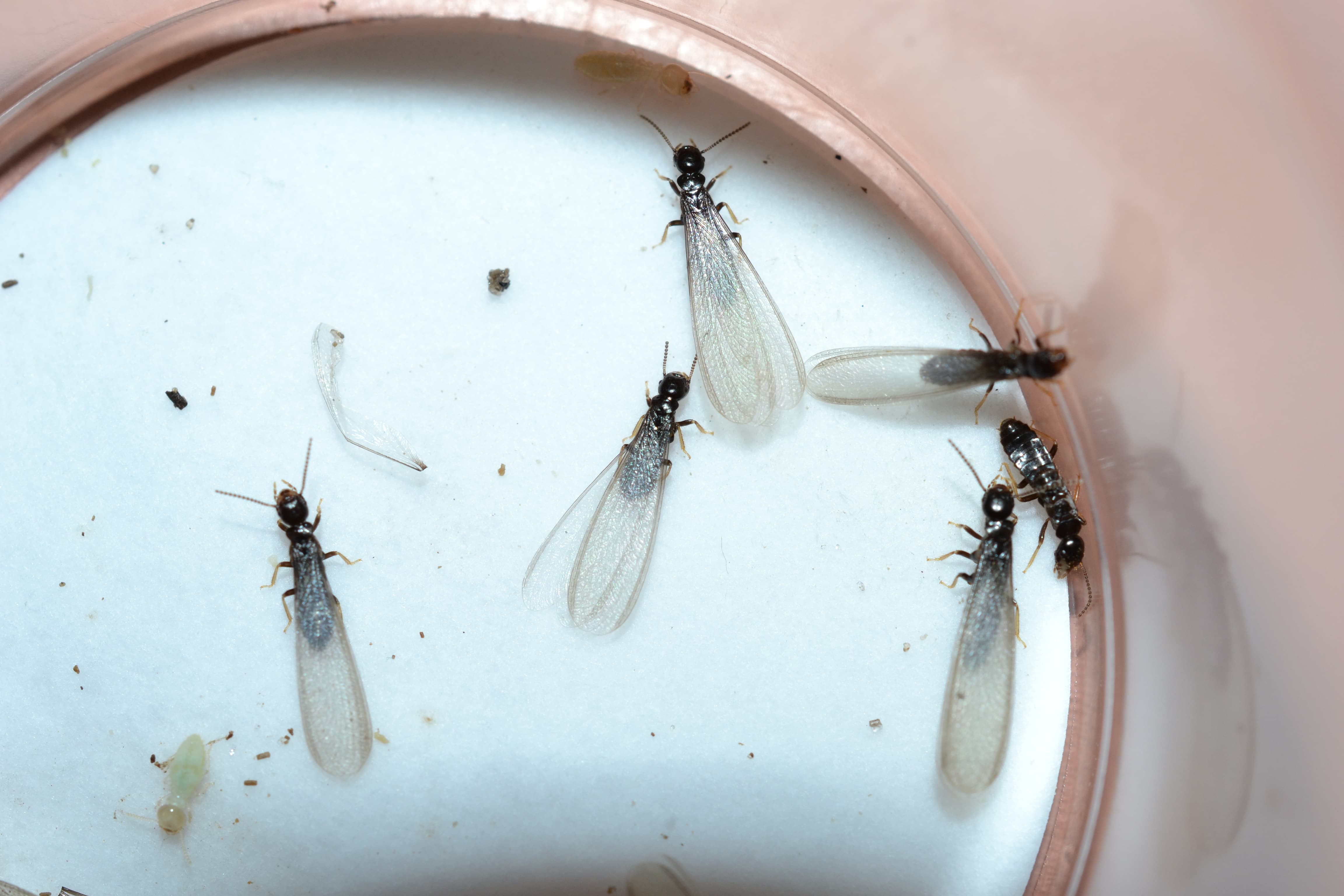
How to Identify Flying Ants vs. Termites in PA & NJ
To identify the difference between flying ants and termites in Pennsylvania and New Jersey, observe the size of shape of their waists and antennae. Flying ants have pinched waists and elbowed antennae, whereas termites have thick waists and straight antennae.
Swarming insects like termite swarmers and carpenter ants are incredibly destructive and typically emerge during warmer spring and summer months in Pennsylvania and New Jersey.
These insects are attracted to standing water and soft wood, which provide an abundant food source for termites and shelter for carpenter ants. Areas like the Lehigh Valley and Edgewater Park, New Jersey, that sit in low river or coastal plains with abundant sources of wood are especially susceptible to these wood-destroying organisms, although they can infest any property in the northeast.
While flying ants and termites look similar, mistaking one for the other is a costly error. Termites cause close to $7 billion in damage to homes and businesses annually. In Pennsylvania and New Jersey, flying termites are subterranean termites, which are considered the most destructive termite species.
Spotting a termite with wings (swarmers) also indicates an established infestation nearby, as swarmers don’t travel far from their colonies.
Flying ants are not harmless either, as they are usually carpenter ants. A large colony of carpenter ants working silently in your shed, basement, or garage can excavate through an entire wall stud in just a few years.
This guide helps you identify flying ants vs termites in the northeast before they cause damage to your property. If you spot either, be sure to contact a pest control professional immediately, as it usually indicates that a wood-destroying organism infestation is established.
What Are Flying Termites?
Flying termites, scientifically called alates, are the reproductive members of a subterranean termite colony. Their sole job is to leave the nest, mate, and establish new colonies.
These winged termites don’t cause direct damage to your home. However, their presence means an established colony is living nearby, most likely near a source of wet or compromised wood.
Flying termites are most active during spring in the northeast, particularly after rain when humidity is high. If you spot them indoors, it’s a strong indicator that termites have already infested your property.
Keep an eye out for discarded wings on windowsills or near light sources. Flying termites shed their wings shortly after landing to begin the next stage of their life cycle. Finding piles of these uniform wings indoors is a sign that a termite colony is active within your property.
What Are Flying Ants?
In the Northeast, flying ants are most commonly carpenter ants, which act as the reproductive “alates” of their colony. While they appear similar to termites, they typically emerge to mate and form new nests during the late summer rather than the spring.
Seeing these winged ants inside your home is a strong indicator that a colony has established itself nearby. Unlike other nuisance ants, carpenter ants can cause long-term structural damage because they tunnel through wood to create nesting galleries. While they don’t eat the wood as termites do, their presence still poses a risk to the integrity of your property.
The key difference remains: flying ants are a destructive nuisance that requires professional treatment, while flying termites represent a more immediate and serious structural risk.
How to Tell Flying Termites and Ants Apart
While they are often mistaken for one another, a closer look reveals that termites and winged ants have very different physical structures. If you spot a swarming insect, use these anatomical markers to differentiate between a destructive wood-eater and a common household explorer.
Identifying Flying Termites
Subterranean termites have a streamlined, “cigar-shaped” appearance. Look for these specific traits:
- Straight, bead-like antennae: Their feelers look like tiny, stacked spheres and do not bend.
- Uniform wing length: They have four wings of equal size that are roughly twice as long as their body.
- Milky appearance: Their wings are typically translucent or “cloudy” white.
- Broad waists: Termites lack a defined waistline, giving them a thick, continuous body shape.
- Dark coloring: Most swarmers are solid black or very dark brown.
- Temporary wings: They shed their wings quickly after landing, often leaving piles behind.
Identifying Flying Ants
Flying carpenter ants have more rugged, segmented bodies. You can distinguish them by these features:
- Bent, elbowed antennae: Their antennae have a distinct “joint” or crook in the middle.
- Unequal wing length: Their front pair of wings is significantly larger and longer than the hind pair.
- Tinted wings: Ant wings are often brownish or yellowish rather than clear.
- Pinched waists: Like a wasp, ants have a narrow “pedicel” that creates a distinct separation between their thorax and abdomen.
- Varied coloring: They can range from jet black to reddish-brown or even dull red.
- Persistent wings: While they also lose their wings after mating, they tend to stay attached longer than termite wings.
If you can capture or photograph one of these insects, compare it against these characteristics. The antennae and waist are the easiest distinguishing features to spot.
Where to Inspect for Carpenter Ants and Termites
Location provides another critical clue for identification. Both insects live in colonies with complex social structures, but their preferred habitats differ significantly.
Termite Colony Locations
Termites need cellulose to survive, which they extract from wood, paper, cardboard, and plant materials. They typically infest dying trees, tree stumps, lumber piles, and wooden structures.
Unlike carpenter ants, termites actually consume wood as food. They tunnel through structural beams, floor joists, and wall studs while building their nests within the wood itself.
Common termite hiding spots include:
- Crawl spaces
- Basements
- Wooden decks
- Door frames
- Window sills
- Anywhere wood contacts soil.
Flying Ants Colony Locations
Carpenter ants are far less picky about nesting locations. While carpenter ants do excavate wood to build nests, they don’t eat it and can shelter in several different locations across your property.
Because these ants can thrive in such a wide variety of environments, regular professional inspections are essential to identify hidden nesting sites before they compromise your home’s infrastructure.
For example, ant colonies can establish themselves in wall voids, under flooring, inside insulation, beneath sidewalks, or in outdoor soil. Carpenter ants prefer moist or rotting wood, but will nest in dry wood if necessary.
The damage carpenter ants cause is cosmetic compared to that of termites. However, large colonies can still weaken wooden structures over many years.
Understanding Swarmer Life Cycles and Behavior
Understanding the distinct life cycles and behavior patterns of these flying insects explains why termites generally pose a far more significant structural threat than ants. While both species produce winged swarmers to expand their populations, their survival and growth rates differ drastically.
Termite Life Cycle & Swarming Behavior
Termites are long-term pests with high survival rates and massive reproductive potential, which is why they are so highly destructive and require professional baiting and monitoring.
- Dual Colony Founders: Unlike many insects, both male and female termites survive after mating. This mated pair becomes the king and queen, remaining together to build and expand the colony for decades.
- Three-Stage Development: Termites undergo a simple metamorphosis through three life stages: egg, nymph, and adult. Their specific role—whether worker, soldier, or reproductive—is determined during their development.
- Extreme Longevity: Worker termites can live for several years, while queens are known to survive for 20 to 40 years. This lifespan allows colonies to swell into the millions.
- Spring Swarming: In the Northeast, termites typically swarm in early spring when temperatures hit approximately 70°F. Once they mate and shed their wings, they immediately begin the process of boring into wood or soil to establish a new nest.
Flying Ant Life Cycle & Swarming Behavior
Ant reproduction is more specialized and follows a different seasonal timeline, which makes them more likely to be spotted during peak summer months.
- Male Mortality: Ant reproduction involves a “nuptial flight” where males die shortly after mating. Only the fertilized queens survive to scout for new nesting locations.
- Four-Stage Metamorphosis: Ants develop through four distinct stages: egg, larva, pupa, and adult. This complete transformation usually takes several weeks, depending on the environment and temperature.
- Slower Growth: Worker ants typically live only a few months, and while queens live for several years, ant colonies grow at a much slower pace than termite colonies.
- Late Summer Swarming: Flying ants generally swarm in late summer or early fall. Like termites, they shed their wings after mating; finding these discarded wings near windows or doors is a key sign of recent activity.
Signs of Termite vs. Ant Infestation in Your Home
While winged insects are the most obvious giveaway, these pests often leave behind a “trail of evidence” long before they are actually seen. Recognizing these subtle red flags in your home can help you determine whether you are facing a nuisance ant problem or a more urgent termite threat.
Termite Infestation Signs
Termites often live deep within the structure of your home for years before being spotted. Watch for these specific indicators:
- Mud tubes: Look for pencil-thick tunnels running along foundation walls or wooden beams; subterranean termites use these for protected travel.
- Hollow wood: If wooden surfaces sound thin or hollow when tapped, it often indicates internal tunneling.
- Discarded wings: Piles of translucent wings near windows, doors, or light fixtures are a hallmark of a recent termite swarm.
- Frass (Droppings): Small piles of termite excrement that resemble sawdust or coffee grounds are often found near exit holes.
- Structural damage: Visible maze-like patterns in exposed wood or “blistering” and darkening of wood surfaces.
- Stuck fixtures: Moisture and warping caused by termites can make doors and windows become tight-fitting or difficult to open.
Ant Infestation Signs
Ant activity, particularly that of carpenter ants, is usually more localized and easier to spot:
- Active trails: Visible lines of ants moving to and from food sources or entry points.
- Wood shavings (Frass): Unlike termites, carpenter ants don’t eat wood; they kick out coarse wood shavings (resembling pencil shavings) as they excavate.
- Rustling sounds: In large, established colonies, you may actually hear a faint rustling sound coming from inside the walls.
- Entry point wings: Dropped wings near doors and windows, though often less numerous than termite wings.
- Foraging behavior: Spotting ants in kitchens, bathrooms, or near moisture-rich areas like leaky pipes.
- Smooth tunnels: If you find damaged wood, carpenter ant galleries appear clean and smooth, almost as if they’ve been sanded.
Because termite damage typically remains hidden behind drywall and structural beams until it becomes severe, it often poses a much greater financial risk than the more visible activity of ants. Regardless of which signs you find, any evidence of wood-destroying insects warrants a professional inspection to prevent long-term damage to your property.
How to Eliminate Swarming Insects in Pennsylvania and New Jersey
Treatment approaches for ants and termites in the Northeast differ dramatically due to their distinct biology, behavior, and colony structures. Whether you are dealing with a summer ant invasion or a spring termite swarm, choosing the right strategy is the only way to ensure your property remains protected.
Strategies for Treating Carpenter Ant Infestations
Ants are generally more accessible than termites, making them easier to manage if you can locate the primary nest. For standard nuisance ants, effective DIY methods include:
- Targeted Baits: Using products containing borax or fipronil allows worker ants to carry the treatment back to the heart of the colony.
- Direct Contact: Insecticidal sprays or a simple mixture of dish soap and water can eliminate ants on contact at entry points.
- Physical Barriers: Sprinkling food-grade diatomaceous earth around foundations and sealing cracks or gaps can prevent scouts from entering.
- Carpenter Ant Protocol: For these wood-excavating ants, you must locate the nest, repair any moisture-damaged wood, and treat wall voids with professional-grade insecticides. While smaller nests are manageable, large, established carpenter ant colonies often require professional intervention to eradicate.
Strategies for Treating Termite Infestations
Because termite colonies are massive, hidden underground, and incredibly resilient, they almost always require professional-grade solutions. DIY treatments are rarely effective and often waste valuable time while structural damage continues. Professional treatments typically involve:
- Liquid Barriers: Applying termiticide to the soil around your home’s perimeter to create a continuous chemical shield.
- Baiting Systems: Installing monitoring stations that workers feed on, eventually eliminating the entire colony at the source.
- Wood & Localized Treatments: Treating specific areas of infestation or using fumigation (tenting) for severe cases.
- Ongoing Monitoring: Annual follow-up inspections are necessary to ensure the treatment remains effective and to maintain specialized termite warranties, which provide the coverage standard homeowners’ insurance typically lacks.
Whether you are dealing with a spring termite swarm or a late-summer ant invasion, both pests require professional evaluation to ensure your home’s structural integrity is maintained. While common nuisance ants can sometimes be managed with store-bought products, carpenter ants are capable of significant long-term damage that often requires expert intervention to eradicate.
In the Pennsylvania and New Jersey area, identifying either of these flying insects is a clear signal to call a licensed pest control expert. Early professional detection and treatment are the only reliable ways to prevent thousands of dollars in hidden repair costs over time.
FAQs
Are flying ants or flying termites more dangerous to homes?
Flying termites are significantly more dangerous because they indicate an active termite colony that feeds on and destroys wood. Termites cause billions in property damage annually. Flying ants signal a nuisance infestation but rarely cause structural damage, except for carpenter ants, which hollow out wood over time.
What time of year do flying ants and flying termites appear?
Flying termites typically swarm in early spring (March through May) when temperatures reach 70°F and humidity increases after rain. Flying ants swarm later in summer and early fall (July through September). Both insects are attracted to warm, humid conditions that signal optimal mating weather.
Are flying ants or flying termites attracted to light?
Yes, both flying ants and flying termites exhibit positive phototaxis (i.e., they’re attracted to light sources). This is why swarmers often gather near windows, outdoor lights, and glass doors. If you find discarded wings near light fixtures or windowsills, it indicates recent swarming activity indoors.
Can flying termites bite or sting humans?
No, flying termites (alates) cannot bite or sting humans. They have soft bodies and no defensive mechanisms. Their only purpose is reproduction. However, soldier termites, which defend the colony, have strong mandibles and can deliver a slight pinch if handled directly, though they rarely encounter humans.
How long do flying ants and termites keep their wings?
Both flying ants and flying termites shed their wings shortly after mating, usually within minutes to hours. Finding piles of discarded wings near entry points, windowsills, or light sources is one of the most reliable signs of a recent swarm and potential infestation nearby.
Do flying termites mean I have an infestation?
Yes, flying termites indoors almost certainly indicate an active termite colony in or very near your home. Swarmers don’t travel far from their parent colony—usually only 100-300 feet. If you see them inside, there’s likely an established colony in your walls, foundation, or nearby structures.
Can I kill flying ants or termites with bug spray?
You can kill individual flying ants or termites with insecticide spray, but this doesn’t address the colony producing them. Spraying visible swarmers is a temporary solution. The colony will continue reproducing and causing damage. Professional treatment targeting the entire colony is necessary for long-term control.
What should I do immediately if I find flying termites in my home?
First, try to capture a specimen in a sealed bag or jar for identification. Take photos of the insect, any discarded wings, and the location where you found them. Contact a licensed pest control company for an immediate termite inspection. Avoid disturbing suspected termite areas, as this can cause the colony to scatter and make treatment harder.
The Pest Rangers Acquires Pest Control Division of JMM Company
The Pest Rangers, one of Pennsylvania and New Jersey’s fastest-growing pest control providers, has added the pest control division of JMM Company to its expanding regional network.
The transaction, announced April 8, 2026, was facilitated by Cetane Associates, the same M&A advisory firm that guided The Pest Rangers’ acquisition of O.C.E. Pest & Termite Control in late 2025.
With this addition, The Pest Rangers now commands a network of over 30 expert technicians serving more than a dozen counties across Eastern Pennsylvania and New Jersey.
A Trusted Bucks County Company Joins a Growing Pennsylvania Leader in Pest Control
JMM Company was founded in 2005 in Bucks County, PA, originally as a plant and tree care operation before expanding into pest control and lawn care services.
By joining forces with The Pest Rangers, JMM’s loyal client base will now benefit from an infusion of new technology and expanded service capabilities, ensuring JMM’s “community-first” focus remains while the quality of care evolves.
“(The) Pest Rangers is a fantastic company, and we’re confident that JMM Company is truly in great hands,” commented Bob Williamson, Pest and Lawn Director of Cetane, who facilitated the sale.
The Pest Rangers Brings Its Award-Winning Services to More Customers in Bucks County
The Pest Rangers has grown steadily since Jeff King founded the company in 2008. What began as a single operation in Northeastern Pennsylvania out of the back of a garbage truck has expanded through a series of strategic acquisitions and branch openings into a multi-location company serving communities across the Commonwealth.
The Pest Rangers’ recent expansion in neighboring Burlington County and Lehigh County allowed the company to bridge the gap between the central parts of the region between its original NEPA location and its Montgomeryville branch.
This recent acquisition of JMM will help The Pest Rangers serve even more customers throughout Bucks County and provide greater resources to loyal JMM customers, including its K9 bed bug detection, termite monitoring, and bat exclusion services that other pest control providers lack.
Jeff King, President of The Pest Rangers, shared his vision for the transition:
“We’re excited to bring JMM Company on board, it’s a great fit for our team. With such a strong reputation and loyal customer base, we’re committed to carrying on the same level of dependable, high-quality service they’ve always delivered. We would also like to thank Bob and the Cetane team for ensuring a smooth process throughout.”
Delivering Award-Winning Pest Control to JMM Customers
For JMM Company clients in Bucks County and the surrounding regions, The Pest Rangers is committed to delivering the same quality of care that JMM customers expect from their pest control provider.
As a JMM customer, you now have access to a more robust, tech-forward service model designed for your convenience and peace of mind:
- Priority Response Times: Pest issues can’t wait. You now benefit from Same-Day or Next-Day service guarantee, supported by one of the largest operational networks in the region.
- The TPR Customer Portal: Take full control of your account. You can now view service histories, pay bills, and see upcoming appointments, all in one place.
- Advanced K9 Bed Bug Detection: Certified K9 scent detection teams provide the most accurate and non-invasive bed bug inspections available today.
- Comprehensive Protection Plans: From ongoing seasonal maintenance to specialized termite monitoring and bat exclusion, The Pest Rangers’ expanded service list ensures your property is protected from the unique pressures of the Delaware River corridor.
- Quality Control in Commercial Sectors: The Pest Rangers is a GreenPro- and QualityPro-certified exterminator with expertise and certification in FSMA and PA Department of Agriculture regulations to support your business.
- Expert Continuity: You will continue to see the experienced technicians you trust, now equipped with the latest advanced treatment methods and eco-friendly technology.
The Pest Rangers specializes in termite treatments, rodent control, bed bug eradication, mosquito and tick plans, and both residential and commercial pest management services. Its wide service network and in-house resources allow it to provide faster and better quality care to customers across Bucks County, which is why it continues its expansion across the region.
FAQs
Will JMM customers continue to receive the same level of service?
Yes. The Pest Rangers is committed to honoring JMM’s tradition of dependable, community-focused care while adding the resources and expertise of a growing regional provider.
Will pricing or service plans change?
Most existing plans will remain in place. Customers may also gain access to new service options, enhanced seasonal plans, and upgraded scheduling tools offered by The Pest Rangers.
Does this acquisition mean faster response times?
Yes. With more staff, equipment, and a larger service network, customers in Bucks County and surrounding areas can expect improved response times year-round.
Which services will now be available to JMM customers?
Customers will have expanded access to termite control, rodent removal, bed bug treatment, mosquito and tick services, seasonal pest plans, and commercial pest management.
Who advised on the transaction?
Cetane Associates served as the sole advisor for JMM Company, facilitating the sale and guiding the transition process.
Signs of Carpenter Ants in Poconos Homes
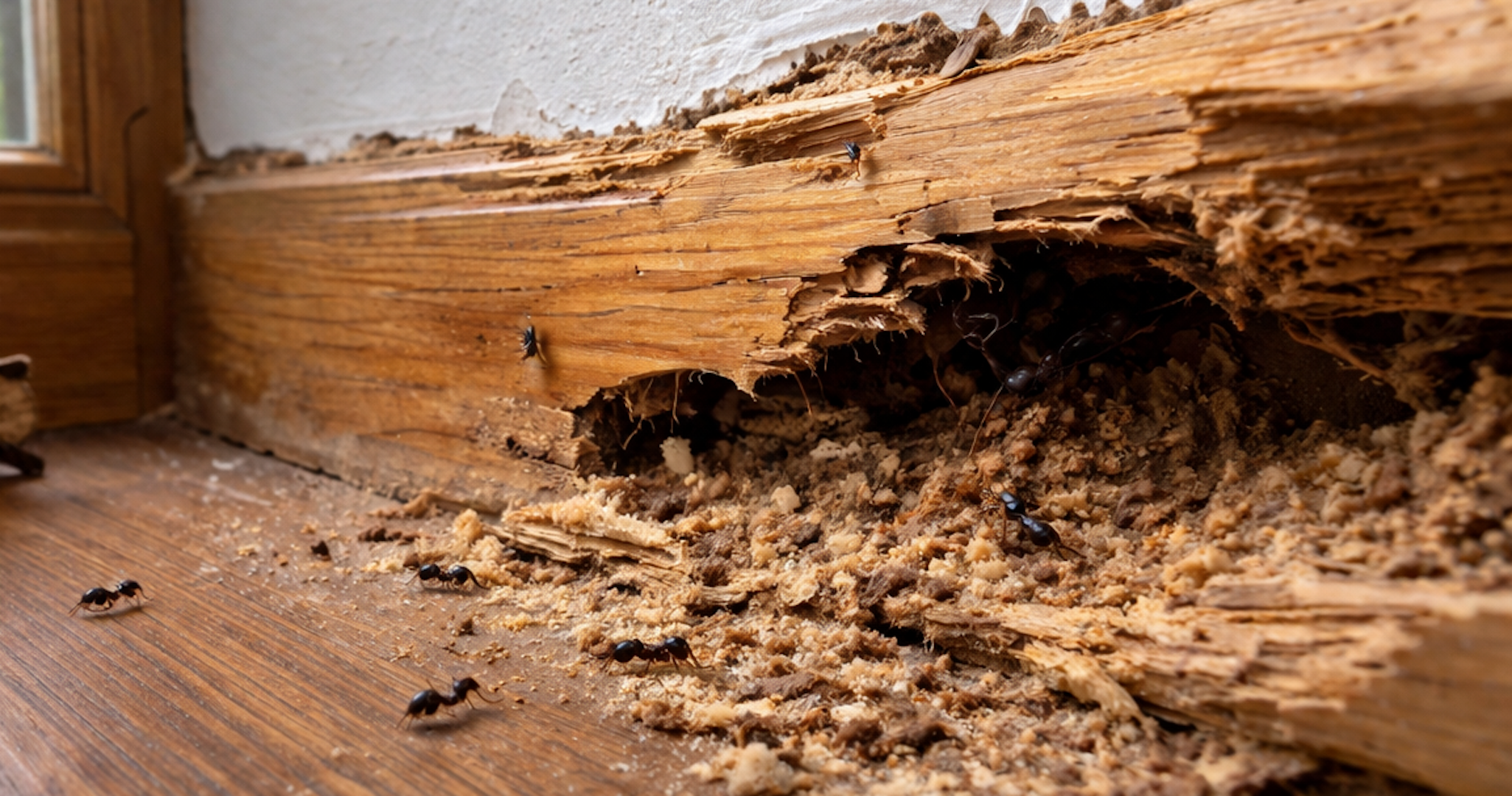
Carpenter ants in the Poconos are usually large (a quarter to half an inch long), black or dark reddish, and often leave small piles of wood shavings called frass near walls, windows, or trim.
The three clearest signs are big black ants indoors, sawdust-like frass beneath wood, and winged swarmers near lights in spring.
This guide walks you through how to identify carpenter ants, where they nest in Pocono homes, how to tell them apart from termites, and what to do next.
Most service calls for pest control in the Poconos come from homeowners in Mount Pocono, Stroudsburg, East Stroudsburg, and Tannersville who spot one or two of these signs and want a professional to confirm the problem before it spreads.
If you are not yet sure which pest you are dealing with, the pest identification library can help you compare carpenter ants to other common invaders.
What Are the Signs of Carpenter Ants in a Poconos Home?
Most Poconos homeowners notice carpenter ants in one of three ways. Each sign points to a nest that is either inside the home or very close to it.
Large black ants indoors: Carpenter ants are bigger than typical kitchen ants. If you see ants that look too large to be pavement or odorous house ants (especially in kitchens, bathrooms, or near windows), treat that as a warning sign.
Frass (wood shavings): Small piles of coarse, stringy wood particles mixed with dead insect parts often sift from cracks in siding, behind moldings, in basements, and in attics. Because carpenter ants do not eat wood, they push excavated material out of the nest.
Winged swarmers indoors: If you see winged ants near windows or light fixtures in spring or early summer, a mature colony is likely nearby. Swarmers are reproductive ants leaving an established nest to start new ones.
Rustling sounds in walls: A faint crinkling or rustling behind drywall or ceilings can sometimes be heard with a stethoscope or an inverted drinking glass. This is often a satellite colony active inside the structure.
What Do Carpenter Ants Look Like?
Carpenter ants are some of the largest ants in Pennsylvania homes. Knowing their size, color, and shape helps you tell them apart from the smaller ants that also show up indoors.
Size, Color, and Key Features
- Size: Workers range from about a quarter inch to half an inch long. Winged reproductive ants are often even bigger.
- Color: Most Poconos carpenter ants are solid black. Some species have reddish or orangish tones on the thorax or legs.
- Body shape: Three distinct segments with a narrow, pinched waist.
- Antennae: Bent or elbowed, not straight.
- Wings (on swarmers): Two pairs. The front wings are noticeably longer than the hind wings.
- Jaws: Strong mandibles used to chew through wood (not to eat it).
The most common species in our region is the black carpenter ant, Camponotus pennsylvanicus. For a closer look at identification details, see Penn State Extension on carpenter ants.
Carpenter Ants vs Regular House Ants
Pavement ants and odorous house ants are the two most common nuisance ants found inside Poconos homes. Both are much smaller than carpenter ants.
- Pavement ants: About 1/8 inch long, dark brown to black. They usually trail in from cracks in concrete or along baseboards.
- Odorous house ants: About 1/8 inch long, dark brown. They give off a strong odor when crushed.
- Carpenter ants: Much larger (up to half an inch), with strong jaws and a preference for damp wood.
If the ants you see are noticeably bigger than the ones you usually find in the kitchen, you are likely dealing with carpenter ants.
Where Do Carpenter Ants Nest in Poconos Homes?
Carpenter ants need moisture. They prefer wood that has been softened by leaks, condensation, or long-term humidity. That preference shapes where nests show up in a home.
Common Indoor Nesting Spots
- Window and door frames, especially where caulking has failed
- Wall voids behind kitchens and bathrooms
- Attic rafters and roof decking near ice dam areas
- Basement sill plates and band joists
- Around chimneys and skylights where flashing leaks
- Under dishwashers and refrigerators with slow drips
- Foam insulation board, which is soft enough for satellite nests
Colonies often have a parent nest outdoors (in a stump, log, or standing dead tree) and one or more satellite nests inside the home.
Satellite nests hold workers, older larvae, and pupae, but not the queen. Homeowners usually see activity from satellite colonies long before they find the parent nest.
For more background on colony structure, see university research on carpenter ant colonies.
Why Poconos Homes Are Especially at Risk
The Poconos have three conditions that carpenter ants love: heavy forest cover, high seasonal humidity, and a lot of wood-framed vacation and seasonal homes.
- Wooded lots: Most properties here sit within a few feet of trees, stumps, and firewood piles that serve as parent nest sites.
- Moisture cycles: Heavy snow, ice dams, spring thaw, and summer humidity create repeated opportunities for wood to stay damp.
- Seasonal homes: Vacation properties often sit empty for weeks. Small leaks go unnoticed, and nests have time to grow before anyone sees them.
- Log cabins and wood siding: Common Pocono building styles give carpenter ants direct access to nestable wood.
What Is Carpenter Ant Frass and Why Does It Matter?
Frass is the mix of wood shavings, dead insect parts, and debris that carpenter ants push out of their galleries. It is the most reliable early sign of an indoor nest.
Why it matters: Frass means an active colony is excavating wood inside your home right now. It is not old damage. It is ongoing damage.
How to spot it: Look for small piles on window sills, in basement corners, near baseboards, under porches, and below attic vents. The piles often contain bits of insulation and bug parts, not just wood.
How to confirm it is carpenter ant frass: Carpenter ant galleries are smooth and clean, with no soil or mud. Frass from their tunnels has a stringy, coarse look. Termite damage, by contrast, includes soil and fecal pellets packed into the galleries.
Carpenter Ants vs Termites: How to Tell the Difference
This is the single most important distinction for a Pocono homeowner. Both pests damage wood, but the treatment, cost, and urgency are very different. Correct identification protects your budget and your home.
| Feature | Carpenter Ants | Termites |
|---|---|---|
| Appearance | Narrow, pinched waist; elbowed antennae; hard black or dark body | Broad waist with no pinch; straight, beaded antennae; soft pale or cream body |
| Wings (swarmers) | Two pairs, front pair longer than hind pair | Two pairs of equal length, longer than the body |
| Behavior with wood | Excavate wood to nest; do not eat it | Eat wood for its cellulose |
| Damage pattern | Smooth, clean galleries; frass pushed out through kick-out holes | Galleries packed with soil and fecal pellets; mud tubes on foundations |
| Wood appearance | Clean tunnels in damp or softened wood | Layered, blistered, or hollowed wood that looks like water damage |
| Where they are seen | Often visible on floors, counters, and near windows | Rarely seen outside the colony except when swarming |
If you see mud tubes along the foundation or crawl space, that points to termites, not carpenter ants. If you see big black ants and loose wood shavings, it points to carpenter ants.
Why Mount Pocono, Stroudsburg, and Tannersville See Frequent Carpenter Ant Activity
Carpenter ant calls spike in Mount Pocono, Stroudsburg, East Stroudsburg, and Tannersville every year. The reason comes down to landscape and housing stock.
Mount Pocono: Higher elevation, heavy tree cover, and many seasonal cabins give colonies steady access to moisture and wood.
Stroudsburg and East Stroudsburg: Older neighborhoods and homes near McMichael and Brodhead Creek deal with consistent humidity and aging wood trim.
Tannersville: Dense woods along Camelback and surrounding resort areas keep parent colonies close to homes, so satellite nests form fast inside the structures.
If you need help in any of these towns, our local carpenter ant treatment team handles calls year-round.
How Much Damage Can Carpenter Ants Cause?
Carpenter ants cause damage more slowly than termites, but the damage adds up. A colony left alone for several years can weaken beams, studs, window frames, and roof decking.
The damage pattern is predictable. Ants start in a spot of softened or water-damaged wood, then expand into neighboring dry wood as the colony grows. Satellite nests extend the problem to new parts of the home.
Typical repair scope: replacing a window frame and surrounding trim, cutting out a damaged section of sill plate, or rebuilding a corner of a porch. Structural repairs on older cabins can run into thousands of dollars, especially when hidden moisture damage is also found.
The faster you confirm and treat the nest, the smaller the repair. Homeowners who catch carpenter ants at the first signs of frass usually avoid major reconstruction.
For background on wood degradation from wood-destroying insects, see research on wood-destroying insects.
What to Do If You Think You Have Carpenter Ants
Take these four steps in order. They protect the home while you get a professional inspection scheduled.
- Do not spray the ants you see. Store-bought sprays scatter the colony and push satellite nests deeper into the structure. This makes the problem harder to find and treat.
- Photograph the evidence. Take clear photos of the ants, any frass piles, and the spots where you see activity. This helps a technician identify the species and plan an inspection.
- Fix obvious moisture issues. Clear gutters, repair leaking pipes, and pull firewood and mulch back from the foundation. Carpenter ants need damp wood; removing the moisture makes your home less welcoming.
- Schedule a professional inspection. A technician can locate the parent nest, map satellite colonies, and treat the whole structure instead of just the ants you see. Our Home Protection Plan includes ongoing carpenter ant coverage, which is often the most cost-effective path for Pocono homes surrounded by woods.
Carpenter Ant FAQs
How do I know if the ants in my house are carpenter ants?
Look at size and color. Carpenter ants are noticeably larger than typical kitchen ants (a quarter to half an inch) and are usually solid black. If you also see loose wood shavings or winged swarmers in spring, you are almost certainly dealing with carpenter ants.
Are carpenter ants as dangerous as termites?
Carpenter ants cause damage more slowly than termites, but both can weaken structural wood over time. In the Poconos, untreated carpenter ant colonies in seasonal homes often cause damage that rivals termite damage simply because the infestation is missed for years.
Do I really need to call a professional?
Yes. The ants you see are foragers, not the nest. Locating the parent colony and any satellite nests requires inspection experience and often specialized tools. DIY treatments rarely reach the queen, so the colony rebuilds.
When are carpenter ants most active in the Poconos?
Carpenter ants are most visible from late spring through early fall, with swarmers emerging on warm days in spring and early summer. Activity slows in winter, though nests inside heated parts of a home can stay active year-round.
Can I tell the size of the colony from how many ants I see?
Not reliably. A mature colony may have thousands of workers but only send a handful indoors to forage. Seeing even a small number of large black ants on a regular basis is enough reason to schedule an inspection.
Have more questions? Visit our carpenter ant FAQ for a full list of common questions Pocono homeowners ask.

Flying Ants in PA & NJ: Identification and Prevention
Flying ants are sexually mature reproductive members of an existing colony, often referred to as alates or swarmers.
In Pennsylvania and New Jersey, these winged insects are almost always carpenter ants, embarking on nuptial flights to mate and establish new colonies. Unlike other species, carpenter ants burrow into softwood to nest; if left untreated, a flying ant infestation can cause significant structural damage to the wood framing and furniture around your property.
Flying ants emerge during the humid summer months to mate, a process that often brings them into contact with residential properties that contain standing water or decaying wood. Rural properties in the forests of the Poconos, Burlington County, NJ, or the Lehigh Valley are at a higher risk of these pests.
Openings around windows and bright outdoor lighting often act as beacons, drawing swarms toward your home as they seek a hospitable environment to start a new nest.
Correctly identifying flying ants vs. termites is the most critical step for any homeowner, as termites cause damage much more rapidly and are much more difficult to eradicate without professional help. Understanding these distinctions is vital to determining the severity of the threat and whether you need a targeted treatment.
This guide helps you identify flying ants throughout the region, implement strategies to prevent them from entering your home, and know exactly when to call a professional exterminator.
What Are Flying Ants?
In Eastern Pennsylvania and New Jersey, flying ants, also called alates, swarmers, or reproductives, are sexually mature carpenter ants seeking to reproduce. Queen ants spawn them, and worker ants feed them until the colony is ready to expand.
These ants swarm when a colony reaches a certain size, and environmental conditions are right. This usually happens on warm, humid days following a rainstorm. You will often see them in large groups around doorframes, windows, or light fixtures.
Spotting flying ants ensures that a local carpenter ant infestation is nearby.
How to Tell Flying Ants Apart from Termites
Flying ants and termites look similar at first glance, but key physical differences help you distinguish between them. Identifying them correctly matters because termites cause significant structural damage to homes, while flying ants typically do not.
Use this table to tell these flying insects apart:
| Feature | Flying Ants | Termites |
| Waist | Pinched, narrow “wasp-like” waist. | Broad, straight, and uniform waist. |
| Wings | Two pairs; front wings are longer than the back. | Two pairs of equal length and shape. |
| Antennae | Bent or “elbowed.” | Straight and look like tiny beads. |
| Body Color | Usually dark brown, black, or reddish. | Often translucent, tan, or “milky” white. |
If you’re unsure which pest you’re dealing with, contact a pest control professional. Misidentifying termites as flying ants can lead to costly structural damage over time.
Do Carpenter Ants Fly?
Yes, some carpenter ants can fly. These winged carpenter ants are swarmers that emerge to mate and establish new colonies.
After male swarmers fertilize females, the males die, and the females shed their wings, land, and start new colonies. While most flying ants will not damage wood, once they establish a colony, carpenter ants will damage wood in your home as they burrow into it to create nesting sites.
When Are Flying Ants Most Active in Pennsylvania and New Jersey?
Flying ants swarm during warm months because temperature and humidity trigger their mating flights. In the tristate area, you’ll typically see swarms in late spring through early fall, with peak activity in July and August.
Swarms usually occur after rain, when the ground is moist and conditions are ideal for establishing new colonies. Swarming often occurs simultaneously across entire neighborhoods because environmental triggers affect all nearby colonies at once.
If you see a swarm near your home, it means there’s likely an established ant colony nearby. The swarm itself is temporary, but the colony that produced it will remain unless treated.
How Do Flying Ants Enter Your Home?
Flying ants enter homes by exploiting small cracks, gaps, and openings like any other ant. Common entry points that attract flying ants include:
- Cracks in foundations, walls, and window frames
- Gaps in your roof line or openings in your attic
- Gaps around doors and windows
- Openings around utility lines and pipes
- Vents and chimneys
- Torn window screens
Once inside, flying ants are attracted to light sources. You’ll often find them gathered near windows, lamps, and other bright areas.
They’re also drawn to moisture and food sources. Kitchens, bathrooms, and basements with high humidity are particularly attractive to them.
Signs of a Flying Ant Infestation in Your Home
While seeing a few flying ants doesn’t always mean you have an infestation, certain signs indicate a more serious problem:
- Large numbers of flying ants inside your home, especially near windows
- Discarded wings near windowsills, doors, or other entry points
- Visible ant trails leading to and from your home
- Piles of sawdust or frass (wood shavings) if carpenter ants are present
- Hollow-sounding wood when tapped
- Small holes in wood surfaces
If you notice multiple signs or a large number of flying ants, an established colony is likely nearby.
Carpenter ants, once established, are nocturnal and can often be seen foraging for food, moisture, and wood to burrow in.
Addressing the problem immediately will mitigate any structural damage and prevent them from entering your home.
How to Prevent Flying Ants from Invading Your Property
Preventing flying ants requires eliminating attractants and sealing entry points around your property. These steps are essential for homeowners in Eastern Pennsylvania and New Jersey due to high seasonal humidity.
Exterior Maintenance
- Trim Vegetation: Regularly cut grass and trim hedges away from the foundation.
- Clear Debris: Remove dead tree branches and fallen leaves from your yard.
- Store Firewood Properly: Keep woodpiles at least 20 feet from your home and elevated off the ground.
- Manage Water: Clear clogged gutters and empty birdbaths to eliminate standing water.
- Fix Wood Damage: Repair or replace rotting wood on decks, siding, and fences.
Interior Maintenance
- Store Food: Use sealed containers for all pantry items.
- Manage Waste: Remove trash from the home daily.
- Seal Gaps: Use caulk to close cracks and crevices in the foundation and walls.
- Control Moisture: Fix leaky pipes and faucets immediately.
- Check Screens: Repair or replace torn window and door screens.
Natural Deterrents
- Peppermint Oil: Spray a mixture of peppermint essential oil and water near entry points.
- Diatomaceous Earth: Sprinkle food-grade powder around windowsills and doors.
- Vinegar Solution: Clean surfaces with vinegar and water to erase ant scent trails.
These prevention methods work best when combined. Addressing moisture issues, sealing entry points, and removing attractants together create the most effective barrier against flying ants.
When to Call a Pest Control Professional About Flying Ants
Many homeowners in Pennsylvania and New Jersey dismiss flying ants as a minor nuisance, but waiting can lead to expensive structural repairs. While ants don’t eat wood like termites, they hollow it out to build “galleries,” which can be just as damaging to your home’s stability.
Contact a local exterminator if:
- You see swarmers indoors: Large numbers of flying ants inside usually mean a mature colony is already nested in your walls.
- You find “Frass”: Piles of fine sawdust mixed with insect parts (frass) near baseboards indicate active excavation.
- You hear rustling: In quiet moments, you may hear a faint clicking or rustling sound inside your walls as ants move through their tunnels.
- You find discarded wings: Piles of wings near entry points or windowsills are a primary sign of an active infestation.
- You see structural changes: Doors or windows that suddenly stick or floors that feel “spongy” can indicate that internal beams have been weakened by tunneling.
Ant infestations in the Mid-Atlantic often involve “satellite” colonies. While you might kill the ants you see, the parent colony is often hidden outdoors in a tree stump or woodpile. A professional inspection identifies these hidden sources to prevent the ants from returning every season.
If you suspect an infestation in Eastern Pennsylvania or South Jersey, contact The Pest Rangers immediately. We identify the specific ant species and eliminate the colony at the source to protect your property.
FAQs
What time of year are flying ants most common in NEPA?
Flying ants are most common during warm summer months, particularly in July and August in the northeast. However, they can also appear during spring and fall depending on weather conditions. Warm, humid days following rain are prime conditions for flying ant swarms.
Do flying ants pose any health risks?
Flying ants are typically harmless to humans and do not pose health risks. Some flying ants may bite or sting if threatened, but these bites are usually not painful. Still, you should keep them away from food and out of your home to prevent contamination and potential infestations.
How long do flying ant swarms last?
Flying ant swarms typically last only a few hours to a day. The mating flight is brief, and once mating occurs, males die and females land to establish new colonies. However, if conditions remain favorable, you may see multiple swarms over several days or weeks.
Are flying ants a sign of an infestation?
Seeing flying ants outside doesn’t necessarily mean you have an infestation, but finding them inside your home often indicates an established colony nearby. If you see multiple flying ants indoors or find discarded wings, a colony is likely present in or near your home.
Can flying ants damage my home?
Most flying ants do not damage homes. However, flying carpenter ants can cause structural damage because they burrow into wood to create nesting sites. If you see flying carpenter ants, contact a pest control professional immediately to prevent damage.
What attracts flying ants to my home?
Flying ants are attracted to light sources, moisture, and food. Common attractants include outdoor lights at night, leaky pipes, clogged gutters, exposed food, and decaying wood. Eliminating these attractants helps prevent flying ants from entering your property.
How do I know if I have carpenter ants or regular flying ants?
Carpenter ants are typically larger than other ant species and are black or dark brown. Look for piles of sawdust (frass) near wood structures, hollow-sounding wood, and small holes in wood surfaces. If you’re unsure, a pest control professional can identify the species.
Will flying ants go away on their own?
Flying ants may disappear after their brief mating flight, but the colony that produced them will remain. If conditions are favorable, the colony will continue to grow and produce more swarmers. Professional treatment is the most reliable way to eliminate the colony.

Do Home Remedies for Cockroaches Work in PA & NJ?
German cockroaches represent 97.8% of cockroach infestations in New Jersey, according to Rutgers University surveys, with 36% of low-income apartments harboring active infestations. Pennsylvania homes face similar infestation rates.
A single female German cockroach can produce up to 200-250 eggs annually, with new generations reproducing within weeks, turning small problems into severe infestations quickly.
Home remedies such as boric acid, diatomaceous earth, and baking soda kill individual cockroaches by poisoning their stomachs or damaging their exoskeletons. However, these methods fail to eliminate infestations because they cannot reach cockroaches hiding in wall voids, behind appliances, and within electrical boxes, where the majority of populations live.
Understanding why home remedies fail helps homeowners make informed treatment decisions.
Why German Cockroaches Are So Common in PA & NJ
Unlike American or Oriental cockroaches that enter from outdoors, German cockroaches are “colonizers”—they establish indoor populations and rarely leave. They prefer warm, humid environments near food and water, such as kitchens, bathrooms, and areas behind appliances.
Reproduction rates make German cockroaches particularly difficult to control. Females carry egg cases containing 30 to 44 eggs. A single female produces 4 to 8 egg cases during her 100 to 200-day lifespan, yielding 120 to 350 offspring.
Nymphs mature within 40 to 125 days, depending on temperature, and then immediately begin reproducing. Exponential population growth explains how minor problems become severe infestations within weeks.
German cockroaches also hide in tiny crevices—1/16-inch gaps provide adequate harborage—making them virtually impossible to detect. Preferred hiding locations include behind baseboards, inside wall voids, under appliances (refrigerators, stoves, dishwashers), within electrical boxes and outlets, inside cabinet hinges, and beneath sinks.
Their nocturnal behavior means homeowners rarely see more than 10% of the population during the day. Daytime sightings typically indicate severe overcrowding.
5 Popular Cockroach Remedies: How They Work and Why They Fail
Home remedies for cockroaches are often the first step property owners take to combat visible cockroaches. While these methods may yield some short-term improvements, they don’t eliminate colonies and only disperse them to other parts of the property. The following are five common home remedies for cockroaches, and whether they work.
1. Boric Acid
Mechanism: Boric acid acts as a stomach poison, destroying the lining of cockroaches’ digestive systems and attacking their nervous systems. It also acts as a desiccant, damaging exoskeletons and causing dehydration. Death occurs within hours to days after ingestion.
Application: Mix boric acid with powdered sugar (1:1 ratio) to attract cockroaches. Sprinkle light dustings along baseboards, under appliances, in cracks and crevices. Heavy applications repel cockroaches—they avoid walking through thick layers of powder.
Effectiveness: Boric acid kills cockroaches that contact it, but three critical limitations prevent infestation elimination:
- Cannot reach wall void populations: 70-80% of German cockroaches hide in wall voids, electrical boxes, and appliance interiors, where boric acid cannot be applied.
- Does not attract cockroaches: Cockroaches must accidentally walk through boric acid. They do not seek it out. Populations avoiding treated areas continue reproducing.
- Requires weeks to impact populations: Cockroaches die days after exposure. During this time, populations continue breeding.
Safety concerns: Boric acid is toxic to humans and pets if swallowed or inhaled. Keep away from food preparation areas, children, and pets. Respiratory irritation occurs with dust inhalation.
2. Diatomaceous Earth (DE)
Mechanism: Food-grade diatomaceous earth consists of fossilized diatom shells with microscopic sharp edges. When cockroaches walk through DE, particles scratch away the waxy protective layer of their exoskeletons. This damage allows body moisture to escape, causing dehydration and death over several hours to days.
Application: Apply thin layers to dry areas where cockroaches travel — baseboards, cracks, behind appliances. DE loses effectiveness when wet. Use only food-grade DE; pool-grade or garden-grade formulations cause severe respiratory damage if inhaled.
Effectiveness: DE kills individual cockroaches through desiccation but shares the same fundamental limitations as boric acid: it becomes ineffective when damp, cannot penetrate hidden wall voids, acts too slowly to outpace reproduction, and lacks any properties to actually attract the pests.
3. Baking Soda
Mechanism: When cockroaches ingest baking soda, it reacts with stomach acids to produce carbon dioxide gas. Cockroaches cannot expel gas through burping. Pressure builds until internal organs rupture, causing death within hours.
Application: Mix baking soda with sugar (1:1 ratio) and place in shallow dishes near cockroach activity. Sugar attracts cockroaches; baking soda kills them after ingestion.
Effectiveness. While laboratory studies show baking soda and sugar mixtures can be as effective as boric acid when force-fed to cockroaches, real-world effectiveness is questionable because many German cockroach populations have developed a genetic aversion to sugar, the mixture only kills individuals that actively consume it, and it lacks the residual “contact kill” properties needed to reach populations hiding in wall voids.
4. Essential Oils (Peppermint, Neem)
Mechanism: Strong scents from essential oils allegedly repel cockroaches by overwhelming sensory organs. Peppermint and neem oils are most commonly recommended. Users dilute oils in water and spray areas where cockroaches travel.
Effectiveness: Minimal to none. No scientific evidence supports essential oils as effective cockroach repellents or killers. Cockroaches may temporarily avoid recently sprayed areas but return once scents dissipate (hours to days). Essential oils do not kill cockroaches and provide no population control.
5. Bleach and Strong Scents
Mechanism: Bleach kills cockroaches through direct contact, but does not work as a repellent despite its strong odor. Other strong scents (bay leaves, cinnamon, garlic, coffee grounds, citrus) allegedly deter cockroaches through odor avoidance.
Effectiveness: Bleach kills cockroaches only when sprayed directly on them—impractical for hidden populations. Strong scents provide no meaningful deterrent. Cockroaches tolerate unpleasant odors easily and return to treated areas once scents fade. Regular cleaning with bleach removes food residues and moisture (effective sanitation), but does not control cockroach populations through smell alone.
Why Home Remedies Cannot Eliminate Infestations
All home remedies share fundamental limitations that prevent them from clearing an entire infestation.
| The Challenge | Home Remedy Reality | Professional Solution |
|---|---|---|
| Hiding Spots | 80% of roaches live in wall voids and appliances where DIY dusts can’t reach. | Void Treatments: Exterminators inject specialized aerosols and dusts directly into walls and outlets. |
| Kill Speed | Boric acid takes days to work; meanwhile, a single roach can lay 50 egg cases weekly. | IGRs: Insect Growth Regulators act as “birth control,” stopping the next generation from breeding. |
| Attraction | Roaches only die if they accidentally walk through DIY powder. | Gel Baits: Contain powerful pheromones and food scents that lure roaches out of hiding. |
| Application | Too much powder repels roaches; too little is ineffective. | Integrated Strategy: A multi-layered attack targeting adults and juveniles simultaneously. |
While home remedies cost $20–$50, they rarely stop the population from growing. Professional treatment typically costs $200–$500 but eliminates the infestation in 2–4 weeks, saving you months of failed DIY attempts.
When to Call Professional Pest Control
In Pennsylvania and New Jersey apartments, cockroach control requires professional treatment because infestations spread through shared walls, electrical conduits, and plumbing. Single-unit DIY treatment fails when adjacent units harbor untreated populations that continuously reinvade.
Contact a professional immediately if you notice these “red flags” of a severe infestation:
- Daylight Sightings: Indicates extreme overcrowding.
- Multiple Rooms: Suggests the infestation is spreading through the wall voids.
- Musty Odor: A distinct smell produced by large, established populations.
- Egg Cases: A sign of active, rapid reproduction.
- Failed DIY: If populations persist after 2 weeks of home remedies.
- Shared Walls: In PA and NJ apartments, roaches travel through plumbing and electrical lines; DIY treatment in one unit won’t stop a building-wide issue.
6 Cockroach Prevention Practices for Property Owners
Cockroach prevention stops a new infestation before it starts. Use these “starve and block” methods to keep cockroaches away:
- Seal Food: Use airtight containers for all pantry items and pet food.
- Clean Nightly: Wipe counters, sweep floors, and wash all dishes before bed.
- Remove Trash: Use sealed cans and empty them daily.
- Fix Leaks: Repair dripping faucets; cockroaches need a water source every day.
- Seal Entry Points: Caulk cracks around baseboards, pipes, and cabinets.
- Reduce Clutter: Get rid of cardboard boxes and paper bags, which roaches use for “harborage.”
These prevention measures are designed to deprive cockroaches of the essentials they need for survival: food, water, and shelter.
Home prevention is not foolproof, and all it takes is one small crack or moist mulch bed to draw German cockroaches from your garden to your home. Invest in a Home Protection Plan to get the best line of protection against German cockroaches and other pests in Pennsylvania and New Jersey.
FAQs
What home remedy kills cockroaches instantly?
No home remedy kills cockroaches instantly. Boric acid and diatomaceous earth require hours to days. Baking soda requires hours after ingestion. Essential oils and bleach do not reliably kill cockroaches. Only direct-contact insecticides (sprays) kill quickly, but cannot reach hidden populations.
What smell keeps cockroaches away?
Several scents have been known to deter cockroaches, including bay leaves, cinnamon, garlic, coffee grounds, and citrus. These scents are safe to use in the home and will not harm humans, but they can effectively deter cockroaches.
Will bleach keep cockroaches away?
The strong smell of bleach has also been shown to keep cockroaches away, which is why keeping a clean home is one of the most effective ways to get rid of these pests. Regularly cleaning your living space, especially your kitchen and other areas where you eat, is imperative to keeping cockroaches away from your home.
Do home remedies work for cockroaches?
Home remedies kill individual cockroaches but cannot eliminate infestations. Boric acid and diatomaceous earth work when cockroaches contact them, but they cannot reach 70-80% of the population hiding in wall voids, behind appliances, and inside electrical boxes. Populations continue reproducing faster than home remedies kill.
Is boric acid or diatomaceous earth better for cockroaches?
Both are equally effective when cockroaches come into contact with them. Boric acid works in damp conditions where DE fails. DE is non-toxic to humans, while boric acid requires careful handling. Neither eliminates infestations because neither reaches hidden populations. Professional treatment is required regardless of which product is used.
How long does it take for boric acid to kill cockroaches?
Boric acid kills cockroaches within 24-72 hours after ingestion. Cockroaches must walk through boric acid dust and ingest it during grooming. Death occurs from digestive system destruction and dehydration. However, populations hiding in wall voids never come into contact with boric acid and continue reproducing.
Can I get rid of cockroaches without an exterminator?
Minor infestations (1-2 cockroaches, no egg cases) may respond to rigorous sanitation plus boric acid or DE. Established infestations with multiple cockroaches, egg cases, or daytime sightings require professional treatment. Apartment infestations always require professional treatment because cockroaches reinvade from untreated adjacent units.

How to Get Rid of Bed Bugs in PA & NJ: Step-by-Step
Bed bugs infest 20% of U.S. homes and hotels annually, with Philadelphia ranking as the most bed bug-infested city in America.
Eastern Pennsylvania and New Jersey residents face heightened risk due to their close proximity to infestation hotspots like Philadelphia and New York, and to high apartment density in urban centers where bed bugs spread through shared walls.
However, bed bugs can infest any home, hotel, or commercial business across the region, hitchhiking on shared luggage and second-hand goods.
Bed bugs reproduce rapidly once they establish a shelter—a single female lays 200 to 500 eggs over her lifetime, with eggs hatching in 6 to 10 days.
If untreated, infestations spread from bedrooms to baseboards, electrical outlets, and furniture within weeks, making DIY removal virtually impossible.
Early identification and immediate action are critical because bed bugs hiding behind walls remain undetected while populations explode.
This guide provides step-by-step instructions on how to identify bed bugs, immediate containment steps, choosing the right professional treatment options (heat vs. chemical), and implementing prevention strategies to stop reinfestations.

Step 1: Identify Bed Bugs
Adult bed bugs are roughly 1/4 inch long (apple seed size) with flat, oval, reddish-brown bodies. After feeding, they swell and turn dark red.
While they cannot jump or fly, they can crawl 3–4 feet per minute. Some young bed bugs and larvae can be spotted with the naked eye, but this may require some close concentration.
Bed bugs may be confused with lice, which are smaller on average (only ⅛ inch in size).
Because bed bugs are elusive, the best way to identify an infestation is to look for these key signs:
- Bloodstains on sheets: Resulting from bed bugs feeding or being accidentally crushed when you move in your sleep.
- Musty odor: A distinct smell produced by pheromones when the bugs are threatened or dead.
- Bed bug bites: Physical evidence of these parasites feasting on your blood.
- Bed bug shells: Discarded bed bug casings shed by juveniles, which often indicate a sizable population.
- Live sightings: Frequently spotting live bugs in your home is a clear alert of a large infestation.
Rutgers University research found that 50% of residents with bed bug infestations remain unaware until the infestation becomes severe. Professional K9 inspections detect 95% of infestations through visual examination of mattress seams, box springs, and furniture—more reliable than waiting for bite reactions.
Step 2: Seal Off the Infestation
Bed bugs travel 100+ feet per night searching for hosts. Containment prevents spread to other rooms and neighboring apartments in multi-unit buildings.
- Close infested room doors: Prevent pets and children from entering. Bed bugs hide in clothing and spread through contact.
- Seal electrical outlets: Install outlet covers. Bed bugs hide behind outlet plates and travel through wall voids to adjacent rooms and apartments.
- Isolate infested items: Place bedding, clothing, and soft items in sealed plastic bags immediately. Do not carry unsealed items through the house–bed bugs transfer during movement.
- Avoid moving furniture: Moving infested furniture to other rooms spreads bed bugs. Leave furniture in place until professional treatment.
- Do not use bug bombs: Total release foggers scatter bed bugs deeper into walls and do not penetrate hiding spots. EPA studies show foggers are ineffective against bed bugs.
- Contact professional pest control immediately: DIY treatments fail because bed bugs hide in inaccessible locations (wall voids, electrical boxes, furniture interiors). Professional treatment is required for elimination.
In apartment buildings and row homes common in eastern PA and southwestern NJ, untreated infestations spread through shared walls within weeks. Notify building management immediately, as coordinated treatment of adjacent units prevents reinfestation.
Step 3: Prepare Your Home for Treatment
Preparation ensures your exterminator can do their job fully without interruption. Requirements vary by treatment method.
Chemical treatments require extensive prep, while heat treatments require minimal prep.
Chemical Treatment Preparation
- Wash all bedding, clothing, curtains, and fabric items: Use hot water (minimum 120°F) and dry on high heat for 30+ minutes. Bag washed items in sealed plastic to prevent reinfestation.
- Empty closets and dressers completely: All items must be removed for chemical application to surfaces.
- Remove clutter: Eliminate hiding spots, including stacks of magazines, boxes, and items under beds.
- Pull furniture away from walls: Create 2-foot clearance for baseboard treatment access.
- Vacuum thoroughly: Remove bed bugs from carpets, mattress seams, and furniture crevices. Immediately seal the plastic bag and discard it outdoors.
- Seal cracks and crevices with caulk: Prevent bed bugs from retreating into wall voids during treatment.
Heat Treatment Preparation
- Remove heat-sensitive items: Medications, aerosol cans, lighters, candles, vinyl records, cassette tapes, photo albums, wax items, oil paintings, and chocolates.
- Unplug electronics: Temperatures reach 135°F to 160°F—electronics must be unplugged, but do not require removal (except plasma TVs).
- Open closets and drawers: Allow heat circulation to all hiding spots.
- Remove pets and plants: Heat levels are lethal to animals and vegetation.
- Minimal fabric handling: Unlike chemical prep, bedding and clothing remain in place and are treated with heat.
Step 4: Eliminate Bed Bugs with Professional Treatment Methods
Professionals generally use two primary methods to eliminate infestations, often combining them for an Integrated Pest Management (IPM) approach:
Heat Treatment (Thermal Remediation)
Industrial heaters raise room temperatures to 135°F–160°F for several hours to kill all life stages, including eggs.
- Pros: Achieves 99% elimination in a single day; non-toxic; reaches inaccessible areas like wall voids.
- Cons: Higher upfront cost ($1,500–$3,000); no residual protection against reintroduction.
Chemical Treatment
Technicians apply a combination of contact killers, residual insecticides, and growth regulators over 2–4 visits.
- Pros: More affordable ($300–$800 per visit); provides lasting chemical barriers to kill bugs over time.
- Cons: Requires multiple treatments over 4–8 weeks; does not kill eggs; significant preparation needed; risk of insecticide resistance.
Pro-Tip: Many experts recommend heat treatment for an immediate knockdown followed by a chemical perimeter for long-term prevention. Your exterminator will recommend a plan based on your property and the level of infestation.
Step 5: Post-Treatment Inspection and Monitoring
Professional treatments include follow-up inspections to verify elimination. Heat treatments typically include one follow-up inspection at 7 to 14 days. Chemical treatments require inspections before each retreatment (every 10-14 days).
K9 bed bug detection dogs identify infestations with 95%+ accuracy, detecting live bugs and viable eggs through scent. K9 inspections confirm elimination and detect reintroductions before populations expand.
Your exterminator will check for the following reinfestation signs:
- Inspect mattress seams weekly for fecal spots or live bugs
- Check bed bug interceptors placed under bed legs — shallow dishes trap bed bugs climbing to/from beds
- Monitor for new bite marks appearing in lines or clusters
- Watch for bloodstains or fecal spots on new bedding
- Set passive monitors (sticky traps) along baseboards and furniture
Contact a pest control professional immediately if any signs reappear. Early retreatment prevents small reintroductions from becoming full infestations.
Step 6: Practice Proper Prevention
Bed bugs enter homes through travel, secondhand furniture, and visitors. Prevention focuses on eliminating entry pathways:
- Inspect hotel rooms before unpacking: Check mattress seams, headboards, furniture for fecal spots
- Elevate luggage on bathroom counters or metal racks—never on beds or floors
- Immediately launder all clothing after travel: Hot water wash, high heat dry 30+ minutes
- Inspect secondhand furniture thoroughly before bringing inside; avoid upholstered items from unknown sources
- Seal cracks in walls and baseboards—bed bugs hide in 1/16″ gaps
- Use mattress and box spring encasements to prevent bed bug entry
- Reduce clutter to eliminate hiding spots
- In apartments, use caution in shared laundry facilities where bed bugs transfer between residents’ items
These tips will reduce the chances of a bed bug encounter. However, for commercial properties, including hotels and motels where bed bugs are more common, it’s essential to invest in a bed bug protection plan that offers frequent inspections and rapid response times.
How Bed Bugs Enter PA & NJ Homes
Bed bugs enter homes exclusively through transport on items and people, such as:
- Travel: Luggage, clothing, and personal items from hotels, Airbnbs, and vacation rentals. Proximity between Philadelphia and NYC increases exposure for PA and NJ residents.
- Secondhand furniture: Used mattresses, couches, dressers, and chairs from thrift stores, yard sales, or curbside pickups.
- Visitors: Guests who unknowingly carry bed bugs on clothing, bags, or personal items introduce infestations.
- Shared laundry facilities: Apartment buildings and laundromats, where bed bugs transfer between residents’ items.
- Adjacent apartments: Multi-unit buildings (common in Camden, Trenton, Philadelphia suburbs) allow bed bugs to travel through shared walls, pipes, and electrical conduits.
- Workplaces and schools: Bed bugs hide in backpacks, coats, and bags, and can transfer between locations.
Contrary to what you might think, bed bugs can make their way into even the cleanest homes.
Peak travel seasons (summer vacation, winter holidays) correlate with increased bed bug activity as travelers unknowingly transport bed bugs home.
Follow these tips to stay protected and to know when to contact an exterminator to stop infestations before they spread.
FAQs
What kills bed bugs instantly?
Heat above 122°F kills bed bugs instantly. Steam at 130°F+ kills on contact. Temperatures between 118°F and 122°F kill bed bugs within 90 minutes. Professional heat treatments maintain 135°F to 160°F for hours, ensuring lethal temperatures penetrate all hiding spots including mattresses, furniture, and wall voids. High-heat dryers (minimum 120°F for 30+ minutes) kill bed bugs in clothing and bedding.
Do bed bugs go away naturally?
No. Bed bugs do not leave voluntarily when hosts are present. Bed bugs survive 12+ months without feeding in favorable conditions. Populations continue reproducing (200-500 eggs per female lifetime) until professional elimination occurs. Ignoring infestations allows populations to expand from bedrooms into walls, furniture, and adjacent rooms or apartments.
Can I get rid of bed bugs myself?
DIY elimination fails in 80%+ of cases because bed bugs hide in inaccessible locations (wall voids, electrical outlets, furniture interiors) that DIY methods cannot reach. Over-the-counter pesticides are ineffective due to widespread insecticide resistance. Professional treatment using heat or professional-grade chemicals with proper application techniques is required for reliable elimination. DIY methods like laundering and steaming supplement professional treatment but cannot replace it.
How long does bed bug treatment take?
Heat treatment eliminates infestations in one 6 to 8 hour session with immediate results. Chemical treatment requires 2 to 4 appointments over 4 to 8 weeks — initial treatment plus follow-ups every 10 to 14 days to kill newly hatched nymphs. Treatment duration depends on infestation severity, home size, and clutter level affecting hiding spots.
How much does professional bed bug treatment cost?
Heat treatment costs $1,200 to $3,000+ for whole-home treatment, depending on size. Chemical treatment costs $650 per application, with 2 to 4 treatments required. Severe infestations, large homes, and high clutter increase costs. Heat treatment has a higher upfront cost but eliminates infestations faster. Chemical treatment spreads costs over weeks but requires multiple treatments and extensive preparation time.
Are bed bugs dangerous or do they spread disease?
According to CDC research, bed bugs do not transmit diseases. Health impacts include itchy bite reactions, secondary skin infections from scratching, allergic reactions (rare), anxiety, insomnia, and psychological distress from infestation stress. Some people show no bite reactions, while others develop severe welts requiring medical attention.
Can bed bugs live in walls?
Yes. Bed bugs hide in wall voids, behind baseboards, inside electrical outlets, and within wall-mounted picture frames. They travel through walls between apartments in multi-unit buildings. Wall infestations make DIY treatment impossible and require professional heat treatment (penetrates walls) or chemical injection into voids. This wall-traveling behavior explains the rapid spread of infestation in apartment buildings common throughout eastern PA and southwestern NJ.
How do I know if bed bug treatment worked?
Signs of successful treatment: no new bite marks after 2+ weeks, no live bed bugs during inspections, no fecal spots on bedding or furniture, no bed bugs captured in interceptors or monitors. Professional follow-up inspections (visual or K9) confirm elimination. Most reputable companies provide warranties ranging from 30 days (chemical) to 1 year (heat treatment) and will retreat if bed bugs return within the warranty period.

How to Meet Restaurant Pest Control Standards in PA & NJ
Restaurants face higher pest risks than other businesses because of constant access to food, organic waste, moisture, and high-traffic entry points.
Beyond the physical damage to equipment and wiring, pests like mice, cockroaches, and flies carry salmonella and E. coli, leading to immediate health inspection failures, fines, or closures.
In Pennsylvania and New Jersey, restaurants must adhere to FDA Food Code standards and state Department of Agriculture regulations. Because commercial pest control accounts for 20% of a health inspection score, even a single sighting can lower your grade, trigger a violation, and damage your reputation.
A 2022 survey found that 66% of food service establishments experienced rodent infestations.
This guide covers Pennsylvania and New Jersey’s specific pest regulations, common pests they encounter, and seven essential practices to keep your facility compliant and protected.
PA & NJ Regulations for Restaurant Pest Control
Both Pennsylvania and New Jersey restaurants operate under the FDA Food Code, which requires establishments to maintain a pest-free environment through routine inspections, approved control methods, and professional service documentation.
Under Pennsylvania Code Title 7 and New Jersey Administrative Code N.J.A.C. 8:24, businesses must also utilize tamper-resistant rodent bait stations and certified pesticide applicators for restricted-use products.
Failure to comply with these regulations leads to:
- Official inspection failures and reinspection fees.
- Negative health grades that impact public reputation.
- Temporary closures or full license suspension for severe violations.
Health department inspections occur every 10 to 12 months for compliant establishments. Pennsylvania’s seven counties (Allegheny, Bucks, Chester, Delaware, Erie, Montgomery, Philadelphia) plus ~100 municipalities conduct independent inspections.
New Jersey county and municipal health departments perform annual surprise inspections.
Finally, both states require HACCP (Hazard Analysis and Critical Control Points) plans for high-risk operations. Restaurants must document pest control services, including dates, findings, treatments, and corrective actions.
Records must be available for inspection and maintained for a minimum of 12 months in Pennsylvania and 3 years in New Jersey.
How Pest Control Complies with ServSafe
ServSafe is a food and beverage safety training program that helps restaurants prevent food-borne illnesses and maintain the highest level of food safety.
Routine pest control can help your restaurant comply with ServSafe standards by ensuring no pests infest your kitchen or dining area and compromise the safety and integrity of your establishment.
Following ServSafe protocols is essential for passing health inspections and getting a positive report.
Common Restaurant Pests in Pennsylvania
Pennsylvania and New Jersey restaurants face five primary pest groups that threaten food safety and regulatory compliance:
Rodents (Mice and Rats)
Rodents can squeeze through gaps as small as 1/4 inch, often entering through loading docks or damaged weather stripping. Once inside, they contaminate food and surfaces with droppings carrying salmonella and hantavirus.
They also pose significant fire hazards to your building, as they are liable to chew on insulation and wiring because they have a constant need to chew to prevent their teeth from growing.
German Cockroaches
The leading pest problem for U.S. restaurants, German cockroaches thrive in warm, moist areas like sinks and dishwashers. They spread E. coli and Salmonella, and spotting one during the day often indicates a severe, overcrowded infestation.
Cockroaches also reproduce extremely rapidly. A single female produces 4 to 8 egg cases during her lifetime, each containing 30 to 40 eggs. Populations explode within weeks if left unchecked, especially in areas like restaurants with steady food supplies.
Flies (Fruit Flies, House Flies, Drain Flies)
Flies breed rapidly in organic waste, clogged drains, and damp mop buckets. They transmit over 100 different pathogens by moving between exterior garbage and interior food prep surfaces, regurgitating digestive enzymes that spread bacteria onto everything they touch.
Ants
Pavement ants and odorous house ants enter restaurants through foundation cracks and gaps around doors, searching for sugar and protein. They establish chemical trails from nests to food sources, bringing thousands of workers once trails are established.
Ants contaminate food through direct contact and by transporting bacteria from their outdoor nests onto their bodies.
Stored Product Pests (Beetles, Moths, Weevils)
Stored product pests infest grains, flour, cereals, nuts, dried fruit, and spices. Indian meal moths, cigarette beetles, and grain weevils enter facilities in infested products, then spread throughout dry storage areas.
Larvae feed inside food packages, contaminating entire lots. Infestations require discarding all affected products and deep-cleaning storage areas—costs that can reach thousands of dollars for large infestations.
7 Best Practices to Follow Restaurant Pest Control Regulations
Following pest control regulations is easier when working with a professional pest control company. The following are seven best practices for maintaining FDA Food Code and state regulatory compliance for dealing with pests inside restaurants.
1. Schedule Monthly Professional Inspections
Restaurants require at least monthly professional inspections, though high-risk sites may need weekly visits to catch infestations early.
Technicians identify conducive conditions, monitor traps, and provide the documentation necessary for health department compliance.
Utilizing the EPA’s own Integrated Pest Management (IPM) focuses on long-term prevention and exclusion to reduce the need for heavy pesticide use.
2. Implement Proper Food Storage Protocols
Store all food in sealed, commercial-grade containers elevated 6 inches off the floor to prevent pest access and allow for easy cleaning.
Following a First-In-First-Out (FIFO) rotation ensures products don’t sit long enough to attract pests, while discarding original cardboard boxes immediately removes common “hitchhiker” hiding spots.
3. Maintain Rigorous Cleaning Standards
Daily “clean-as-you-go” protocols and nightly degreasing of floors prevent the accumulation of grease and debris that feed pests. It is critical to move equipment weekly for deep cleaning and to treat floor drains with enzymatic cleaners to eliminate organic buildup where drain flies breed.
4. Follow Strict Waste Management Procedures
Garbage is a primary attractant for pests; all bins must have tight lids and be emptied frequently throughout the day.
Exterior dumpsters should be kept at least 25 feet from the building on concrete pads, and all recyclables must be rinsed to remove odors that draw in rodents and insects.
5. Train Staff on Pest Prevention Protocols
Consistent prevention relies on staff trained to identify pests, properly manage food storage, and report sightings immediately. Quarterly refresher training ensures that every employee understands their role in maintaining ServSafe standards and facility hygiene.
6. Seal Entry Points and Eliminate Harborage
Exclusion is the most effective defense against pests.
Seal all foundation cracks and utility gaps with commercial sealant or copper mesh. Ensure exterior doors have functional sweeps with no more than a 1/4-inch gap, and keep landscaping trimmed at least 18 inches from the building to remove natural hiding spots.
7. Deploy Monitoring and Control Systems
Strategic use of numbered glue boards, pheromone traps, and UV light traps allows for the early detection of developing pest populations. Per state regulations, all rodent bait must be housed in covered, tamper-resistant stations and checked weekly to monitor and document activity levels.
Preparing for PA & NJ Health Inspections
Health inspections occur annually for compliant establishments, and more frequently for those with violations. Inspections can be announced or unannounced in both states. Preparation ensures readiness regardless of timing:
- Maintain pest control service records: Document all inspections, treatments, and corrective actions. PA requires 12-month retention; NJ requires 3-year retention. Inspectors review documentation to verify active pest management programs.
- Ensure monitoring devices are in place: Glue boards, bait stations, and traps should be properly positioned, numbered, and maintained. Missing or poorly maintained devices indicate inadequate pest control.
- Fix pest conducive conditions: Seal gaps, repair screens, eliminate standing water, and remove clutter before inspections. Conducive conditions violate health codes even without active infestations.
- Remove pest evidence: Clean up droppings, dead insects, and pest damage immediately. Evidence of pests, even if pests are no longer present, triggers violations.
- Verify proper chemical storage: Pesticides must be stored in locked cabinets away from food, labeled properly, and limited to products approved for food facility use.
- Train staff on inspection protocols: Employees should know not to disturb inspection processes and should answer inspector questions accurately without speculation.
Inspection failures require reinspections costing $200 to $400 and delay reopening. Severe violations result in immediate closure until corrected. Grade reductions damage reputation and reduce customer traffic.
Proactive pest management prevents violations and maintains grades. At The Pest Rangers, we follow standards set by the Food Safety Modernization Act and use different quality control standards in food processing designed to thwart pests and keep your restaurant safe. Contact us today for more information and a quote!
FAQs
How often should restaurants have pest control inspections?
Monthly inspections minimum. High-risk restaurants with previous infestations require weekly or bi-weekly inspections. Monthly frequency detects early infestation signs before populations reach damaging levels and demonstrates active pest management programs during health inspections.
Are pesticides safe to use in restaurants?
Only when applied by state-certified pesticide applicators following label instructions and FDA/USDA regulations. Pesticides must be approved for food facility use, applied to prevent food contamination, and stored in locked cabinets. Professional pest control ensures legal compliance and safe application. DIY pesticide use by untrained staff often violates regulations.
What happens if a restaurant fails a health inspection for pests?
Inspection failures require immediate corrective action and reinspection. Minor violations allow continued operation with reinspection scheduled within days or weeks.
Severe violations (live pest infestations, extensive contamination) result in immediate closure until corrected. Reinspection fees cost $200 to $400. Repeated failures can result in license suspension or revocation.
Do restaurants need documentation of pest control services?
Yes. Health inspectors review pest control service records during inspections. Documentation must include service dates, areas inspected, findings, treatments applied, and recommendations.
Pennsylvania requires 12-month record retention; New Jersey requires 3-year retention. Lack of documentation indicates the absence of active pest management programs and results in violations even without visible pest activity.
Can restaurants treat pest problems themselves?
Limited DIY pest control is allowed using over-the-counter products like glue boards and non-toxic monitors. Restricted-use pesticides require application by state-certified applicators.
Most restaurants lack the expertise to identify pest species, locate nests, apply treatments safely, and maintain documentation required by regulations. Professional services ensure compliance and provide superior control.
What are the most common pest violations in PA & NJ restaurants?
Live rodents or insects present during inspection, pest droppings in food storage or prep areas, chewed or damaged food packaging, inadequate pest monitoring devices, failure to correct conducive conditions (unsealed gaps, standing water, clutter), and lack of pest control service documentation.
Even a single pest sighting can trigger violations and grade reductions.
Beware of Door-to-Door Pest Control Companies in PA and NJ
Fraudulent scams involving salesmen posing as door-to-door pest control technicians are on the rise across Pennsylvania and New Jersey.
High-profile enforcement actions, including a lawsuit by the Pennsylvania Attorney General against Aptive Environmental and the recent $300,000 fraud arrest in Monmouth County, underscore the growing threat of deceptive door-to-door sales.
Jeff King, owner of The Pest Rangers, based in New Jersey and Pennsylvania, has warned local residents to ignore any pest control company that comes door-knocking, as no reputable pest control company would do that without prior contact.
Many of these scams involve collecting credit card information to sign customers up for recurring plans without actually applying any treatments or returning for service. Others involve knocking on people’s doors and offering free inspections, during which they identify an expensive pest control problem that doesn’t exist but requires prompt action.
This guide informs residents of how pest control scams work, what signs to look for, and what companies to be aware of in the tristate area.
How Door-to-Door Pest Control Scams Work
A door-to-door pest control scam works by enrolling people in monthly plans that include services they didn’t ask for, or by tricking them into signing up for an expensive treatment with no service provided.
In the first scenario, a solicitor will offer you a monthly pest control service, usually at a low premium, to get you to agree to a complicated contract that you’re not supposed to read.
While most exterminators offer monthly services, the ones these solicitors provide are designed to trap people into lengthy contracts and charge for services they don’t ask for.
In many cases, we’ve witnessed companies scam customers by:
- Failing to show up to perform their contracted services.
- Sending contractors to homes without the owner’s knowledge and charging them for services.
- Preventing customers from canceling their services through legalese or by not picking up the phone.
Many of these sales reps have no connection to the pest control industry and are recruited by these companies using tactics used in multi-level marketing (MLM) scams.
The goal is to enroll customers in your area in ongoing pest control contracts for services for which they receive a commission. As with most MLM scams, the more contracts and reps they recruit, the bigger their take.
In the second scenario, a “technician” may knock on your door, offering a free inspection. Once you agree, they will either find or even plant an insect on your property and convince you to hire them for some sort of quick treatment. Afterward, they may even entice you to agree to multiple unnecessary treatments.
How to Spot a Pest Control Scam
The best way to spot a pest control scam is to educate yourself on common sales tactics used by sales reps and ask as many questions as possible.
It’s important to state that no licensed exterminator goes door-to-door to find customers. That, in and of itself, should raise a red flag with customers.
However, there are many things customers can do to protect themselves against possible scams.
- Ask for a Business Card: Most licensed exterminators will carry a business card with an address and phone number to reach them. Failing to provide a business card or an address will be an obvious red flag.
- Be Weary of Out-of-State Addresses or Area Codes. Beware of companies without a legitimate business address in your local area, as these are often employed by solicitors who operate nationwide.
- Ask for a License. Many of these so-called “technicians” are merely slick salesmen and often don’t have proper licenses or permits to provide legal services. In fact, that person knocking at your door most likely resides in a different state.
Remember, every customer has the right to say no and to refuse door-to-door services or solicitation.
The Recent Case Against Aptive Environmental
A recent lawsuit filed by the Pennsylvania AG against Aptive Environmental highlights the dangers of duplicitous door-to-door sales tactics.
According to a previously highlighted agreement, Aptive Environmental engaged in door-to-door sales without the necessary permits, failed to provide customers with their contracts, neglected to inform them of their right to cancel within three days, and improperly handled cancellation requests, including penalizing those wishing to end their services.
Moreover, there were allegations that Aptive Environmental continued to charge customers who had attempted to cancel their services, in some cases sending contractors to their homes and billing them for these visits. Deputy Attorney General Jaimie George of the Bureau of Consumer Protection resolved the matter.
As part of the Consent Order, Aptive Environmental is required to pay $220,000 to the Commonwealth, with $195,000 allocated for civil penalties concerning the breach of the earlier settlement and an additional $25,000 to cover investigative and legal costs.
Door-to-Door Pest Control Companies to Watch Out For
In addition to complaints against Aptive Environmental, customers should be aware of several pest control solicitors operating in Pennsylvania and New Jersey that use similar tactics.
The best way to combat aggressive door-to-door pest control tactics is through proactive education. By learning to spot the signs of a scam, such as high-pressure, limited-time offers, the absence of physical business cards, or generic service descriptions, homeowners can confidently decline fraudulent solicitors.
Arming yourself with this information ensures you avoid costly, binding contracts and instead receive professional, reliable extermination care from local experts you can actually trust.
FAQs
What are the most common signs of a pest control scam?
The most frequent red flags include high-pressure discounts only available if you sign up today, salesmen claiming they just treated your neighbor’s house without providing a name, and a refusal to provide a written contract or physical business card before you commit to a service.
Are door-to-door pest control solicitations legal in Pennsylvania and New Jersey?
While solicitations are generally legal, many municipalities require a specific peddler’s permit. Always ask to see a permit and official company identification; if they cannot produce both, it is a significant warning sign of a potential scam.
How much have people lost to pest control scams recently?
Scams can range from small initial fees to massive fraud. For example, a recent case in Monmouth County involved a duo that allegedly defrauded residents of $300,000 through fraudulent pest-control and home-improvement schemes.
What should I do if a salesperson is aggressive or won’t leave?
If a solicitor becomes aggressive or refuses to leave your property, do not engage further. Close the door and, if necessary, contact local law enforcement. Legitimate companies will never use intimidation or high-pressure tactics to secure a customer.
How can I verify if a pest control company is legitimate?
Before signing anything, verify the license is valid through the Pennsylvania Department of Agriculture or the New Jersey Department of Environmental Protection. Additionally, look for established local reviews and ensure the company has a physical office address rather than just a roaming sales team.