
How to Get Rid of Mice in Your House: 11 Proven Tips
The fastest way to get mice out of your Pennsylvania home is to trap the ones already inside, remove the food and water keeping them there, and seal every entry point before the first cold nights of fall. Late August is the deadline that matters in Pa. Once overnight temperatures drop into the 40s, mice begin moving indoors for warmth, and a sealed home in August prevents an infestation in October.
Why act now instead of waiting for the first sighting? Because mice multiply quickly, and a pair that slips in this fall can become a full infestation by the holidays. Professional rodent control pairs trapping with exclusion, which means the same entry points do not refill every season.
Here is how to protect your home in 11 steps, plus a clear answer on when the job calls for a professional.
Why Do Mice Move Indoors in Late August and September?
Mice move indoors in late summer because their outdoor food supply shrinks and overnight temperatures fall. A house offers everything a mouse needs: warmth, nesting material, crumbs, and pet food.
This is a predictable NEPA pattern. Mice lead the wave of fall invaders that also includes stink bugs and other overwintering pests, which is why a full fall pest prep pays off in one effort.
Older homes are hit hardest. In markets like Wilkes-Barre, where roughly two-thirds of homes were built before 1940, settled masonry, original sills, and worn door thresholds give mice ready-made highways inside.
How small a gap can a mouse use? According to the CDC, a mouse can squeeze through a hole the size of a nickel. That is why sealing has to be thorough, not casual.
11 Proven Tips to Get Mice Out Before Fall
Work through these in order. Tips 1 through 3 stop the mice already inside. Tips 4 through 9 seal them out. Tips 10 and 11 keep them from coming back.
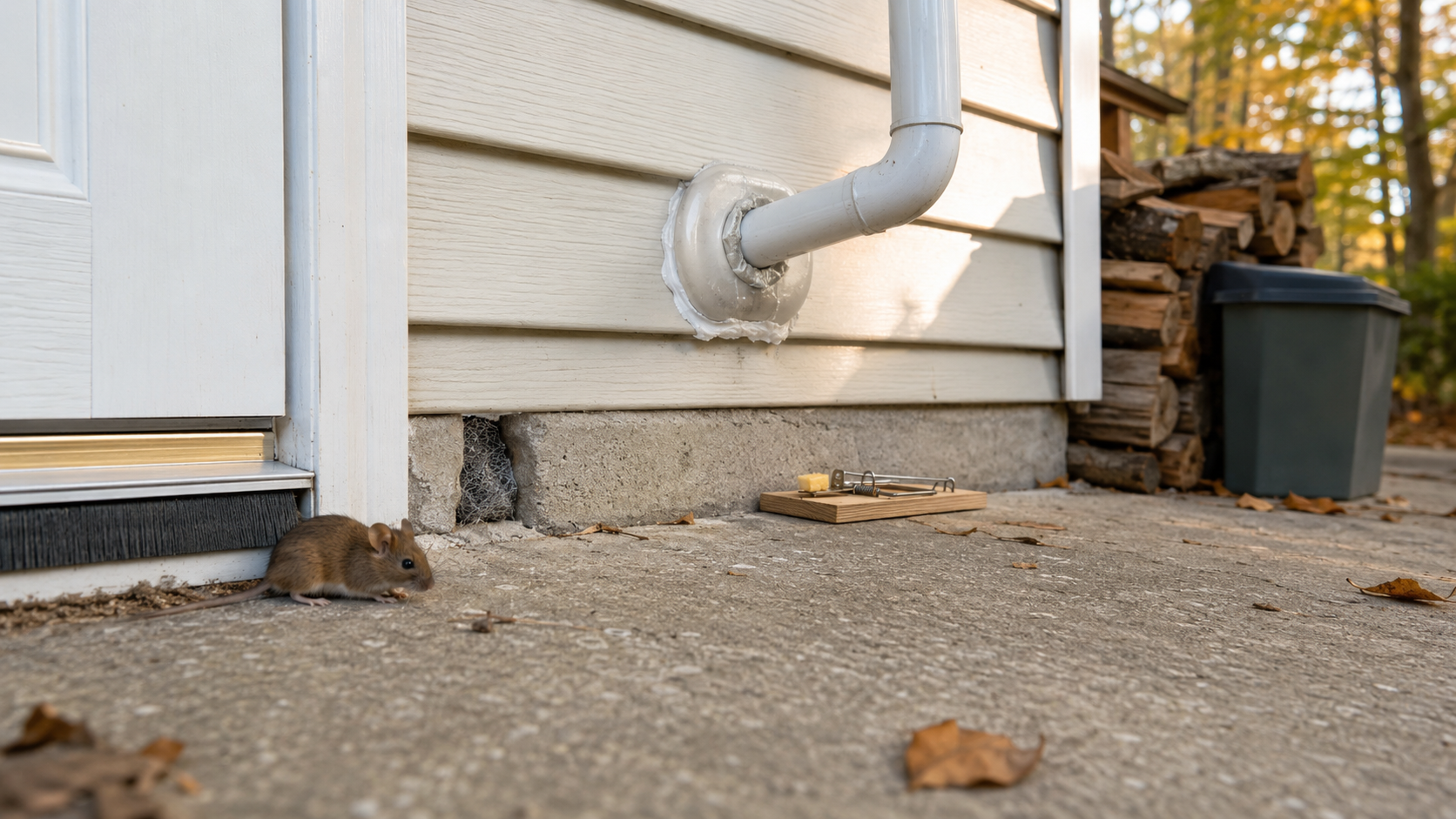
- Set traps where you see evidence: Place traps perpendicular to walls, trigger side toward the baseboard, in areas with droppings or gnaw marks. Why? Mice travel along walls, not open floors.
- Bait smart, not heavy: A pea-sized dab of peanut butter outperforms a loaded trap. Too much bait lets mice feed without triggering the trap.
- Cut off food and water: Store pantry goods and pet food in sealed containers, wipe up crumbs nightly, and fix dripping pipes. Mice can live on a few grams of food a day, so sanitation directly shrinks the population a home can support.
- Seal exterior gaps with steel wool and caulk: The CDC recommends stuffing small holes with steel wool and sealing around it with caulk, because mice cannot gnaw through it the way they chew foam.
- Install door sweeps on exterior doors: The gap under a garage or basement door is the most common entry point we find on NEPA service calls.
- Screen vents and chimney openings: Use quarter-inch hardware cloth on dryer vents, weep holes, and chimney caps.
- Seal around utility penetrations: Follow every pipe, cable, and AC line into the house and seal the gap around it.
- Declutter storage areas: Cardboard boxes on basement floors are nesting kits. Switch to lidded plastic totes on shelving.
- Trim vegetation and move firewood: Keep shrubs off the foundation and stack firewood at least 20 feet from the house, because ground cover gives mice protected runways to your walls.
- Clean up droppings the right way: Never dry-sweep or vacuum droppings. The CDC advises ventilating the area and wet-cleaning with disinfectant to avoid stirring up particles that can carry hantavirus.
- Monitor for two weeks after sealing: Place fresh traps and check for new droppings. No new activity for two weeks means your exclusion worked.
Mouse Entry Point Checklist
| Entry Point | What to Look For | How to Seal It |
|---|---|---|
| Foundation gaps and cracks | Openings the size of a nickel or larger | Steel wool packed tight, then caulk or mortar |
| Under exterior doors | Daylight visible beneath the door | Door sweeps and threshold repair |
| Utility penetrations | Gaps around pipes, cables, AC lines | Steel wool plus sealant; escutcheon plates |
| Dryer and attic vents | Torn or missing screens | Quarter-inch hardware cloth |
| Garage doors | Gnawed or flattened corner seals | New bottom seal and side weatherstripping |
| Chimneys | Open flue or missing cap | Chimney cap with mesh screening |
| Rooflines and soffits | Gaps where trim meets siding | Flashing, hardware cloth, sealant |
DIY Traps vs. a Professional Rodent Plan: Which Works?
DIY trapping works for one or two mice that just arrived. It fails against an established population, because traps remove individual mice without closing the entry points or finding the nest.
A professional program solves the problem in one pass. A licensed technician identifies every entry point, seals them, traps the remaining mice, and documents the work. Penn State Extension recommends exactly this integrated pest management approach for mice, combining sanitation, exclusion, and trapping rather than relying on any single method.
Ongoing coverage matters too. A Home Protection Plan includes rodent coverage with scheduled visits and free return service between visits, so a new fall invasion never gets a head start.
What Health Risks Do Mice Bring Into a Home?
Mice are a health issue, not just a nuisance. According to the CDC, rodents can spread disease directly through droppings, urine, and saliva, and indirectly through the ticks, mites, and fleas they carry. Hantavirus, salmonella, and leptospirosis are among the risks associated with rodent contamination.
Mice also create a fire hazard. They gnaw constantly to wear down their teeth, and gnawed electrical wiring inside walls is a real ignition risk in older NEPA homes.
Treat droppings in the pantry or nesting in the walls as a household health problem that deserves a fast, complete response.
When Should You Call a Professional for Mice?
Call a professional when you see any of these signs:
- Droppings in multiple rooms or on multiple floors, which signals an established population rather than a stray mouse.
- Scratching or scurrying in walls and ceilings, which usually means nesting inside voids you cannot reach with traps.
- Traps catching mice week after week, which means new mice keep entering through unsealed points.
- A strong ammonia odor, which indicates heavy urine contamination.
- Any contact between rodents and food prep areas, for health reasons.
The Pest Rangers pair trapping with full exclusion work, and every technician is licensed by the Pennsylvania Department of Agriculture. If a covered problem returns between visits, so do we, at no extra charge.
FAQs
How do I get rid of mice fast?
Set snap traps along walls where you see droppings, remove all accessible food, and seal entry points with steel wool and caulk. Trapping alone removes current mice, but sealing is what actually ends the problem.
When do mice start coming indoors in Pennsylvania?
Mouse pressure rises in late August and peaks through fall as overnight temperatures drop. Sealing your home before Labor Day is the most effective timing in NEPA.
Do mice leave on their own in spring?
No. Once mice establish nesting, food, and warmth indoors, they stay year-round. A fall invasion becomes a permanent population without trapping and exclusion.
Are mouse droppings dangerous?
They can be. The CDC links rodent droppings and urine to diseases including hantavirus and salmonella. Never dry-sweep droppings; ventilate the area and wet-clean with disinfectant.
How much does professional mouse control cost in NEPA?
Cost depends on the size of the home, the severity of the infestation, and the exclusion work needed, so it is quoted after an inspection. Year-round Home Protection Plans that include rodent coverage start at $45 per month, and free pest inspections are available.

DIY vs. Pro Mosquito Control in Wilkes-Barre (2026)
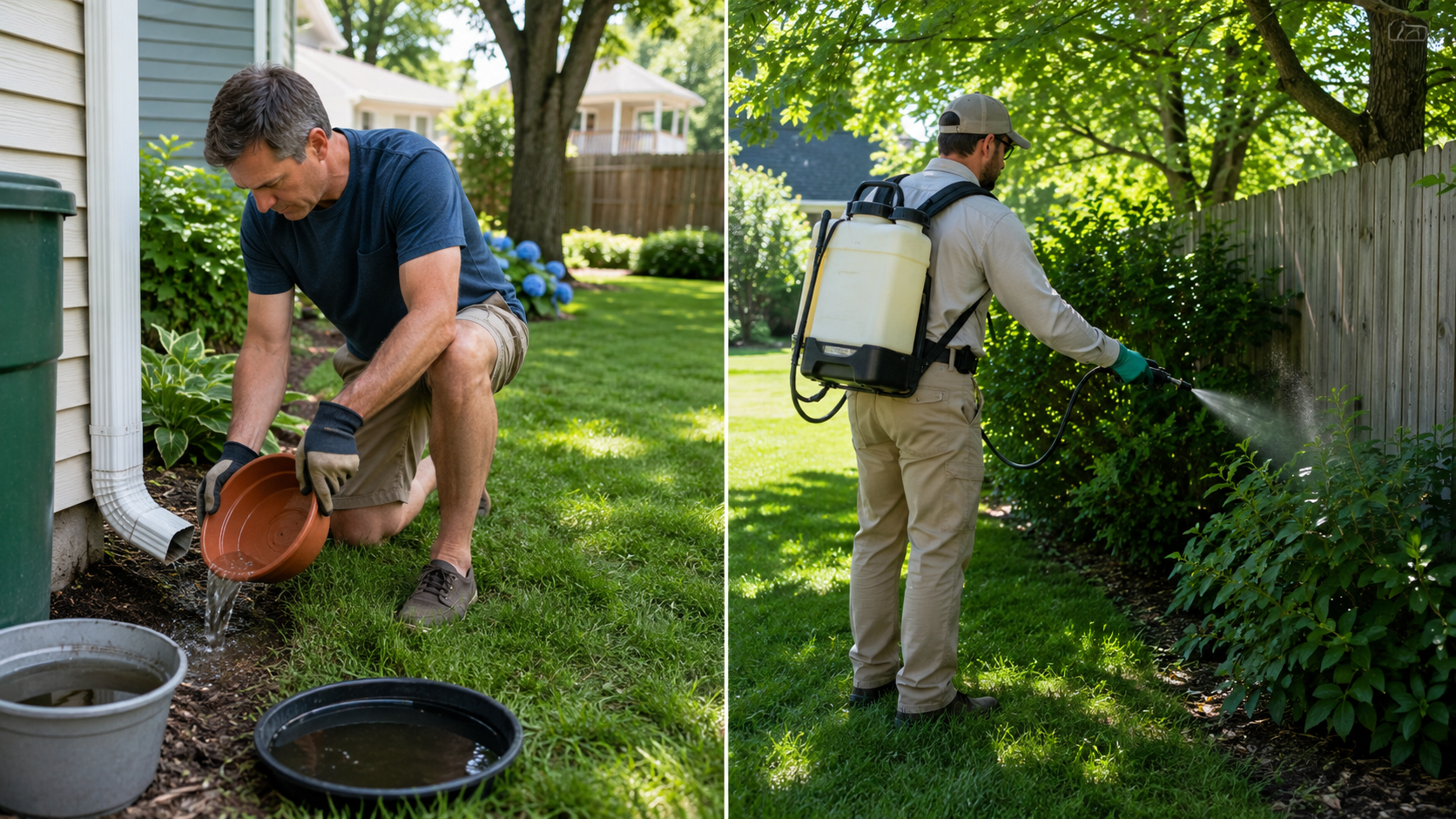
DIY works for one job and one job only: removing the standing water where mosquitoes breed. That part is free; it is the most important step, and no professional service replaces it.
Everything else sold to homeowners for mosquito control (citronella candles, foggers, zappers, hose-end sprays) delivers hours of relief at best. Professional barrier treatment is what holds a Wilkes-Barre yard for weeks at a time.
So the practical answer for most homeowners is both: dump the water yourself, then use a monthly mosquito and tick barrier treatment to handle the adults flying in from everywhere you cannot control. This guide shows the cost and effectiveness of each option so you can decide where your money actually goes.
Which Works Better for Wilkes-Barre Mosquitoes: DIY or a Pro?
Split the problem in two, and the answer becomes obvious.
DIY wins. Walking your yard and emptying every container that holds water is the highest-value mosquito control action available, and it costs nothing. A professional will recommend the exact same thing.
Professional treatment wins clearly. Adults resting in your shrub line, fence row, and shaded beds are not affected by anything you dump out, and consumer products do not leave enough residual on foliage to matter.
Much of the mosquito pressure here originates off your property. Floodplain low ground along the Susquehanna corridor, storm drains, neighboring lots, and wooded edges all produce mosquitoes that fly to you. You cannot dump someone else’s water.
Why Do Citronella, Foggers, and Store Sprays Fail?
Each one fails for a specific, understandable reason. Knowing the reason keeps you from spending the same money twice.
Citronella candles: Citronella masks the carbon dioxide and body odors mosquitoes use to find you, but the effect is weak, and it drops off fast with distance and wind. A University of Guelph field study of 3 percent citronella candles and 5 percent citronella incense found them ineffective at reducing mosquito annoyance under real outdoor conditions. A separate indoor trial measured a repellency rate of about 29 percent for 5 percent citronella candles. A candle may help slightly at the table you are sitting at. It does nothing for a yard.
Foggers and propane traps: Foggers knock down the adults flying at the moment you spray, then leave almost no residual behind. Protection is generally measured in days, not weeks, and mosquitoes from surrounding property move back in almost immediately.
Hose-end and aerosol yard sprays: Consumer formulations are diluted for untrained use and lack the adhesion chemistry that makes professional products bond to leaf surfaces. They also tend to disperse into the air rather than coating the underside of foliage where mosquitoes actually rest.
Bug zappers: Zappers attract insects with UV light, but mosquitoes are drawn to carbon dioxide and body heat instead. Research has repeatedly shown mosquitoes make up a tiny share of what zappers kill, while beneficial insects make up most of it.
One product that does work: larvicide dunks containing Bti, a naturally occurring bacterium, are available to homeowners and are effective in water you cannot drain, such as a rain barrel or an ornamental pond. Penn State Extension includes them in its integrated pest management guidance for mosquitoes.
Barrier Spray vs. Misting System vs. Larvicide: What Is the Difference?
Three professional approaches, three different jobs. Most Wilkes-Barre properties need the first, sometimes combined with the third.
A technician applies a residual product to the vegetation, fence lines, and shaded perimeter areas where adult mosquitoes rest during the day. It kills on contact and keeps working as mosquitoes land on treated surfaces. Industry-standard residual is roughly 21 to 30 days, which is why service runs monthly through the season.
Applied directly to water that cannot be drained, it stops larvae from becoming biting adults. It does not touch adults already flying, so it complements barrier treatment rather than replacing it.
A permanent installation of nozzles around a property that releases insecticide on a timer. Installation typically runs $1,200 to $2,500 plus $400 to $700 per year in maintenance. It delivers convenience at a high cost, and because it sprays on a schedule rather than on inspection, it uses far more product over a season.
For nearly every residential property in the Wyoming Valley, monthly barrier treatment with targeted larvicide where needed gives the best result per dollar.
DIY vs. Professional Mosquito Control: Cost and Effectiveness
Costs below reflect typical 2026 pricing. Professional yard treatment in Northeast Pennsylvania is quoted after a property assessment, because lot size, tree cover, and water sources drive the price.
| Method | Typical Cost | How Long It Lasts | What It Actually Does |
|---|---|---|---|
| Dumping standing water (DIY) | $0 | Ongoing, if repeated weekly | The most effective single action available. Removes the breeding source on your own property. |
| Citronella candles | $5 to $25 each | While burning, a few feet | Weak masking effect at close range. Field testing found no meaningful reduction in outdoor annoyance. |
| Bug zapper | $30 to $150 | Not effective | Kills mostly non-target insects. Mosquitoes are a small fraction of the catch. |
| Store-bought fogger or hose-end spray | $15 to $60 per round | Hours to a few days | Knocks down adults present at application. Minimal residual, rapid reinfestation. |
| Bti larvicide dunks (DIY) | $10 to $30 | About 30 days per dunk | Genuinely effective in standing water you cannot drain. Does not affect flying adults. |
| Professional barrier treatment | Quoted per property; monthly seasonal plans are the common structure | About 21 to 30 days per application | Treats adult resting sites across the yard, covers ticks in the same visit, and includes inspection for breeding sources. |
| Misting system | $1,200 to $2,500 install, plus $400 to $700 per year | Continuous, on a timer | Convenient but expensive, and applies product on a schedule rather than based on inspection. |
Note on one-and-done treatments: a single barrier application will noticeably reduce mosquito pressure for about three to four weeks, then fade as sunlight, heat, and rain break the product down.
Mosquitoes never stopped breeding during that window, so one treatment in June does not carry a yard through August. That is the entire reason barrier service is structured monthly instead of annually. Our guide to mosquito and tick barrier spray covers the re-treatment cadence in more detail.
What Does a Professional Mosquito Treatment Include?
A legitimate service is more than someone walking the perimeter with a sprayer. Here is the sequence.
- Property inspection: The technician identifies breeding sources (gutters, containers, low spots, tarps) and maps the shaded resting areas where adults spend the day.
- Source reduction guidance: You get a specific list of what to drain or fix on your property. This is the part that keeps the treatment working.
- Targeted barrier application: Product is applied to the underside of foliage, shrub lines, fence rows, and shaded perimeter zones using a backpack mist blower rather than a broadcast spray. This follows integrated pest management principles, which prioritize targeted application over blanket spraying.
- Larvicide where needed: Applied to standing water that cannot be drained.
- Tick coverage in the same visit: Barrier treatments target the same lawn edges, landscape beds, and shaded zones where blacklegged ticks wait. In Pennsylvania, where Lyme disease is a persistent concern, this is a real part of the value.
- Scheduled re-treatment: Monthly service through the season refreshes the barrier before it fully degrades. The Pest Rangers applies monthly barrier sprays across Northeast Pennsylvania, with noticeable relief typically within 24 hours of the first application.
When Should You Call a Pro?
Stay DIY when:
- You found a clear container source and clearing it solved the problem
- Bites are occasional and limited to dusk
- You are willing to walk the yard weekly during the season
- Your lot is open, sunny, and has no adjacent woods or wet ground
Call a professional when:
- Pressure stays high after you have removed every water source you can find
- Your property borders woods, a creek, a drainage ditch, or floodplain low ground
- You are being bitten during the day, which points to established container breeding
- You have an event on a specific date and need reliable results
- Ticks are also present, since one treatment covers both
- Someone in the household is older, immunocompromised, or reacts badly to bites
If you are still trying to work out why your yard is so bad in the first place, start with why you have so many mosquitoes in your Wilkes-Barre yard.
FAQs
How long does a professional mosquito treatment last?
A barrier application typically holds for about 21 to 30 days. Protection is strongest in the first two weeks, then the active ingredient degrades from UV exposure, heat, and rain.
Heavy rainfall right after application can shorten it, which is why service is scheduled monthly through the season rather than as a one-time job.
Will one treatment fix my mosquito problem for the summer?
No, and any company that promises that is overselling. One treatment gives you three to four good weeks. Mosquitoes continue breeding in surrounding areas the entire time, so consistent monthly service through the season is what actually keeps pressure down.
Is professional mosquito treatment safe around kids and pets?
Products are EPA-registered and applied by technicians licensed through the Pennsylvania Department of Agriculture. The standard guidance is to stay off the treated area while the product is wet, which is usually about 30 minutes, and to return once it has dried.
Tell your technician in advance about pets, pollinator gardens, vegetable beds, or anyone in the home with sensitivities so the application can be adjusted.
Does mosquito spray kill bees?
It can if applied carelessly, which is why application method matters. A trained technician treats shaded resting vegetation rather than flowering plants, and times applications to avoid peak pollinator activity. If you keep a pollinator garden or hives, point them out before the first treatment.
Can I do DIY and professional treatment together?
Yes, and that combination gives the best result. You handle source reduction weekly, the professional handles the adult population and the sources you cannot reach. Let your technician know what products you have already applied so the plan accounts for it.
How much does mosquito control cost in Wilkes-Barre?
Seasonal mosquito and tick programs are quoted after a property assessment, because lot size, tree cover, standing water, and how much of the yard needs coverage all move the price. Ask for pricing on both a single treatment and a full-season plan so you can compare the per-visit cost.
Why Are There So Many Mosquitoes in My Wilkes-Barre Yard?
You have so many mosquitoes because something on or near your property is holding water long enough for them to breed. In Wilkes-Barre, three things stack on top of each other: standing water in yard containers, the humid summer air of the Wyoming Valley, and the Susquehanna River floodplain that surrounds the city.
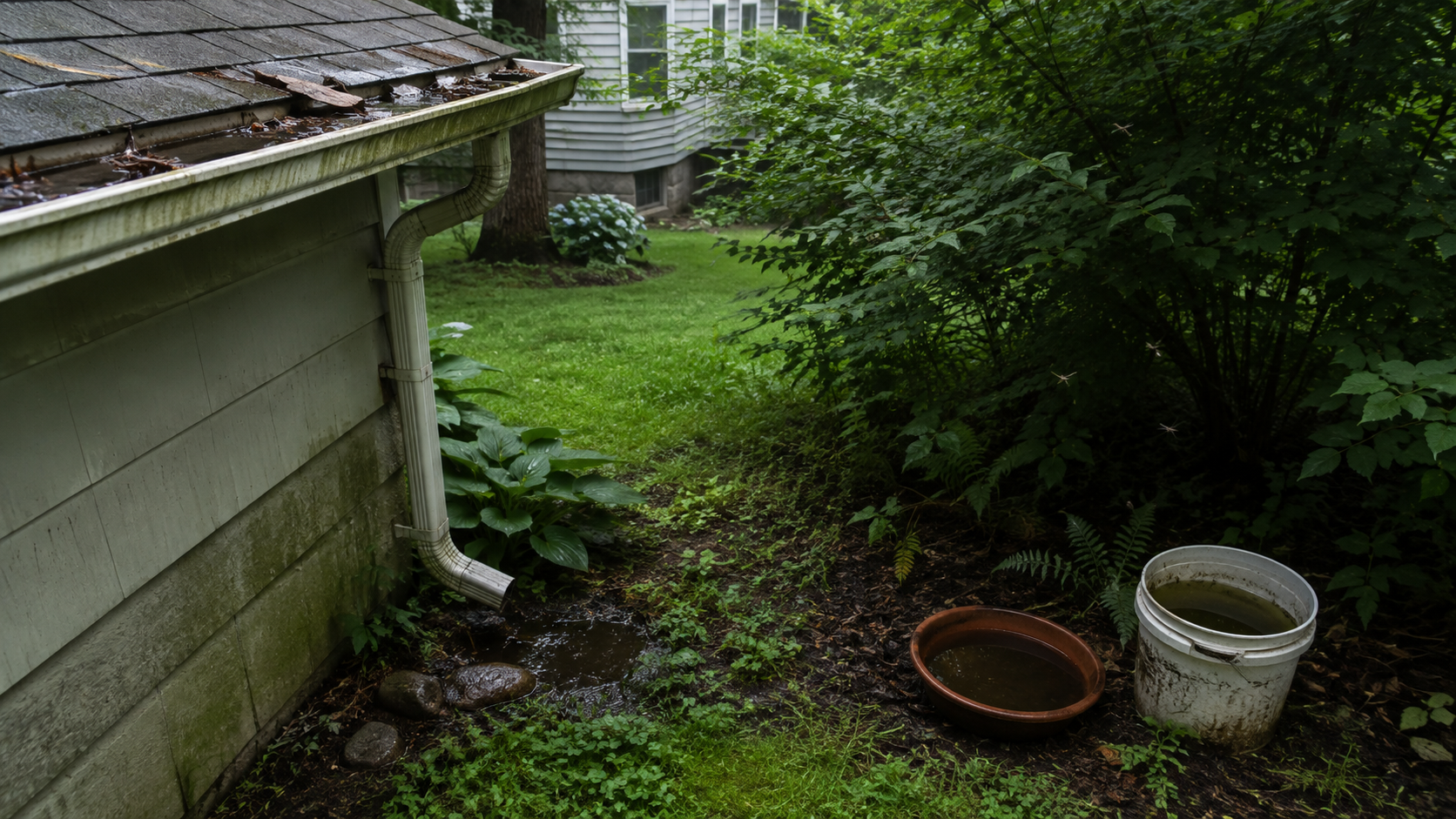
Mosquitoes only need water that sits for about four days to complete a generation. That means a clogged gutter, a forgotten bucket, or a sagging tarp can produce hundreds of biting adults without you ever noticing the source.
Below you will find where they breed, which species bite here, what the real health risk is in Luzerne County, and when a yard problem needs professional mosquito and tick treatment.
What Are the Top Reasons Mosquitoes Swarm Wilkes-Barre Yards?
Four local conditions drive almost every mosquito call we get in the city. Each one works the same way: it gives females a place to lay eggs and gives adults a cool, shaded place to rest during the day.
Standing water you have not noticed: Mosquitoes will breed in any still water that stands for more than four days. Most of it is not a pond. It is a saucer under a flowerpot, a kid’s pool, a tire, or a gutter that has not drained since spring.
Wyoming Valley humidity: Warm, humid air keeps adult mosquitoes alive longer and speeds up the time it takes eggs to become biting adults. Some species can finish the cycle in as little as seven days, though Penn State Extension notes 10 to 14 days is more typical in Pennsylvania.
The Susquehanna floodplain: Wilkes-Barre sits behind a levee system on a valley floor that stays damp. Floodplain mosquitoes lay eggs in leaf litter and soil, and those eggs hatch when the low spots fill with water after a heavy rain. Luzerne County’s mosquito program has specifically flagged the county’s floodplain topography as a driver of local mosquito problems.
Dense shade and overgrowth: Mosquitoes do not fly all day. They rest in cool, shaded vegetation and only come out to feed. Thick shrub lines, ivy, tall grass along a fence, and the shaded north side of a house give them somewhere to wait out the heat.
Technician note: The single most common source we find on Wilkes-Barre properties is not a pond or a creek. It is a clogged gutter. Older homes in the Heights, North End, and South Wilkes-Barre often have original gutter runs that hold a shallow line of water and leaf sludge all summer.
Where Do Mosquitoes Breed Around Your Home?
Almost every backyard breeding site falls into one of five categories. Walk your property once with this list and you will usually find the source in under 15 minutes.
Breeding-site checklist:
- Clogged gutters and downspouts: the most common source on older Wilkes-Barre homes. Water pools behind leaf packs and never drains.
- Containers: flowerpot saucers, buckets, watering cans, recycling bins, wheelbarrows, birdbaths, pet bowls, and discarded tires.
- Tarps and covers: grill covers, pool covers, woodpile tarps, and boat covers that sag and hold a pocket of rainwater.
- Shaded low spots: ruts in the lawn, low corners of the yard, window wells, and areas where downspouts dump onto flat ground.
- Neglected water features: unmaintained swimming pools, ornamental ponds without circulation, rain barrels without screens, and clogged storm drains along the curb.
Two notes that save people time. First, moving water is generally not the problem, so a creek or a properly circulating pond is much less likely to be your source than a still bucket. Second, you do not need much water. A bottle cap holds enough for a mosquito to reproduce.
Which Mosquitoes Bite in Luzerne County?
Pennsylvania has more than 60 mosquito species, but only some bite people. According to Penn State Extension, the most common species around Pennsylvania homes are the northern house mosquito and the Asian tiger mosquito.
Northern house mosquito (Culex pipiens): Small to medium, brown, with no bold markings. It is the most common mosquito in Pennsylvania and the primary carrier of West Nile virus in the state. It feeds mostly at dusk and dawn and breeds readily in containers and stagnant water around homes.
Asian tiger mosquito (Aedes albopictus): Easy to spot, with bold black and white stripes on its legs and body. Unlike most mosquitoes, it bites aggressively during the day. It is an invasive species that has expanded its range north through much of Pennsylvania since 2001, and it is a determined container breeder.
Floodplain species: These lay eggs in leaf litter and damp soil rather than in open water, then hatch in large numbers when woodland pools and floodplains fill after rain. They matter more here than in most of the state because of the Susquehanna corridor running through the Wyoming Valley.
Why this matters for you: a daytime biter points toward a container source close to the house, while a dusk-only biter points toward stagnant water nearby. Knowing which one is biting helps narrow the search.
What Is the Health Risk From Mosquitoes in Pennsylvania?
The honest answer: the risk for any one person is low, but it is not zero, and it is monitored closely in Luzerne County for a reason.
West Nile virus is the realistic concern. The Pennsylvania Department of Environmental Protection reports that roughly 1 in 150 people infected with West Nile develop a severe form of the illness, and there is no specific treatment or vaccine. Most people who are infected recover fully, and many never show symptoms at all.
Eastern equine encephalitis (EEE) is rare but serious. The Pennsylvania Department of Health reports only two human EEE cases in the state since 1964. When it does occur, roughly 30 percent of cases are fatal and many survivors have lasting neurological effects. Risk is highest from late July through September.
Local surveillance is active every season. The Luzerne Conservation District administers the county’s Mosquito-borne Disease Control Program and collects adult and larval samples at least twice a week from April through October. State crews set roughly 30 traps in and around the county each year, and West Nile has been detected here every year since trapping began in 2001.
Practical takeaway: you do not need to panic about a few bites. You do need to take standing water seriously, especially from late July through September when virus activity peaks.
What Are the Signs You Have a Breeding Site on Your Property?
Mosquitoes that fly in from a neighboring lot behave differently than mosquitoes breeding in your own yard. These four signs point to an on-site source.
- Bites happen in one specific area. If the back corner near the shed is unbearable but the front yard is fine, the source is almost certainly within a short distance of that corner.
- You see wigglers in standing water. Mosquito larvae look like small comma-shaped threads that jerk toward the bottom when disturbed. Check any container holding water. If you see them, you have found a source.
- Activity spikes three to seven days after rain. A predictable surge a few days after every storm means water is collecting somewhere and producing a new batch.
- Mosquitoes rise when you disturb shrubs. If brushing past a hedge or mowing near a tree line sends up a cloud, that vegetation is a resting site and a breeding source is likely close by.
When Is DIY Mosquito Control Not Enough?
Dumping standing water is the single most effective thing a homeowner can do, and it is free. Start there every time. But source reduction has limits.
DIY is usually enough when:
- You found an obvious container source and emptied it
- Bites are limited to one small area of the yard
- Activity drops noticeably within a week of clearing the water
You need professional help when:
- Mosquito pressure stays high after you have cleared every container you can find
- The source is off your property (a neighbor’s pool, a drainage ditch, a wooded lot)
- Your yard backs up to woods, a creek, or floodplain low ground
- You are hosting an event and need reliable relief on a specific date
- Ticks are also a problem, since barrier treatments cover both
FAQs
How far do mosquitoes travel from where they breed?
It depends on the species. Container breeders like the Asian tiger mosquito usually stay within a few hundred feet of where they hatched, which is why a daytime biting problem almost always traces back to your own yard or your immediate neighbor’s. Floodplain species can travel considerably farther.
Why do I have mosquitoes when I do not have standing water?
You almost certainly have water somewhere you have not checked. The usual culprits are clogged gutters, a sagging tarp, a corrugated downspout extension, a window well, or a low spot that holds water for a few days after rain. Floodplain species can also fly in from wet ground nearby.
When is mosquito season in Wilkes-Barre?
Mosquito season in Pennsylvania generally runs April through October, which is also when Luzerne County conducts its surveillance trapping. Activity typically peaks in July and August, and West Nile detections tend to climb in late summer.
Do mosquito-repelling plants work?
Not meaningfully on their own. Plants like citronella grass and lavender contain compounds that repel mosquitoes when the oils are extracted and concentrated, but a living plant sitting in a pot does not release enough to protect a yard. They are fine as landscaping, not as a control method.
Does a bug zapper reduce mosquitoes?
No. Bug zappers kill large numbers of insects, but studies have consistently shown that mosquitoes make up a very small fraction of the catch, and most of what they kill is harmless or beneficial. They do not reduce biting pressure in a yard.
More answers are on our mosquito FAQ page, and you can see full service details for the area on our Wilkes-Barre pest control page.
Wasps, Hornets & Yellowjackets in NJ: How to Tell Them Apart
The easiest way to identify whether you are dealing with a wasp, hornet, or yellowjacket in New Jersey is by looking at its body shape, coloring, and nest type.
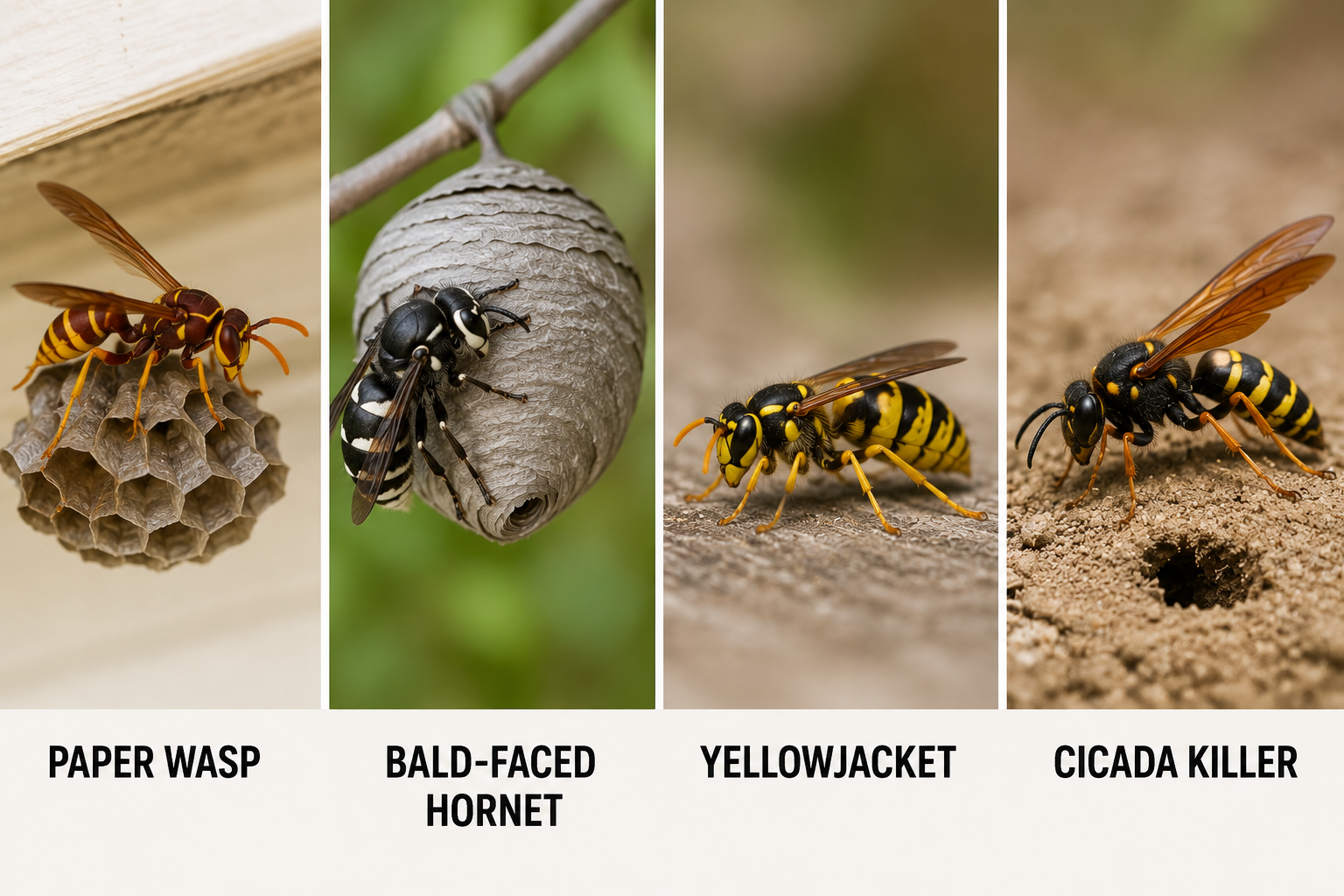
While slender paper wasps build open, umbrella-shaped nests under eaves, large black-and-white bald-faced hornets construct gray, football-shaped nests in trees, and small yellowjackets typically nest underground or inside wall voids.
Telling these stinging insects apart is important for homeowners, as stinging insects can be aggressive, especially if their nest is disturbed during unsafe removal practices.
All three stinging insects reach their peak population and aggression levels from late July through September, making them a common hazard for local homeowners in the Garden State.
In this guide, you’ll learn side-by-side behavioral differences between common stinging insects in New Jersey, their nesting habits, and when to call professional stinging insect control.
Stinging Insect Identification in New Jersey
You can quickly tell local stinging insects in New Jersey apart by analyzing their distinct body shapes, color patterns, and nesting locations:
- Paper Wasps: Slender with long, dangling legs and reddish-brown bodies with yellow markings. They build open, umbrella-shaped paper nests under roof eaves, deck railings, and window sills, and are generally non-aggressive unless directly threatened.
- Bald-Faced Hornets: Large, distinct black-and-white insects (technically a type of wasp, not a bee). They build large, gray, football-shaped aerial nests in trees or shrubs and will aggressively pursue threats far from their territory.
- Yellowjackets: Small, fast, and vividly striped in bright yellow and black. They typically build hidden nests underground, inside wall voids, or behind siding crevices, and they are responsible for the majority of severe stinging incidents in the region.
- Cicada Killers: Formidable, extra-large solitary wasps that dig individual burrows in bare or sandy soil. Despite their alarming size, they are solitary, rarely defend their nests aggressively, and are considered beneficial pollinators.
Wasps vs. Hornets vs. Yellowjackets: Side-by-Side Identification
The following table can help homeowners accurately identify common stinging insect species in New Jersey based on their physical appearance, nesting habits, and aggressive behavior.
| Species | Size | Coloring | Nest Type & Location | Aggression Level |
| Paper Wasp(Polistes exclamans) | ¾ – 1 inch | Brown/reddish-brown with yellow markings; slender waist | Open, umbrella-shaped paper comb; under eaves, deck rails, door frames, window sills | Moderate — defends nest when disturbed; not prone to unprovoked attack |
| Bald-Faced Hornet(Dolichovespula maculata) | ¾ – 1 inch | Black body with white/ivory markings on face and abdomen; not a true hornet | Large gray paper ball nest; trees, shrubs, building overhangs; 1,000+ workers at peak | High — will pursue and sting repeatedly; guards perimeter around nest |
| Yellowjacket(Vespula / Dolichovespula spp.) | ½ – ¾ inch | Bright yellow and black banding; smooth, wasp-waisted body; no hair | Underground burrows, wall voids, attic spaces, hollow logs; colony of 1,500–3,000 by August | Very high — swarms when disturbed; releases alarm pheromone recruiting others to sting |
| Cicada Killer(Sphecius speciosus) | 1 – 1.5 inches | Black with yellow markings; large, robust body; similar to yellowjacket but much larger | Individual burrows in lawns, sandy soil, garden beds; solitary, not colonial | Low — females rarely sting humans; males territorial but stingless |
Where Do Stinging Insects Nest?
Stinging insects most commonly nest in trees, the eaves of houses, or anywhere that provides shelter and easy proximity to food.
Identifying the specific location of a nest can provide an important clue about which stinging insect species you are dealing with.
Paper Wasp Nests
Paper wasps build open, exposed nests attached to a single stalk from a protected horizontal surface.
Common locations include the underside of deck rails and porch ceilings, behind shutters, inside light fixtures, in doorframe corners, and under roof overhangs.
Nests are flat, hexagonal, honeycomb-like structures with cells facing downward. Queens begin building in April, and colonies rarely exceed 20 to 30 workers.
Bald-Faced Hornet Nests
Bald-faced hornets build enclosed, layered paper nests that can reach the size of a basketball or larger by September.
They prefer trees and large shrubs at height—often 10 to 30 feet off the ground—but will also nest under roof eaves, in wall cavities, and in dense shrubs at lower heights.
A mature colony contains 400 to 700 workers by late August.
Yellowjacket Nests
Yellowjackets nest in concealed locations, which is what makes them the most dangerous stinging insect in New Jersey.
Underground nests are the most common type of yellow jacket nest, often found in garden beds or on your lawn.
Our technicians have also spotted yellow jacket nests inside wall voids and attic spaces, entering through gaps in siding, weep holes, and soffit cracks.
A yellowjacket nest discovered in August may contain thousands of workers accessible through a fingernail-sized gap.
Cicada Killer Nests
Cicada killers nest in individual burrows excavated in dry, well-drained soil.
Lawns, gardens, and sandy play areas are common sites for nests.
A population of cicada killers in a lawn will produce multiple visible burrow entrances over the course of the summer, but each female operates independently without a colony.
Stinging Risks: Who Is Most at Risk?
Most wasp and hornet stings in New Jersey cause localized pain and swelling that resolves within hours.
However, for people with a venom allergy, a single sting can trigger anaphylaxis. Anyone who has experienced a systemic reaction to a previous sting should carry an epinephrine auto-injector and should treat any active nest near the home as a medical risk, not a nuisance.
Likewise, accidental disturbances of underground yellowjacket nests can trigger entire swarms of wasps attacking you simultaneously.
Unlike honeybees, wasps and yellowjackets have smooth, unbarbed stingers that do not detach in the skin. A single yellowjacket can sting repeatedly, and when it does, it releases an alarm pheromone that signals other workers to attack the same target.
Why DIY Nest Removal Is Dangerous
Attempting to eliminate a stinging insect colony on your own frequently fails and carries significant physical risk.
- Ineffective Retail Products: Consumer aerosol sprays require you to stand dangerously close to the nest and fail to reach workers hidden deep inside complex or underground colonies, triggering an immediate, defensive swarm.
- Nighttime Removal Myths: Stinging insects do not become inactive after dark; they consolidate inside the nest, meaning a nighttime disturbance with a flashlight will still prompt an aggressive defense in conditions where it is difficult to retreat.
- Hidden Ground Colonies: Ground nests often hide massive populations of 2,000 or more yellowjackets; flooding the entrance hole simply forces an evacuation through secondary exits, which can drive the insects directly into your home’s wall voids.
- Pre-Contact Aggression: Species like bald-faced hornets are hyper-sensitive to nearby vibration and movement, meaning they can launch a coordinated attack from several feet away before you even touch the nest or deploy a spray.
When to Call a Professional for Wasp and Hornet Removal
The safest way to identify and remove a stinging insect colony on your property is to contact a professional pest control expert immediately.
Not only can disturbing a nest trigger a swarm of aggressive wasps or hornets, but because nests are often high and hidden, it can be difficult for homeowners to accurately determine the extent of the infestation they have on their hands.
Professional stinging insect treatment uses application equipment that delivers insecticide directly into nest cavities from a safe standoff distance, and technicians are equipped with protective gear appropriate for high-risk nest types.
Treatment timing is chosen to maximize colony contact, and follow-up confirmation ensures the nest is inactive before homeowners resume normal use of the affected area.
FAQs
What is the difference between a wasp, a hornet, and a yellowjacket?
Hornets and yellowjackets are both types of wasps, as wasps are a broader category of stinging insects. In everyday use, ‘wasp’ usually refers to paper wasps (Polistes species), which are slender and build open umbrella-shaped nests.
Hornets are large colonial wasps; the only true hornet native to North America is the European hornet, which is not native to the region. Yellowjackets are aggressive ground- or wall-nesting wasps in the genus Vespula or Dolichovespula and are responsible for most serious stinging incidents in the northeast.
How do I identify a yellowjacket nest?
A yellowjacket ground nest looks like a small hole, usually 1 to 2 inches across, with workers flying in and out in a steady stream. Above-ground yellowjacket nests in wall voids appear as paper structures with a single worker-entry point. Do not approach or disturb an active nest; yellowjackets defend aggressively with no warning.
When are stinging insects most aggressive in New Jersey?
Stinging insects in New Jersey are most aggressive from late July through September, when colonies reach peak population and food competition increases. Yellowjacket colonies reach 1,500 to 3,000 workers by mid-August.
Bald-faced hornet colonies peak at 400 to 700 workers by September. August and September are the highest-risk months for stinging incidents in the region.
Is it safe to remove a wasp or hornet nest myself?
DIY removal of an active wasp or hornet nest is not safe for any nest with more than a few workers. Consumer aerosol sprays require close approach and do not reach workers deep in the nest. Disturbing the nest triggers immediate swarming.
A single bald-faced hornet nest can mobilize 400 or more defenders within seconds. Anyone with a known venom allergy should treat any active nest near the home as requiring professional removal.
Can yellowjackets sting multiple times?
Yes. Yellowjackets have smooth stingers that do not lodge in skin, so they can sting repeatedly without dying, unlike honeybees.
A single yellowjacket can deliver multiple stings in rapid succession. When a yellowjacket stings, it releases an alarm pheromone that recruits nearby workers to attack the same target, which is why nest disturbances can rapidly escalate to dozens or hundreds of stings.
What is a cicada killer and is it dangerous?
The cicada killer (Sphecius speciosus) is a large solitary ground-nesting wasp that paralyzes cicadas for its larvae. Despite its size, cicada killers are non-aggressive and rarely sting humans unless handled directly. They do not defend their nests collectively. Males patrol territory but have no stinger. The main concern is the visible burrow mounds they create in lawns.
Schedule My Free Stinging Insect Inspection

11 Yard Pest Control Tips for NJ & PA Homeowners
Effective yard pest control in New Jersey and Pennsylvania combines consistent yard maintenance, moisture reduction, and proactive pest prevention.
Consistent lawn care is essential for minimizing pest incidence in the Northeast, especially blacklegged ticks and mosquitoes, which thrive in thick foliage and spread disease.
Other species like rodents, cockroaches, and termites are also attracted to leaf piles, standing water, and wet mulch that is too close to the foundation line and provide an easy bridge between the outdoor elements and your home.
To help you maintain a safe, comfortable, and bug-free outdoor space, this article offers eleven essential yard pest-control tips tailored for New Jersey and Pennsylvania homeowners.
Common Yard Pests Found in New Jersey and Pennsylvania
As spring temperatures rise, the combination of warmth, moisture, and emerging vegetation creates an ideal environment for outdoor pests. Homeowners in New Jersey and Pennsylvania frequently encounter several common yard pests as they emerge from winter dormancy.
Here are some of the most common and feared spring pests you should be aware of:
- Mosquitoes: Spring provides the perfect climate for mosquitoes in the northeast, offering warm yet cool cover that is comfortable for them to lurk in. Excess standing water also provides the perfect breeding ground for these bugs to multiply and find a home on your property.
- Ticks: Like mosquitoes, ticks tend to shy away from direct sunlight during summer days and lurk in shady and moist but still warm areas around the perimeter of your yard.
- Termites: Moisture plus blossoming trees provide plenty of food sources for termites to feast on. Be sure to remove any branches or logs lying in direct exposure to rain.
- Stink Bugs: After emerging from a state of dormancy called diapause, stink bugs become fully active in spring, infesting properties and annoying homeowners in the process.
- Carpenter Ants: Ants are very common spring insects, and you will certainly spot some if they made a nest inside your home last summer. Look for carpenter ants that nest in softwoods and leave a trail of frass.
11 Yard Pest Control Tips to Reduce Pest Populations
Maintaining a healthy, manicured yard is the best defense against surging pest populations.
Here are 11 yard pest control tips to keep your property free from invading insects, starting with spring lawn care all the way through late fall in the Northeast.
1. Spring Clean Your Yard
Debris like leaves, rotting wood, and dead plants left behind from melting snow are perfect places for bugs.
Before those pests get a chance to take advantage, take the time to practice some spring pest control (i.e., spring cleaning).
Rake up lingering leaf piles, clear away fallen branches, and remove any moldy wood from the perimeter of your home before pests take advantage.
2. Clear Any Standing Water
Stagnant water resulting from winter snowmelt and early spring rain is the primary breeding ground for mosquitoes. Inspect your gutters, driveway depressions, flowerpots, and low spots in your lawn to ensure all blockages are cleared so water drains properly before temperatures rise.
3. Keep Your Lawn Mowed
Long grass offers excellent concealment and moisture protection for parasites like ticks and fleas. Keep your grass cut short throughout the growing season. Maintaining a clean treeline and short grass barrier prevents ticks from migrating into active backyard spaces.
4. Trim Lawns and Edges Frequently
Skipping even a week of mowing can turn rapidly growing grass into an instant haven for mole crickets, fleas, and ticks. Stick to a regular mowing schedule and utilize a string trimmer along fences, foundations, and patio edges where pests like to hide.
5. Apply Proper Water Treatment
Overwatering your lawn creates localized flooding and puddles, while underwatering stresses the grass and invites lawn-damaging grubs. Water deeply but infrequently, preferably in the early morning, to keep the turf healthy enough to naturally resist infestations.
6. Keep Your Brush, Bushes, and Foliage Trim
Overgrown ornamental shrubs, bushes, and ferns can quickly harbor dense insect populations and trap moisture against your home’s exterior.
Prune your plants regularly to maintain clear space between them and your home’s foundation, maximizing sunlight and airflow.
7. Clear Out Ant Hills
You’ll notice an uptick in ant hills on your property, even before the grass starts to grow back. There are many ways to deal with ant hills in your yard, from flattening them to pouring boiling water on top of them.
8. Research Lawn and Garden Killers
While DIY pest control products are widely available, many contain harsh chemicals that can harm beneficial insects, pets, children, or your turf.
Read product labels carefully before application, and consider targeted, professional-grade alternatives such as specialized mosquito yard sprays.
9. Pinpoint Your Problem
Using a generic pesticide rarely works because different pests require completely different control strategies. You must identify whether your issue stems from ticks, ants, mealybugs, grubs, or fleas to target your treatments efficiently and minimize chemical waste.
10. Strictly Follow Label Instructions
Pesticides and repellents can be hazardous and ineffective if applied in the wrong weather conditions, at incorrect concentrations, or with the wrong equipment.
Carefully read and follow all manufacturer instructions regarding safety gear, mixing ratios, and drying times to ensure maximum effectiveness.
11. Utilize Professional Pest Control Services
Severe or deep-rooted infestations often require specialized equipment, commercial-grade products, and deep industry expertise that DIY methods cannot replicate.
If pests persist despite your best efforts, schedule a professional yard inspection to identify hidden nests and establish a long-term prevention plan.
Preparation is the best prevention. Do your due diligence to find the right pest control partner and stop pests from taking over.
FAQs
Are there any plants that repel common yard pests?
Yes, several plants have natural pest-repelling properties. For example, marigolds can deter aphids and mosquitoes, while lavender repels fleas and moths.
Other examples include mint, basil, and rosemary, which can deter various insects when planted strategically in your yard.
What should I do if I find termites or carpenter ants in my yard?
If you discover termites or carpenter ants in your yard, it’s crucial to address the issue promptly to prevent potential damage to nearby structures. Contact a licensed pest control professional to conduct a thorough inspection and recommend appropriate treatment options based on the extent of the infestation.
How do I safely dispose of pest-infested plant material?
To safely dispose of pest-infested plant material, avoid composting or leaving it in piles where pests can spread. Instead, bag the infested material securely and dispose of it in the trash.
Burning may also be an option if it is permitted in your area and appropriate for the material.
Are there any DIY traps I can make to catch yard pests?
Yes, you can make several DIY traps to catch yard pests. For example, you can create a simple beer trap to catch slugs and snails by burying a container filled with beer at ground level.
Additionally, sticky traps made with adhesive or petroleum jelly can help capture flying insects like flies and mosquitoes.
How often should I treat my yard for mosquitoes and ticks?
For optimal protection in the Northeast, professional yard treatments are typically applied every 21 to 30 days throughout the active pest season (generally from April through October). Consistency is key, as these treatments disrupt successive breeding cycles and keep a protective barrier around your property lines.
Will professional yard sprays harm beneficial insects like bees?
Reputable pest control companies utilize targeted application methods and eco-conscious products designed to minimize impact on non-target wildlife. By avoiding blossoming flowers, spraying during low-activity hours (such as early morning or dusk), and focusing strictly on dense foliage where mosquitoes and ticks harbor, beneficial pollinators like honeybees and butterflies remain largely unaffected.

Fleas & Ticks: How to Protect Your Pets in PA
Eliminating fleas and ticks from your pets and yard in Pennsylvania requires timed treatments that target each life stage of these pests.
Technicians and homeowners typically focus on three areas of the property simultaneously to achieve the best results against parasites: your yard, your home’s interior, and your pet.
Unfortunately, DIY flea and tick treatments are rarely effective at stopping a flea or tick infestation, as it’s nearly impossible for homeowners to control all of the environmental variables that allow these pests to proliferate.
Certain life cycle stages (such as flea pupae) are chemically impervious and tend to hide in carpet fibers, out of homeowners’ sight.
Likewise, ticks tend to enter properties via other wildlife, so even the best yard maintenance is not sufficient to control errant ticks that end up near your home.
In this homeowner guide, you’ll learn the precise biological lifecycles of fleas and ticks in Pennsylvania, why DIY treatments consistently fail, and a step-by-step blueprint for coordinating vet care with professional yard treatments to protect your property and loved ones all season long.
Flea and Tick Lifecycle: Why Timing Determines Whether Treatment Works
Successful flea and tick treatments must be timed to target their distinct life stages and break their reproductive loops before new generations can emerge.
While adult fleas feed on hosts, roughly 95% of an infestation exists in your environment as eggs, larvae, and chemically impervious pupae that can lie dormant for up to five months.
Meanwhile, ticks develop over two years, with tiny, hard-to-detect nymphs peaking in late spring and posing the highest risk for Lyme disease transmission.
The following table shows the life cycle of these parasitic pests and when treatments must be applied for the best results.
| Pest & Stage | Appearance & Behavior | Habitat & Environmental Location | Key Treatment & Timing Insight |
|---|---|---|---|
| FLEAS (4-Stage Lifecycle) |
Requires a single host as adults; environmental stages make up 95% of the population. | Primarily indoor carpet fibers, furniture, yard debris, and shaded outdoor resting areas. | Treat all 3 environments (pet, home, yard) simultaneously to stop the cycle. |
| • Eggs | Female lays up to 50 non-sticky eggs/day on the host, which immediately roll off. | Pet bedding, couches, carpets, and favorite resting spots. | Suppress development: Apply indoor treatments containing Insect Growth Regulators (IGRs). |
| • Larvae | Hatch in 1–10 days; avoid light and feed on organic debris/adult flea feces. | Deep carpet fibers, under furniture, and shaded, humid outdoor soil/mulch. | Highly vulnerable: Easily killed by residual indoor insecticides and professional yard sprays. |
| • Pupae | Spin sticky, debris-coated cocoons; can lie dormant for up to 5 months. | Soil, leaf litter, and deep carpet fibers. | Chemically impervious: No insecticide can penetrate. Must wait 2–3 weeks for them to hatch (stimulated by vacuuming) to kill them. |
| • Adults | Jump to find hosts; feed within minutes and lay eggs within 24–48 hours of feeding. | Live and feed exclusively on the pet host. | Immediate control: Apply vet-approved oral or topical preventatives to kill adults before they lay eggs. |
| TICKS (Blacklegged) (4-Stage, 2-Year Lifecycle) |
Requires a separate host for each feeding stage; does not establish indoor populations. | Transition zones (lawn-vegetation borders, leaf litter, wooded edges, shrub beds). | April through October yard sprays; start before peak nymph season in May. |
| • Larvae | Tiny (grain of sand); active late summer (Aug–Sept); have not yet fed. | Ground-level leaf litter and low vegetation. | Low immediate risk: Do not yet carry Lyme disease pathogens at this stage. |
| • Nymphs | Tiny (poppy-seed size); active May–July; highly likely to go undetected. | Transition zones and dense low ground cover. | Highest Lyme risk: Responsible for most Lyme transmission. Prioritize daily tick checks and spring yard treatments. |
| • Adults | Sesame-seed sized; active Oct–Nov and March–May; quest for hosts by grabbing on. | Shrub foliage up to 3 feet high and tall brush. | Easiest to spot: Run monthly yard barrier sprays and conduct physical checks to remove them. |
Starting yard tick treatment in April, before nymph season peaks in May, provides residual coverage during the period of highest Lyme transmission risk.
Why DIY Flea and Tick Treatments Fail
DIY flea and tick treatments fail because standard consumer products and spot applications do not affect chemically impervious lifecycle stages (e.g., flea pupae) or reach hidden breeding grounds.
While over-the-counter sprays might temporarily kill active adults on your pet or carpet, they lack the residual strength and precise delivery needed to eliminate the larvae and pupae nesting in your yard.
Without professional-grade formulations and a coordinated plan, DIY efforts merely suppress the pests temporarily, leaving you stuck in a frustrating cycle of rebound infestations every few weeks.
How to Coordinate Vet Care and Yard Treatment for Maximum Control
Coordinating veterinary pet care and professional yard treatments on the same day provides the best defense against parasitic infestations.
Step 1: Secure Day-One Pet Protection
The foundation of a successful treatment plan is to start all pets on a vet-recommended preventive on the same day your yard and home are treated.
Fast-acting, oral prescription treatments (like Bravecto, NexGard, or Simparica) kill adult fleas within hours of ingestion—before they can lay new eggs.
If you treat your home and yard on Day 1 but delay your pet’s preventative until Day 7, your pet will pick up surviving pests outdoors and re-infest your clean indoor spaces.
Be careful, however; over-the-counter topical treatments vary widely in strength and often fail to provide reliable protection compared with veterinary prescriptions.
Step 2: Target the Right Outdoor Zones
Blanketing an entire sunny lawn with pesticides is wasteful and ineffective. Fleas and ticks thrive in very different, highly specific outdoor microhabitats:
| Target Pest | Where They Hide Outdoors | Why They Are There | Treatment Strategy |
|---|---|---|---|
| Flea Larvae | Under decks, porches, leaf litter, mulch beds, and shaded pet resting areas. | Larvae require cool, shaded, and humid environments to survive; direct sunlight dehydrates and kills them within hours. | Skip open lawns. Focus yard treatments strictly on shaded, high-moisture zones. |
| Questing Ticks | The border where mowed grass transitions to tall weeds, brush, or woods. | Ticks climb up low-lying brush and wait for a host to brush past. | Create a barrier. Spray the perimeter, lower shrub foliage (up to 3 feet), and dense ground covers to reduce tick counts by 80% to 90%. |
Step 3: Follow the Coordination Timeline
Breaking an active infestation requires a strict chronological strategy:
Active Flea Infestation Timeline
- Day 1:
- Give all pets their vet-recommended oral preventative.
- Apply an indoor treatment containing an Insect Growth Regulator (IGR) to carpets and furniture.
- Treat shaded outdoor yard zones.
- Days 2–14 (The Hatch Window): Expect to see some fleas as pupae hatch. Vacuum carpets daily to stimulate pupae emergence (the vibration triggers them to hatch) so they contact the active Day 1 treatment residual. Do not apply more pesticides yet.
- Days 14–21 (The Final Strike): Apply a targeted follow-up indoor treatment to eliminate any late-emerging fleas, and keep pets strictly on their monthly preventative schedule.
Standard Tick Prevention Timeline
- April–October: Maintain monthly professional yard barrier sprays.
- March–December (At Minimum): Keep pets on a continuous preventative schedule.
- Daily: Conduct quick physical tick checks on pets and family members after outdoor activities.
When a Professional Yard Treatment Makes Sense
Professional yard treatment makes sense whenever the infestation is established, the yard has significant flea or tick habitat, or DIY applications have not produced lasting results.
We typically recommend professional spraying and other treatments for homeowners in the following scenarios:
- Active Indoor Flea Infestations: If fleas are already inside your home, your yard is the active source. DIY sprays often target open grass while missing the shaded breeding zones, which only extends the infestation.
- Properties Bordering Woods or Parks: Yards bordering forests or thick shrubs face constant tick pressure. Monthly professional barrier sprays maintain the residual coverage needed to keep ticks from continuously crossing onto your lawn.
- High-Risk Households: Pennsylvania leads the nation in Lyme disease cases. If your pet has a history of Lyme disease, or if a family member is highly vulnerable to tick-borne illness, professional prevention is a vital health safeguard.
- Failing DIY Applications: Consumer sprays have short residual lifespans and lack the coverage depth of professional equipment. If your DIY treatments wear off after two to three weeks, the resulting residual gap will cause pest populations to rebound.
While over-the-counter DIY sprays are easily washed away and fail to reach hidden nesting zones, professional-grade treatments use specialized equipment to coat the undersides of leaves and shaded areas.
This ensures consistent, long-lasting barrier protection that stops pests before they ever reach your pets or family.
Frequently Asked Questions
When is flea and tick season in Pennsylvania?
Flea activity in Pennsylvania peaks from June through September, but indoor infestations can persist year-round in heated homes. Blacklegged tick nymphs are most active and most dangerous from May through July; they are poppy-seed sized and most likely to go undetected.
Adult blacklegged ticks are active September through November and during winter warm spells above 35°F. American dog ticks peak May through August.
Why do I still have fleas after treating my house and pet?
Flea pupae are chemically impervious to all available flea-killing products. A pupa can remain dormant for up to five months, then hatch in response to vibration and warmth when an animal walks past.
The new adults appearing two to three weeks after treatment are not survivors — they are a new hatch. Continued pet preventative and a follow-up interior treatment at two-week intervals break this cycle.
What is the difference between a flea and a tick?
Fleas are insects with six legs that jump up to 13 inches and move actively between hosts. Ticks are arachnids with eight legs that quest and cannot jump. Fleas feed repeatedly and live most of their life cycle off the host in the environment.
Ticks feed once per life stage, becoming engorged and dropping off between meals. Both are disease vectors: fleas transmit murine typhus; ticks transmit Lyme disease, anaplasmosis, alpha-gal syndrome, and Rocky Mountain spotted fever.
Can ticks infest my house the same way fleas do?
Most tick species, including the blacklegged tick, do not establish indoor infestations. They require outdoor environments to survive and do not reproduce indoors.
The exception is the brown dog tick, which can complete its life cycle indoors and establish a house infestation if an infested dog brings ticks inside. Brown dog tick infestations require professional interior treatment alongside outdoor control.
Is professional yard spray better than DIY for fleas and ticks?
Professional yard spray is more effective than DIY for two reasons: coverage and residual. Professional applications target the specific microhabitats where flea larvae and questing ticks live.
Professional formulations maintain longer residual activity than consumer products, and monthly application timing provides coverage through the full flea and tick season without gaps.

Why Are There So Many Mosquitoes in My Yard in PA & NJ
Mosquitoes are primarily drawn to properties in Pennsylvania and New Jersey by a combination of standing water, dense shade, and human biological markers such as exhaled carbon dioxide (CO2) and body heat.
Local species such as the aggressive Asian Tiger mosquito require only a tiny, bottle-cap amount of stagnant water to lay eggs.
Consequently, minor drainage problems, including clogged gutters or unmaintained birdbaths, can rapidly trigger a massive local infestation.
While environmental factors draw mosquitoes to your yard, a 2022 study shows they use a complex tracking system to choose their specific targets. From over 150 feet away, they lock onto your exhaled carbon dioxide and skin odors, switching to body heat and skin acids once they get within a few feet.
While we can’t help that we emit CO2 when we breathe, we can make our homes more inhospitable to mosquitoes by eliminating what attracts them and applying a professional yard spray.
In this guide, you’ll learn the primary factors attracting mosquitoes to your home and how to eliminate mosquito swarms with a combination of resource deprivation and professional control in New Jersey and Pennsylvania.
When Are Mosquitoes Most Active in Pennsylvania and New Jersey?
Property owners in Pennsylvania and New Jersey can generally expect mosquitoes to emerge in early spring and remain a persistent nuisance through late autumn.
While these pests can bite at any point during the warmer months, their threat level peaks dramatically during the midsummer heat between June and August.
To help you anticipate these population spikes and plan your outdoor activities or pest control treatments effectively, here is a breakdown of the typical tri-state mosquito activity calendar:
| Season & Months | Activity Level | Temperature Threshold & Behavioral Impact |
| Early Spring
(April – May) |
Low to Moderate | Sustained 50°F+
Overwintering mosquito eggs begin to hatch, and hibernating adult females emerge as daily temperatures consistently stay above 50°F. |
| Summer Peak
(June – August) |
Extreme | 70°F to 90°F+
High heat and intense humidity accelerate mosquito life cycles. Larvae can mature into biting adults in as little as 7 to 10 days, causing rapid population surges after heavy summer rainstorms. |
| Early Fall
(September – October) |
Moderate to High | Variable Temperatures
Mosquitoes feed aggressively during late-season warm spells to build energy reserves before the cold weather sets in. |
| Late Fall & Winter
(November – March) |
Dormant | Below 50°F / First Frost
Sustained freezing temperatures and the season’s first official frost signal the end of mosquito activity. Non-hibernating species die off, while others enter a dormant state known as diapause. |
5 Resources that Attract Mosquitoes to Yards in the Northeast
Mosquitoes only require a tiny amount of water to breed, but they are specifically attracted to certain homes that provide adequate shelter (yard debris) and specific biological markers. Here are five mosquito attractants you need to control to reduce your encounters with mosquitoes this summer.
Standing Water for Breeding
Standing water provides an ideal, stagnant environment for female mosquitoes to lay eggs and for larvae to develop.
Stagnant water accumulates easily in common backyard items like birdbaths, clogged gutters, untended flowerpots, and kiddie pools.
Eliminating these water sources is critical for property safety; mosquito-borne diseases pose severe health risks, particularly to pregnant individuals and vulnerable family members.
Solution
Examine your property thoroughly after every rainstorm to locate and drain hidden water pools in gutters, tarps, or low spots on your lawn.
Additionally, make it a habit to empty children’s kiddie pools and water toys immediately after use rather than leaving them filled throughout the season.
Foliage and Yard Debris for Shelter
Foliage and yard debris provide a cool, shaded resting area that where mosquitoes need to survive the midday sun.
Overgrown lawns, uncollected leaf piles, and dense brush offer perfect microclimates for these pests to rest and hide.
Neglecting property maintenance creates an open invitation not just for mosquitoes but also for secondary pests such as ticks, ants, and cockroaches.
Solution
Keep a consistent lawn and yard care routine, including regularly cutting the grass and trimming excess foliage. This will reduce the number of mosquitoes and ticks hanging around your property.
Perspiration and CO2 for Food
Human blood is rich in proteins and amino acids, which are essential for mosquito survival and reproduction.
One way they can sense a human host from several feet away is by sniffing out the CO2 you exhale and the sweat you perspire.
CO2 indicates heat, while perspiration is full of lactic acid and ammonia, which mosquitoes tend to desire.
The combination of sweat and air makes you a savory host for mosquitoes looking for a quick snack.
Solution
While we can’t hold our breath while outside, there are several things you can do to deter mosquitoes. First, shower as soon as possible after spending significant time outside. By rinsing off after sweating, you will give mosquitoes less reason to be attracted to you.
Likewise, long sleeves will cover any sweat and limit the surface area mosquitoes have to bite you.
Colognes and Perfumes in Floral Scents
Wearing strong colognes or perfumes, especially with floral scents, can attract mosquitoes and increase your chances of being bitten.
Studies even show that showering with floral scents can also increase your likelihood of being bitten.
Solution
Try to avoid wearing strongly scented perfumes before spending time outdoors. This also includes shampoo, body lotion, and any other scented products that could make you a target for these bothersome pests.
Dark Colors for Heat Retention
Mosquitoes tend to prefer dark colors because they absorb and retain heat more effectively. Dark colors also typically stand out more than light colors, making it easier for mosquitoes to spot you.
Solution
Choose the color of your clothing carefully before heading outdoors this summer. If you can help it, try to avoid dark colors and opt for lighter ones when getting dressed.
DIY Tips to Keep Mosquitoes Away from You and Your Yard
Homeowners can successfully repel mosquitoes and keep them away from their property by combining personal behavioral shifts with targeted environmental controls.
While adjusting your hygiene routine and choosing lighter-colored clothing limits your personal exposure, implementing strategic backyard modifications directly targets their breeding and resting habits.
Effective DIY mosquito prevention methods for your yard include:
- Using a mosquito yard spray around the edge of your property (professional assistance recommended)
- Installing mosquito nets in outdoor spaces, such as a patio or deck
- Growing mosquito-repellent plants like citronella and lavender
- Installing high-speed fans on outdoor patio areas
- Burning citronella candles at night
When Should You Contact a Professional for Mosquitoes?
When dealing with any pest problem, it is always wise to reach out to a trusted professional. Mosquitoes can be difficult to eliminate, especially if you live near ponds or other water bodies that you cannot remove.
While many of these prevention tips can temporarily keep mosquitoes away, the only long-term solution is to apply a yard spray.
Be cautious, though, as yard sprays contain dangerous chemicals that require proper application. Likewise, these sprays can harm beneficial insects, such as honeybees, if applied haphazardly.
A trusted exterminator will diligently apply a yard spray along the perimeter of your property to minimize exposure and ensure 100% effectiveness.
Yard sprays are generally applied every six weeks throughout the warmer months to ensure a mosquito-free yard.
FAQs
Why are mosquitoes attracted to some people more than others?
People with a higher metabolic rate, such as those who work out a lot or are pregnant, may notice that they get bitten by mosquitoes more than others. This is because they tend to exhale more CO2, which makes them more attractive to mosquitoes.
What is the best way to avoid mosquito bites outdoors?
One of the best ways to prevent mosquito bites is to wear long sleeves and long pants when outdoors. Making it more difficult for mosquitoes to land on you will greatly reduce the number of bites you get, so consider covering your arms, legs, and feet before heading outdoors this summer.
Do mosquito-repellent wristbands work?
Mosquito-repellent wristbands are marketed as a more natural way to prevent mosquito bites than topical bug sprays, but they are unfortunately not known to be effective. While wearing a mosquito-repellent wristband won’t hurt, you should double up on protection by covering your arms and legs when spending time outdoors.
What time of day are mosquitoes most active?
Mosquitoes in Pennsylvania and New Jersey are generally most active at dawn and dusk, though certain invasive species bite aggressively throughout the day. The common native house mosquito strictly avoids the dehydrating midday sun, preferring the high humidity of early morning and early evening.
Conversely, the widespread Asian Tiger mosquito remains highly active and hunts continuously throughout daylight hours.
Does Citronella actually keep mosquitoes out of your yard?
Citronella candles and torches offer minimal, localized protection against mosquitoes and are ineffective at clearing them from an entire yard. The scented smoke only repels insects if they fly directly through the narrow plume.
Slight crosswinds rapidly disperse the fragrance, rendering the candles useless for broader property defense compared to professional source reduction.
Can mosquitoes breed in wet or damp grass?
Mosquitoes cannot breed directly in damp grass, but they rely on overgrown lawns as a primary daytime resting shelter. While the larvae strictly require stagnant, standing water to hatch and survive, long blades of grass trap essential humidity and block the sun.
Regular lawn mowing eliminates these shaded microclimates, forcing pests to look elsewhere for cover.

How Do I Protect My Dog from Ticks in PA & NJ
The most effective way to protect your dog from ticks in Pennsylvania and New Jersey is to apply a veterinarian-recommended oral or topical preventative year-round medication.
When taking your dog on trails or out in public, it’s always important to do a tick check and consider sending the tick to the East Stroudsburg lab for testing if it’s swollen or enlarged.
However, you can greatly reduce the risk of tick encounters at home for you and your pets with a professional yard spray and by keeping your lawn mowed.
With the recent uptick in tick hospitalizations in the Northeast, including the proliferation of the Lone Star tick, and scrutiny over the safety of name-brand Soresto collars for dogs, tick prevention has never been more important for pet owners.
In this guide, you’ll learn five helpful tips to reduce your dog’s risk of tick-borne illness and how professional tick control in New Jersey and Pennsylvania can greatly reduce your risk of exposure.
Common Ticks Found in New Jersey and Pennsylvania
The most common tick species found in Pennsylvania and New Jersey are the American Dog Tick, the Brown Dog Tick, and the Blacklegged tick, also known as the Deer Tick.
The Blacklegged tick is the most common vector of Canine Lyme Disease. Other tick diseases that impact our furry friends include Ehrlichia, Rocky Mountain spotted fever, and Canine Anaplasmosis.
These illnesses are not limited to pets and can easily be transferred to humans as well. The best way to combat a tick problem is by protecting yourself and your pets. Here are the top seven ways to stop ticks.
Other ticks, such as the Lone Star Tick, which is now established in the northeast, are responsible for Alpha-Gal Syndrome (AGS). However, non-primate mammals, such as felines and canines, are not affected by AGS.
What Should You Do If You Find a Tick On Your Dog?
Since pathogens like Lyme disease typically require 24 to 48 hours of attachment to infect a dog, immediate and safe tick removal is vital.
Follow these steps if you discover a tick on your pet:
- Use fine-tipped tweezers: Grasp the tick as close to your dog’s skin surface as possible. Avoid using blunt tweezers or your fingers, as you need precise control to ensure a clean extraction.
- Pull upward with steady pressure: Pull straight upward with even, steady pressure. Do not twist, jerk, or squeeze the tick, as this can break off its mouthparts or cause it to regurgitate infectious fluids into the bite site.
- Clean the bite area: After removing the tick, thoroughly wash the bite site on your dog with rubbing alcohol, iodine, or soap and water to disinfect the area. Clean your hands and the tweezers as well.
- Preserve and test the tick: Place the tick in a sealed container or a plastic baggie with a small amount of rubbing alcohol to kill it. Note the date of the bite. You can consider submitting the tick to the Pennsylvania Tick Research Lab at East Stroudsburg University for testing to determine whether it carries any harmful pathogens.
- Monitor your dog for symptoms: Keep a close eye on your pet for the next three to four weeks. Watch for common signs of tick-borne illnesses, such as shifting lameness, lethargy, fever, or loss of appetite, and contact your veterinarian promptly if any appear.
Never use petroleum jelly, nail polish, or heat (like a hot match) to force the tick to detach. These methods can stress the tick, causing it to immediately release pathogens into your pet’s bloodstream.
5 Tips to Protect Your Dog from Tick-Borne Illnesses
The best way to protect your dog from Lyme and other tick-borne illnesses is to reduce their risk of exposure via veterinary-prescribed preventatives and safe yard treatments.
Here are five tips to protect your furry friend from potentially dangerous illnesses from a tick.
1. Use Veterinarian-Recommended Tick Preventatives
Investing in vet-recommended tick preventatives is one of the most effective ways to protect your pets from tick-borne illnesses.
Depending on your veterinarian’s advice, you can choose from various prescription and over-the-counter (OTC) treatments designed to repel and kill ticks, fleas, and mites.
The most common types of tick preventatives include:
- Monthly Chews: Oral systemic treatments that are easy to administer.
- Topical Ointments: Spot-on liquid treatments applied directly to the skin.
- Treated Collars: Wearable protection that provides long-lasting defense.
One thing to keep in mind is that households with multiple pets should have treatments for all pets, whether they are indoor or outdoor.
If one pet is allowed outside, it can easily bring pests into your other pets. Also, when selecting a treatment, be sure to check the labels; some topical treatments for dogs may be harmful to cats and children.
2. Check Your Animals Daily
Depending on how often you take them out and where you live, you should check your pets daily. Whether you want to give them a quick brushing or an all-over body check, you want to be sure they aren’t bringing any unwanted pests inside.
If you live near the woods or in areas with unkempt growth, it’s a good idea to check multiple times a day.
If your pet has a ton of hair or a particularly thick coat, check under the collar, behind the ears, under the tail, and on the belly.
Ticks are drawn to dark, warm areas. So, check between the toes and the lower extremities, where ticks can grab hold.
3. Apply Professional Tick Yard Spray Treatment
Professional tick yard spray treatment should be applied monthly from April through October to reduce tick populations around the home’s perimeter.
Professional applications target the vegetation zones where blacklegged tick nymphs and adults inhabit
Studies of acaricide yard-spray programs in Lyme-endemic areas of the Northeast, including Connecticut and Pennsylvania, report 68 to 100 percent reductions in tick encounter rates on treated properties compared with untreated properties during the treatment period.
For high-risk properties where dogs have daily access to tick habitat, the combination of on-animal tick preventatives and professional yard treatment provides overlapping protection.
4. Keep Your Lawn Mowed
Ticks are drawn to overgrown and tall grass, which is a prime spot for them to hang out.
Most ticks climb onto their hosts at the feet, and high grass is a great way for them to find a blood meal.
To protect your animals and yourself, keep the grass cut and short. Ticks will have a tougher time reaching out from low-cut grass.
5. Have Your Pet Tested Annually
Pennsylvania is currently the worst state for Deer ticks, known for carrying Lyme Disease. Even the most vigilant pet owners can make mistakes or forget sometimes.
If you are a frequent hiker, have a pet that loves being outside, or live in a tick hotspot, it’s wise to get your pet tested yearly.
In addition to getting your pet tested, you can opt for vaccines to help prevent tick-borne diseases such as Lyme disease. Sometimes the best way to protect your pet is by being proactive.
FAQs
What is the correct way to remove a tick from my dog?
Use fine-tipped tweezers to grasp the tick as close to your dog’s skin as possible. Pull straight upward with steady, even pressure without twisting or squeezing the tick. Afterward, disinfect the bite site with rubbing alcohol or soap and water, and save the tick in a sealed container for potential testing.
What are the symptoms of tick-borne illness in dogs?
Keep a close eye on your pet for three to four weeks following a bite. Common symptoms of tick-borne illnesses such as Canine Lyme Disease, Ehrlichia, or Anaplasmosis include intermittent lameness, lethargy, fever, and a sudden loss of appetite. Contact your vet immediately if these appear.
Why should I treat indoor pets for ticks if they never go outside?
In multi-pet households, all animals must be treated. If even one pet goes outdoors, they can easily bring hitchhiking ticks into the house, creating a direct risk of infestation for your strictly indoor pets.
Can I use the same topical tick treatment on both my dog and my cat?
No. You must always read labels carefully before application. Many topical tick treatments formulated specifically for dogs contain active ingredients that are highly toxic and potentially fatal to cats.
Does keeping my grass cut short actually prevent ticks?
Yes. Ticks thrive in tall, overgrown grass because it traps moisture and makes it easy for them to climb onto the feet and fur of passing hosts. Keeping your lawn short exposes the soil to sunlight, drying out the environment and making it difficult for ticks to survive and seek out hosts.
5 Most Common Pest Control Methods Used in PA & NJ
The most common pest control methods used by professional technicians in Pennsylvania and New Jersey include physical exclusion, targeted chemical treatments, and Integrated Pest Management (IPM).
The Mid-Atlantic climate brings a diverse mix of seasonal pests, ranging from destructive termites and carpenter ants to winter-invading rodents.
Choosing the right pest method for a burgeoning infestation starts with a thorough inspection to determine what species you’re dealing with, the severity, and where their nests are located.
Haphazardly applying over-the-counter sprays to surface-level cockroaches does nothing to stop or even slow an infestation in Trenton or Allentown.
Similarly, physical exclusion may be effective for rodents, but it does nothing to prevent or stop bed bugs from entering your home.
In this guide, you’ll learn about common pest control methods used by our technicians in the field and how we select each method based on the scenarios we encounter every day.
5 Common Pest Control Methods in Pennsylvania and New Jersey
Managing local infestations requires a targeted strategy, whether you handle it yourself or hire a professional. Homeowners across Pennsylvania and New Jersey typically rely on five core pest control methods to eliminate insects and rodents effectively:
1. Physical Pest Control
Physical pest control involves killing pests directly or setting up barriers to prevent them from entering a space. Methods such as stepping on pests, temperature control (heat treatments for bed bugs), mouse traps, and introducing predatory species are common examples.
Physical pest control is highly effective for prevention and small infestations, but cannot combat large populations of termites, cockroaches, or ants.
2. Chemical Pest Control
Chemical pest control involves using toxic chemicals to kill pests. Insecticides are among the most commonly used chemical pest control methods and among the most effective.
For example, our mosquito yard sprays use a powerful insecticide that repels and kills mosquitoes and ticks after short exposure.
Insecticides are classified into different categories:
- Synthetic: The most common and potent option for long-lasting residual control.
- Organic: Derived from natural sources like plant oils, offering a softer footprint.
- Inorganic & Miscellaneous: Mineral-based or specialized compounds used for targeted baiting.
While synthetic treatments offer the strongest knockdown power, strategic application ensures the right compound is chosen for your property’s specific ecosystem.
3. Organic Pest Control
Organic pest control focuses on long-term prevention and intervention rather than quick fixes or harsh chemicals, making it appealing to homeowners with small children and pets.
Organic pest control can be highly effective when used correctly and administered by a pest control professional.
Examples of organic pest control include neem oil and diatomaceous earth or organic sprays used by your local exterminator.
However, we caution homeowners against relying too heavily on organic pest control, especially for difficult pests such as termites, mosquitoes, and cockroaches, which can be dangerous if left untreated.
4. Biological Pest Control
Biological pest control uses living organisms and natural predators to deter pests. One of the most commonly used methods is importation, in which the natural enemy of a specific pest is introduced to eliminate the pest.
Biological pest control can be highly effective when done correctly but should only be attempted by a pest control expert.
5. Integrated Pest Management
Integrated Pest Management (IPM) combines various pest control methods and a basic understanding of pests to provide long-term control.
IPM is one of the most environmentally friendly approaches to pest management, making it appealing to many homeowners. Talk to your local exterminator about IPM strategies for pest control and whether they offer any.
How Do Professional Exterminators Select the Right Pest Control Method
Choosing the correct pest control method requires a systematic evaluation of your specific property and local environmental factors.
Our field technicians typically determine their strategy based on four critical factors:
- Pest Identification and Biology: Different pests require distinct approaches. For instance, eliminating a subterranean termite colony requires localized soil treatments or bait stations, while a bed bug infestation demands intensive heat treatments or insect growth regulators (IGRs).
- Infestation Severity and Location: A localized nest of carpenter ants in a porch column can often be resolved with targeted physical exclusion and a localized bait. However, a widespread, structural infestation demands systemic chemical or biological interventions to reach deep behind drywall.
- Environmental and Structural Layout: Technicians must evaluate the layout of your home or business. Properties near local waterways in or heavily wooded areas require careful boundary management to ensure treatments do not impact non-target wildlife or local watersheds.
- Safety and Household Dynamics: The presence of children, pets, or individuals with respiratory sensitivities strongly influences material choices. In these scenarios, technicians often rely heavily on Integrated Pest Management (IPM), prioritizing physical barriers and low-toxicity organic compounds before resorting to synthetic alternatives.
By balancing these field observations, exterminators can craft a targeted strategy that provides immediate knockdown and prevents them from returning.
The Mid-Atlantic Seasonal Pest Calendar
The Mid-Atlantic seasonal pest calendar outlines a year-round cycle where pests exploit shifting weather patterns, moving from active outdoor breeding in spring and summer to indoor overwintering in fall and winter.
Understanding these seasonal behaviors allows property owners to choose the right pest control method to circumvent seasonal pests before they can establish a foothold.
| Season | Active Pests in PA & NJ | Primary Vulnerabilities & Behaviors | Prevention Strategy |
|---|---|---|---|
| Spring (March – May) |
Termites, Carpenter Ants, Stinging Insects, Ticks | Warmer weather triggers reproductive “swarming” and nesting near structures; wood-destroying insects emerge. | Schedule a structural termite inspection; clear dead wood and mulch away from foundations. |
| Summer (June – August) |
Mosquitoes, Ants, Fleas, Stinging Insects, Flies | High humidity and peak temperatures accelerate breeding cycles; pests aggressively seek food and water indoors. | Eliminate standing water sources; maintain yard landscaping; apply professional targeted barrier sprays. |
| Fall (Sept – Nov) |
Rodents (Mice/Rats), Stink Bugs, Boxelder Bugs, Spiders | Dropping outdoor temperatures force pests to seek warmth, shelter, and food sources inside walls and attics. | Focus heavily on physical exclusion; seal hairline foundation cracks and install tight weather stripping. |
| Winter (Dec – Feb) |
Mice, Rats, Cockroaches, Bed Bugs, Wildlife | Active pests nest deeply inside structural voids, relying on interior heat and pantry crumbs to survive the cold. | Keep interior food sealed; audit utility lines for entry gaps; monitor dark basement and crawlspace zones. |
Benefits of Investing in Seasonal Pest Control
Investing in seasonal pest control provides continuous protection against shifting, year-round pest pressures while saving you money on emergency extermination and structural repairs.
As different pests emerge with changing weather patterns, a proactive maintenance plan helps prevent infestations from taking hold in your home.
Partnering with a professional for year-round defense offers several key advantages:
- Customized, Safe Treatment Plans: A trusted professional handles complex infestations safely and tailors strategies to your household. For instance, if you have children or pets, they can implement organic solutions or Integrated Pest Management (IPM) strategies to control yard pests without harsh chemicals.
- Proactive Structural Protection: Treating an active infestation on your own is difficult and often reactive. Regular seasonal visits allow a technician to inspect your property, identify hidden vulnerabilities, and apply targeted treatments that keep destructive pests from damaging your home’s equity.
Based on seasonal patterns, your exterminator will apply different pest control methods to prevent pests from establishing colonies and to knock down any existing ones at no additional charge.
FAQs
Are chemical pesticides safe for use around children and pets?
Using any kind of chemical around children and pests can be dangerous, which is why it is imperative to seek help from a pest control expert before handling these chemicals. A professional exterminator can provide instructions on how to handle these pesticides and when to avoid contact with them.
What should I do if DIY pest control methods are not effective?
While taking a DIY approach to pest control may be tempting if you’re on a budget, seeking out professional pest control is always the smarter option. DIY pest control methods are not always reliable, and you may end up spending more money than you need to without seeing real, lasting results.
How often should I schedule professional pest control services?
While the frequency at which you receive professional pest control will depend on your unique situation, homeowners can typically expect to schedule pest control every 2 to 3 months.
How do I know which pest control method is right for my home?
The right pest control method depends on the exact pest species, the severity of the infestation, and your household’s safety needs. A professional exterminator will conduct a thorough inspection to determine whether your property requires physical exclusion, targeted chemical treatments, or an eco-friendly Integrated Pest Management (IPM) strategy.
What is the difference between physical and chemical pest control?
Physical pest control focuses on prevention by sealing entry points and using traps to block pests out, while chemical pest control uses targeted substances to eliminate active, deeply rooted infestations. For complete protection, professional technicians usually combine both methods to knock down current pests and prevent future invasions.
Are organic pest control methods as effective as synthetic chemicals?
Yes, organic pest control methods are highly effective for preventative maintenance and targeted insect management, though they may require more frequent applications than long-lasting synthetic treatments. Organic options use natural botanicals and essential oils, making them an excellent choice for households that prioritize a minimal environmental footprint.

How to Get Rid of Oriental Cockroaches in PA & NJ
The most effective way to get rid of Oriental cockroaches in Pennsylvania and New Jersey is to eliminate standing water in your basement or crawl space.
Unlike German roaches, which are attracted to food scraps and greasy residue, Oriental cockroaches are primarily drawn to stagnant water with organic material nearby. This is why they’re often referred to incorrectly as water bugs.
Oriental cockroaches tend to be less common than American and German cockroaches and dwell in the cooler, damper lower parts of the home.
If you’re dealing with stubborn Oriental roaches or a large colony, you can try applying boric acid or diatomaceous earth to common entry points in your basement or consult your local New Jersey or Pennsylvania cockroach control experts.
In this guide, you’ll learn how Oriental cockroaches differ from other common species and how to prevent and get rid of them once and for all.
What Are Oriental Cockroaches?
Oriental cockroaches are a shiny black species of cockroach that primarily dwells outdoors.
While not as common as German cockroaches, Oriental cockroaches occasionally make their way indoors, typically through floor drains, sewer pipes, or basement windows.
Once inside, Oriental cockroaches tend to dwell near damp, cool spaces, such as basements, crawl spaces, and occasionally around toilets.
Since Oriental cockroaches spend significant time in sewers and storm drains, they carry hazardous pathogens on their legs and bodies that can spread to common surfaces in your basement or bathroom.
Where Are Oriental Cockroaches Found in Your Home?
Oriental cockroaches are highly susceptible to dehydration, which is why they frequent areas of your home with high humidity or standing water.
Furthermore, these roaches lack specialized suction pads on their feet. This keeps them primarily restricted to ground levels and subterranean areas of a house, where they typically hide in the following spots:
- Basements and Crawl Spaces: They routinely hide beneath cardboard storage boxes, along perimeter sill plates, or near cracks where moisture seeps through foundation walls.
- Floor Drains and Sump Pumps: Often arriving directly via sewer lines or storm drains, these cockroaches frequently emerge from plumbing fixtures. They are commonly found around sump pump basins, floor drains in utility rooms, and laundry room drain lines.
- Under and Around Utility Appliances: Appliances that generate heat, condensation, or use large amounts of water create perfect high-moisture microclimates. Key hiding spots include the dark spaces behind or underneath water heaters, washing machines, and the condensation drip pans under refrigerators.
- Bathrooms: Bathrooms offer an abundant supply of water and humidity. Oriental cockroaches typically seek shelter in dark voids behind or beneath toilets, inside bathroom vanities near leaky pipes, and around shower stalls or bathtub access panels.
When inspecting these damp areas, keep an eye out for key signs of an active infestation.
You are likely to find egg cases (oothecae), which are dark brown or black pouches about 10mm long, scattered in hidden corners.
Additionally, a large congregation of these pests will produce a distinct musty or oily odor that clings to the air in enclosed spaces such as crawl spaces and cabinets.
What’s the Difference Between Water Bugs and Cockroaches?
Water bugs live primarily in freshwater ponds, marshes, and streams, while oriental cockroaches tend to dwell in damp areas such as basements and sewers.
True water bugs are aquatic insects that live underwater and use their legs as paddles to move through the water. Water bugs are predatory insects that hunt aquatic creatures like mosquitoes and other small pests.
Most importantly, water bugs rarely enter homes, making them far less of a threat than Oriental cockroaches, especially in the northeast.
8 Tips to Get Rid of Oriental Cockroaches
Getting rid of Oriental cockroaches focuses on eliminating standing water and differs from methods for getting rid of German cockroaches.
1. Eliminate Standing Water
Oriental cockroaches are drawn to damp areas with standing water, which is why you may notice them primarily in your basement. Eliminating any standing water in or around your home can help keep these pests away.
Things like bird baths, leaky pipes, clogged gutters, or even overwatered houseplants can attract this type of cockroach to your home, so be sure to remove any excess water from your property to avoid these pests.
2. Seal Gaps and Cracks
Like all pests, preventing oriental cockroaches from physically gaining access to your home is an important first step. While many of these roaches do come in from drain pipes, you can still reduce your risk of encountering these pests by sealing up all cracks and weatherstripping all doors and windows.
3. Use a Boric Acid Trap
Boric acid works by clinging to cockroaches’ legs as they walk on top of the substance and ingest it, attacking their nervous system and killing them. You can find many lures and traps in several name-brand stores or make your own trap by researching different additives.
4. Sprinkle Diatomaceous Earth
Simply sprinkle the powder anywhere you have seen cockroaches in your home. The powder will dry out their exoskeletons, causing them to die from dehydration.
5. Attack with Baking Soda
You can use baking soda in a similar manner to diatomaceous earth by sprinkling it where cockroaches dwell in your home. Once the cockroaches ingest the baking soda, it will cause them to have gas, and their stomachs will burst.
6. Remove Clutter and Trash
Cockroaches are drawn to clutter and trash, so depriving them of these resources will reduce your chances of encountering them.
Remove excess clutter, such as old newspapers, boxes, and other random junk, that roaches and other pests use to nest under.
Virtually anything exposed to moisture should also be eliminated, as it will attract Oriental cockroaches and a motley crew of other pests.
7. Use a Store-Bought Insecticide
Store-bought insecticides can be effective in getting rid of oriental cockroaches, especially if you’re in a pinch and need to kill them ASAP.
However, be sure to carefully read the insecticide instructions that come with your purchase to ensure you apply it safely and effectively, as these chemicals are potent and can be harmful to humans and pets if ingested.
8. Hire a Pest Control Company
When dealing with a cockroach infestation of any kind, your best bet is to contact a pest control professional promptly. Cockroaches can be extremely difficult to get rid of, as they reproduce quickly and are great at hiding.
Partnering with a licensed pest control professional is the most effective way to eliminate the infestation and guarantee these resilient pests don’t return.
FAQs
Are oriental cockroaches dangerous to humans?
Oriental cockroaches can be dangerous to humans who come in contact with them. Oriental cockroaches can carry a number of viruses and bacteria that can cause diarrhea, salmonella, and other illnesses in humans.
How long does it take to eliminate an oriental cockroach infestation?
Once a cockroach infestation has been professionally treated, you can expect the problem to start to get better within a few weeks. You should start to notice a significant decrease in the number of cockroaches in your home, and with proper treatment and prevention, you should not see any more cockroaches after that.
Can oriental cockroaches come back after treatment?
While any professional extermination aims to prevent cockroaches from returning, they can come back after treatment. This can be due to several factors, including hidden cockroach eggs and new cockroaches entering the home. The best course of action to prevent ever seeing another cockroach again is regular pest control maintenance by a trusted exterminator.
Do Oriental cockroaches bite humans or pets?
Oriental cockroaches rarely bite humans or pets. They lack the mouthparts designed for attacking or piercing skin, and they naturally flee human activity.
On the exceptionally rare occasion that a bite occurs, it is typically accidental—usually when the cockroach tries to feed on food residue or dead skin cells left on a sleeping person. The primary risk they pose is not biting, but rather the pathogens and allergens they spread through contact.
Are Oriental cockroaches active during the winter?
Yes, Oriental cockroaches can remain active during the winter, especially in Pennsylvania and New Jersey. Unlike many other cockroach species that require tropical warmth, Oriental cockroaches are quite cold-hardy and can survive northern winters outdoors in protected microclimates such as sewers or beneath heavy mulch.
However, when outdoor temperatures drop drastically, they frequently migrate indoors into heated basements and crawl spaces, making them a year-round household nuisance.
Can I get rid of an Oriental cockroach infestation on my own?
While small outdoor populations can sometimes be managed with DIY methods like sealing cracks and applying diatomaceous earth, an indoor infestation is incredibly difficult to eliminate on your own.
Because these roaches often travel deep within sewer lines, sump pump pits, and structural wall voids, standard store-bought traps and sprays rarely reach the root of the problem. Over-the-counter insecticides can also cause the pests to scatter further into the home rather than wiping out the hidden population.

How to Get Rid of Mosquitoes in Your Yard in PA & NJ
The most effective way to get rid of mosquitoes in your yard is to eliminate standing water and apply a targeted yard spray.
A single female mosquito can deposit up to 100 eggs in a single batch and repeat this across multiple breeding sites.
These eggs are also drought-resistant, can survive desiccation for months, and hatch as soon as water returns.
However, in many cases, mosquitoes can travel from a neighboring property onto yours, making many DIY preventative measures largely useless.
We strongly recommend that anyone dealing with recurring mosquito bites in New Jersey or Pennsylvania invest in a professional yard spray that creates a protective barrier against mosquitoes and repels them from crossing onto your property.
Mosquitoes can carry several dangerous diseases, including malaria and West Nile virus, making proper prevention and elimination necessary.
Here are five ways to get rid of mosquitoes in your yard this summer, combining temporary measures with long-term prevention for total peace of mind.
What Attracts Mosquitoes to Your Yard
Mosquitoes are primarily attracted to your yard by standing water, dense or overgrown vegetation, and yard debris.
These elements provide the ideal breeding grounds and resting conditions that mosquitoes need to survive and multiply.
The most common mosquito attractants in a typical yard include:
- Standing Water: Even a bottle cap full of stagnant water can serve as a breeding site. Common culprits include birdbaths, unturned flower pots, and pool covers.
- Clogged Gutters: Trapped water and decaying leaves create a hidden, nutrient-rich nursery for mosquito larvae.
- Overgrown Vegetation: Tall grass, unmanaged bushes, and heavy weeds block sunlight and trap moisture, creating the cool, damp shade mosquitoes need to rest during the day.
- Yard Debris: Piles of grass clippings, logs, and accumulated leaves offer shelter from wind and predators.
- Open Garbage Cans: Trash bins can collect rainwater and contain organic waste that emits tempting scents.
- Plant Nectar: While female mosquitoes seek blood for egg production, both male and female mosquitoes actively feed on plant nectar for daily energy.
Beyond environmental factors, mosquitoes are naturally drawn to human hosts by tracking carbon dioxide from respiration, body heat, and the chemical signatures in human sweat.
5 DIY Methods to Get Rid of Mosquitoes in Your Yard
The best DIY methods to get rid of mosquitoes in your yard include eliminating standing water, using outdoor repellents or fans, introducing natural predators, and installing physical barriers.
Implementing these practical steps may reduce mosquito populations, but should not serve as a replacement for professional pest control.
If you want to reclaim your outdoor space, these five proven, effective DIY solutions will get rid of mosquitoes:
1. Clean Up Any Standing Water
Birdbaths, gutters, and streams are all mosquito breeding sites because they contain standing water where mosquitoes can breed and their larvae can develop.
Having standing water near your property can be especially dangerous for pregnant women, as getting bitten by a mosquito can put you at risk of contracting a dangerous disease, like malaria or Zika virus.
To keep you and your loved ones safe this summer, take note of any standing water in your yard and make sure to remove it before spending time outdoors. Tip over bird baths after rain storms, ensure there are proper drainage systems for your yard, and clear out your gutters after each fall.
2. Use an Outdoor Mosquito Repellent
Using an outdoor mosquito repellent is one of the most commonly used methods for protecting yourself from mosquito bites.
There are several options on the market, ranging from essential oils to DEET-containing sprays.
When choosing an outdoor mosquito repellent, it is imperative that you do your research and carefully read the instructions on the product you choose to ensure you use it as intended.
3. Use an Outdoor Fan
Using an outdoor fan keeps mosquitoes away because mosquitoes are weak fliers that cannot navigate against the fan’s airspeed, and the airflow disrupts their ability to track human scents.
Additionally, the constant air movement quickly disperses the carbon dioxide, body heat, and sweat that mosquitoes use to locate their hosts.
Placing an oscillating or ceiling fan on a patio or deck creates a wind barrier that keeps mosquitoes at bay while keeping you cool—a win-win.
4. Use a Natural Predator
Birds are some of the most prominent natural predators of mosquitoes, and inviting more of them into your yard can help keep mosquitoes away.
Try hanging up bird feeders to invite more to your yard. Even mowing your yard regularly will attract birds, as it disturbs bugs that live in the grass, providing another tasty snack for these predators.
5. Install Mosquito Nets and Barriers
If you can’t eliminate mosquitoes, you can at least keep yourself safe from them. Mosquito nets can cover a small area of your yard and block out mosquitoes. They can be purchased relatively cheaply and installed without professional help.
Professional Mosquito Control Is the Only Guaranteed Way to Get Rid of Mosquitoes
A mosquito yard spray is the only solution that will ensure that mosquitoes do not invade your property.
Mosquito sprays are perfectly safe and offer mosquito relief for up to a month. Your pest control company will apply these monthly to provide seasonal protection during the warmer months.
While store-bought sprays are available, we highly recommend investing in professional mosquito control. It is not safe to handle insecticides without proper equipment. Likewise, if haphazardly applied, these sprays can disturb other insects, including honeybees.
FAQs
How do mosquitoes find their hosts?
While no one is immune to mosquito bites, some people may be more prone to getting bitten than others. It is said that mosquitoes prefer to bite people with a higher metabolic rate, such as pregnant women and those who work out regularly.
It is also believed that mosquitoes may prefer the taste of blood type O compared to other blood types, meaning people with this blood type may notice that they get bitten more often.
What are the most effective mosquito repellents?
While many different products and methods are said to repel mosquitoes, mosquito yard sprays are typically the most effective at keeping these pests away. Mosquito yard sprays act as a barrier and are applied where mosquitoes hang out, such as in shady areas under trees.
Once applied, this spray will last for up to a month, so you won’t have to worry about getting bitten every time you step outside.
Can mosquitoes breed indoors?
While mosquitoes aren’t commonly seen indoors, these pests can enter your house and lay their eggs if given access. To prevent mosquitoes from entering your home, be sure not to leave any doors or windows open during the summer, and check to see if any of your screens need repairing or if there are any gaps or cracks they can squeeze through.
Do ultrasonic mosquito repellents work?
Many ultrasonic devices on the market claim to repel mosquitoes by emitting a high-frequency sound. However, these devices are not effective and will not significantly reduce mosquito numbers. Other methods, such as using an outdoor yard spray or installing mosquito nets, are known to be much more effective.
What is the best time of day to spray for mosquitoes?
The best time of day to spray for mosquitoes is either early morning or late evening (dawn and dusk), when mosquitoes are most active and beneficial pollinators are at rest. Spraying during these cooler hours ensures the treatment directly targets mosquitoes while they are feeding or actively moving through vegetation.
Additionally, avoiding midday applications prevents the spray from evaporating too quickly in the hot sun and reduces the risk of harming active bees and butterflies.
Does cutting your grass help get rid of mosquitoes?
Yes, keeping your grass cut short helps get rid of mosquitoes by eliminating the cool, damp shade and high humidity they require to survive the daytime heat. Mosquitoes are highly susceptible to dehydration and cannot tolerate direct sunlight.
By regularly mowing your lawn and trimming overgrown weeds, you remove their primary resting habitats, forcing them to find shelter elsewhere.
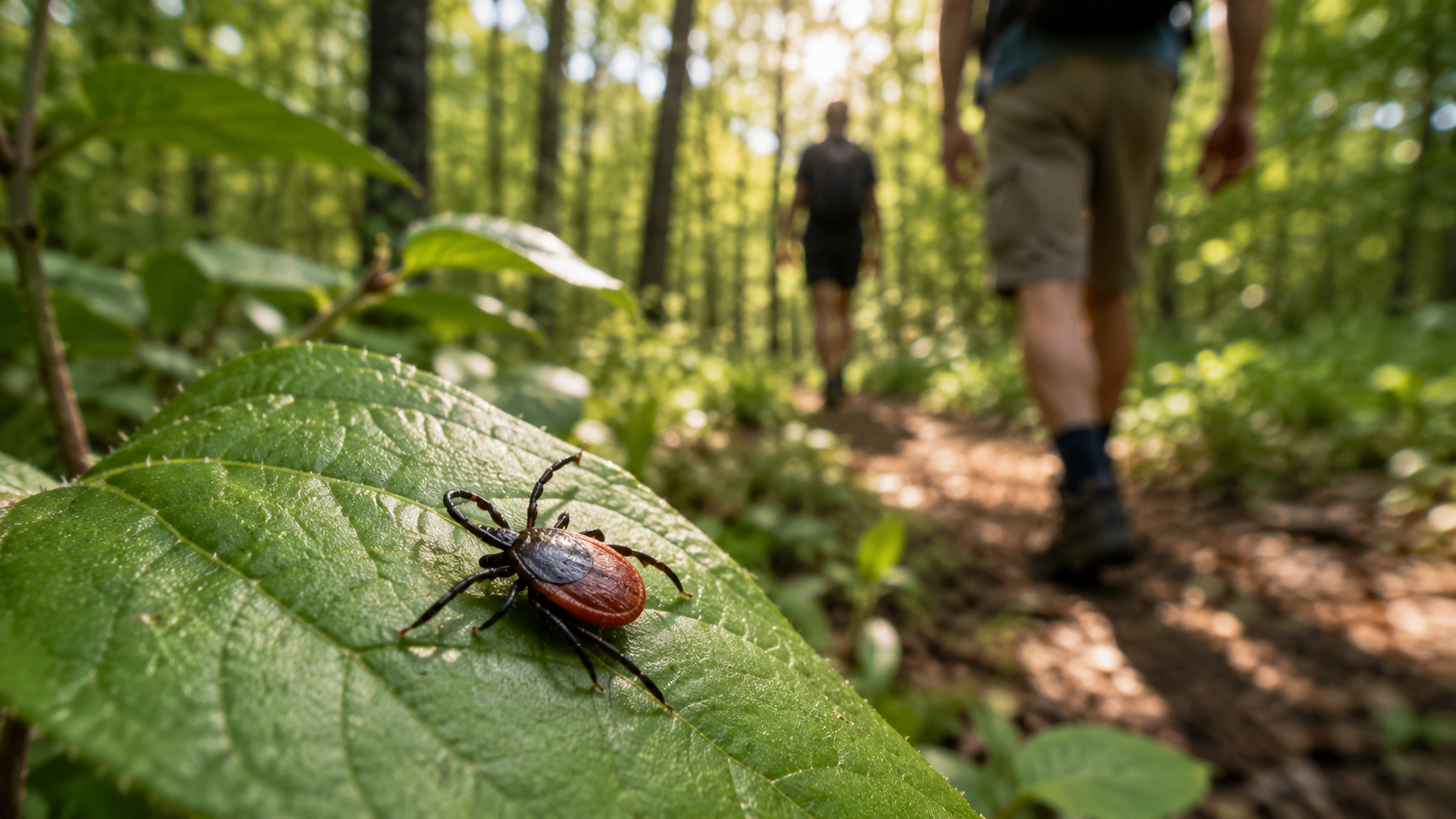
When Is Tick Season In Pennsylvania and New Jersey?
Tick season in Pennsylvania and New Jersey runs from April through October, with the peak risk period falling in May and June when blacklegged tick nymphs are at their smallest and hardest to detect.
Pennsylvania ranks first in the nation for Lyme disease cases, and New Jersey is one of the top 4 states across the country.
2026 has brought the highest emergency room visit rates for tick bites in the Northeast since 2017 and the emergence of the Lone Star Tick across the Northeast has created a new public health threat for local residents.
Understanding when each tick species is active, which months pose the greatest risk, and what conditions drive tick populations is essential for protecting yourself and your family throughout the outdoor season.
When Is Tick Season Most Active in Pennsylvania and New Jersey?
In Pennsylvania and New Jersey, tick season runs from April through October, with peak danger in the spring and summer months of May, June, and July.
During this peak window, high volumes of nymph-stage blacklegged ticks emerge. These nymphs are roughly the size of a poppy seed, making them exceptionally difficult to detect and responsible for the vast majority of Lyme disease transmissions in the Mid-Atlantic region.
While spring and summer pose the highest risk, tick activity is closely tied to temperature rather than the calendar. Adult blacklegged ticks become active on any given day of the year when temperatures climb above freezing (32°F to 35°F) and reach a consistent baseline threshold of 45°F.
Clyde>
| Season / Months | Activity Level | Primary Risk & Behavior |
|---|---|---|
| Early Spring (March – April) |
Moderate to High | Adult ticks emerge from leaf litter as winter thaws. Nymphs begin emerging in April as soil temperatures cross the 45°F mark. |
| Late Spring / Summer (May – July) |
🚨 PEAK DANGER | Highest risk period. Poppy-seed-sized nymphs are highly active, questing in tall brush, wooded borders, and leaf litter. |
| Late Summer (August – September) |
Moderate | Larvae and adult ticks remain active, though nymph populations begin to taper off. |
| Fall (October – November) |
High | A secondary surge occurs as adult blacklegged ticks become highly active again during fall yard cleanups and cooling temperatures. |
| Winter (December – February) |
Low (But Present) | Ticks go dormant under snow cover but will emerge to seek hosts on any mild winter day when temperatures exceed freezing. |
What Are the Most Common Ticks in the Mid-Atlantic?
While there are dozens of tick species worldwide, three primary species account for nearly all human encounters and tick-borne disease transmissions in Pennsylvania and New Jersey. Understanding how to identify them and knowing their distinct habitats is crucial for outdoor safety.
1. Blacklegged Tick: The Deer Tick
This tick is exceptionally small, with nymphs being the size of a poppy seed and adults roughly the size of a sesame seed.
Females have a distinct reddish-orange rear body behind a dark dorsal shield. They prefer shaded woods, forest edges, deep leaf litter, and dense residential yard borders where humidity is high.
This tick is the primary vector for Lyme disease, and it can also transmit Anaplasmosis, Babesiosis, and Powassan virus.
2. American Dog Tick (Dermacentor variabilis)
Significantly larger than deer ticks, these possess a dark brown body with distinctive, ornate, off-white or silver patterns on their backs.
Unlike deer ticks, they prefer open, sunny environments with little tree cover, such as tall grassy fields, roadside vegetation, and overgrown suburban lots.
They do not transmit Lyme disease, but they are the primary vector for Rocky Mountain Spotted Fever (RMSF) and Tularemia.
3. Lone Star Tick (Amblyomma americanum)
This medium-sized, extremely fast-moving tick is easily identified by the solitary, bright white dot located dead center on the back of the female. They thrive in woodlands with dense undergrowth, brushy fields, and manicured lawns that back up to wildlife habitats.
They do not carry Lyme disease, but their saliva can trigger Alpha-gal syndrome (a life-altering red meat and dairy allergy), and they can transmit Ehrlichiosis and STARI.
What Diseases Do Ticks Carry in Pennsylvania and New Jersey?
Pennsylvania ticks transmit multiple pathogens, and some ticks carry more than one simultaneously. Co-infection, being infected with multiple tick-borne pathogens from a single bite, is documented in Pennsylvania and can complicate diagnosis and treatment.
- The Co-Infection Risk: Ticks in the northeast can carry multiple pathogens at once. A single bite can transmit more than one disease, which complicates medical diagnosis and treatment.
- Lyme Disease: The most common tick-borne illness. Early signs include fever, fatigue, joint aches, and a bull’s-eye rash (in 70–80% of cases). Untreated, it can cause arthritis and heart issues, but early antibiotic treatment is highly effective.
- Anaplasmosis: Spread by blacklegged ticks, causing flu-like symptoms and low white blood cells within 1–2 weeks. It requires a lab test and is treated with doxycycline.
- Babesiosis: A parasitic infection of the red blood cells spread by blacklegged ticks. Cases are rising in the northeast; it ranges from symptom-free to severe, posing the highest risk to the elderly and immunocompromised.
- Rocky Mountain Spotted Fever (RMSF): A potentially fatal bacterial infection spread by the American dog tick. It causes a high fever followed by a distinct spotted rash 2–5 days later and requires immediate antibiotics.
- Ehrlichiosis: Transmitted by the lone star tick, causing sudden fever, headache, and muscle aches. It is rarely life-threatening if treated promptly.
- Alpha-Gal Syndrome: A permanent red meat and dairy allergy triggered by the Lone Star tick. Symptoms like hives and stomach distress develop 2–6 hours after eating mammalian products.
- Powassan Virus: A rare, severe neurological disease spread by blacklegged ticks. Unlike Lyme disease, it can be transmitted in just 15 minutes of attachment, and there is no specific treatment.
How to Remove a Tick Correctly
Proper tick removal reduces the risk of disease transmission. Crushing the tick, applying petroleum jelly or nail polish, or using heat can increase the risk by stimulating the tick to regurgitate before detachment.
- Step 1: Use fine-tipped tweezers: Grasp the tick as close to the skin surface as possible. Fine-tipped tweezers, not fingers, provide the control needed for a clean removal.
- Step 2: Pull upward with steady pressure: Pull straight upward with even, steady pressure without twisting or jerking. The goal is to remove the tick intact, with its mouthparts detached from the skin.
- Step 3: Do not crush the tick with your fingers: Dispose of the tick by placing it in alcohol, a sealed bag, or flushing it down the toilet. Crushing the tick with bare fingers risks exposure to infectious fluids.
- Step 4: Clean the bite area: Wash the bite site with rubbing alcohol, iodine, or soap and water after removal.
- Step 5: Monitor for symptoms: Watch for fever, rash, or flu-like symptoms in the 3 to 30 days following a tick bite. The bull’s-eye rash of Lyme disease does not appear in all cases.
- Step 6: Consider tick testing: The Pennsylvania Tick Research Lab at East Stroudsburg University offers free basic tick testing to Pennsylvania residents. Submit a removed tick to ticklab.org to determine whether it carries tick-borne pathogens.
How to Protect Yourself and Your Family During Tick Season
Implementing strict personal protection habits forms your immediate line of defense against tick-borne illnesses when spending time outdoors.
- Apply EPA-Registered Repellents: Use formulas containing 20% to 30% DEET, picaridin, IR3535, or oil of lemon eucalyptus on exposed skin before going outside.
- Treat Outdoor Gear with Permethrin: Spray clothing, boots, and gear with 0.5% permethrin to kill ticks on contact. Pre-treated clothing remains effective through multiple washes.
- Wear Smart Clothing Configurations: Wear light-colored clothing to spot crawling ticks easily, and tuck long pants directly into your socks to block entry at the ankle line.
- Execute Thorough Tick Checks: Scan your full body within two hours of returning indoors, focusing on hidden areas like the hairline, behind ears, armpits, navel, groin, and behind knees.
- Shower Promptly: Washing skin within two hours of coming inside reduces Lyme transmission risk by rinsing away unattached ticks and facilitating a visual inspection.
- Protect Household Pets: Apply veterinarian-recommended oral or topical tick preventives to dogs and cats year-round to stop them from carrying active ticks into your home.
While personal precautions are vital when you venture into high-risk areas, professional yard treatments from an exterminator are the single most effective way to eliminate tick threats at home.
By establishing a protective chemical barrier directly in the transition zones and leaf litter where ticks breed, a professional exterminator shifts your strategy from reactive defense to proactive prevention, eradicating up to 95% of active pest populations before they can ever target your family.
FAQs
Is Pennsylvania the worst state for ticks?
Yes, Pennsylvania consistently ranks first in the United States for total annual cases of Lyme disease. State agricultural extensions confirm that blacklegged ticks are now fully established in all 67 Pennsylvania counties.
New Jersey shares an identically high risk profile due to matching environmental factors: dense white-tailed deer populations, expanding suburban-woodland interfaces, and mild winter climates that preserve overwintering tick populations.
Do ticks die in the winter in Pennsylvania and New Jersey?
No, ticks do not die out during Mid-Atlantic winters. Adult blacklegged ticks remain active whenever temperatures climb above 35°F. Nymphs and larvae survive freezing weather by entering a dormant state beneath insulating leaf litter and soil.
Counterintuitively, heavy winter snow cover acts as a protective thermal blanket that shields ticks from lethal sub-zero winds, often resulting in explosive population surges once the spring thaw arrives.
How long does a tick need to be attached to transmit Lyme disease?
In the vast majority of medical cases, a blacklegged tick must remain attached for 36 to 48 hours to successfully transmit the Lyme disease bacterium (Borrelia burgdorferi). This makes thorough, daily tick checks an incredibly effective preventative tool.
However, other regional pathogens—specifically the rare Powassan virus—can transmit into the human bloodstream in as little as 15 minutes following initial attachment.
Where on the body do ticks most commonly attach?
Ticks naturally migrate toward warm, moist, and well-hidden areas of the body. The most common attachment locations include the scalp, hairline, behind the ears, the back of the neck, armpits, inside the navel, around the groin, and directly behind the knees.
Because children are lower to the ground, they are far more likely to receive tick bites on their head and neck than adults.
What should I do if I find a tick on my child?
Remove the tick immediately using fine-tipped tweezers by pulling straight up with steady, even pressure. Wash the area thoroughly with soap and water or rubbing alcohol.
Place the tick in a sealed container, note the date and the location of the bite, and consider submitting it to regional diagnostic labs like ticklab.org. Monitor your child closely for 30 days for any signs of fever, rash, or lethargy, and contact your pediatrician immediately if symptoms manifest.
Does professional tick yard spray actually work?
Yes. Independent studies published in the Journal of Medical Entomology demonstrate that professional, targeted barrier sprays reduce tick populations within treated outdoor activity zones by 68% to 100%.
Rather than blanket-spraying an open lawn where ticks cannot survive the direct sun, effective treatments specifically target transition zones, woodland edges, ornamental beds, and leaf debris perimeters where ticks gather. Standard applications repeated every 3 to 4 weeks maintain continuous protection through peak nymph and adult seasons.