
The most effective way to keep ladybugs and Asian Lady Beetles away in Pennsylvania and New Jersey is to seal entry points, such as cracks around windows and door frames, before temperatures drop in the fall.
Natural repellents like spreading diatomaceous earth at common entry points or applying cloves are considered a mildly effective deterrent. For any beetles that do end up inside, you can vacuum them up and dispose of them immediately.
Overwinter pests like ladybugs and Asian lady beetles are incredibly common in the tristate area, taking advantage of gaps caused by foundation settlement to shelter during the cold winter months.
While ladybugs are seen as a sign of luck, the Asian Lady Beetle–also known as the Halloween Beetle–can be incredibly destructive to plant life and release a foul odor when disturbed.
With over 5,000 species of ladybugs worldwide found throughout Eastern Pennsylvania and New Jersey, it’s common to mistake the invasive Asian Lady Beetle for another innocuous ladybug.
Nevertheless, these overwintering pests can quickly overwhelm homeowners, much like boxelder bugs, and be difficult to remove once indoors.
This guide discusses ways to prevent ladybugs and Asian Lady Beetles from taking shelter inside your home so you can keep them away the next fall.
Why Are Ladybugs and Asian Lady Beetles a Problem for Homeowners?
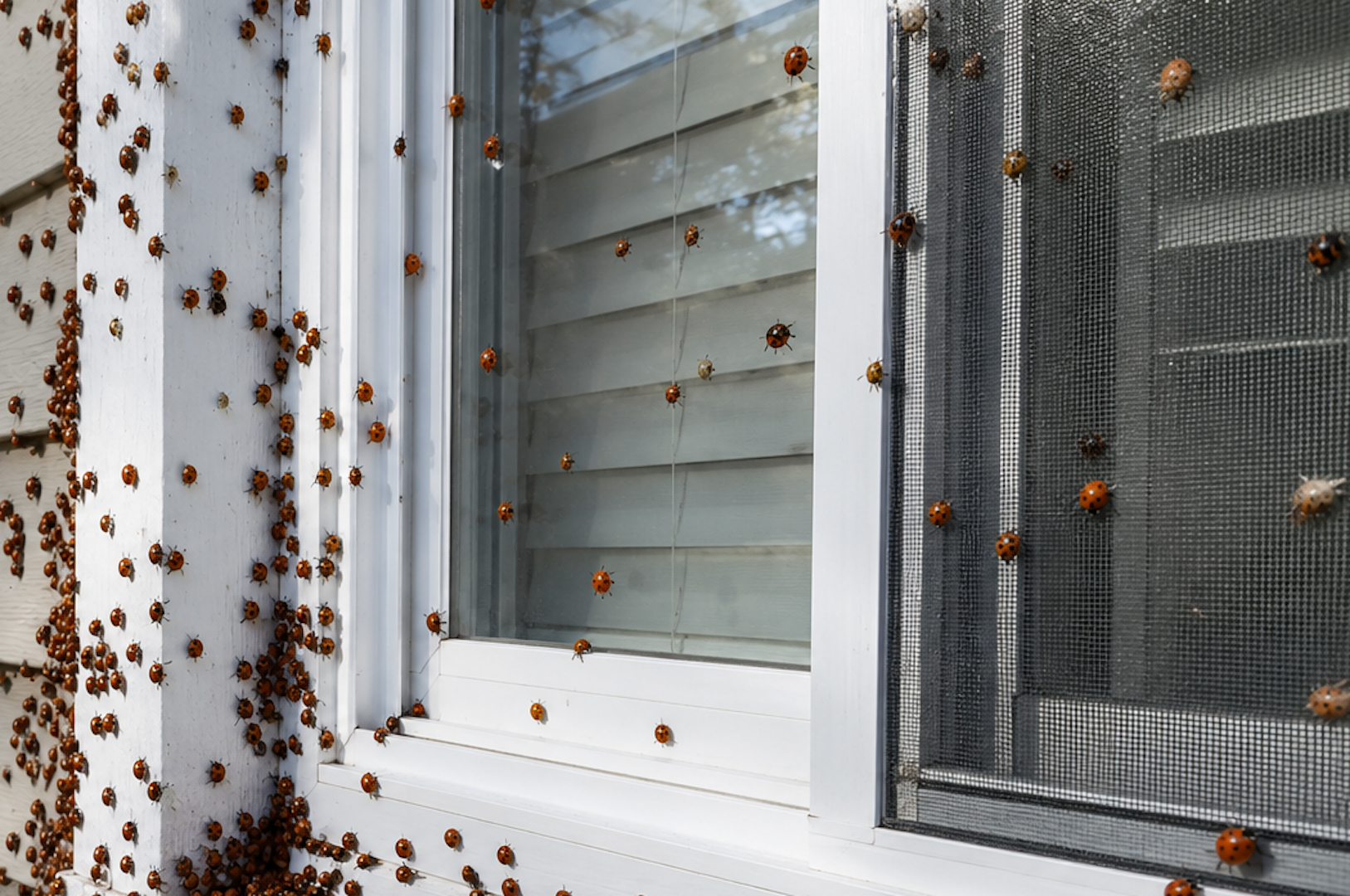
Asian lady beetles are a significant problem for homeowners because they aggressively swarm houses in the fall to overwinter, causing indoor infestations that lead to unpleasant bites and leave permanent yellow stains on surfaces.
While native ladybugs are beneficial garden insects, this invasive species creates a persistent nuisance in New Jersey and Pennsylvania by releasing a foul-smelling chemical odor that attracts more beetles to your home year after year.
- Invasive Swarming: Asian Lady Beetles congregate in massive numbers on windows and light fixtures to stay warm.
- Physical Aggression: Unlike docile native ladybugs, Asian lady beetles are known to bite humans.
- Chemical Staining: They suffer from reflex bleeding, a defense mechanism that excretes a yellow liquid that stains walls, curtains, and upholstery.
- Persistent Odors: They emit a pungent, acrid scent that can linger for up to a year, acting as a beacon for future infestations.
How to Tell the Difference Between Ladybugs and Lady Beetles
The easiest way to tell the difference between a ladybug and an Asian lady beetle is by checking for a white “M” or “W” marking on the head and observing their winter behavior.
While ladybugs are famously polka-dotted, Asian Lady Beetles are a solid reddish-brown color with the distinct white “M.”
Ladybugs are also sparsely found indoors, while Lady Beetles overwinter indoors in large numbers. If you spot a swarm of orange beetles in your home, chances are it’s the Asian Lady Beetle.
The table below provides important information to help you tell these two beetles apart.
| Feature | Native Ladybug | Asian Lady Beetle (Invasive) |
| Head Marking | Solid black or white spots. | Distinct white “M” or “W” shape. |
| Color | Vivid, bright red. | Range from orange to brownish-red. |
| Body Shape | Small and round. | Slightly larger and more oval-shaped. |
| Winter Habits | Stay outdoors; die off or hide in leaf litter. | Swarm indoors (overwinter) in large numbers. |
| Defense | Generally odorless. | Release a foul, yellow chemical scent. |
12 Tips to Keep Asian Lady Beetles Away in New Jersey and Pennsylvania
To stop an Asian lady beetle infestation, you must combine physical exclusion with natural repellents. Because these pests multiply rapidly and leave staining pheromones, homeowners in New Jersey and Pennsylvania should prioritize sealing their homes before the first frost.
Physical Prevention and Exclusion
Asian Lady Beetles can fit through gaps as small as ⅛ inch, so prioritize sealing all visible gaps, starting from the bottom up.
- Winterize Your Home: Seal cracks, plug holes, and caulk window frames. If beetles cannot find a gap, they cannot overwinter inside.
- Repair Window Screens: Even tiny tears in mesh screens allow beetles to fly directly into living spaces.
- Manage Your Yard: Keep gardens trimmed and store firewood at least 20 feet away from the foundation to remove nearby hiding spots.
- Use Motion-Sensor Lighting: Asian lady beetles are highly attracted to light and heat. Switching to motion-sensor bulbs reduces the nighttime beacon effect on your siding.
Removal and Active Deterrence
Once inside, start by vacuuming beetles to avoid unpleasant scents. Some products, like citronella and diatomaceous earth, can disperse and repel beetles.
- Vacuuming (Non-Lethal Removal): Use a vacuum with a sealed bag or canister to collect beetles without crushing them. Dispose of the bag immediately outdoors to prevent them from crawling back out.
- Diatomaceous Earth (Natural Insecticide): Sprinkle this non-toxic powder in high-traffic areas. It dehydrates and kills beetles and other pests, such as stink bugs.
- Light Traps: Use the beetle’s natural phototaxis against them by setting up a light trap to draw them in and remove them in bulk.
- Soapy Water or Citronella Sprays: Spraying swarms with soapy water or citronella oil can kill or deter them and neutralize their foul odor.
Natural Repellents and Bio-Barriers
While essential oils and herbs are not a replacement for professional pest control, they have been shown to act as natural repellents against Asian Lady Beetles.
- Plant Mums: Planting chrysanthemums (mums) around entry points acts as a natural deterrent, as beetles dislike their scent.
- Cloves and Bay Leaves: Place these spices on windowsills or in infested dark corners to repel beetles naturally.
- Scent Masking: Use citrus or citronella oils to hide the pheromone “scent trails” that tell other beetles your home is a safe place to hibernate.
- Act Immediately: Speed is critical. Once a few beetles establish a scent trail, an infestation can grow from a few insects to thousands in days.
When to Call an Exterminator for an Asian Ladybug Infestation?
Call a pest control exterminator when natural repellents and physical sealing fail to stop Asian lady beetles from swarming your home or if you notice recurring seasonal infestations.
Professional residential pest control plans establish a high-grade protective barrier around your home’s exterior, eliminating beetles before they can penetrate window seals or siding.
Instead of reacting to an overwhelming infestation, reaching out to an expert before the first frost allows for the most effective exclusion and long-term prevention.
FAQs
Why are there so many ladybugs in my house?
Ladybugs and Asian lady beetles enter houses to overwinter, seeking warmth and shelter as outdoor temperatures drop in the fall. They are particularly attracted to sun-exposed walls and often congregate in large numbers once a few scouts leave a pheromone trail for others to follow.
Are there any natural repellents for ladybugs?
Effective natural repellents for ladybugs include cloves, bay leaves, citrus oils, and diluted vinegar sprays. These scents mask the beetles’ pheromones and irritate their senses, making entry points like windowsills and doorways less attractive for nesting.
When is the best time to take action against ladybugs?
The best time to take action is late summer or early fall, before the first frost triggers the beetles’ search for indoor shelter. Proactively sealing cracks and applying repellents in September or October prevents an infestation before it begins.
When did the Asian Lady Beetle become invasive in Pennsylvania and New Jersey?
The Asian lady beetle was imported by the USDA in 1916 to combat certain insects, but it was not established until the late 1980s when several states decided to unleash these pests in the wild. Over the years, they have congregated northward into Pennsylvania and New Jersey, where they became a seasonal nuisance to homeowners.
Do Asian lady beetles bite humans or pets?
Yes, unlike native ladybugs, Asian lady beetles are aggressive and known to bite humans and pets, causing minor skin irritation. While they do not inject venom or transmit diseases, their bites are a common nuisance during indoor infestations.
How do I get rid of the yellow stains ladybugs leave behind?
You can remove the yellow stains left by ladybugs with a mixture of mild dish soap and warm water, or with a specialized enzyme cleaner. These stains are actually “reflex blood” secreted by the beetles when threatened; it is important to clean these areas thoroughly to remove the lingering chemical scent that attracts more beetles.