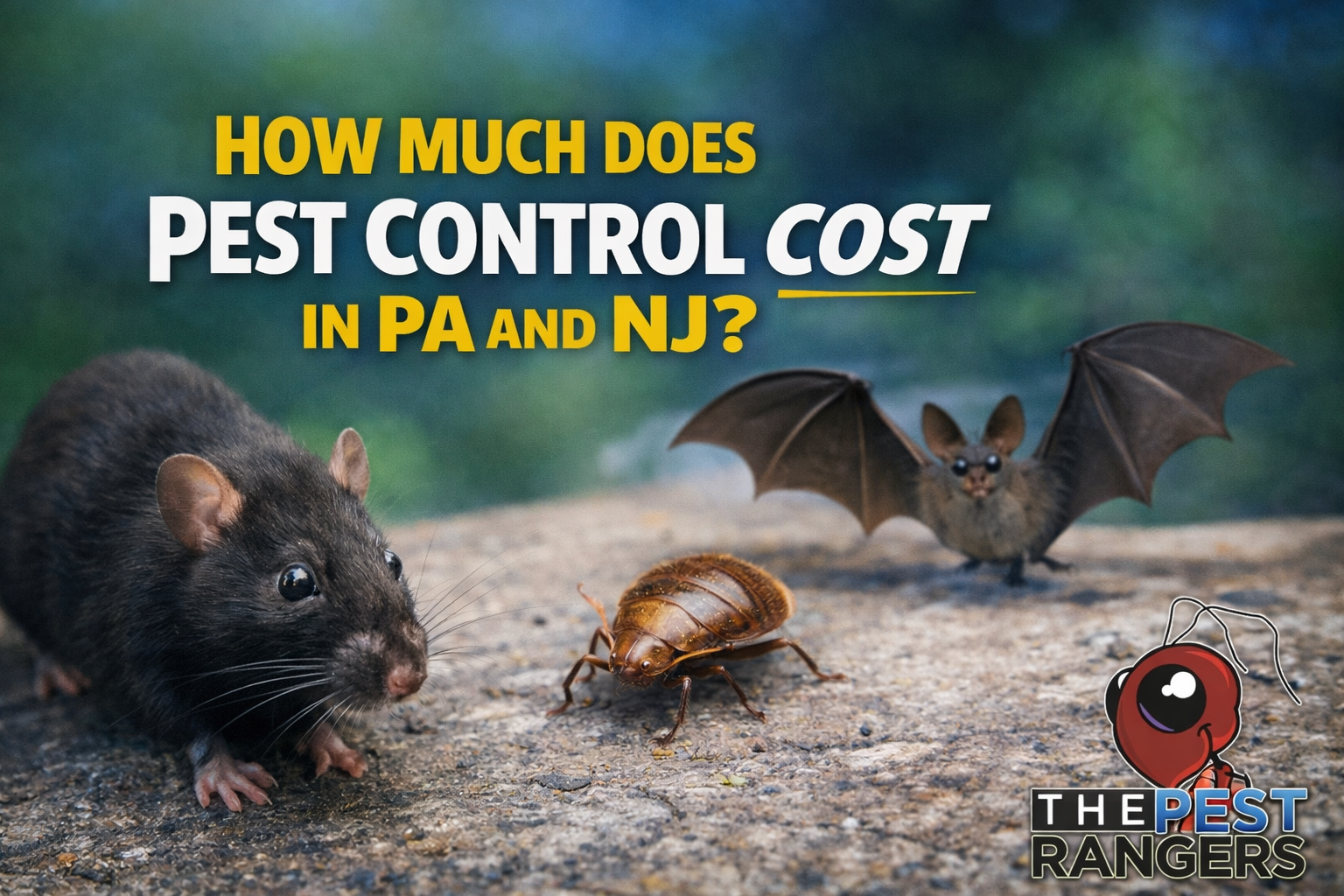
Pest control costs in Pennsylvania and New Jersey range from $225 to $895 for one-time treatments, depending on pest type and infestation severity.
Ongoing home protection plans cost $45 to $90 per month, based on property size, and cover 40+ common pests with three scheduled visits per year, plus unlimited re-service as needed.
Specialty treatments vary significantly based on infestation severity and treatment type. For example, bed bugs run $650 per room for chemical treatment or $2,200 to $2,700+ for whole-home heat treatment. Bat exclusion can cost up to $3,000, while minor ant issues cost as little as $225.
This guide breaks down The Pest Rangers’ pricing structure for New Jersey and Pennsylvania property owners by service type. It explains what drives cost differences, and shows you how to evaluate whether ongoing protection or one-time treatment makes more financial sense for your situation.
Average Pest Control Plan Costs in Pennsylvania and New Jersey
Pest control pricing in the Mid-Atlantic region follows predictable patterns based on service frequency and treatment scope. One-time emergency treatments cost more per visit than maintenance plans, but ongoing plans provide better long-term protection and lower per-visit costs.
| Home Protection Plan (Ongoing Service) | Monthly Price |
| 0–2,000 sq ft | $45 – $55 |
| 2,000–3,000 sq ft | $50 – $60 |
| 3,000–4,000 sq ft | $70 – $80 |
| 4,000–6,000 sq ft | $80 – $90 |
| Larger homes / duplexes | Quoted individually |
The Pest Rangers’ Home Protection Plans include coverage against 40+ common insects and rodents, three scheduled visits per year, and unlimited re-service between scheduled visits at no additional charge.
What Determines Pest Control Pricing
The Pest Rangers calculates pricing using a combination of fixed and variable factors. Understanding these cost drivers helps you evaluate quotes and avoid overpaying.
Pest Type
Treatment complexity and labor intensity vary dramatically by species. Ants require targeted baiting and exterior perimeter treatment, while bed bugs demand heat treatment or multiple chemical applications with mattress encasements.
The following table illustrates one-time treatment costs for common pests across Eastern Pennsylvania and New Jersey.
| Pest Type | Treatment Cost |
| Ants (Small / Common) | ~$225 |
| Carpenter Ants | ~$325 |
| Pharaoh Ants | ~$475 |
| Cockroaches (German) | $395 – $795 |
| Cockroaches (American / Oriental) | $295 – $595 |
| Rodents (Mice) | $295 – $595 |
| Rodents (Rats) | $595 – $895 |
| Spiders / Occasional Pests | $225 – $350 |
| Stinging Insects (Ground Nests) | ~$225 |
| Stinging Insects (Eye-Level Nests) | ~$245 |
| Stinging Insects (Above First Floor) | $275+ |
| Bed Bugs (Liquid Treatment per Room) | ~$650 |
| Bed Bugs (Heat Treatment, Whole-Home) | $2,200 – $2,700+ |
| Bat Exclusion | Starting ~$3,000 |
| Wildlife (Raccoons, Squirrels) | Quoted after inspection |
Bed bugs and wildlife exclusion are the most costly treatments due to specialized equipment, extensive labor, and structural work.
Infestation Severity
Early detection significantly reduces treatment costs. A localized ant colony near a kitchen window can be eliminated with targeted baiting during a single visit. A cockroach infestation that spreads across multiple rooms requires whole-home treatment, follow-up inspections, and potentially multiple product applications, which can inflate the cost of service.
Property Size
Square footage directly impacts treatment time and material usage. A 1,000-square-foot apartment requires fewer products and labor than a 3,000-square-foot single-family home.
Exterior perimeter treatments scale with the foundation’s linear footage. Interior treatments scale with the number of rooms and the total area requiring coverage.
Expect to pay 30 to 50 percent more for pest control in homes over 2,500 square feet compared to homes under 1,500 square feet, assuming similar infestation levels and pest types.
Treatment Frequency
Most minor pest issues resolve in one or two visits. Severe infestations or reproductive pests like bed bugs and German cockroaches require multiple treatments spaced two to four weeks apart to target newly hatched individuals that survived the initial application.
Treatment Method
Treatment approach affects both cost and effectiveness. Common methods include:
- Chemical applications: Sprays, dusts, and granules applied to target areas and pest entry points
- Baiting systems: Gel baits, bait stations, or traps that attract pests and eliminate colonies
- Heat treatment: Whole-room heating to 120–140°F to kill bed bugs and eggs (higher cost, single-visit solution)
- Fumigation: Tent or chamber fumigation for severe termite or stored product pest infestations (highest cost)
- Exclusion work: Sealing entry points, installing door sweeps, and repairing screens to prevent pest access
Heat treatment for bed bugs costs more upfront but often eliminates the infestation in a single day. Chemical treatment costs less per visit but typically requires two to three applications.
The lower per-visit cost can result in a higher total cost if multiple treatments are needed.
Geographic Location and Seasonality
Climate and regional pest pressure influence service frequency. Southeastern Pennsylvania and southern New Jersey experience longer warm seasons, extending mosquito and tick activity compared to the Poconos or northwestern Pennsylvania.
Urban areas like Philadelphia and Trenton see higher rodent populations due to density and available food sources.
Service rates also vary by market. Companies operating in metropolitan areas typically charge 10 to 20 percent more than providers in rural counties due to higher operating costs, though competition in urban markets can moderate pricing.
DIY Vs. Professional Pest Control: Cost vs. Effectiveness
Over-the-counter pest control products cost $10 to $50 per treatment and can resolve minor, localized problems. A can of aerosol insecticide may eliminate visible ants in a kitchen, but it is no match for a fully established colony inside your walls.
In addition, homeowners commonly run into these mistakes when treating pests on their own.
- Using foggers or bug bombs that push cockroaches deeper into wall voids rather than eliminating them
- Applying insufficient product or treating only visible areas while missing nests and harborages
- Choosing the wrong product for the pest species or life stage
- Misidentifying the pest entirely, wasting time and money on ineffective treatments
Professional pest control companies have access to commercial-grade products unavailable to consumers, understand pest biology and behavior, and know where to apply treatments for maximum effectiveness.
We routinely service homes where DIY efforts cost $200 to $300 in retail products but failed to resolve the issue, money that could have paid for professional treatment from the start.
Warning: Bed bugs, termites, and cockroaches should always be handled by licensed professionals. These pests spread quickly, cause significant damage or health risks, and resist most consumer products. Attempting DIY treatment on these species typically makes the problem worse and more expensive to fix later.
Commercial Pest Control Costs in PA and NJ
Commercial pest control in Pennsylvania and New Jersey costs $50 to $1,500 per month, depending on property size, industry, and regulatory requirements. A 2,000-square-foot retail shop may pay $75 to $150 per month for routine service, while a 50,000-square-foot warehouse or food processing facility can exceed $1,000 per month for comprehensive integrated pest management programs.
Restaurants, food retailers, healthcare facilities, and hospitality businesses face strict regulatory standards and regular health inspections. Pest violations lead to failed inspections, fines, mandatory closures, and reputational damage.
The cost of a monthly pest control program is often negligible compared to the financial and operational impact of a single failed inspection or customer complaint tied to visible pests.
Commercial programs include routine inspections, monitoring, treatment, documentation, and corrective action reports required for regulatory compliance. These services are not optional for businesses operating in regulated industries.
The ROI of Preventive Pest Control
Pests like termites cause over $5 billion in property damage annually in the United States.
Wood-destroying pests like termites and carpenter ants damage wood furniture and framing components, threatening the structural integrity of your home. Rodents chew through wiring, insulation, and structural materials.
Repairing rodent-damaged wiring or attic insulation costs $1,500 to $4,500. Replacing carpenter ant-damaged floor joists or support beams can cost $2,000 to $10,000, depending on the extent of the damage.
A home protection program costs $540 to $1,080 per year, depending on property size, saving you thousands of dollars in potential repairs.
Beyond property damage, pest infestations create health risks. Cockroaches and rodents spread allergens that trigger asthma and respiratory issues. Ticks carry Lyme disease. Mosquitoes transmit West Nile virus and Eastern equine encephalitis, which require expensive medical treatment and lost productivity that far exceed the cost of preventive services.
When compared to the negative consequences of a pest infestation, preventive pest control is not an expense. Risk mitigation protects property value, avoids repair costs, and reduces health risks.
Remember, when you see pests, you are seeing only a fraction of the population. Early professional intervention costs less and works better than waiting until the problem is severe.
FAQs
Do I really need monthly pest control service?
Monthly service is not required for all properties, but it provides the best protection for homes with recurring issues, properties near wooded areas, or houses with conducive conditions like crawl spaces or damp basements. Quarterly service is sufficient for most homeowners. Monthly plans are recommended during active infestations or for properties with persistent pest pressure.
How often should I schedule pest control treatments?
The Pest Rangers’ standard home protection plans include three scheduled visits per year, which align with seasonal pest cycles and provide consistent year-round coverage. Active infestations may require more frequent visits — monthly or bi-weekly — until the pest population is eliminated.
How much does recurring pest control cost per month?
Residential recurring service through The Pest Rangers costs $45 to $90 per month based on property size, covering general household pests with three scheduled visits per year plus unlimited re-service. Commercial recurring service ranges from $50 to $1,500 per month depending on property size, industry, and regulatory compliance requirements.
Do pest control prices include follow-up visits?
Most professional pest control companies include follow-up visits as part of their service guarantee for active infestations. Preventive maintenance plans typically include scheduled quarterly visits plus emergency callback service at no additional charge if pests appear between scheduled treatments.
Does home size affect pest control cost?
Yes. Property size directly impacts the amount of product required, treatment time, and labor costs. Pest control companies calculate pricing based on square footage and the linear footage of exterior perimeter requiring treatment. Larger homes take longer to inspect and treat, require more material, and present more potential entry points and harborage areas.
How can I reduce pest control costs?
The most cost-effective strategy is prevention. Seal cracks and gaps around windows, doors, and foundation penetrations. Eliminate standing water, fix leaking pipes, and reduce moisture in basements and crawl spaces. Schedule annual inspections to catch problems early before they require expensive emergency treatment.