
Pantry Pest Exterminators Serving Scranton-Wilkes-Barre, the Poconos, the Lehigh Valley, and Montgomery and Bucks Counties
With over 60 industrial food and beverage industries operating in Northeast Pennsylvania alone and hundreds more throughout the Eastern parts of the state, stored-product pests can be an incredibly destructive and costly problem for residents and commercial food-processing facilities.
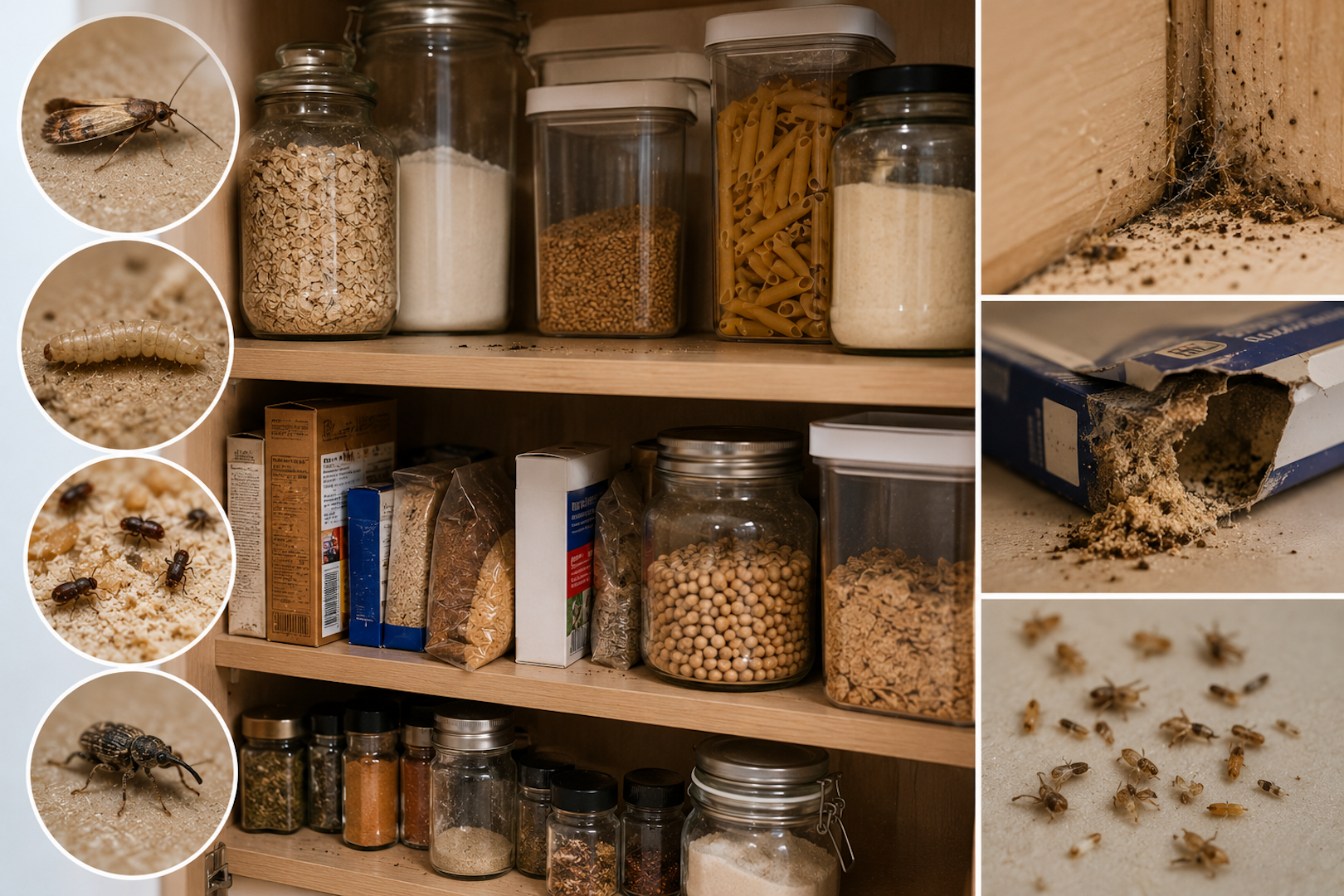
The most common culprits of food contamination and packaging damage in the state include carpet beetles, clothes moths, grain beetles, Indian meal moths, Japanese beetles, and weevils.
While each of these insects is distinct, they can all lay hundreds of eggs in a matter of weeks, infesting entire pantries, cabinets, and food facilities if left unchecked.
Unfortunately, many people make the mistake of relying exclusively on surface cleaners and sprays to eliminate visible eggs, only to find these pests multiply in Eastern Pennsylvania.
The Pest Rangers offers professional-grade treatments that target the reproductive lifecycle of stored-product pests and provides monthly protection plans that keep facilities and residents covered if these pests return.
With a local presence spanning NEPA to SEPA, our technicians can offer same-day or next-day treatments for stored-product pests, helping you avoid incidental exposure.
As Food Prices Rise, Stored Product Pests Can Be Costly
With grocery bills higher than ever, throwing away food hurts your wallet.
Ignoring a pantry pest problem or relying on a quick surface cleaning will cost you. What starts as a single infested box can quickly escalate into a widespread outbreak that ruins your entire pantry investment.
Here is why these pests are so expensive to ignore and why DIY methods fall short:
- The Cost of Constant Replacement: Pantry pests don’t stay contained. If left alone, a single female moth can lay hundreds of eggs. The hatching larvae will migrate from package to package, chewing through cardboard and plastic film. Ignoring the signs means eventually throwing out hundreds of dollars in grains, baking staples, pet food, and expensive bulk purchases.
- The Rapid Escalation Cycle: Tossing out ruined food and wiping down the shelves gives a false sense of security. Within two to four weeks, a new wave of adult moths or beetles emerges. This happens because the larvae travel away from the food to hide and spin cocoons in cabinet hinges, wall joints, and crown molding. Standard cleaning fails to detect these hidden pupae, allowing the infestation to restart and expand.
- Invisible Threat in Unopened Packages: Because these pests often ride along from the processing plant, microscopic eggs can sit inside completely sealed, unopened packages. If you don’t map out the full scope of the infestation, you will likely leave an undetected package on the shelf, leaving a ticking financial time bomb in your pantry.
- Why Retail Traps Fail: Store-bought pheromone sticky traps only catch adult male moths. While they prove you have a problem, they do absolutely nothing to stop the larvae currently destroying your food or the pupae developing in your cabinetry.
To stop losing money to ruined food, you have to break the breeding cycle.
Professional pest control goes beyond the spray-and-wipe method. It involves precision crack-and-crevice treatments that target the actual, hidden harborage zones where larvae hide, without contaminating your food-prep areas.
Expert Stored Product Pest Treatment for Eastern PA Homes and Businesses
Stored product pest eradication requires a scientific approach that targets the hidden biological behavior of these pests.
What sets our treatment protocol apart is a focus on breaking the reproductive cycle entirely. Our treatments can reach microscopic eggs and larvae hidden deep within the nooks and crannies of your kitchen, which standard cleaning completely misses.
- Inventory Inspection & Mapping: Full inspection of all dry goods, visible gaps, and cabinetry to identify where larvae and eggs are nested.
- Precision Crack-and-Crevice Treatments: Targeted treatments applied directly into cabinet hinges, shelf joints, and drawer slides where larvae hide. We treat the exact spots where pests live, avoiding open shelves where food is stored.
- Infested Material Sorting & Containment: Clear guidance on what food to throw away and what is safe to keep. We will show you how to protect your remaining food in glass or hard-plastic containers with locking lids.
- Post-Treatment Pheromone Monitoring: Professional traps are placed after treatment to track the pest population and ensure the population is declining. This acts as an early warning system to catch any new pests brought in from the store.
- Targeted Bulk-Storage Protection: Tailored inspection and storage plans for large-quantity dry goods bought from warehouse clubs. This cuts off the main pathway for large outbreaks before pests can spread to the rest of your pantry.
When a pantry infestation breaks out, timing is everything. Larvae continuously migrate away from food sources to find new hiding spots, meaning a delay of even a few days can significantly expand the scope of the problem.
Having a dedicated, local team stationed right here in Eastern Pennsylvania means technicians can respond rapidly to calls across Scranton, Wilkes-Barre, the Poconos, the Lehigh Valley, and neighboring counties.
Our technicians live and work in your community, allowing them to arrive quickly, pinpoint harborage zones immediately, and restore peace of mind without delay.
Get fast, responsive treatments that knock out stored-product pests quickly, plus monthly protection plans that cover you if they return.
Why Eastern PA Residents Choose The Pest Rangers for Stored Product Pest Control
- 5-Star Rated Service: Top-tier customer service with a local presence in Scranton, Wilkes-Barre, Allentown, the Poconos, Montgomeryville, and Hazleton.
- Industry-Leading Certified: All technicians are GreenPro and QualityPro-certified, ensuring all products are applied safely with minimal environmental exposure.
- Detailed Inspections: We target the hidden wall junctions, crown molding gaps, and cabinet hardware, where standard cleaning often misses pests.
- Precision Crack-and-Crevice Treatments: Treatments applied directly into the tiny gaps where larvae actually develop, avoiding open shelf surfaces where food is stored.
- Bulk Storage Protocols: Specialized storage protocols and containment plans to stop stored product pests before they contaminate bulk storage or consumer products.
- Guaranteed Results: Your peace of mind is our priority. If stored-product pests return between our scheduled visits, we will return at no additional charge to make it right.
Frequently Asked Questions
How do grain beetles and meal moths get into my Eastern PA pantry if I buy sealed packages?
Infestations usually start in processing plants or warehouses before the food is even shipped. Eggs are laid inside the packaging, and once they hatch, the larvae can easily chew through cardboard, foil, and plastic film. For this reason, you need to inspect all your dried goods, not just the ones that look damaged.
What dry goods are most at risk for stored product pest infestations in Eastern PA?
Pretty much any dry food in soft packaging (paper bags, thin plastic, or cardboard boxes) is fair game. This includes:
- Pantry staples: Flour, cornmeal, oats, cereal, rice, pasta, and spices.
- Snacks & treats: Nuts, seeds, dried fruit, chocolate, and powdered milk.
- Pet supplies: Dog food and bird seed.
Grain beetles and weevils prefer whole grains, while meal moths eat almost anything. Protect your food by switching to hard-sided plastic or glass containers with locking lids.
Why do Indian meal moths keep coming back after I clean and throw out infested food?
Tossing out the infested food only gets rid of the visible pests. It doesn’t touch the larvae that have already crawled away to hide.
They squeeze into cabinet joints, wall corners, and crown molding to spin cocoons. They will still hatch into adults weeks later, no matter how clean your shelves are. Professional crack-and-crevice treatments are required to stop this cycle.
Do stored product pests in Eastern PA harm people?
They don’t bite, sting, or carry diseases, and accidentally eating them won’t poison you. However, they completely ruin your food. Larvae leave behind waste, shed skins, and messy silk webbing that can trigger allergies.
Beetles can also give grains a foul, off-odor. If you spot them, throw away infested items immediately and seal up the rest.
Can stored product pest control be performed in occupied homes with children and pets?
Yes, absolutely. We use a highly targeted crack-and-crevice method. Instead of spraying open countertops or food-prep areas, we apply professional-grade, EPA-registered products directly into the hidden gaps and joints where pests hide.
This keeps exposure to your family and pets at a minimum. Your technician will give you clear, easy instructions on safety and quick re-entry times.
READY TO GET STARTED?
Contact Us Today and Set Up a Free Pest Inspection!*