
The best way to keep bed bugs from coming home with your college student is a five-minute inspection before anything gets unpacked. Check the mattress seams, headboard, and furniture in the dorm room on move-in day, keep luggage off beds and carpet, and run travel clothing through a hot dryer the moment it comes home.
Why so much caution in August? Because this is the month bed bugs move. Students carry bedding and soft furniture into rooms that have been occupied by hundreds of previous residents, and families return from summer hotels at the same time. Bed bugs are expert hitchhikers, and one gravid female in a duffel bag can seed a home infestation. The Pest Ranger’s bed bug treatment team handles the results of August travel every fall, and the inspections below are the same ones recommended to customers.
Why Is August Peak Season for Bringing Bed Bugs Home?
August combines the year’s heaviest travel with millions of students moving into shared housing, and both are exactly how bed bugs spread. Bed bugs do not fly or jump. They crawl into luggage, bedding, backpacks, and secondhand furniture, then ride to a new address.
One misconception to clear up first: bed bugs are not a cleanliness problem. Penn State Extension notes that bed bugs feed on blood, not filth, and infest five-star hotels and spotless dorms alike. What they need is a host and a hiding place within a few feet of where people sleep.
The second misconception: that bites mean disease. According to the CDC, bed bugs are not known to spread diseases to people. The real costs are itchy bites, lost sleep, anxiety, and an expensive treatment if an infestation establishes. Prevention is dramatically cheaper.
Dorm Move-In Inspection Checklist
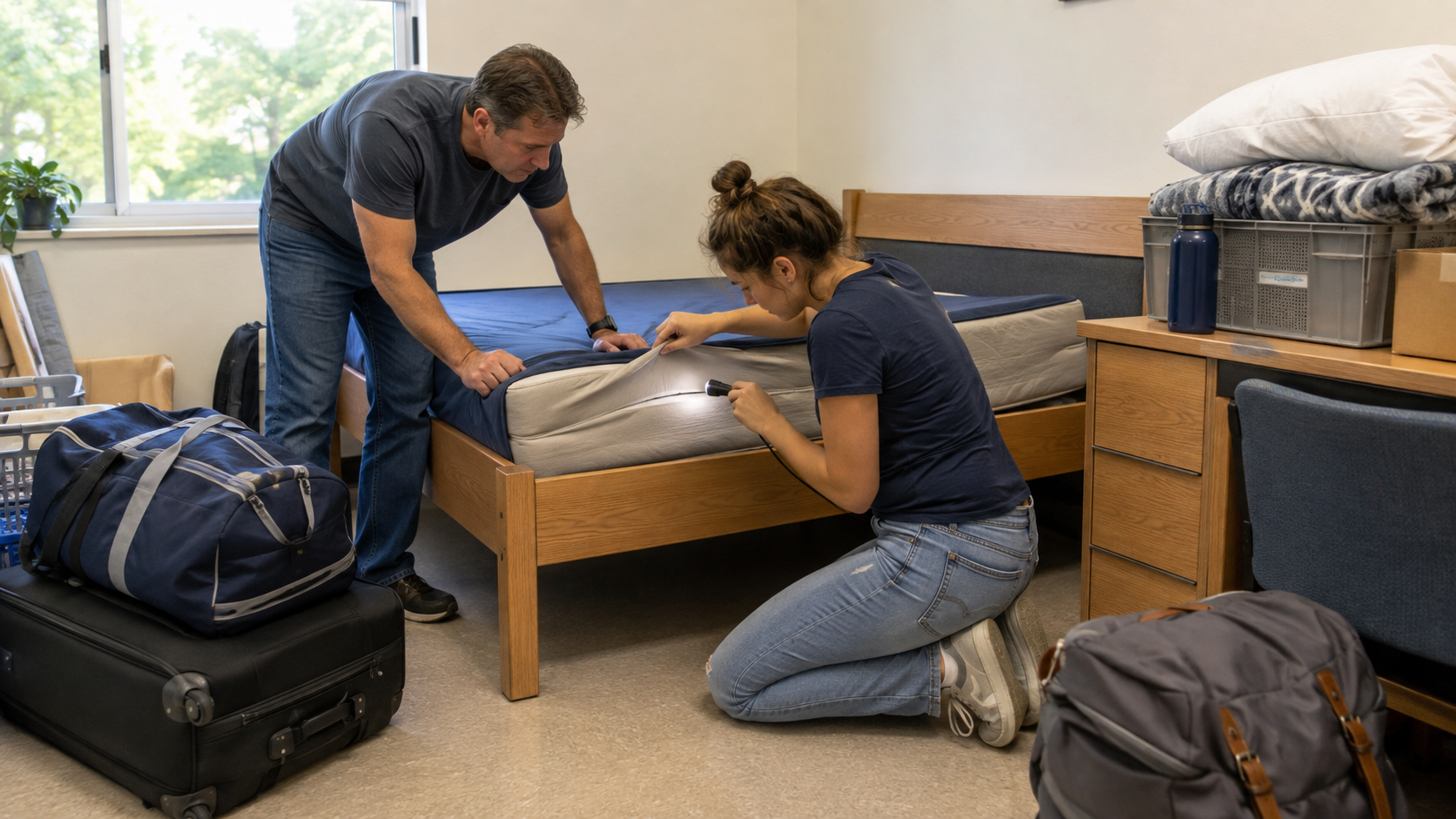
Before unpacking a single box, spend five minutes on this sweep. Bring a flashlight; your phone’s light works.
| Where to Check | What to Look For |
|---|---|
| Mattress seams, piping, and tags | Live bugs (apple-seed size, reddish-brown), pale shed skins, black ink-dot stains |
| Box spring and bed frame joints | Bugs and stains in cracks, screw holes, and slat ends |
| Headboard, especially the back side | Stains and bugs where the headboard meets the wall |
| Couches and upholstered chairs | Bugs in seams, under cushions, in the fold of the fabric |
| Dresser and desk drawers | Bugs and stains in corners and drawer glides |
| Baseboards and outlet covers near the bed | Stains along cracks; bugs hide within a few feet of sleepers |
| Any secondhand or hallway furniture | Everything above, twice; free furniture is the top dorm risk |
Found something suspicious? Photograph it, report it to housing staff immediately, and do not move belongings in until the room is inspected and cleared. Many small insects get mistaken for bed bugs, and our guide to 9 bugs commonly confused with bed bugs can help you compare photos before panicking.
Two smart habits for the semester: keep the bed pulled slightly away from the wall, and store luggage in a sealed bin or trash bag rather than under the bed.
How Do You Inspect Luggage After a Trip?
Treat every returning suitcase as suspect until checked. The EPA’s bed bug guidance recommends exactly this kind of routine inspection because catching hitchhikers early is far easier than treating an established infestation. Here is the process:
- Unpack outside the bedroom: Use the garage, a hard-floored entryway, or even the bathtub, where pale bugs are easy to spot and cannot reach carpet.
- Inspect the suitcase itself: Check seams, pockets, zipper channels, and wheel wells with a flashlight. Bed bugs tuck into fabric folds and stitching.
- Run everything washable through a hot dryer: High heat kills bed bugs and their eggs. A hot dryer cycle of about 30 minutes on the highest setting the fabric tolerates is the single most effective step, and it works even on clothes that were never worn.
- Vacuum the empty luggage: Get into the seams, then empty the vacuum outside.
- Store luggage away from bedrooms: A garage or basement shelf beats the bedroom closet.
For students coming home for breaks, run the same routine on laundry bags and backpacks. It takes ten minutes and has saved many NEPA families a four-figure treatment bill.
What Are the Signs of a Bed Bug Infestation?
Watch for these signs in the weeks after move-in or travel:
- Bites in lines or clusters: Itchy red welts, often on skin exposed during sleep. Reactions vary, and some people do not react at all, so never rely on bites alone.
- Ink-dot stains on bedding: Black or rust-colored fecal spots along mattress seams and sheets are the most reliable early sign.
- Shed skins and pale eggs: Papery molted skins and rice-grain eggs in seams and cracks.
- Live bugs: Adults are the size and color of an apple seed; nymphs are smaller and paler. Check with a flashlight where the mattress meets the frame.
- A sweet, musty odor: Noticeable only in heavier infestations.
The catch is that early infestations are easy to miss. A visual inspection depends on bugs being where you happen to look, and a light introduction of a few bugs can hide in outlets, baseboards, and furniture joints for weeks.
Company president Jeff King has built the program into a regional authority on bed bug detection and treatment, and speaks nationally on bed bug service models. I
When Should You Get a Professional Bed Bug Inspection?
Book an inspection when you have bites without an identified source, when you have found stains or a suspicious bug, when a student’s dorm or apartment building has a confirmed infestation, or when you are returning from travel where you saw evidence. Landlords and property managers should also screen units between tenants, because catching bed bugs at turnover is far cheaper than treating an occupied unit.
The reason to act on suspicion rather than certainty is simple math: bed bug populations grow every week they go undetected, and treatment cost scales with spread. A K-9 screening resolves the question quickly, in about 2 to 15 minutes per room, with an answer you can act on.
FAQs
How do I check a dorm room for bed bugs?
Before unpacking, use a flashlight to inspect the mattress seams, box spring, bed frame joints, and the back of the headboard for live bugs, shed skins, and black ink-dot stains. Check upholstered furniture and drawers next. The whole sweep takes about five minutes.
Can bed bugs travel home in luggage?
Yes, this is their main way of spreading. Bed bugs crawl into suitcase seams, pockets, and packed clothing, then establish near beds at the new location. Unpack outside the bedroom and run clothes through a hot dryer for about 30 minutes to kill bugs and eggs.
Do bed bug bites spread disease?
No. The CDC states bed bugs are not known to spread diseases to people. Bites can cause itching, welts, lost sleep, and occasionally allergic reactions, and scratching can lead to secondary skin infection, but the bugs themselves are not disease vectors.
How accurate are bed bug detection dogs?
A properly trained and certified detection dog locates live bed bugs and viable eggs by scent, including in hidden spots a visual inspection cannot reach, and screens a room in roughly 2 to 15 minutes. Accuracy depends on certification and ongoing training, which is why The Pest Rangers maintains a certified K-9 team.
What should I do if I find bed bugs after moving in?
Do not start throwing things away or spraying store-bought foggers, which scatter bugs into walls and neighboring rooms. Bag and heat-dry bedding and clothing, photograph the evidence, notify housing or your landlord, and get a professional inspection to map the infestation before treatment.