
Termites are attracted to three things: moisture, wood, and a hidden route between the soil and that wood. Almost every termite risk around a Pennsylvania or New Jersey home is some version of those three, which is good news, because it means most of the risk can be removed with a weekend of work and a few habit changes.
Why bother if you haven’t seen a termite? Because eastern subterranean termites, the species across PA and NJ, feed silently from inside wood for years before most homeowners notice. Termites cause an estimated $5 billion in property damage in the U.S. each year, and insurance does not cover it. Prevention is cheap. Repairs are not. If you want the house checked while you work through this list, a free termite inspection takes about an hour.
Here are the seven attractants, ranked roughly by how often our technicians find them, and the fix for each.
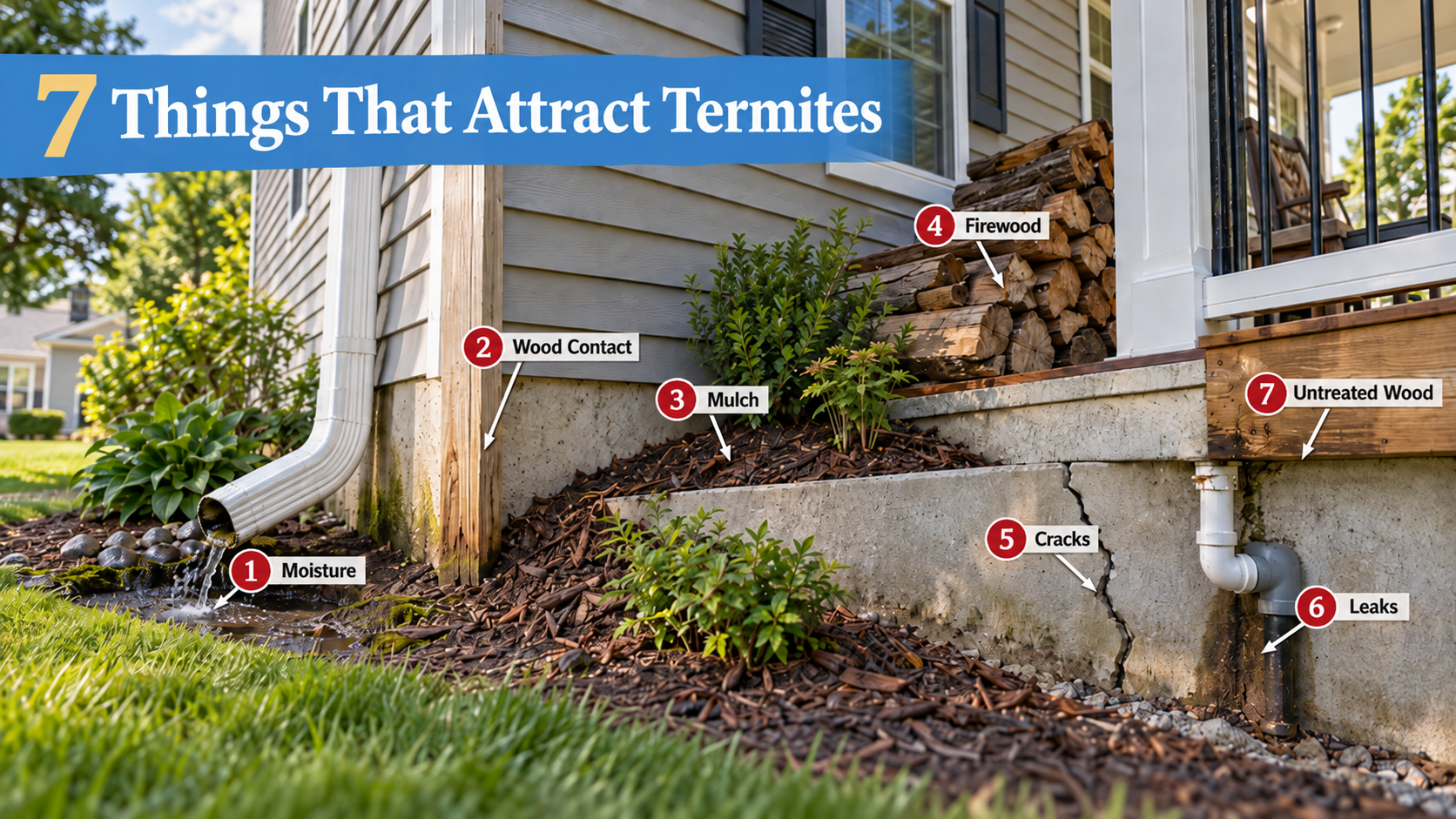
What Are the 7 Things That Attract Termites?
These seven attractants show up repeatedly on inspections across NEPA, the Poconos, the Lehigh Valley, and South Jersey. Each includes why it draws termites and how to correct it.
1. Moisture Against the Foundation
Why it attracts termites: Subterranean termites need constant moisture to survive, and damp soil against a foundation is ideal colony habitat. The EPA’s termite prevention guidance puts moisture control first for exactly this reason.
How to fix it: Extend downspouts at least three feet from the house, clean gutters twice a year, regrade soil to slope away from the foundation, and fix dripping spigots and AC condensate lines. In older homes with stone or block foundations, run a dehumidifier in the basement.
2. Wood-to-Soil Contact
Why it attracts termites: Wood touching soil is a direct highway from the colony into the structure, with no mud tube needed. Porch posts, deck supports, latticework, siding that reaches the ground, and door frames set into concrete are the usual offenders.
How to fix it: Keep at least six inches between soil and any wood on the house. Set posts on concrete piers with metal standoffs, trim siding above grade, and replace buried wood framing around basement windows.
3. Mulch and Landscaping Piled Against the House
Why it attracts termites: Mulch holds moisture and keeps soil cool, creating the perfect foraging zone right against the foundation. Deep mulch beds also hide mud tubes from view.
How to fix it: Keep mulch at least 12 inches from the foundation and no more than two to three inches deep. Consider stone or rubber mulch in the beds closest to the house, and keep shrubs trimmed so foundation walls are visible and dry.
4. Firewood, Lumber, and Stumps Near the Home
Why it attracts termites: Stacked firewood, scrap lumber, old fence boards, and tree stumps are a food source that can support a colony a few feet from your siding. Once established there, termites forage outward, and the house is next.
How to fix it: Stack firewood at least 20 feet from the house and off the ground. Remove stumps and buried construction debris, a common find in newer developments where wood scraps were buried during grading.
5. Cracks, Gaps, and Expansion Joints in the Foundation
Why it attracts termites: Termites need an opening only about 1/64 of an inch wide. Foundation cracks, slab expansion joints, and the gaps where pipes and utility lines pass through concrete are all open doors.
How to fix it: Seal cracks with cement, grout, or a polyurethane caulk, and seal around every pipe and conduit penetration. On slab homes, pay special attention to the joint where an attached garage or porch slab meets the main foundation.
6. Leaks in Plumbing, Roofs, and Crawl Spaces
Why it attracts termites: A slow leak keeps framing damp enough for termites to feed year-round, and bathroom and kitchen plumbing walls are among the most common damage sites we find. Crawl spaces with poor ventilation trap the same moisture.
How to fix it: Repair leaks promptly, insulate cold-water pipes to stop condensation, install a vapor barrier over crawl space soil, and make sure crawl space vents are open and unobstructed.
7. Untreated Wood and Poor Construction Details
Why it attracts termites: Untreated wood in contact with concrete, form boards left in place after a pour, and wood framing within inches of grade on slab additions all give termites easy access. Penn State Extension notes that colonies forage upward into structures and build shelter tubes over any surface between soil and wood.
How to fix it: Use pressure-treated lumber where wood must be near grade, remove leftover form boards and grade stakes, and for new construction or additions, ask about pre-construction termite treatment before the slab is poured.
Termite Prevention Checklist
Print this and walk the property once each spring and once each fall.
| Attractant | What to Check | Fix | Priority |
|---|---|---|---|
| Moisture at foundation | Downspouts, gutters, grading, spigots, condensate lines | Extend downspouts, regrade, repair leaks, dehumidify basement | High |
| Wood-to-soil contact | Porch posts, deck supports, siding, door frames, lattice | Six inches of clearance; piers and standoffs; trim siding | High |
| Mulch against the house | Depth and distance of beds at the foundation | 12 inches from foundation; 2 to 3 inches deep; stone near walls | High |
| Firewood, lumber, stumps | Woodpiles, scrap, stumps, buried debris | 20 feet from house and off the ground; remove stumps | Medium |
| Foundation cracks and gaps | Cracks, expansion joints, pipe penetrations | Seal with cement, grout, or caulk | Medium |
| Leaks and crawl spaces | Plumbing walls, roof, crawl space moisture and ventilation | Repair leaks; vapor barrier; open vents | High |
| Untreated wood and construction details | Form boards, grade stakes, wood near grade on additions | Remove debris; use treated lumber; pre-construction treatment | Medium |
When Is Termite Prevention Not Enough?
Prevention is not enough when a colony is already feeding on the house, when the home has construction features you cannot change, or when a neighbor’s property has been treated. Here is how to tell:
- You have seen a sign of activity: Mud tubes on the foundation, a swarm indoors, discarded wings, or hollow-sounding wood mean the colony is past the prevention stage. Our guide to 10 signs you may have termites covers what to look for, and our Scranton guide to signs of termites in older homes shows where they attack pre-1940 housing.
- Your home has permanent risk factors: Slab-on-grade additions, stone foundations, enclosed porches, and finished basements all hide entry points you cannot inspect. In those homes, a monitoring system is the practical answer.
- A neighbor has been treated: In double-blocks, row homes, and closely spaced houses, a treated colony next door often has a foothold on your side too.
The University of Kentucky’s entomology department is blunt about the next step in its homeowner termite guidance: do-it-yourself products seldom eradicate an existing infestation, and treatment is a job for a licensed professional with the right equipment. Our guide to DIY versus professional termite treatment explains why in detail.
How Do You Protect a Home Long-Term?
Long-term protection combines the prevention checklist above with professional monitoring. Active Termite Protection through the Home Protection Premier plan installs a monitoring system around the home and keeps it checked year after year, alongside coverage for more than 40 other household pests, starting at $75 per month.
For homes with active termites, The Pest Rangers offers Sentricon colony elimination and non-repellent liquid treatments, both warrantied. Every technician is licensed by the Pennsylvania Department of Agriculture, inspections are free for homeowners, and if a covered problem returns between visits, so do we.
FAQs
What attracts termites the most?
Moisture. Subterranean termites cannot survive without it, so damp soil against a foundation, leaking plumbing, clogged gutters, and poorly ventilated crawl spaces are the strongest attractants. Wood-to-soil contact and mulch piled against the house come next.
Does mulch attract termites?
Mulch does not feed termites much, but it holds moisture and keeps soil cool, which draws foraging termites to the foundation and hides their mud tubes. Keep mulch 12 inches from the house and two to three inches deep, or use stone in the beds nearest the foundation.
Can termites get into a house with a concrete foundation?
Yes. Termites need a gap of only about 1/64 of an inch, and they enter through foundation cracks, slab expansion joints, and the openings around pipes and utility lines. Slab homes and homes with attached slab porches or garages are inspected at those joints first.
How far should firewood be from the house?
At least 20 feet, stacked off the ground on a rack or pallets. Firewood against the house is a food source that can host a colony inches from your siding, and it hides mud tubes and moisture.
How often should a home in Pennsylvania or New Jersey be inspected for termites?
Once a year is the standard recommendation, and more often if the home has known risk factors like a stone foundation, slab additions, or a history of moisture problems. Free inspections make annual checks easy, and a monitoring system covers the months in between.